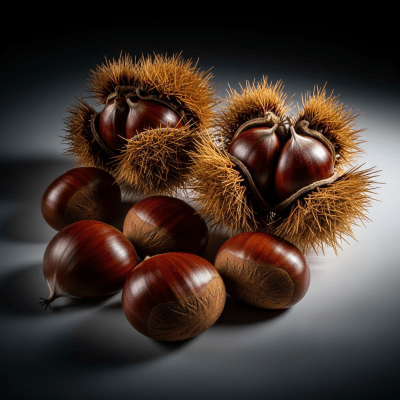
Origin Story
The story of nuts begins in diverse regions across the globe, where various trees and plants developed hard-shelled fruits as natural protection. True nuts like hazelnuts and chestnuts originated in temperate forests, while many nut-like seeds such as almonds and cashews trace back to tropical and subtropical areas. Over centuries, humans have cultivated and harvested these nutrient-dense foods, spreading their use through trade and agriculture worldwide.
Classification
Nuts belong to several botanical families and groups, including true nuts—dry, indehiscent fruits like acorns and chestnuts—and nut-like seeds such as almonds, cashews, and peanuts. While true nuts come from families like Fagaceae, many edible nuts are actually seeds of drupes or legumes, reflecting a complex classification that spans botanical, culinary, and commercial frames.
Appearance or Form
Nuts vary widely in appearance but typically feature a hard outer shell encasing a nutrient-dense kernel. True nuts like hazelnuts have a smooth, rounded shell, while others such as walnuts display a wrinkled, textured exterior. Nut-like seeds like almonds and cashews have softer shells or are enclosed in fleshy fruit parts. Their colors range from creamy white to deep brown, and their shapes can be round, oval, or crescent-shaped, often with a firm, crunchy texture.
Behavior or Usage
Nuts serve multiple roles in human life, primarily as nutritious food sources rich in healthy fats, proteins, vitamins, and minerals. They are consumed raw, roasted, or processed into oils and pastes. Beyond nutrition, nuts are used in cooking and baking worldwide, prized for their flavor and texture. Agriculturally, nut trees contribute to ecosystems by supporting biodiversity and soil health. Additionally, nuts are important in trade and commerce, with global markets driven by consumer demand and cultural preferences.