
Acorn
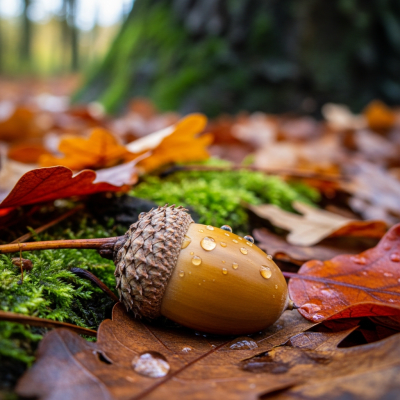
An acorn is the edible nut of the oak tree, recognized as a true botanical nut and historically valued as a staple food in many cultures.
An acorn is the edible nut of the oak tree, recognized as a true botanical nut and historically valued as a staple food in many cultures.
Acorns originate from oak trees of the genus Quercus, which encompass over 500 species native to the Northern Hemisphere. Their use as food dates back to prehistoric times, with archaeological evidence of acorn consumption in ancient Europe, Asia, and North America. Unlike cultivated nuts, acorns are wild-harvested, with their lineage tied to local oak species such as the English oak (Quercus robur), white oak (Quercus alba), holm oak (Quercus ilex), and cork oak (Quercus suber).
Acorns are classified botanically as true nuts, produced by oak trees in the family Fagaceae, genus Quercus. This distinguishes them from many culinary nuts that are seeds or drupes. In the culinary and commercial context, acorns are grouped with edible nuts, though their botanical status is more strictly defined by their hard shell and indehiscent fruit structure.
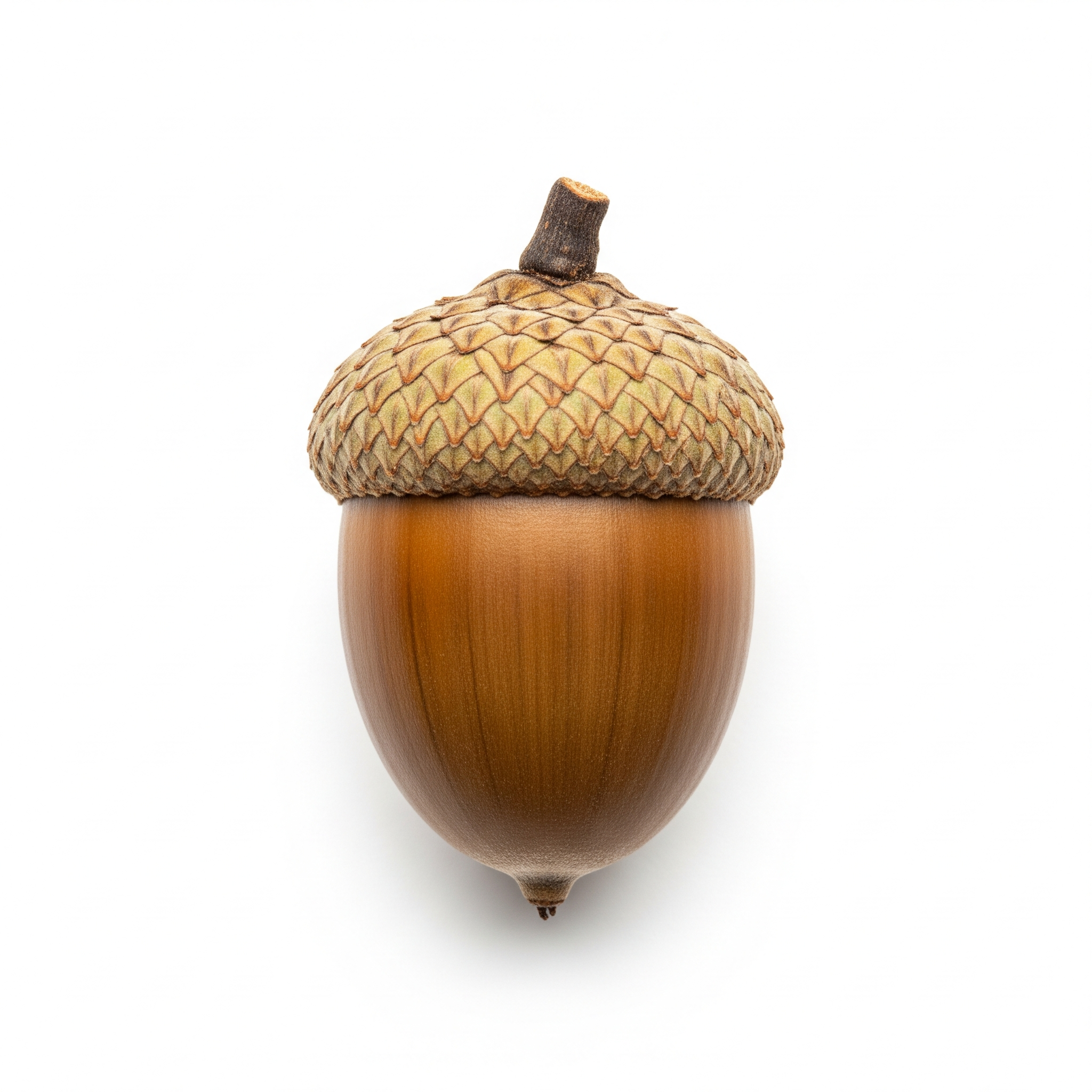
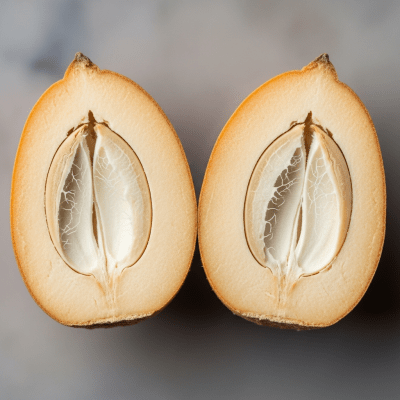
Acorns typically measure 1–6 cm in length and 0.8–4 cm in diameter, varying by oak species. Each acorn features a smooth, tough shell and is topped with a distinctive, scaly cap called a cupule. Their color ranges from pale brown to deep chestnut, and the nut’s interior is firm and pale. Fresh acorns feel solid and slightly heavy due to their moisture content.
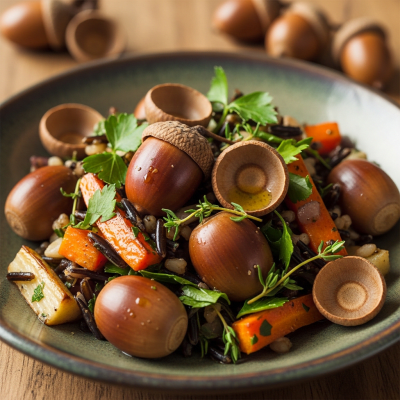
Acorns play a vital ecological role as a food source for wildlife and have historically served as a staple carbohydrate for humans. Before consumption, acorns must be processed to remove bitter tannins—typically by shelling, grinding, and leaching. Processed acorn meal can be baked, boiled, or used as a thickener. Beyond human use, acorns support livestock feed and forest habitat management.
Bring this kind into your world illustrated posters, mugs, and shirts.
Archival print, museum-grade paper
Buy Poster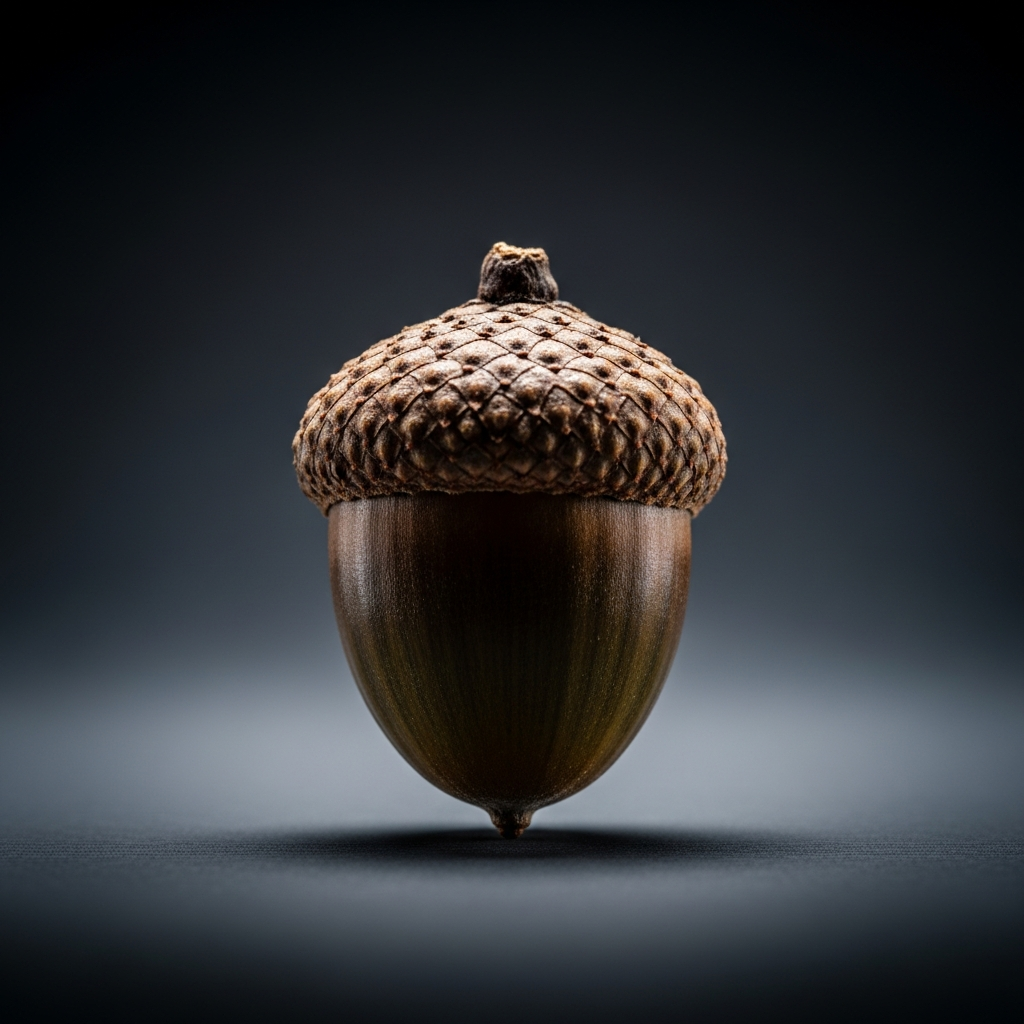
Stoneware mug, dishwasher safe
Buy Mug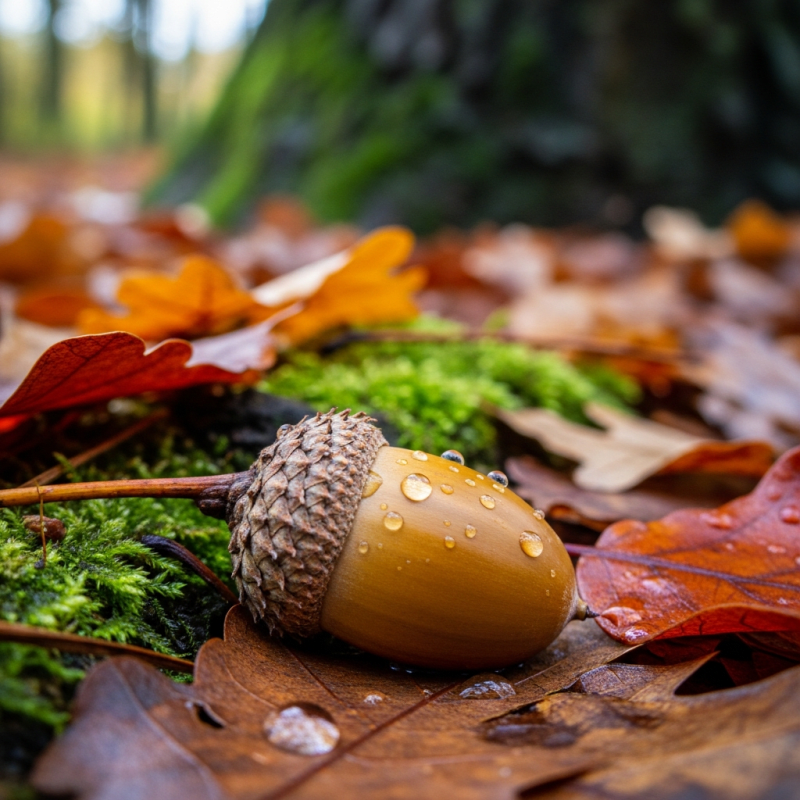
Soft cotton tee, unisex sizes
Buy ShirtThroughout history, acorns have symbolized abundance and potential in art and folklore. In Mediterranean cultures, they are linked to traditional breads and coffee substitutes, while in Korea, acorn starch is used to make dotori-muk, a jelly-like dish. Acorns appear in myth as emblems of strength and longevity, reflecting the enduring presence of oak trees in landscapes and stories.
Scientific Name: Genus Quercus (oak species)
Family: Fagaceae
Key Traits: True botanical nut; hard shell; scaly cupule; high tannin content; annual or biennial fruiting cycles; wild-harvested from mature oak trees.

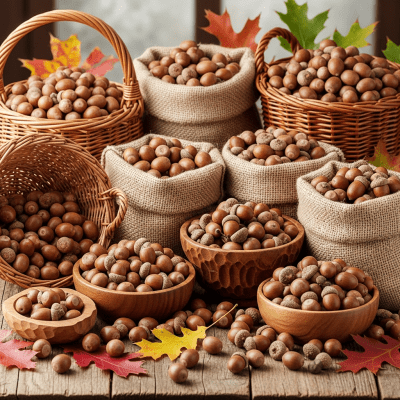
Acorns are primarily gathered from wild oak stands rather than cultivated orchards. Oaks begin producing acorns between 20 and 50 years of age, with fruiting cycles influenced by species and environmental conditions. Harvest typically occurs in late summer to autumn, when acorns fall naturally to the ground. Collection is manual, and yields can fluctuate widely due to mast cycles and climate factors. Commercial farming of acorns is rare, but they are sometimes managed for wildlife habitat or specialty food production.
Acorns are a rich source of carbohydrates and contain moderate amounts of protein and fat. They also provide minerals such as potassium, magnesium, and calcium. Once processed to remove tannins, acorn meal offers dietary fiber and can serve as a gluten-free alternative in baking. Nutritional content varies by species and preparation method.
Acorns are not classified as a major food allergen in regulatory frameworks such as the US or EU. However, individuals with oak pollen allergies or sensitivities should exercise caution. Acorn products are generally considered safe for most consumers when properly processed.
Acorns are not widely traded on global commodity markets, but they are available in niche markets as flour, meal, or processed products. Major producer regions include East Asia, the Mediterranean, and North America, where traditional uses persist. Commercial acorn products are often sold by specialty food companies or local producers, with limited international trade.