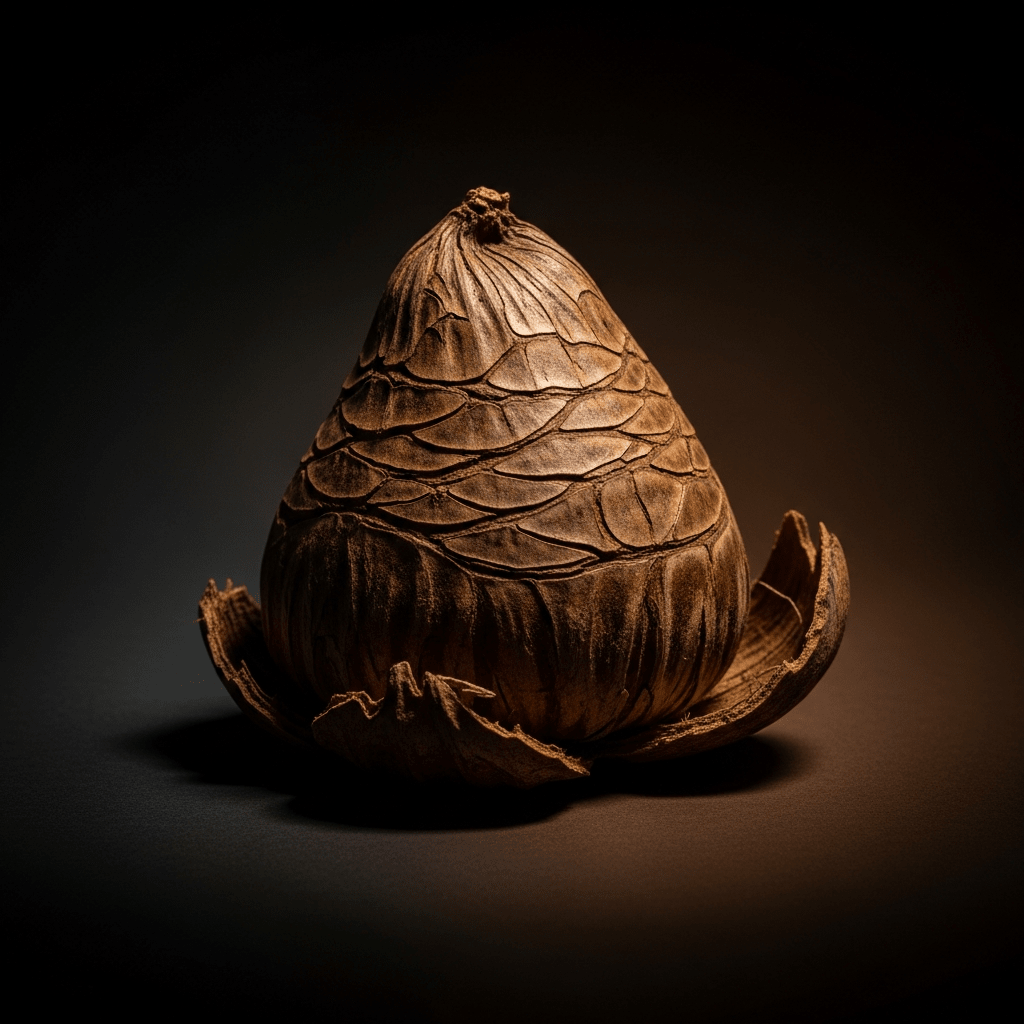
Bunya Nut
The Bunya nut is the large, edible seed of the Bunya pine (Araucaria bidwillii), celebrated for its unique flavor and deep cultural roots in Indigenous Australian tradition.
The Bunya nut is the large, edible seed of the Bunya pine (Araucaria bidwillii), celebrated for its unique flavor and deep cultural roots in Indigenous Australian tradition.
Originating from the ancient Bunya pine, the Bunya nut is native to the Bunya Mountains of southeastern Queensland, Australia. First described scientifically in 1843 by botanist John Carne Bidwill, the species has remained wild and undomesticated, with nuts harvested from naturally occurring trees rather than cultivated orchards. For thousands of years, the nut has been a vital food source for Aboriginal groups, especially during seasonal gatherings and feasts.
The Bunya nut belongs to the family Araucariaceae and is the seed of Araucaria bidwillii, a towering evergreen conifer. Unlike many culinary "nuts," the Bunya nut is not a true botanical nut but rather a large seed encased within massive cones. It is classified within the broader culinary nut taxonomy due to its edible nature and usage, but it stands apart as a botanical rarity among conifers.
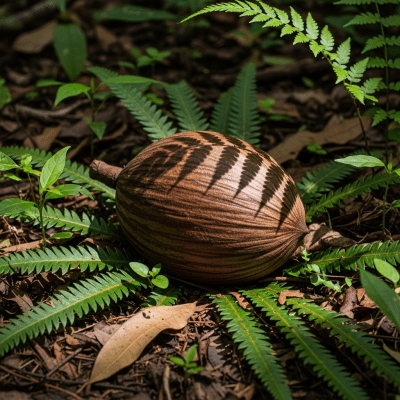
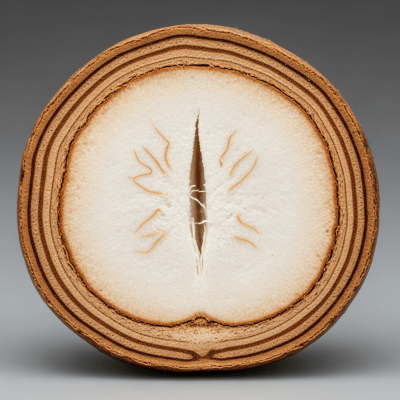
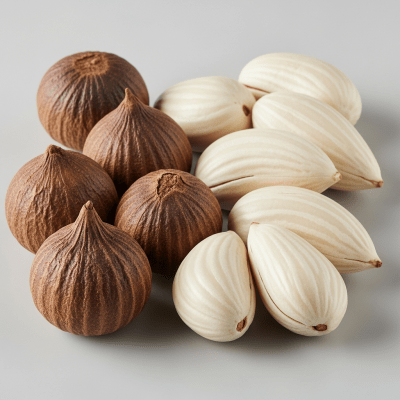
Bunya nuts are substantial in size, typically measuring 3–5 cm long and 2–3 cm wide, with a hard, brown shell protecting a pale, starchy interior. They are found clustered within enormous, spiky cones that can weigh up to 10 kg and contain dozens of seeds. The nuts themselves have a smooth, firm texture and a mildly sweet aroma reminiscent of chestnut or potato.
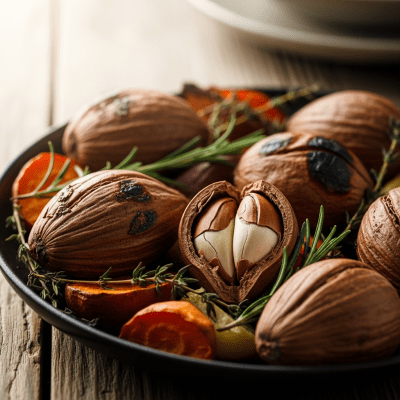
Traditionally, Bunya nuts are roasted, boiled, or ground into flour for baking. Their starchy texture makes them versatile in both sweet and savory recipes. The nuts are highly perishable once removed from their cones and are best consumed fresh or preserved by freezing or drying. Most Bunya nuts are wild-harvested, with little commercial farming or mechanized processing.
Bring this kind into your world illustrated posters, mugs, and shirts.

Archival print, museum-grade paper
Buy Poster
Stoneware mug, dishwasher safe
Buy Mug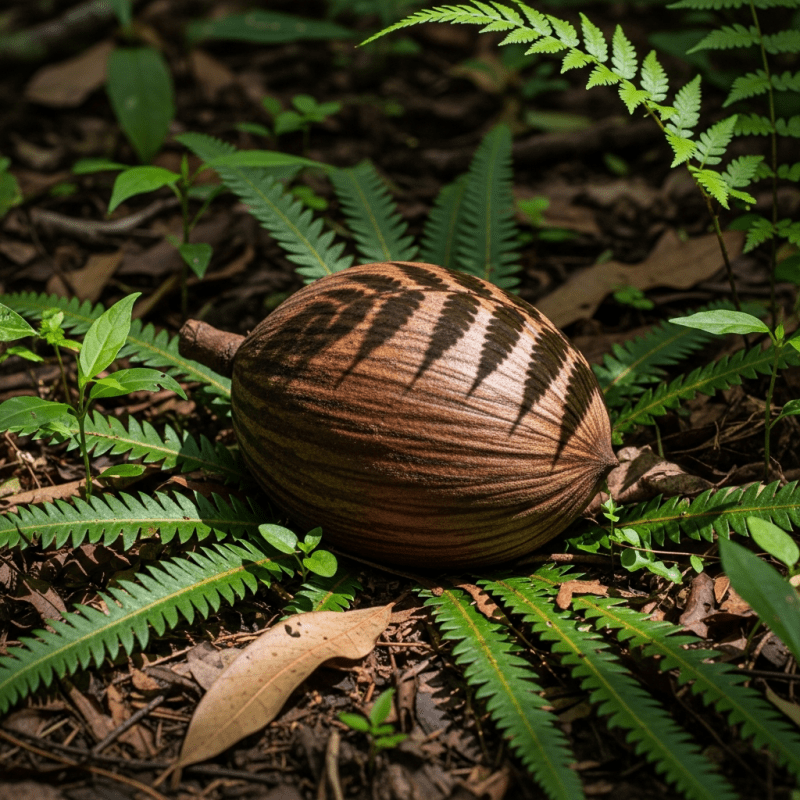
Soft cotton tee, unisex sizes
Buy ShirtBunya nuts hold profound cultural importance for Indigenous Australians, particularly the Wakka Wakka, Gubbi Gubbi, and neighboring groups. Seasonal Bunya gatherings were major social events, drawing clans together for feasting, ceremony, and trade. The nut is woven into oral histories, language, and traditional practices, symbolizing abundance and unity. Today, Bunya nuts continue to feature in Indigenous cuisine and cultural revival efforts.
Scientific Name: Araucaria bidwillii
Family: Araucariaceae
Key Traits: Large, starchy seed; encased in massive cones; produced by a long-lived, evergreen conifer native to Queensland, Australia.
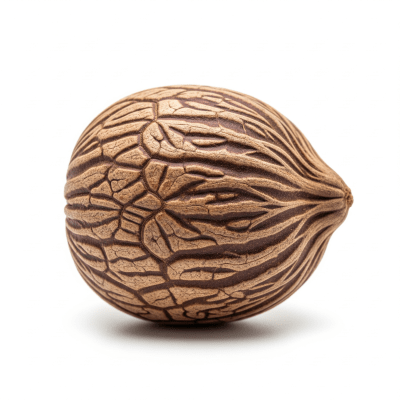
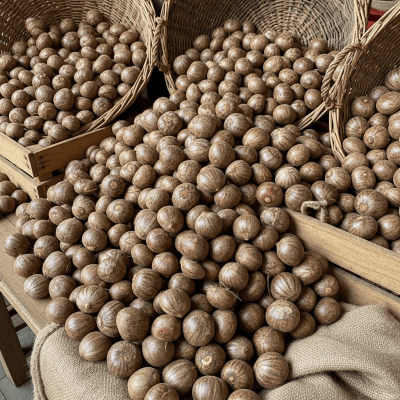
Bunya nuts are exclusively wild-harvested from mature Bunya pines, which fruit every 2–4 years. Harvesting involves gathering fallen cones, extracting the seeds, and processing them quickly due to their short shelf life. There are no formal cultivation or breeding programs, and mechanized harvesting is rare. Most nuts are collected by hand in natural forests, with yields varying widely depending on tree age and environmental conditions.
There are no documented commercial or heritage varieties of Bunya nut. All nuts come from the species Araucaria bidwillii, with natural variation in seed size and yield depending on individual trees and environmental factors.
Bunya nuts are valued for their starchy composition and are naturally gluten-free. While detailed nutritional data is limited, they are known to provide energy, some protein, and micronutrients, making them a nourishing food for both traditional and modern diets.
There is no documented evidence of Bunya nut being a regulated major allergen. However, as with any novel or wild-harvested food, individuals with sensitivities should exercise caution and consult local guidelines.
Bunya nuts are enjoyed roasted, boiled, or ground into flour for breads, cakes, and porridges. Their mild, starchy flavor lends itself to both sweet and savory dishes, and they are sometimes incorporated into gourmet recipes or specialty products. Minimal processing is typical, with shelling and cooking as the main steps.
Bunya nuts are primarily sold in local or specialty markets within Australia, with limited commercial availability. Most trade is informal, and there are no major producer countries outside Australia. Market forms include fresh, shelled, or minimally processed nuts, often sold directly by harvesters or at regional festivals.
The Bunya pine is resilient to most pests and diseases but is sensitive to frost and prolonged drought. The nuts themselves are highly perishable and susceptible to spoilage if not processed quickly. There are no notable resistances to commercial pests, and cultivation outside native regions is limited by environmental requirements.