
Kola Nut
The kola nut is a caffeine-rich seed from the genus Cola, prized for its stimulant properties and deep cultural roots in West Africa.
The kola nut is a caffeine-rich seed from the genus Cola, prized for its stimulant properties and deep cultural roots in West Africa.
Native to the tropical rainforests of West Africa, the kola nut has been cultivated for centuries, especially in Nigeria, Ghana, and Côte d’Ivoire. Its domestication traces back to indigenous practices, with propagation traditionally by seed from wild or cultivated trees. The nut’s prominence grew from local ceremonial use to global recognition as a key ingredient in early cola beverages, though its exact domestication period remains undocumented.
Botanically, the kola nut belongs to the family Malvaceae, genus Cola, with the most commercially important species being Cola acuminata and Cola nitida. While often grouped with other edible nuts in culinary contexts, it is distinct from true nuts like hazelnuts or chestnuts, and is classified as a seed within its fruit. The taxonomy reflects both botanical and commercial perspectives, bridging scientific and cultural definitions.
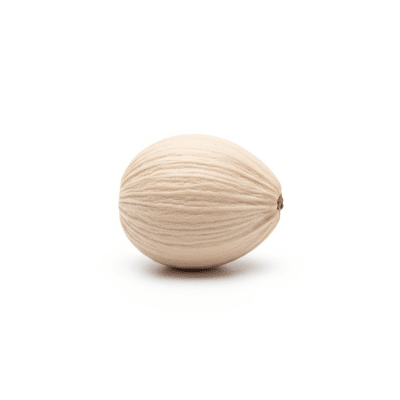
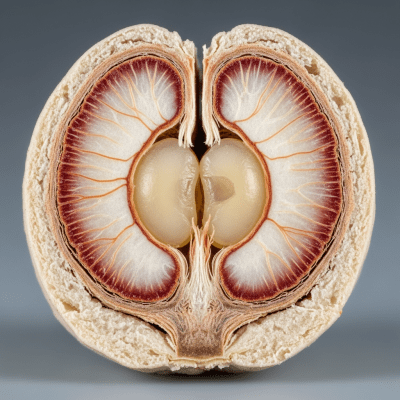
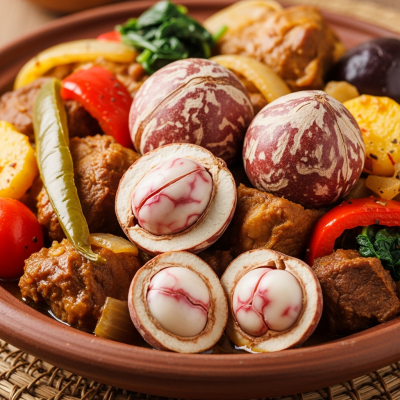
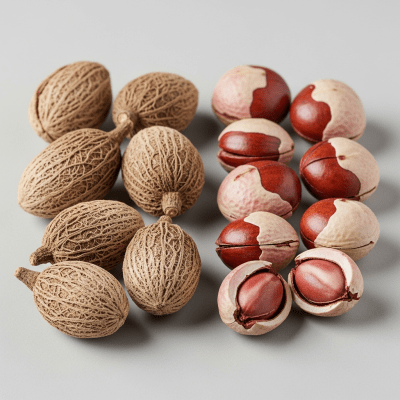
Kola nuts are typically 2–5 cm long, with a smooth, glossy surface and a firm texture. Their color ranges from reddish-brown to creamy white, depending on species and variety. The nuts are enclosed within star-shaped or oval fruits, each containing 2–5 seeds. When split open, the nut reveals a dense, slightly bitter flesh with a distinctive aroma, and its tactile qualities are leathery and robust.
Kola nuts are chewed raw for their energizing effects, thanks to a notable caffeine and theobromine content. They are also ground into powders or extracts for use in beverages, confectionery, and herbal medicine. In West Africa, they play a central role in hospitality and ceremonial exchanges, symbolizing respect and community. Commercially, kola nut extract was once essential in cola soft drinks, though synthetic alternatives now prevail.
Bring this kind into your world illustrated posters, mugs, and shirts.

Archival print, museum-grade paper
Buy Poster
Stoneware mug, dishwasher safe
Buy Mug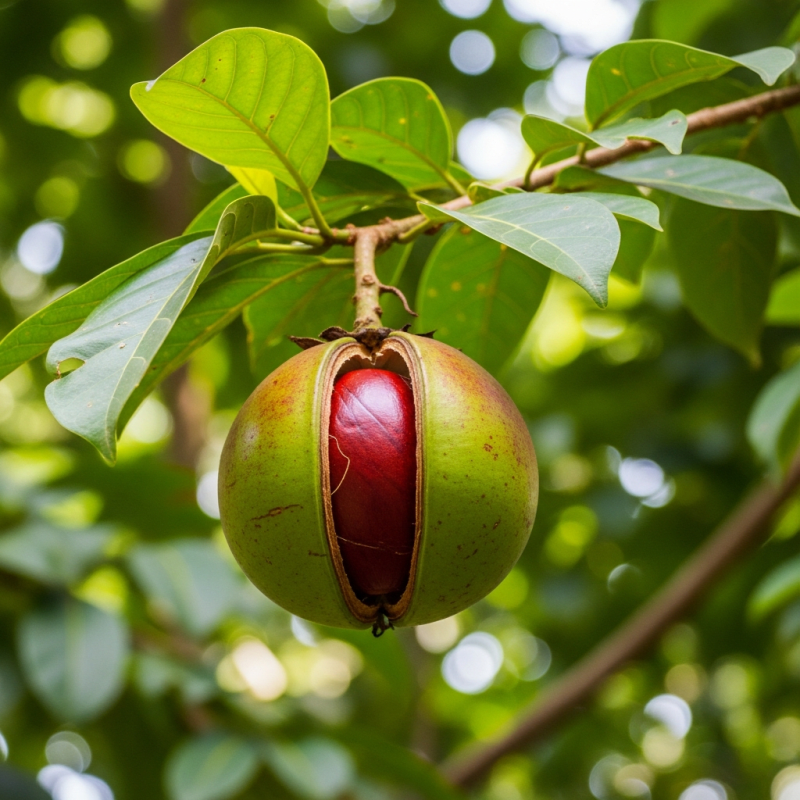
Soft cotton tee, unisex sizes
Buy ShirtDeeply woven into West African tradition, the kola nut is a symbol of hospitality, friendship, and spiritual connection. It features prominently in rituals, weddings, and social gatherings, offered as a gesture of goodwill and respect. In regional languages, it is known as "gworo" (Hausa), "obi" (Yoruba), and "oji" (Igbo), underscoring its cultural resonance. The nut’s legacy extends to its influence on global beverage culture, inspiring the creation of iconic cola drinks.
The kola nut is the seed of Cola acuminata and Cola nitida, both in the Malvaceae family. Trees are evergreen, reaching up to 20 meters, with glossy leaves and star-shaped or oval fruits. Each fruit contains several seeds—the kola nuts—distinguished by their color and caffeine content.
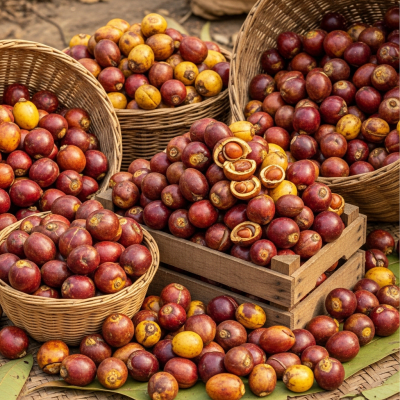
Kola trees thrive in humid, shaded environments and are propagated by seed or vegetative cuttings. Harvesting is manual, with ripe fruits split open to extract the nuts. Yields vary from 400 to 1,200 kg per hectare annually, depending on species, age, and farming practices. Prompt drying or refrigeration is essential to preserve quality, as fresh nuts are highly perishable.
The two principal species are Cola acuminata, known for its star-shaped, five-lobed fruit and reddish nuts, and Cola nitida, with two-lobed fruit and paler nuts. Regional variants differ in nut size, color, and flavor, but a comprehensive list of cultivars is not documented. Local preferences influence which species are grown and consumed.
Kola nuts are valued for their stimulant alkaloids—caffeine and theobromine—which provide energy and alertness. They also contain carbohydrates, proteins, and small amounts of fat, along with micronutrients. Their use in herbal medicine is linked to digestive and energizing effects, though moderation is advised due to high caffeine levels.
Kola nuts are not classified as a major allergen under international food safety standards. However, individuals sensitive to caffeine or related compounds should consume them with caution. No widespread regulatory restrictions apply to kola nut consumption.
Kola nuts are chewed raw or ground into powders for use in beverages, including traditional infusions and specialty sodas. They serve as a flavoring agent in confectionery and are sometimes incorporated into herbal remedies. While their role in commercial cola drinks has diminished, they remain a staple in West African culinary and ceremonial practices.
Major producer countries include Nigeria, Ghana, and Côte d’Ivoire, with local consumption dominating the market. Kola nuts are exported primarily for beverage and pharmaceutical uses, especially to Europe and North America. Commercial forms range from whole nuts to dried powders and extracts, with trade regulated mainly for quality and phytosanitary standards.