Water Caltrop
The water caltrop is an aquatic seed, commonly consumed as a nut in Asian cuisines, notable for its horned shell and cultural importance across China, India, and Southeast Asia.
The water caltrop is an aquatic seed, commonly consumed as a nut in Asian cuisines, notable for its horned shell and cultural importance across China, India, and Southeast Asia.
Originating in Eurasia, the water caltrop (Trapa natans) has been harvested from wild freshwater bodies for thousands of years. Archaeological evidence points to its presence in China, India, and Europe since antiquity, with no single breeder or institution credited for its domestication. Its lineage traces directly to the genus Trapa, and related species such as Trapa bicornis and Trapa japonica are also cultivated in Asia. The plant's enduring role in regional diets and traditions highlights its deep historical roots.
Though widely regarded as a nut in culinary contexts, the water caltrop is botanically a seed from the genus Trapa. It belongs to the family Lythraceae, with Trapa natans as its most recognized species. Its classification as a "nut" reflects its starchy, edible qualities and cultural usage, rather than strict botanical criteria. Other regional variants include Trapa bicornis and Trapa japonica, further enriching its diversity within the genus.
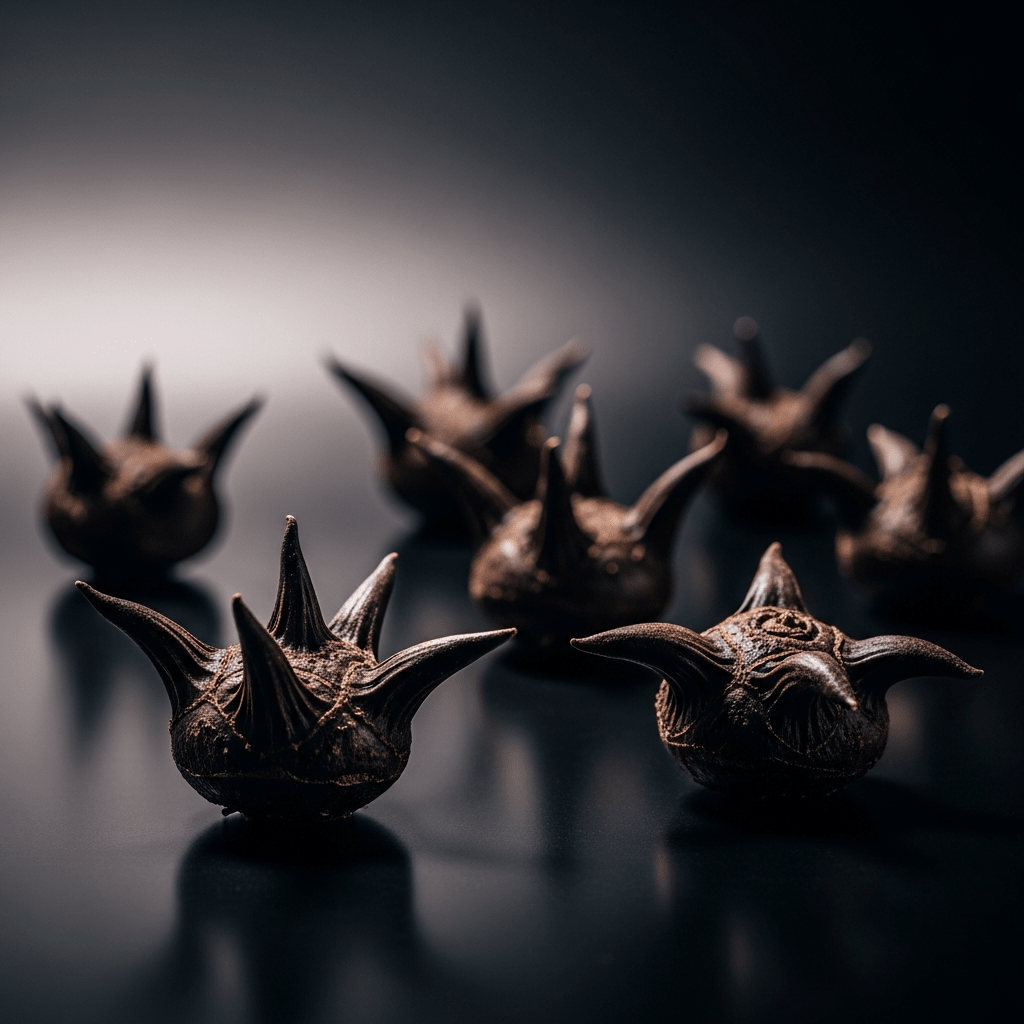
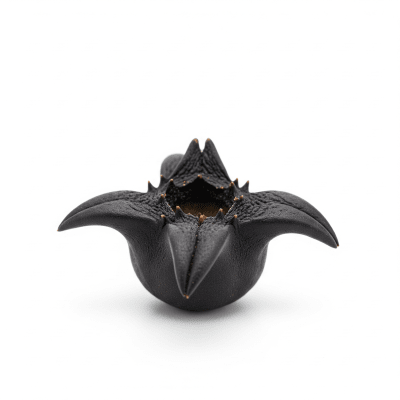
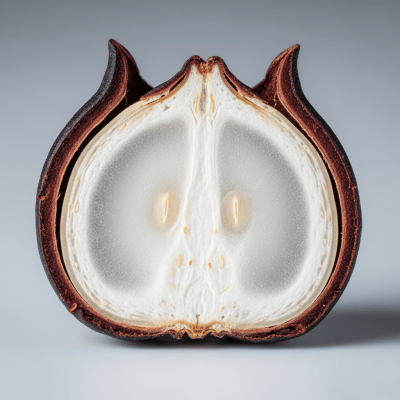
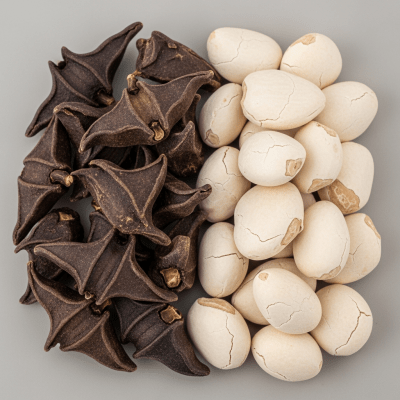
The water caltrop is instantly recognizable by its hard, woody shell adorned with two or four prominent, curved horns, resembling a bat or buffalo head. The shell is typically black or dark brown, encasing a starchy, edible seed measuring 3–5 cm in diameter. The plant itself features floating, rosette-like leaves and a submerged stem anchored in muddy lake or pond bottoms, creating a striking presence in calm freshwater environments.
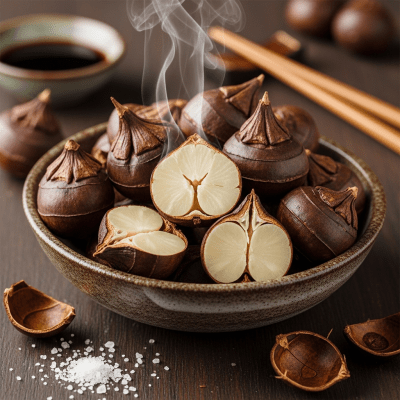
Water caltrop thrives in slow-moving or stagnant freshwater bodies, preferring warm temperate to subtropical climates. Its seeds are harvested from wild or small-scale cultivated plants, then boiled or roasted for consumption. The starchy interior is enjoyed as a snack, ground into flour for religious fasting in India, or incorporated into festive dishes. The plant is sensitive to water pollution and vulnerable to invasive species, but demonstrates resilience to brief droughts and moderate temperature shifts.
Bring this kind into your world illustrated posters, mugs, and shirts.
Archival print, museum-grade paper
Buy Poster
Stoneware mug, dishwasher safe
Buy Mug
Soft cotton tee, unisex sizes
Buy ShirtWater caltrop holds a special place in East and South Asian cultures. In China, its seeds are a traditional treat during the Mid-Autumn Festival, symbolizing good fortune and unity. In India, singhara atta (water caltrop flour) is a staple during religious fasting and is featured in a variety of festive recipes. Its unique form has inspired folklore and decorative motifs, while its role in celebrations underscores its enduring cultural resonance.
Scientific name: Trapa natans. Family: Lythraceae. Water caltrop is an annual aquatic plant with floating leaves and a submerged stem anchored in mud. Its edible seed is protected by a horned, woody shell, and it thrives in warm, slow-moving freshwater habitats.
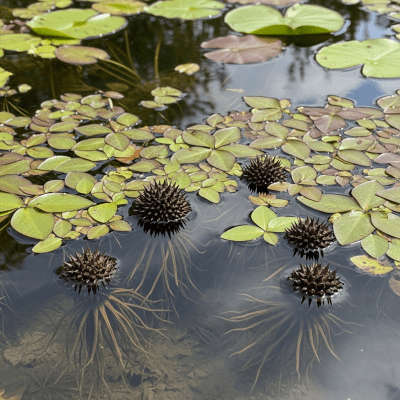
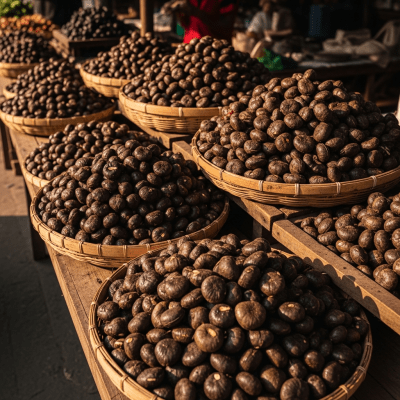
Water caltrop is primarily harvested from wild populations in lakes and ponds, though small-scale cultivation occurs in Asia. Plants are grown in shallow, slow-moving waters, where they anchor in mud and produce seeds by late summer. Harvesting involves collecting mature seeds from the water's surface or mud, followed by drying and cleaning. The plant is sensitive to water quality and invasive competitors, making careful site selection important for successful yields.
Notable varieties include Trapa bicornis, found in China and Southeast Asia, and Trapa japonica, cultivated in Japan. These regional cultivars differ in shell shape and horn configuration, offering subtle variations in flavor and appearance that are prized in local cuisines.
Water caltrop seeds are valued for their high carbohydrate content, providing a starchy, mildly nutty flavor. They serve as an energy-rich food, especially during fasting periods in India. While not as protein-dense as tree nuts, they offer a unique nutritional profile suited to traditional diets and festival foods.
Water caltrop is not regulated as a major allergen and is generally considered safe for consumption. However, individuals with specific sensitivities should exercise caution, as with any novel food.
Water caltrop seeds are enjoyed boiled or roasted as snacks, featured in desserts and soups, and celebrated in festival foods such as those served during the Mid-Autumn Festival in China. In India, the seeds are ground into singhara atta, a flour used for religious fasting and a variety of recipes. Commercially, seeds may be canned or vacuum-packed for extended shelf life.
Water caltrop is primarily consumed in Asian countries, with most supply sourced from wild or small-scale cultivated populations in China, India, and Southeast Asia. It is marketed as a nut-like food and sometimes labeled as "water chestnut," though this can cause confusion with other species. Commercial production is limited, and international trade is modest, focused on specialty and festival markets.