Pili Nut
The pili nut is the edible seed of Canarium ovatum, prized for its rich, buttery flavor and high oil content, and native to the tropical forests of Southeast Asia.
The pili nut is the edible seed of Canarium ovatum, prized for its rich, buttery flavor and high oil content, and native to the tropical forests of Southeast Asia.
Originating in the Philippines and maritime Southeast Asia, the pili nut has been cultivated and cherished locally for centuries. Its domestication is rooted in traditional farmer selection and propagation, with genetic diversity preserved through wild-type and landrace populations rather than formal breeding programs. While the exact timeline of its domestication remains unclear, the pili nut’s cultural and economic importance in its homeland is longstanding, especially in the Bicol region of the Philippines.
Botanically, the pili nut belongs to the family Burseraceae, genus Canarium, species Canarium ovatum. Although commonly called a nut, it is technically the kernel of a drupe—a fruit with a hard shell enclosing the edible seed. In culinary and commercial contexts, the pili nut is grouped alongside other edible nuts for its similar uses and nutritional qualities, despite its distinct botanical lineage.
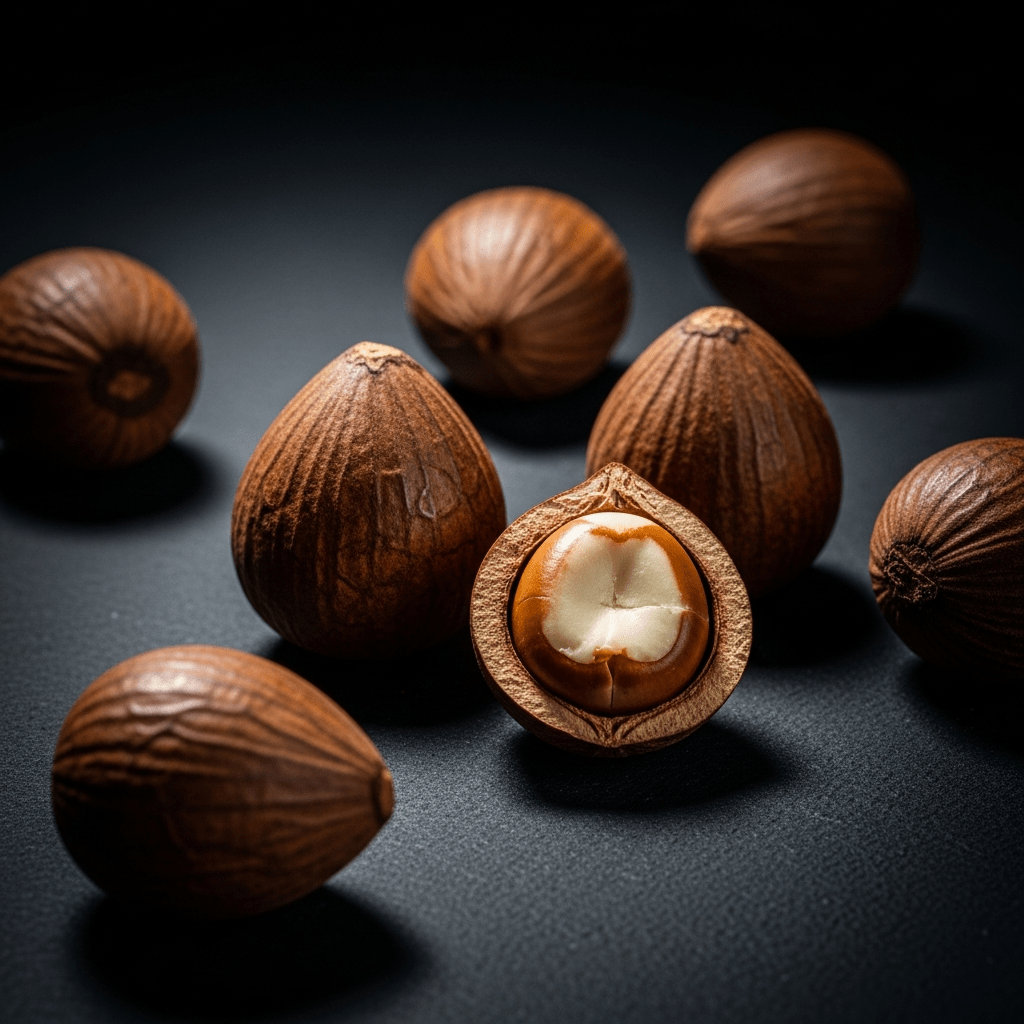
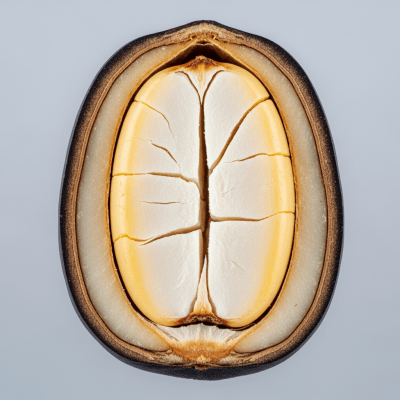
Pili nuts are elongated, measuring about 2–3 cm long, with a thin, brown outer skin (testa) and a firm, hard shell that must be cracked to access the kernel. The kernel itself is pale, soft, and creamy when roasted, owing to its high oil content. The fruit from which the nut is extracted is ovoid to ellipsoid, 4–7 cm in length, and hangs from the broad-canopied, evergreen pili tree.
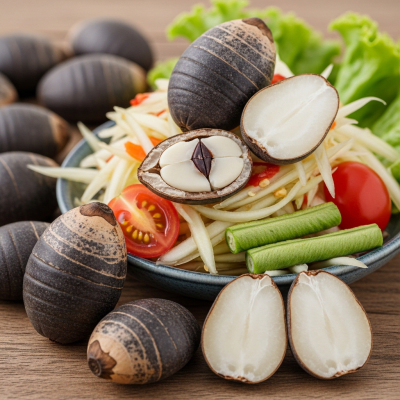
Pili nuts are enjoyed raw or roasted, and feature prominently in confections, baked goods, and traditional Filipino sweets like mazapan de pili and pili brittle. Their creamy texture and rich taste make them a sought-after ingredient in gourmet and health food markets. Beyond direct consumption, pili nuts are processed into oil, flour, and nut butter, expanding their utility in both local and international cuisines.
Bring this kind into your world illustrated posters, mugs, and shirts.
Archival print, museum-grade paper
Buy Poster
Stoneware mug, dishwasher safe
Buy Mug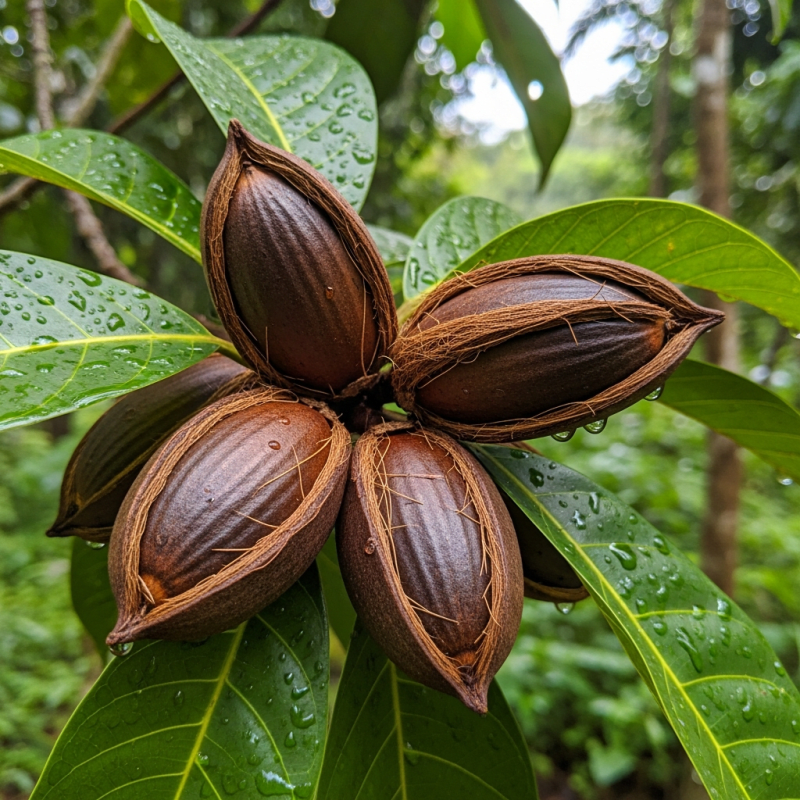
Soft cotton tee, unisex sizes
Buy ShirtIn the Philippines, the pili nut is a symbol of regional pride and a staple in festive treats and culinary traditions, especially in the Bicol region. It is celebrated in local festivals, featured in artisanal sweets, and represents a connection to the country’s agricultural heritage. The nut’s growing popularity abroad also highlights its role as a cultural ambassador, introducing Filipino flavors to global markets.
Scientific Name: Canarium ovatum
Family: Burseraceae
Genus: Canarium
Species: ovatum
The pili tree is a large, evergreen species reaching up to 30 meters, bearing ovoid drupes with a hard shell and a single edible kernel. It thrives in tropical climates and begins fruiting after 5–6 years.

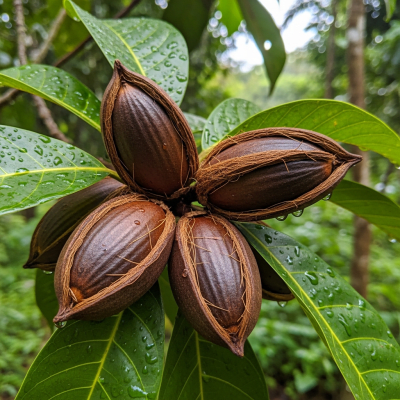
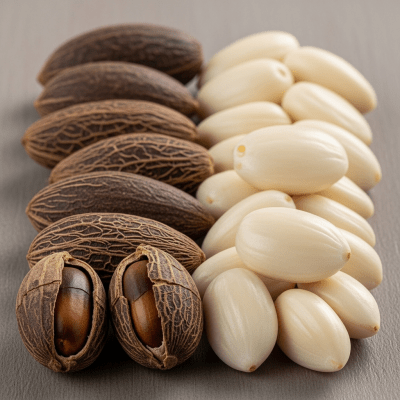
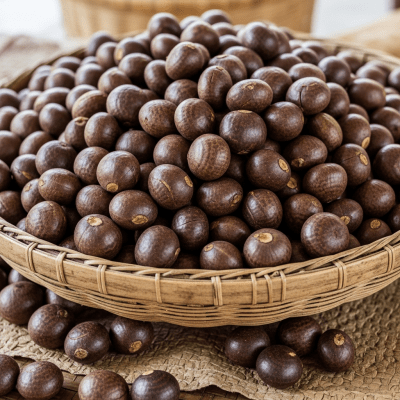
Pili trees are grown in tropical regions with well-drained soils and high rainfall, particularly in the Philippines. Trees mature and begin bearing fruit after 5–6 years, with optimal yields of 30–50 kg of nuts per tree annually. Harvesting is done by hand, and extracting the kernel requires cracking the hard shell. The nuts’ high oil content makes them highly perishable, necessitating prompt drying or processing to maintain quality.
As of 2024, there are no formally recognized commercial cultivars or hybrids of the pili nut. Most production relies on wild-type or landrace trees, with genetic diversity maintained through traditional farmer selection and local propagation.
Pili nuts are celebrated for their dense nutritional profile, especially their high content of healthy fats (60–70% oil), magnesium, and vitamin E. Their creamy texture and rich flavor make them a popular choice among those seeking nutrient-dense snacks and ingredients.
Pili nuts are not regulated as a major allergen in most jurisdictions. However, as with all nuts, individuals with sensitivities should exercise caution and consult medical advice before consumption.
The Philippines is the leading producer and exporter of pili nuts, with the crop playing a vital role in regional economies and cuisine. Internationally, pili nuts are marketed as a premium, nutrient-rich snack and ingredient, especially in health food and gourmet sectors. They are exported in various forms, including raw, roasted, and processed products.