Candlenut
The candlenut (Aleurites moluccanus) is a tropical nut prized for its high oil content and essential role in Southeast Asian and Pacific cuisines, but must be cooked before eating due to mild toxicity when raw.
The candlenut (Aleurites moluccanus) is a tropical nut prized for its high oil content and essential role in Southeast Asian and Pacific cuisines, but must be cooked before eating due to mild toxicity when raw.
Originating in the Indo-Malayan region, candlenut trees have flourished across Southeast Asia, the Pacific Islands, and Australasia for centuries. First described scientifically by Carl Linnaeus in 1753, candlenut has no single breeder or institution tied to its domestication; instead, it has been cultivated and valued by indigenous peoples for generations, woven into local traditions and diets.
Candlenut belongs to the family Euphorbiaceae, genus Aleurites, and species Aleurites moluccanus. While not a true botanical nut, it is classified as such in culinary and commercial contexts due to its nut-like properties and uses. Its aliases include kemiri, kukui nut, buah keras, and Indian walnut, reflecting its broad regional presence.
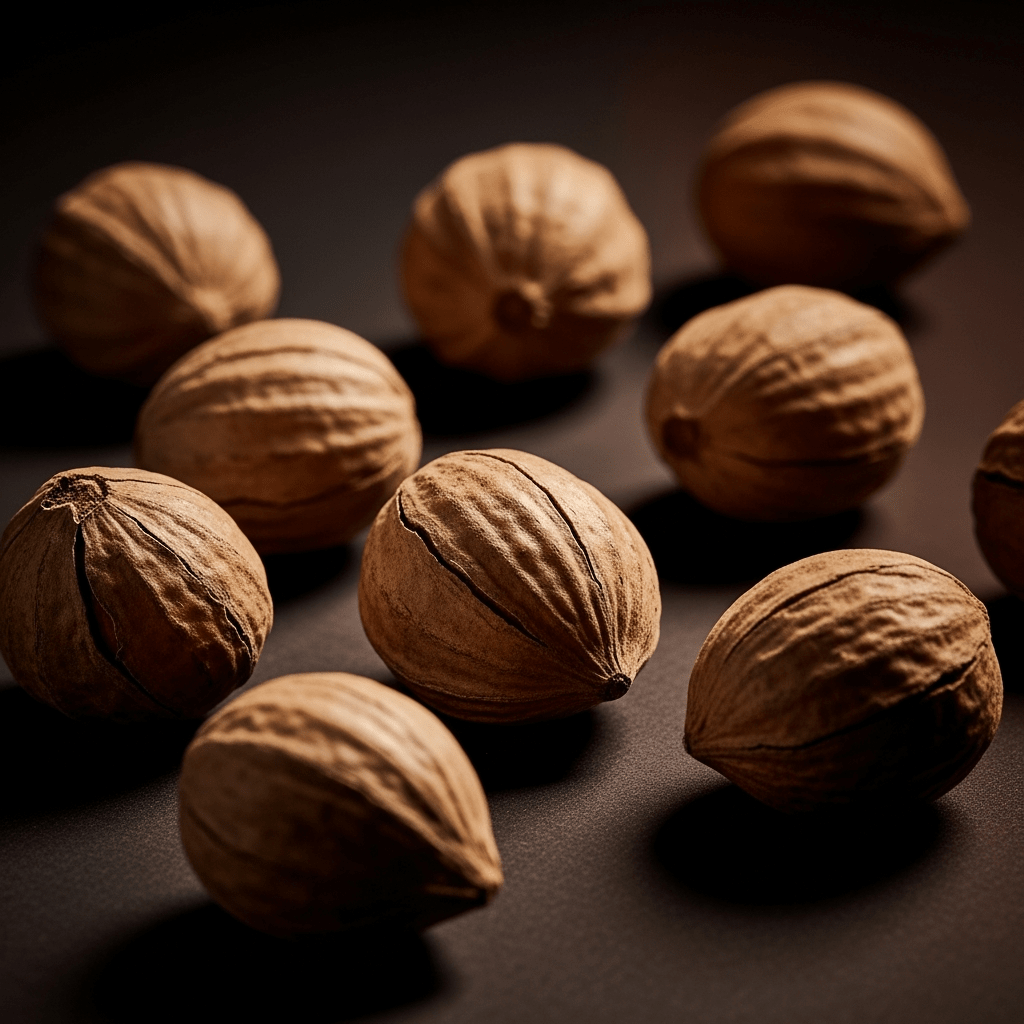
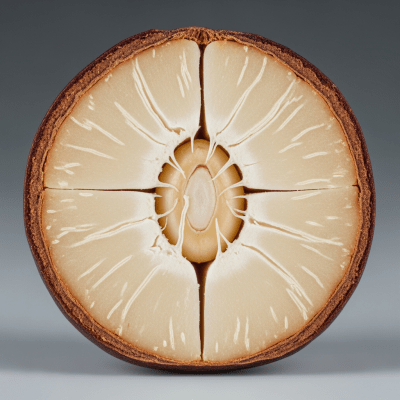
The candlenut is round to oval, measuring 2–4 cm in diameter, and encased in a hard shell within a green, fleshy fruit. Its kernel is pale, oily, and soft when fresh, often containing up to 60% oil by weight. The tree itself is fast-growing, with broad, glossy leaves and clusters of small, white flowers, reaching heights of 15–25 meters.
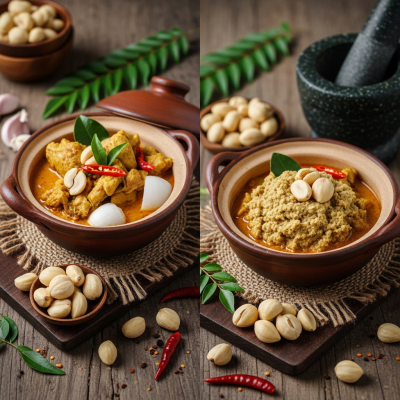
Candlenuts are primarily used as a culinary ingredient to thicken and enrich curries, sambals, and sauces, especially in Indonesian and Malaysian cuisine. In Hawaii, kukui nuts feature in traditional dishes and condiments. Beyond food, their high oil content makes them valuable for oil extraction, used in cosmetics, soap, and historically as lamp oil. Importantly, candlenuts must be roasted, boiled, or cooked before eating, as raw nuts are mildly toxic.
Bring this kind into your world illustrated posters, mugs, and shirts.

Archival print, museum-grade paper
Buy Poster
Stoneware mug, dishwasher safe
Buy Mug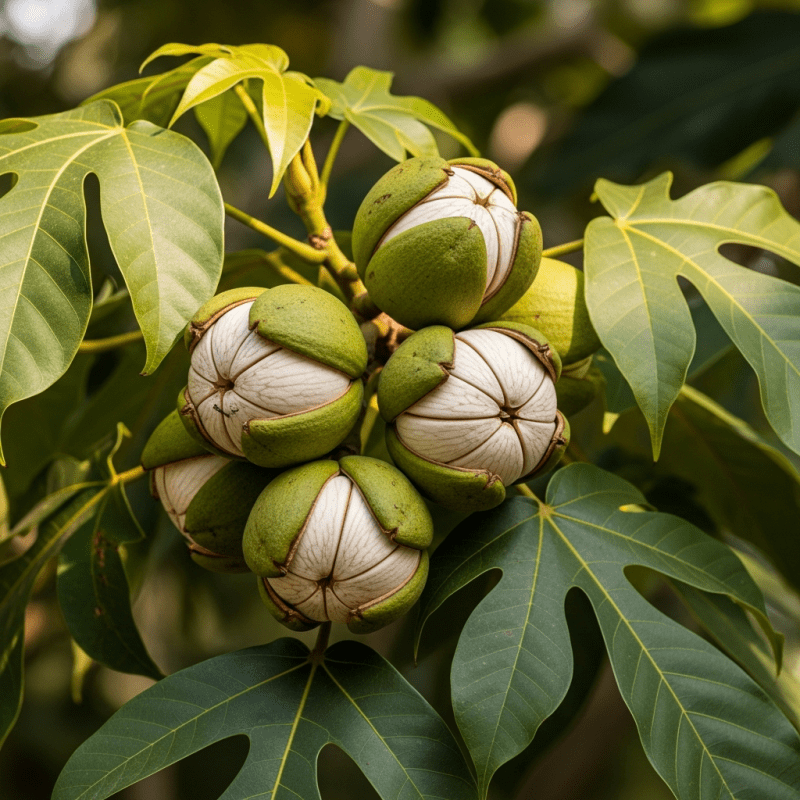
Soft cotton tee, unisex sizes
Buy ShirtCandlenuts hold deep cultural importance in Southeast Asia and the Pacific. In Indonesia and Malaysia, they are a staple in everyday cooking, while in Hawaii, kukui nuts are used in ceremonial leis and as a symbol of enlightenment and protection. Their role as both food and source of light has made them a fixture in traditional practices, folklore, and rituals across their native regions.
Scientific Name: Aleurites moluccanus
Family: Euphorbiaceae
Key Traits: Fast-growing tree, broad glossy leaves, clusters of small white flowers, nut encased in hard shell within green fruit, kernel up to 60% oil by weight. Thrives in tropical climates and well-drained soils.
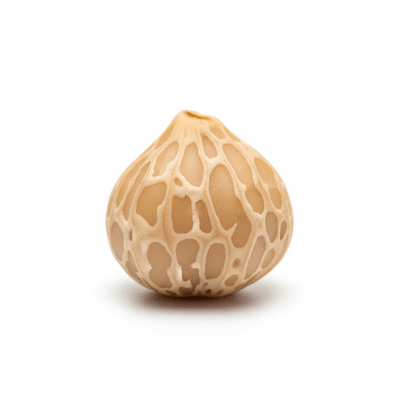
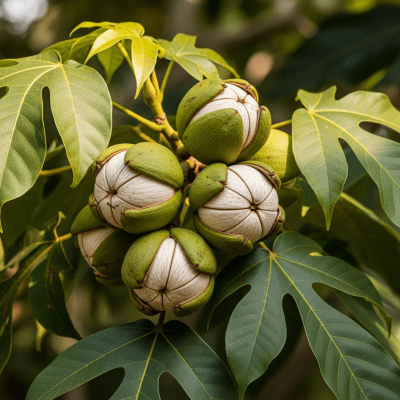

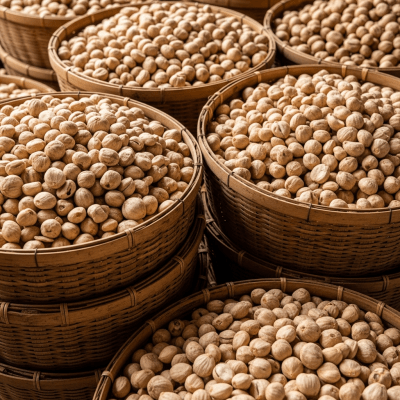
Candlenut trees are cultivated in tropical regions, thriving from sea level up to 800 meters. They grow rapidly and produce several kilograms of nuts per mature tree each year. Harvesting involves collecting the fleshy fruits, extracting the hard-shelled nuts, and drying or processing them. Protection from moisture and pests is crucial due to the nut's high oil content, which can lead to rancidity if improperly stored.
There are no widely recognized commercial or heritage cultivars of candlenut; it is primarily grown as a wild or semi-domesticated species. Regional names—such as kemiri, kukui nut, buah keras, and Indian walnut—reflect its diverse cultural roles rather than botanical variation.
Candlenuts are notable for their high oil content, with kernels containing up to 60% oil by weight. This makes them a rich source of energy and healthy fats. They also provide some protein and micronutrients, but should only be consumed cooked due to the presence of natural toxins in raw nuts.
There is no established regulatory status for candlenut as a major allergen. Individuals with nut allergies should exercise caution, and consult local guidelines or healthcare providers before consumption.
Candlenuts are a staple thickener and flavor enhancer in Indonesian and Malaysian curries, sambals, and sauces. In Hawaii, kukui nuts are used in traditional dishes like poke and as a condiment called inamona. The nuts must be roasted, boiled, or otherwise cooked before use, and are sometimes ground into pastes or powders for culinary applications.
Candlenuts are a staple in local markets throughout Southeast Asia, the Pacific Islands, and Australasia. While not widely traded internationally, they are commercially valued for their oil, which is used in cosmetics, soap, and lamp oil. Candlenuts also play a role in cultural practices, such as making leis and in ceremonies.
Candlenut trees are generally hardy, but susceptible to fungal diseases, insect pests, and kernel rancidity due to high oil content. Their resilience allows them to thrive in varied tropical environments, though careful storage is needed to prevent spoilage.