
Pecan
The pecan is the edible seed of Carya illinoinensis, a North American hickory tree prized for its rich, buttery flavor and high oil content.
The pecan is the edible seed of Carya illinoinensis, a North American hickory tree prized for its rich, buttery flavor and high oil content.
Native to the Mississippi River region and the central and southern United States, pecan trees have thrived in wild populations across Texas, Louisiana, and Oklahoma for centuries. First scientifically described in the early 19th century, pecans were gradually domesticated and selectively bred from wild trees, with commercial cultivation expanding notably in the mid-1800s through efforts by U.S. agricultural institutions.
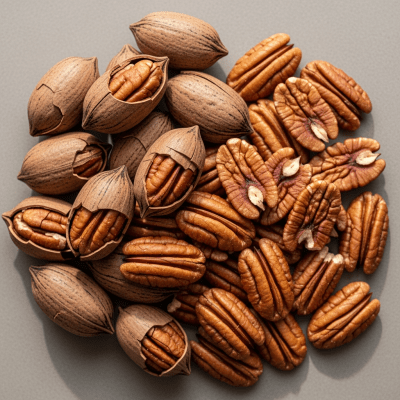
Pecan belongs to the genus Carya within the walnut family Juglandaceae. Though commonly called a nut, pecans are botanically classified as drupes—fruits with a fleshy outer husk surrounding a hard shell that encloses the edible seed.
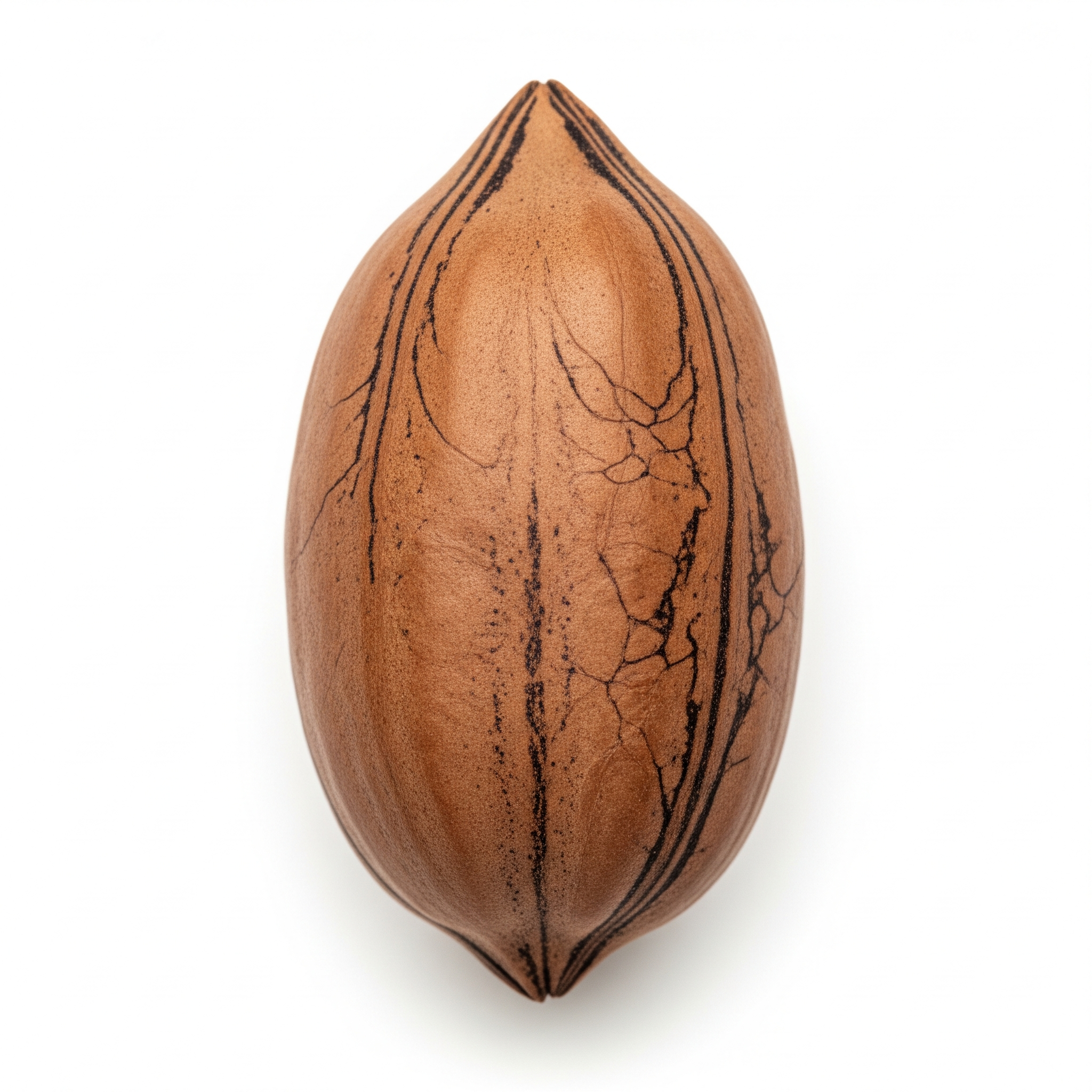
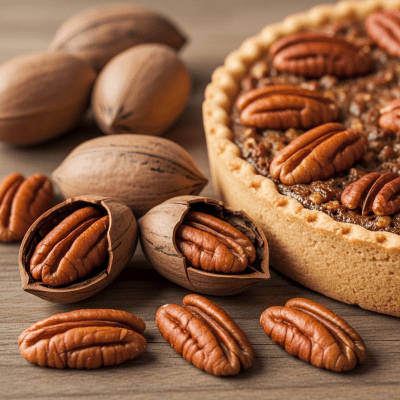
Pecans are elongated, oval-shaped nuts measuring 2.5 to 5 centimeters in length. They feature a smooth, thin brown shell encased in a green husk that splits open at maturity. Inside, the kernel is golden-brown with a characteristic wrinkled surface and a rich, buttery texture.
Pecan trees are large deciduous trees reaching up to 40 meters tall, with pinnately compound leaves and broad crowns. They require a long growing season and well-drained soils, producing nuts that mature after the husk splits. Pecans are wind-pollinated and exhibit alternate bearing, yielding heavier crops every other year. Their nuts serve as a versatile food source, enjoyed raw or processed in various culinary forms.
Bring this kind into your world illustrated posters, mugs, and shirts.
Archival print, museum-grade paper
Buy Poster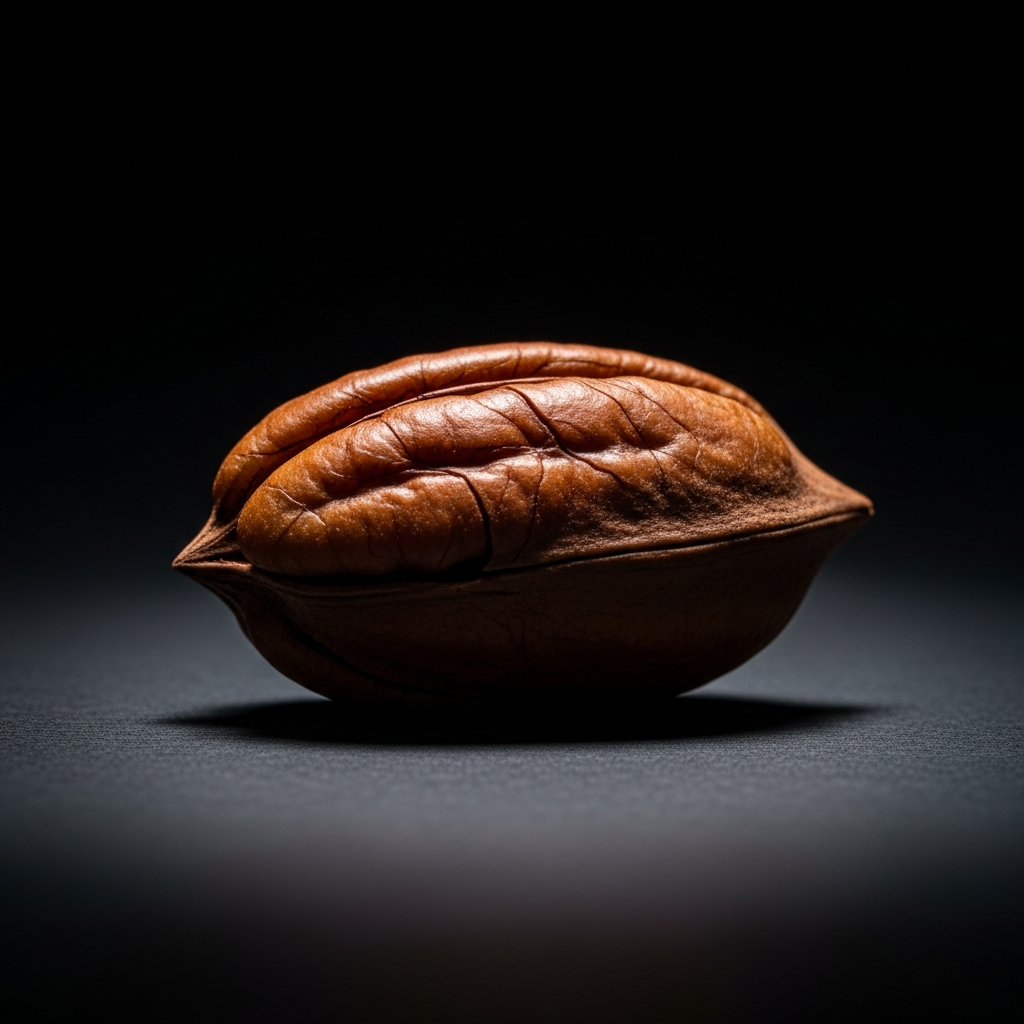
Stoneware mug, dishwasher safe
Buy Mug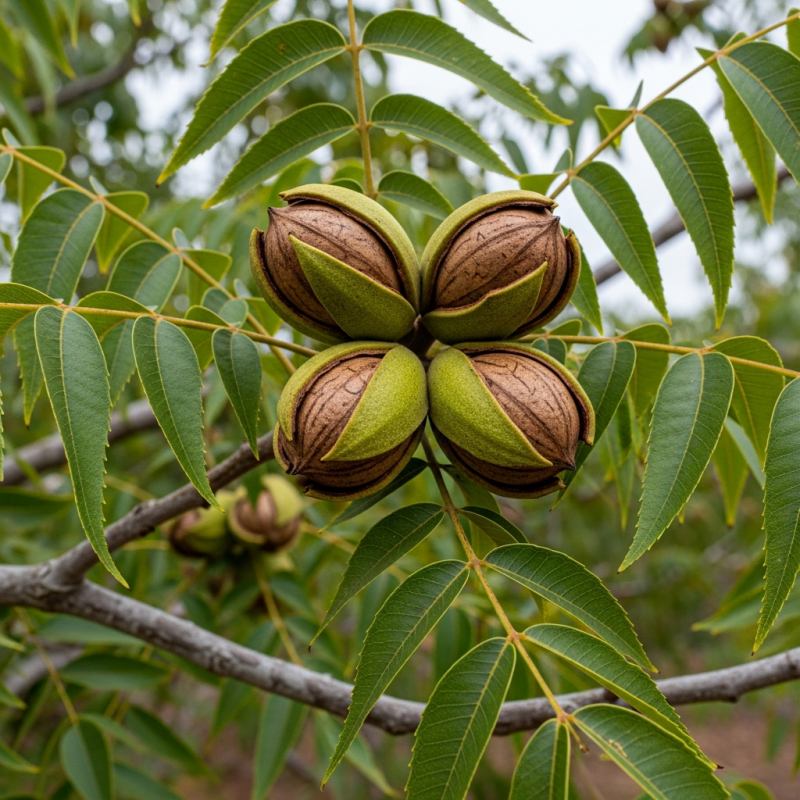
Soft cotton tee, unisex sizes
Buy ShirtPecans hold a cherished place in Southern U.S. culture, famously starring in pecan pie—a classic dessert symbolizing regional heritage. Beyond cuisine, pecans appear in local folklore and festivals celebrating agricultural traditions, reflecting their economic and cultural importance.
Known scientifically as Carya illinoinensis, the pecan is a member of the Juglandaceae family. It is a large deciduous tree with pinnately compound leaves and produces drupaceous fruits. The nut's thin shell encloses a rich, oily kernel prized for its flavor and nutritional value.


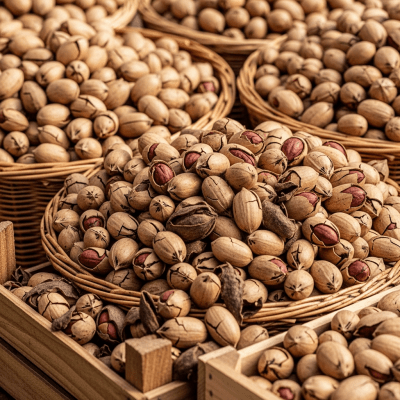
Pecans thrive in deep, well-drained soils with a long growing season and moderate drought tolerance. Commercial orchards require careful management to prevent fungal diseases like pecan scab. Nuts mature in the fall when the green husks split open, allowing harvest by shaking or collecting fallen nuts. Alternate bearing patterns mean growers often see fluctuating yields year to year.
Notable pecan cultivars include 'Stuart', 'Desirable', 'Cape Fear', 'Pawnee', and 'Elliott'. These varieties differ in nut size, shell thickness, disease resistance, and yield, and have been developed through selective breeding by agricultural institutions to optimize commercial production.
Pecans are nutrient-dense, rich in healthy monounsaturated fats, protein, dietary fiber, and essential minerals like manganese and zinc. Their high oil content contributes to a buttery flavor and provides antioxidants that support heart health and overall wellness.
⚠️ Pecans are classified as a major allergen in the United States and many other countries. They must be clearly labeled on food products to inform consumers with nut allergies and comply with food safety regulations.
Pecans are enjoyed raw, roasted, salted, or sweetened and are a staple in desserts like pecan pie and pralines. They also enhance savory dishes, salads, and cereals. Commercially, pecans are sold in-shell, shelled halves, pieces, and ground forms for baking and cooking.
The United States dominates pecan production and export, with major markets including Mexico, China, and Europe. Pecans are traded as in-shell nuts, shelled halves, and processed products. The industry relies on consistent quality, disease management, and cultivar improvements to maintain global competitiveness.
Pecans are vulnerable to fungal diseases such as pecan scab, which thrives in humid conditions, and insect pests like the pecan weevil. While some cultivars show resistance to certain pests, disease management remains a key challenge. The trees tolerate moderate drought but are sensitive to waterlogged soils.