Submarine Volcano
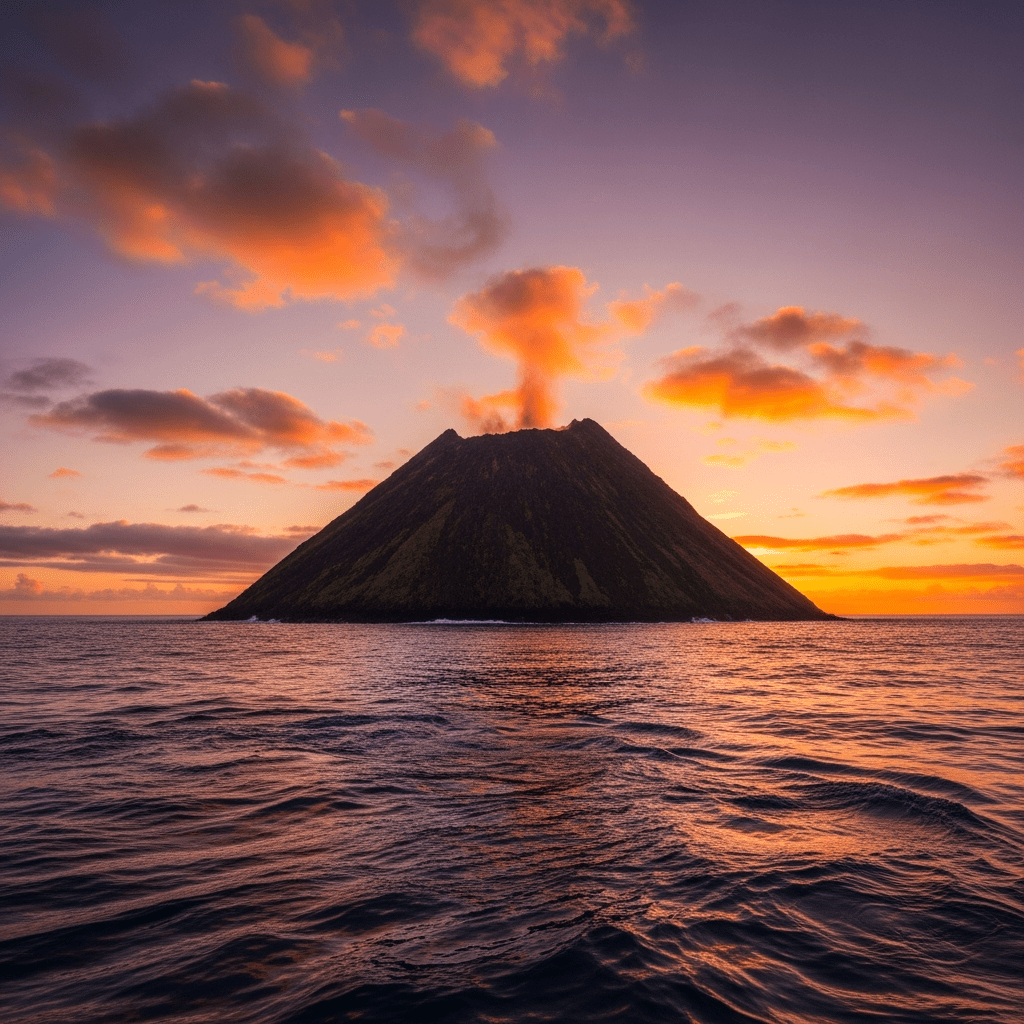
A submarine volcano is a volcanic vent or mountain located beneath the ocean surface, representing a major portion of Earth's volcanic activity hidden under the sea.
A submarine volcano is a volcanic vent or mountain located beneath the ocean surface, representing a major portion of Earth's volcanic activity hidden under the sea.
Submarine volcanoes have been recognized since the early days of ocean exploration, with their identification advancing through sonar mapping and deep-sea research. These underwater volcanic features form where magma erupts below the sea surface, though their eruptions are often difficult to date due to the challenges of underwater observation.
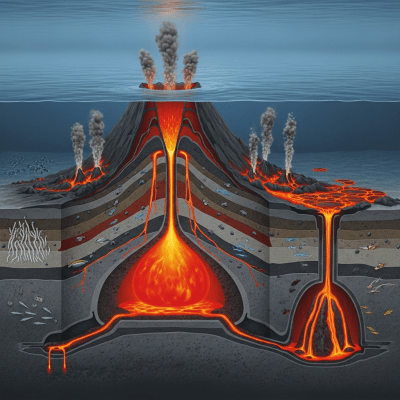
Classified as a distinct type of volcano based on their submerged location, submarine volcanoes belong to the broader family of volcanic landforms that include seamounts, calderas, and volcanic cones. They are primarily found along tectonic boundaries such as mid-ocean ridges, subduction zones, and hotspots, distinguishing them from terrestrial volcanoes by their unique underwater setting and eruption dynamics.
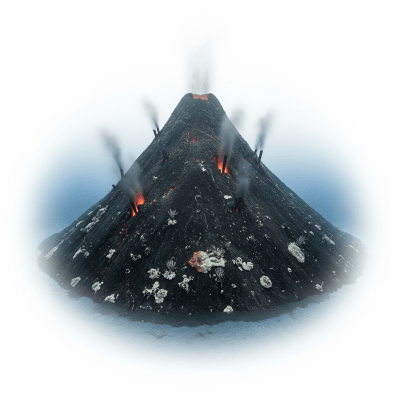
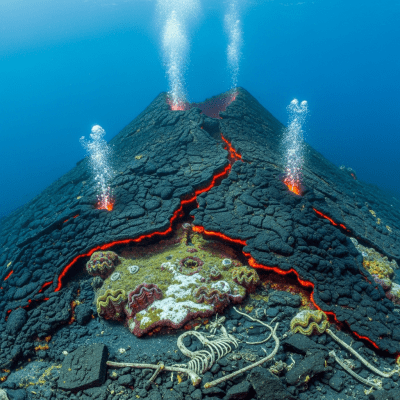
Submarine volcanoes take on various forms including seamounts, calderas, and volcanic cones, often rising thousands of meters from the ocean floor. Their eruptive products cool rapidly underwater, forming distinctive pillow lavas and hydrothermal vent structures. Though hidden beneath the waves, their shapes can be broad or steep-sided, shaped by the interaction of magma with high-pressure seawater.
These volcanoes actively shape the oceanic crust and support unique marine ecosystems through hydrothermal venting. Their eruptions vary from explosive fragmentation to effusive lava flows, influenced by the immense pressure of surrounding water. While generally inaccessible, submarine volcanoes impact marine navigation and can trigger local tsunamis, making their study important for environmental and hazard awareness.
Bring this kind into your world illustrated posters, mugs, and shirts.
Archival print, museum-grade paper
Buy Poster
Stoneware mug, dishwasher safe
Buy Mug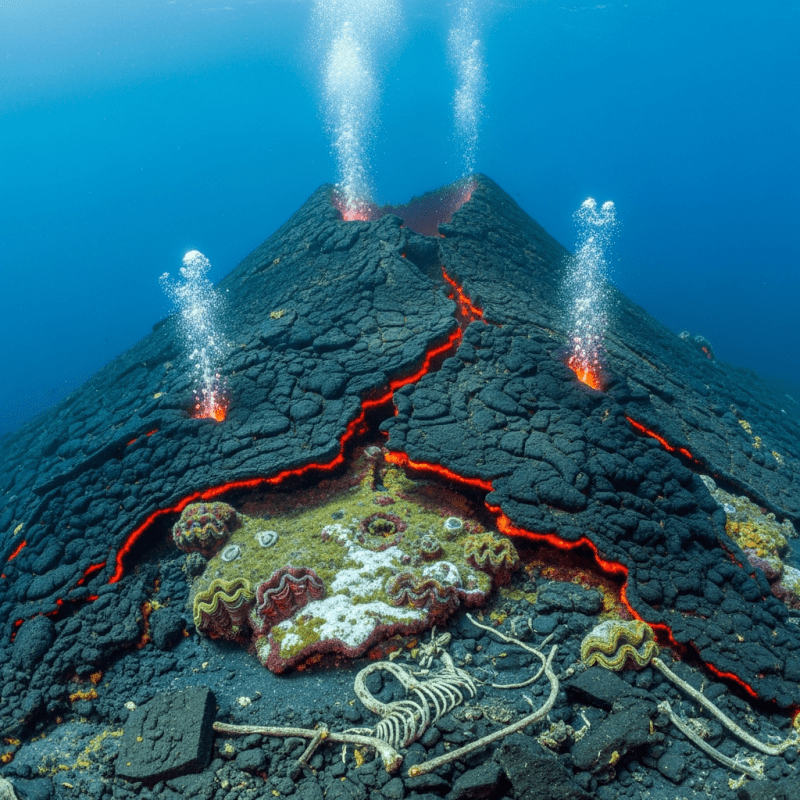
Soft cotton tee, unisex sizes
Buy ShirtThough largely out of sight, submarine volcanoes have inspired scientific exploration and feature in modern oceanographic research. They contribute to our understanding of Earth's geology and the origins of deep-sea life, symbolizing the mysterious and dynamic nature of the planet’s hidden underwater landscapes.
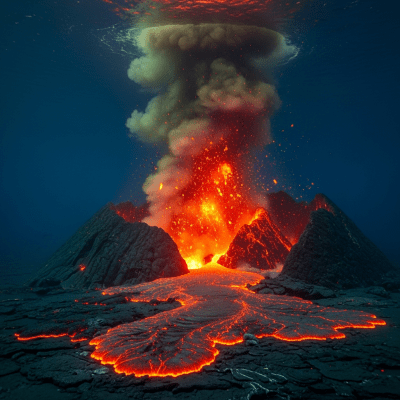
Submarine volcanoes typically erupt through explosive fragmentation or effusive lava flows. The high pressure of deep seawater influences eruption style, often causing rapid cooling of lava into pillow formations. Hydrothermal activity frequently accompanies eruptions, releasing mineral-rich fluids that sustain unique ecosystems.
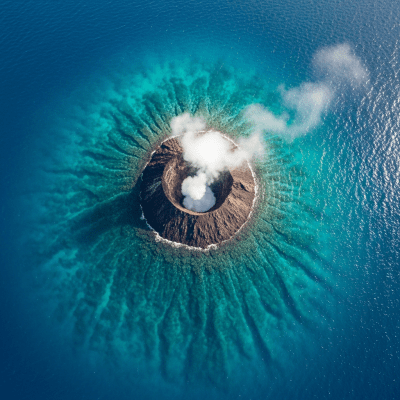
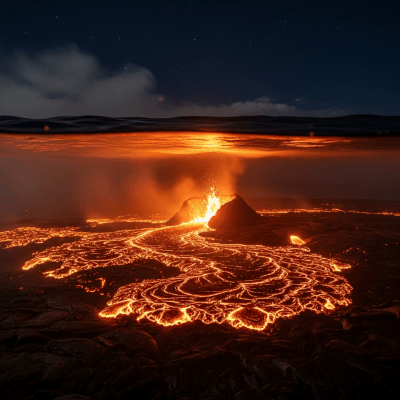
While submarine volcanoes are mostly remote, they can generate local hazards including tsunamis triggered by underwater eruptions or landslides, release of volcanic gases harmful to marine life, and disruptions to marine navigation. Their eruptions may also impact delicate hydrothermal vent ecosystems.
Notable submarine volcanoes include Loihi Seamount near Hawaii, an active underwater volcano rising over 3,000 meters from the seafloor, and West Mata in the Tonga Arc, which erupted in 2009–2010 with significant hydrothermal activity. These exemplars highlight the dynamic nature of submarine volcanism.
Monitoring submarine volcanoes is challenging due to their depth and inaccessibility. Agencies like the USGS and NOAA use remote sensing technologies, underwater seismometers, and hydrophone arrays to detect seismic activity and eruptions. Safety measures focus on early warning for tsunamis and navigation alerts to protect vessels in affected regions.
Over time, submarine volcanoes contribute to the formation and renewal of oceanic crust, building seamounts and volcanic islands. Their eruptions create new habitats through hydrothermal vents, supporting diverse marine life. These volcanoes also influence ocean chemistry and play a key role in plate tectonics and seafloor spreading processes.