Extraterrestrial Volcano
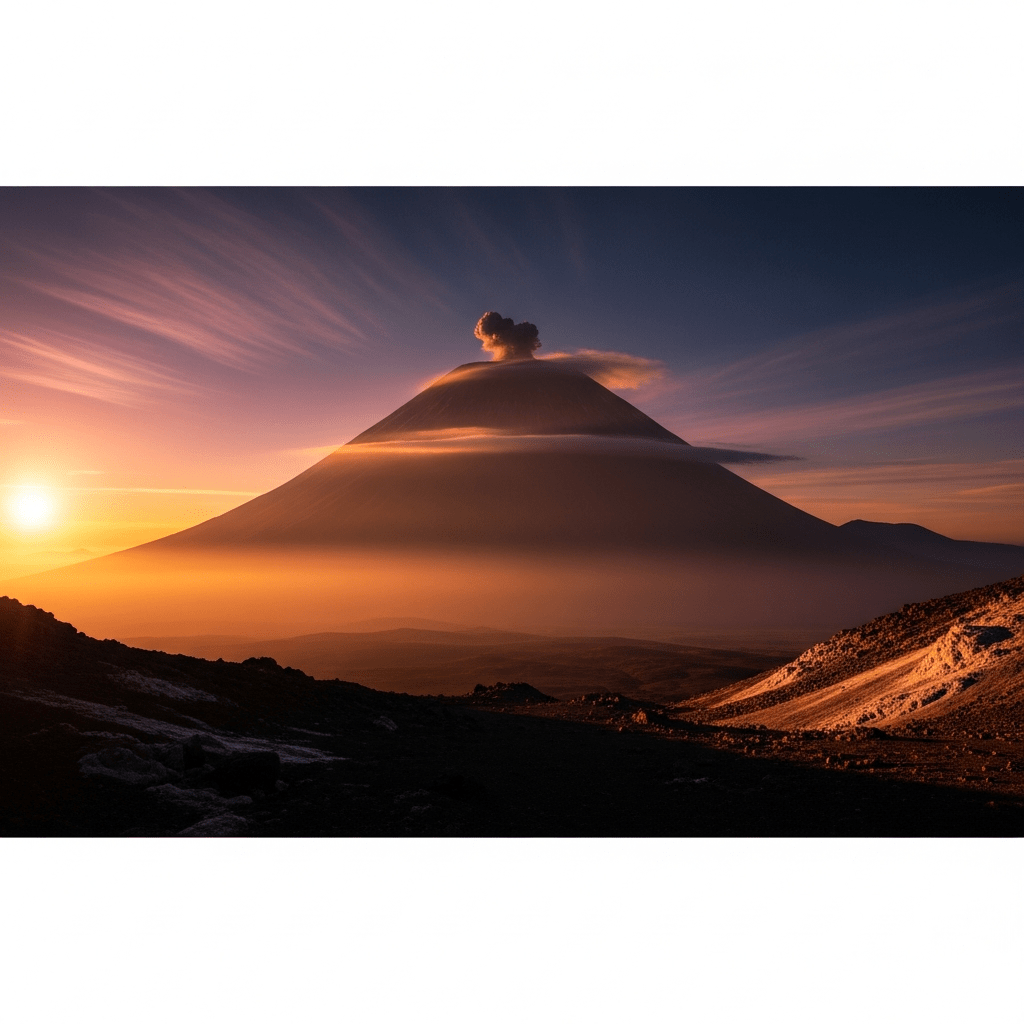
An extraterrestrial volcano is a volcanic landform found on planetary bodies beyond Earth, exhibiting diverse shapes and eruption styles shaped by unique planetary environments.
An extraterrestrial volcano is a volcanic landform found on planetary bodies beyond Earth, exhibiting diverse shapes and eruption styles shaped by unique planetary environments.
The study of extraterrestrial volcanoes began with early telescopic observations and advanced significantly through NASA space missions such as Mariner, Viking, Voyager, Galileo, and the Mars Reconnaissance Orbiter. Notably, Olympus Mons on Mars was identified in 1971 by Mariner 9 imagery, while volcanic activity at Loki Patera on Jupiter's moon Io was confirmed by Voyager 1 in 1979. Naming conventions for these features follow International Astronomical Union guidelines, often drawing from mythological or historical sources.
Extraterrestrial volcanoes belong to a broad family of volcanic landforms that include shield volcanoes, paterae (complex volcanic depressions), cryovolcanoes (ice volcanoes), and calderas. Their classification reflects both morphology and eruption style, influenced by the varied environments of planets and moons such as Mars, Io, Venus, and icy satellites like Enceladus and Triton.
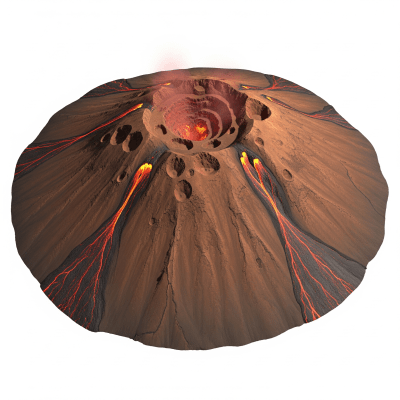
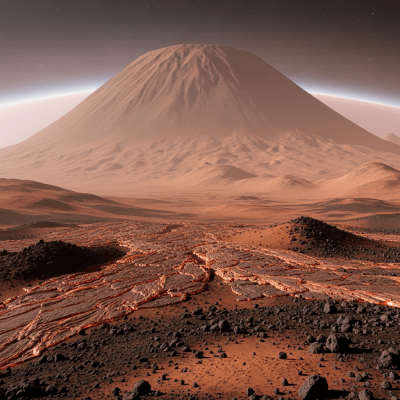
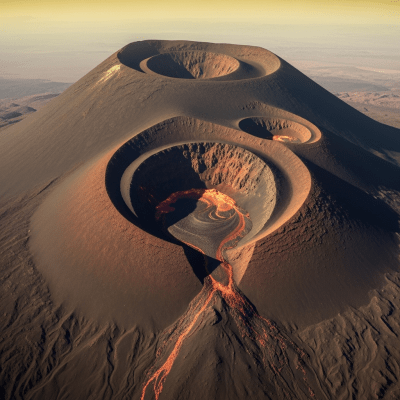
These volcanoes display a wide range of forms, from the immense, gently sloping shield volcano Olympus Mons on Mars, rising nearly 22 kilometers high, to vast volcanic depressions like Loki Patera on Io, spanning about 200 kilometers across. Cryovolcanoes on icy moons erupt volatile substances such as water, ammonia, or methane instead of molten rock. Summit features commonly include calderas and paterae, with morphology shaped by local gravity, crust composition, and atmospheric conditions.
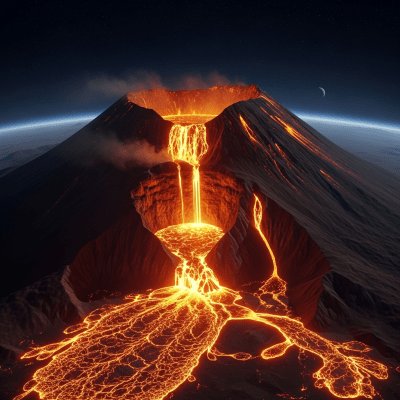
Extraterrestrial volcanoes behave according to their planetary context: some produce effusive lava flows like those on Mars, others exhibit explosive outgassing as seen on Io, and cryovolcanoes emit plumes of volatile ices on moons such as Enceladus and Triton. While they pose no direct threat to humans, their activity provides crucial insights into planetary internal heat, geological evolution, and surface renewal processes.
Bring this kind into your world illustrated posters, mugs, and shirts.
Archival print, museum-grade paper
Buy Poster
Stoneware mug, dishwasher safe
Buy Mug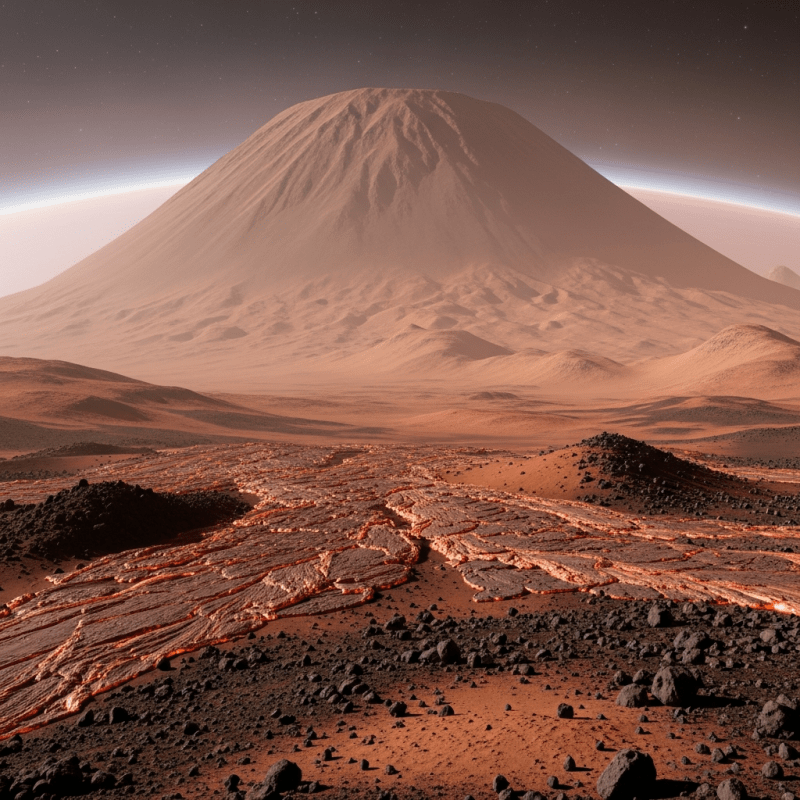
Soft cotton tee, unisex sizes
Buy ShirtThough beyond Earth, extraterrestrial volcanoes have captured human imagination and feature prominently in scientific culture and space exploration narratives. Names like Olympus Mons evoke mythological grandeur, linking planetary science to human heritage. These volcanoes inspire art, literature, and educational outreach, symbolizing the dynamic forces shaping worlds beyond our own.
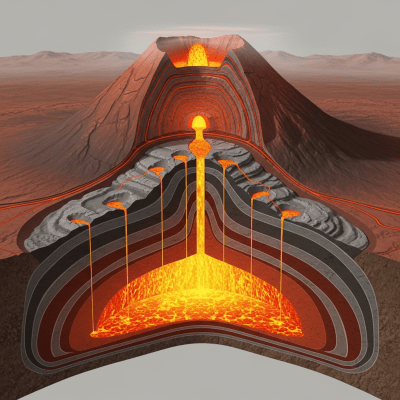
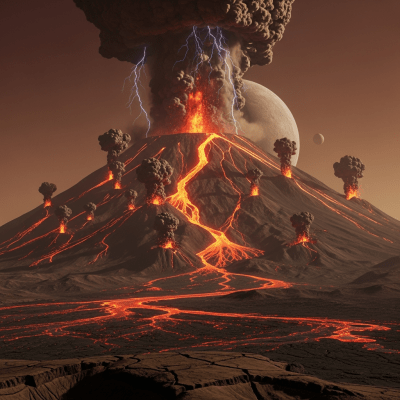
Extraterrestrial volcanoes exhibit varied eruption styles depending on their environment. Mars’s volcanoes typically produce effusive lava flows of basaltic composition, forming broad shield volcanoes. Io’s volcanoes display explosive outgassing driven by intense tidal heating, resulting in frequent and vigorous eruptions. Cryovolcanoes on icy moons emit plumes of volatile ices such as water or methane, often forming spectacular jets that reshape their surfaces.
Unlike Earth’s volcanoes, extraterrestrial volcanoes pose no direct hazard to human populations. Their hazards are primarily scientific, offering challenges for spacecraft navigation and observation. Studying their activity helps scientists understand planetary processes and assess potential risks for future exploration missions.
Prominent extraterrestrial volcanoes include:
Extraterrestrial volcanoes are monitored remotely using spacecraft imaging, thermal sensing, and spectroscopy. Missions such as Mars Reconnaissance Orbiter and orbiters around Jupiter and Saturn provide near-real-time data on volcanic activity. Safety measures focus on spacecraft navigation and mission planning rather than human hazard mitigation, as these volcanoes do not threaten human life.
Extraterrestrial volcanoes profoundly shape the landscapes of their host bodies over geological time. Olympus Mons and other Martian volcanoes have built vast shield structures that dominate the surface. Io’s intense volcanism continually resurfaces the moon, erasing impact craters and driving sulfur-rich landscapes. Cryovolcanism alters icy moon surfaces by depositing fresh ice and reshaping terrain, revealing active internal processes and contributing to planetary evolution.