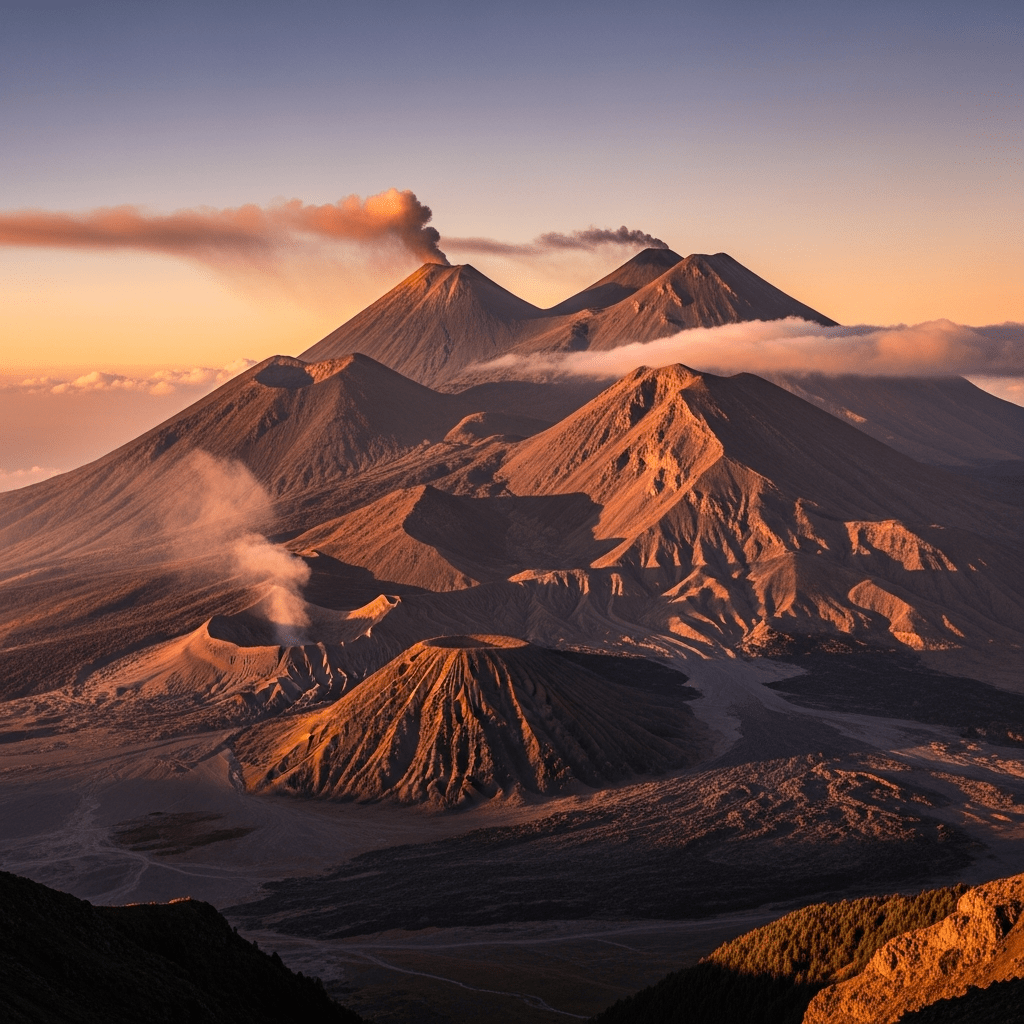
Complex Volcano
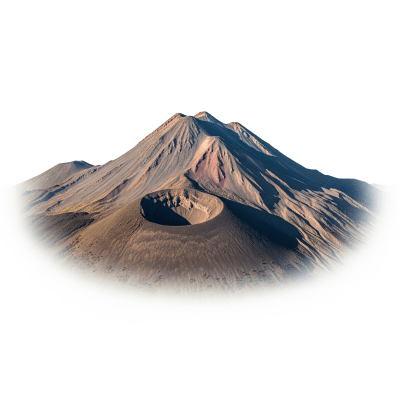
A complex volcano is a volcanic landform distinguished by multiple or evolving volcanic centers, combining various structures such as stratovolcanoes, shield volcanoes, and calderas into a single, dynamic geological feature.
A complex volcano is a volcanic landform distinguished by multiple or evolving volcanic centers, combining various structures such as stratovolcanoes, shield volcanoes, and calderas into a single, dynamic geological feature.
The term "complex volcano" arose in modern volcanology to describe volcanoes that defy simple classification due to their development through multiple eruptive phases and overlapping volcanic structures. This concept emerged alongside advances in geological mapping and remote sensing, revealing volcanoes with shifting centers and mixed morphologies. Their names often stem from local geographic landmarks or indigenous languages, while the classification itself reflects contemporary scientific understanding.
Complex volcanoes belong to the broader family of volcanic landforms but stand apart by their composite nature. Unlike single-structure types such as shield or stratovolcanoes, complex volcanoes encompass multiple vents, cones, and calderas, often combining features of several volcano types. They are sometimes referred to as compound volcanoes and are typically classified based on their evolving morphology and varied eruption histories.
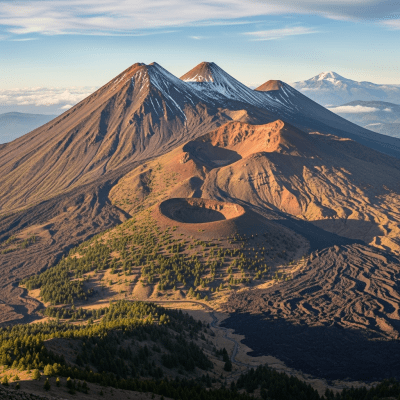
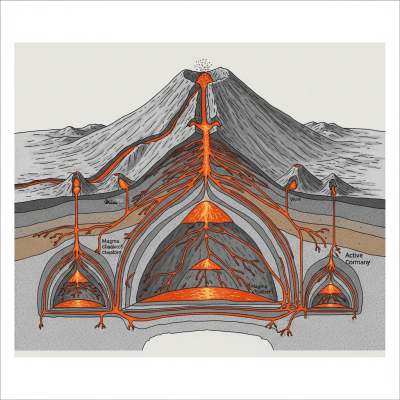
These volcanoes exhibit a composite structure marked by overlapping cones, multiple vents, calderas, and lava domes. Their forms reflect a history of shifting eruptive centers, resulting in landscapes that blend steep stratovolcanic slopes with broader shield-like areas and pyroclastic cones. Heights vary widely, with examples like Mount Shasta reaching 4,322 meters and Mount Etna about 3,329 meters, often dominating tectonically active regions with their complex, rugged profiles.
Complex volcanoes display diverse eruptive behaviors ranging from effusive lava flows to explosive pyroclastic events. Their multiple active centers can erupt independently or simultaneously, complicating predictions and hazard assessments. These volcanoes interact dynamically with their environments, shaping landscapes and influencing ecosystems, while also posing challenges and opportunities for human settlement, scientific study, and hazard mitigation.
Bring this kind into your world illustrated posters, mugs, and shirts.
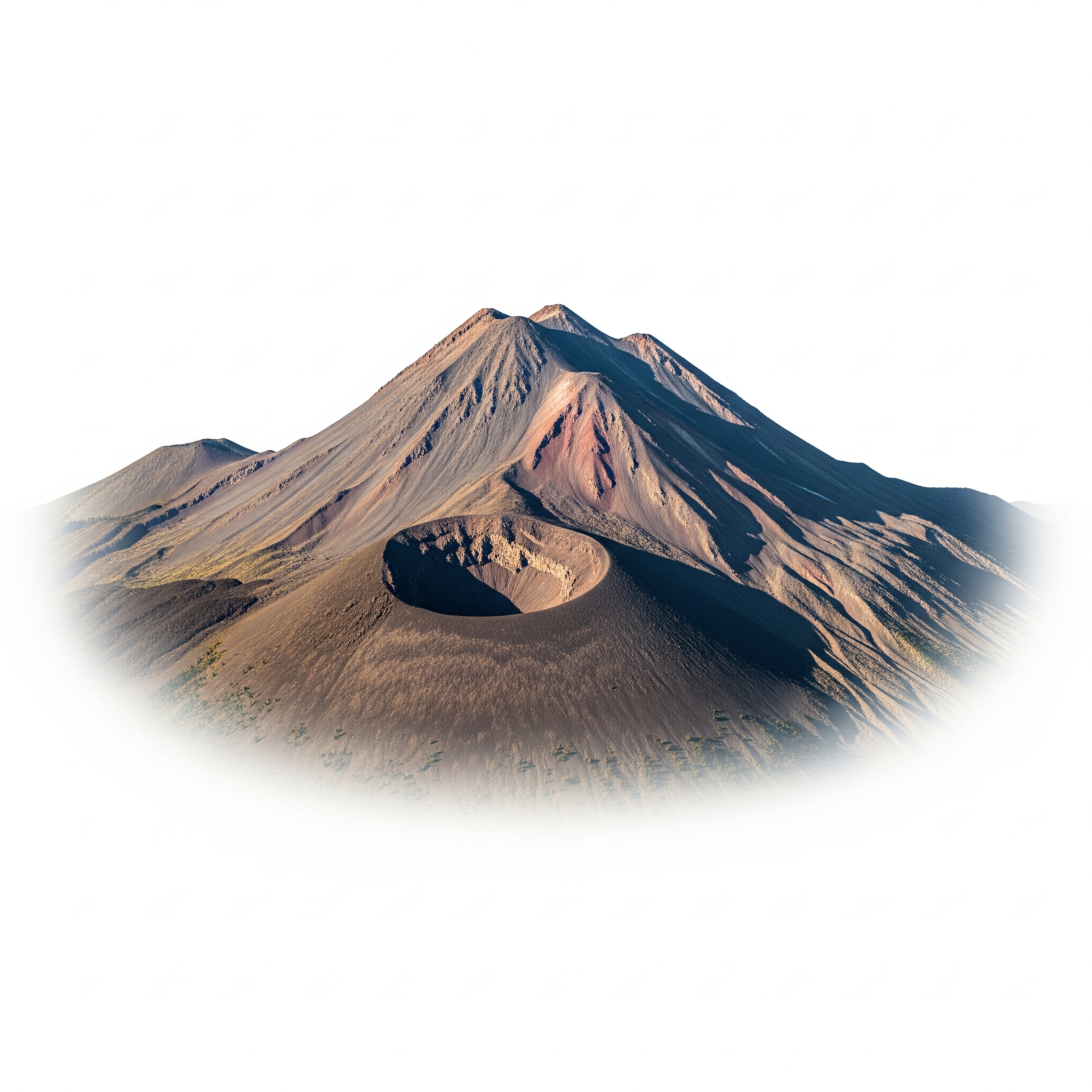
Archival print, museum-grade paper
Buy Poster
Stoneware mug, dishwasher safe
Buy Mug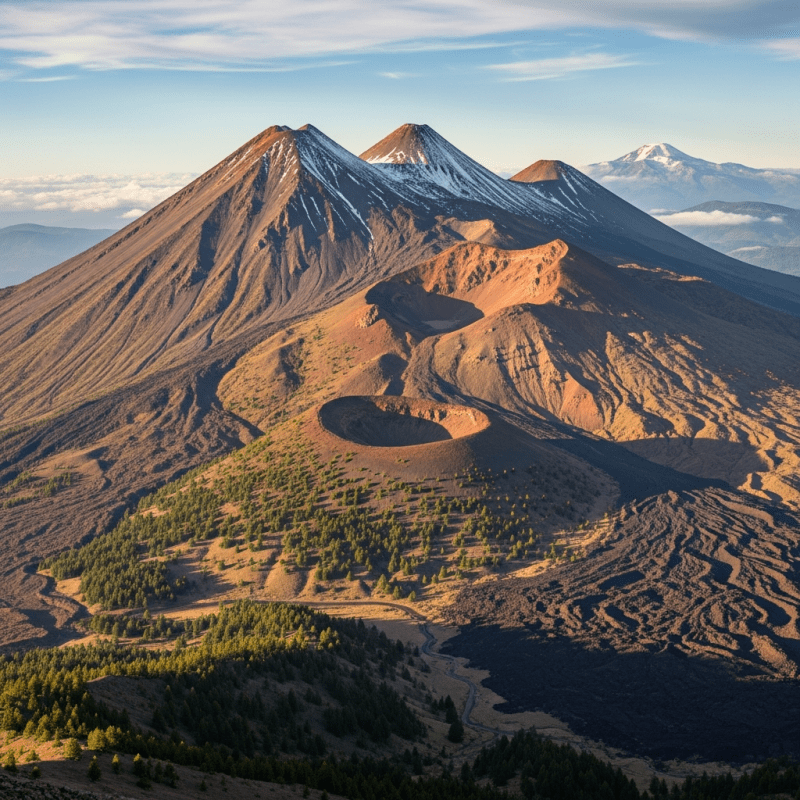
Soft cotton tee, unisex sizes
Buy ShirtThroughout history, complex volcanoes have inspired awe and reverence, appearing in local myths, art, and folklore. Their imposing presence and unpredictable activity have made them symbols of both creation and destruction in many cultures. Modern culture continues to engage with these volcanoes through tourism, scientific exploration, and media, highlighting their significance as natural wonders and sources of geological insight.
Complex volcanoes exhibit a wide range of eruption styles, including effusive lava flows that build broad volcanic features and explosive pyroclastic eruptions that produce ash, pumice, and pyroclastic flows. Their eruptions may shift between these styles over time or occur simultaneously at different vents, reflecting the volcano’s evolving magma supply and structural changes.
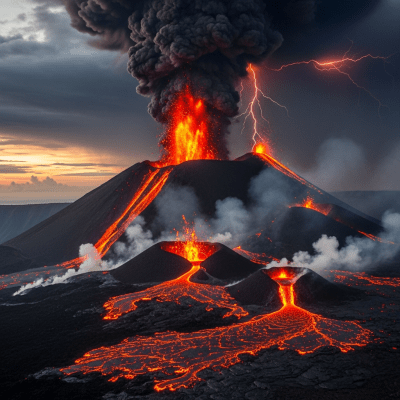
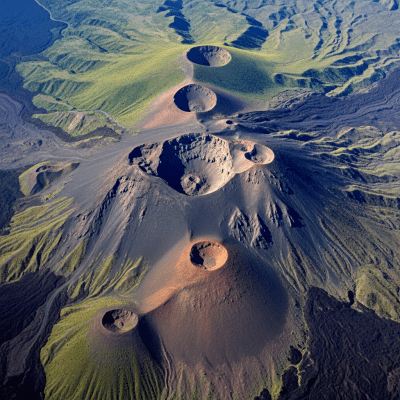
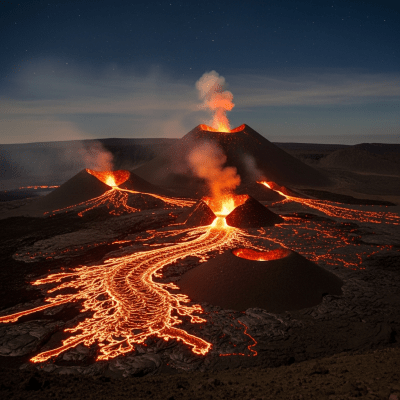
These volcanoes pose multiple hazards such as lava flows that can destroy property, ashfall affecting air quality and infrastructure, pyroclastic flows that are fast-moving and deadly, and lahars—volcanic mudflows triggered by rainfall or melting snow. The complexity of their structure often complicates hazard prediction and emergency response.
Notable complex volcanoes include Mount Etna in Italy, renowned for its frequent activity and cultural prominence, and Mount Shasta in California, USA, known for its towering height and prehistoric eruptions. Both exemplify the diverse morphology and dynamic behavior characteristic of complex volcanoes.
Monitoring complex volcanoes involves tracking seismic activity, gas emissions, ground deformation, and thermal changes across multiple vents and cones. Given their unpredictable behavior, comprehensive surveillance networks and early warning systems are essential. Safety measures include hazard zoning, evacuation planning, and public education to mitigate risks posed by their diverse eruption styles.
Over time, complex volcanoes profoundly reshape landscapes through repeated eruptions that build layered structures, create calderas, and deposit varied volcanic materials. Their activity influences soil fertility, water systems, and local ecosystems. The interplay of constructive and destructive forces at these volcanoes contributes to rich geological diversity and ongoing landscape evolution.