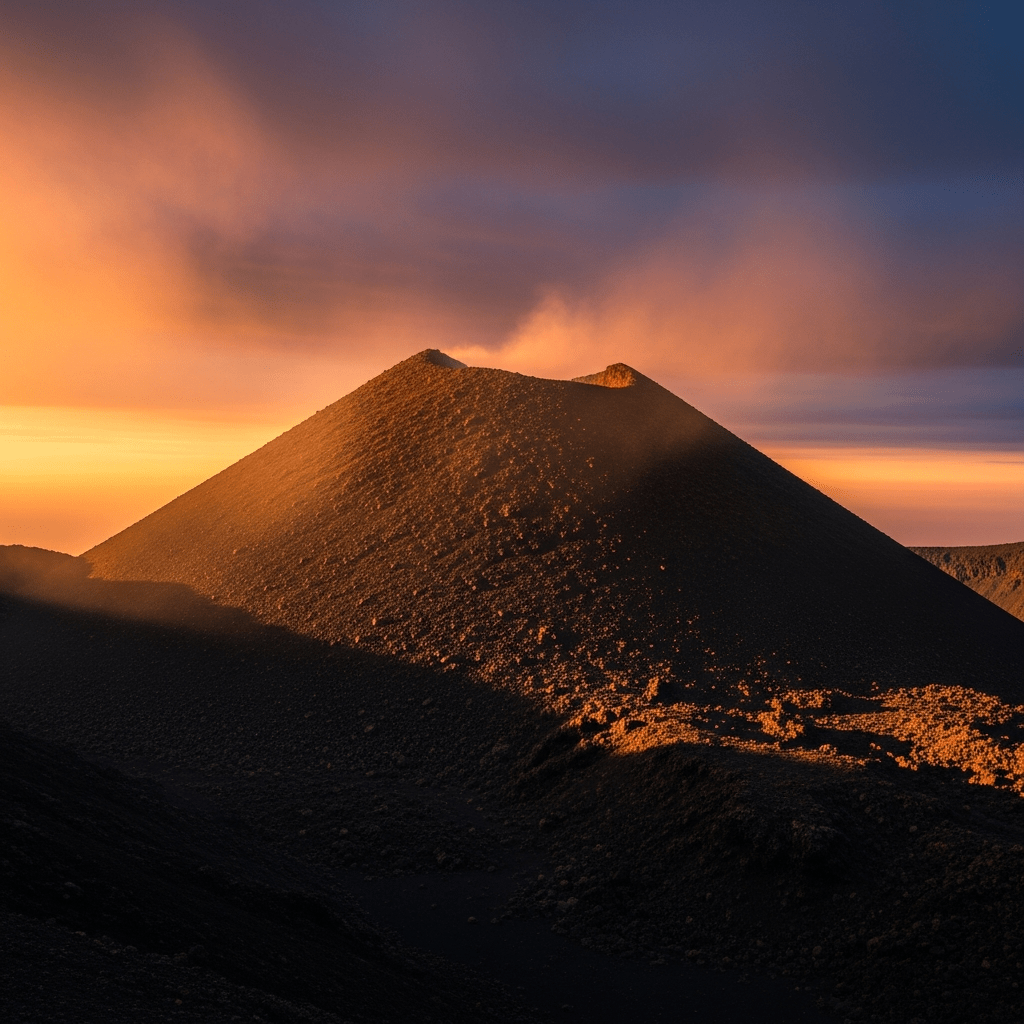
Cinder Cone
A cinder cone is a small, steep-sided volcano built from loose volcanic fragments called cinders, formed rapidly during short-lived eruptive episodes.
A cinder cone is a small, steep-sided volcano built from loose volcanic fragments called cinders, formed rapidly during short-lived eruptive episodes.
The term "cinder cone" comes from the accumulation of volcanic cinders—small, porous lava fragments ejected during eruptions. These volcanoes typically form during a single eruptive event lasting weeks to years. Famous examples include Parícutin in Mexico, which unexpectedly emerged in a farmer's field in 1943, and Sunset Crater in Arizona, USA, which formed around 1085 CE. Their classification is well-established by volcanological authorities such as the USGS and Smithsonian Institution.
Cinder cones belong to the family of monogenetic volcanoes, meaning each cone usually results from a single eruptive episode. They are one of several volcanic landform types, distinguished by their small size, steep slopes, and composition of pyroclastic debris. Unlike larger shield or stratovolcanoes, cinder cones are built almost entirely from loose fragments like scoria and ash.
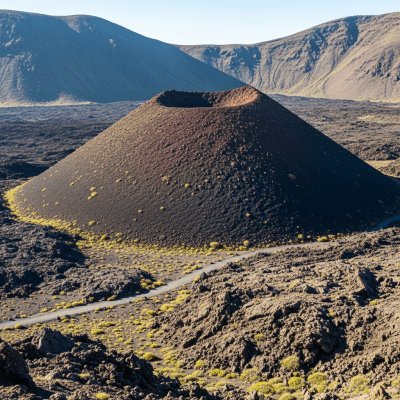
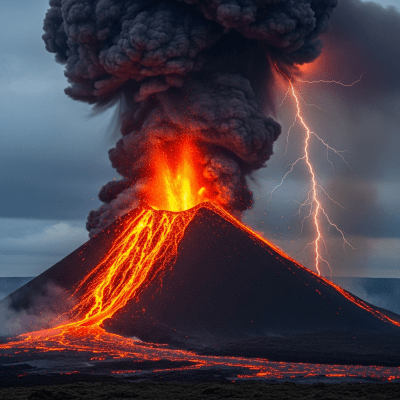
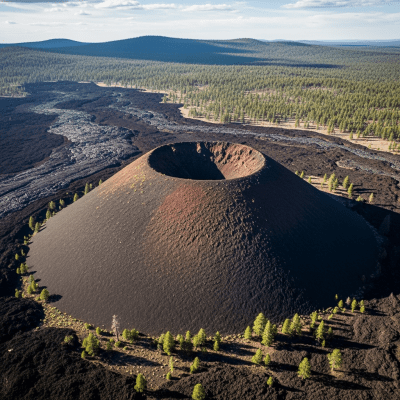
Cinder cones have a distinctive conical shape with steep slopes ranging from 30° to 40°. They typically rise between 10 meters and several hundred meters high. Their structure is composed mainly of loose pyroclastic debris, primarily scoria and ash, piled around a central vent. At the summit, a bowl-shaped crater is common, and some cones feature lava fields at their base. Their fragmental texture gives them a rough, porous appearance, setting them apart from smoother lava-formed volcanoes.
Cinder cones form rapidly during Strombolian-style eruptions, which are moderately explosive and eject incandescent volcanic fragments. Their eruptive activity is usually brief, lasting from weeks to a few years before becoming dormant. While they pose localized hazards such as tephra fallout and minor lava flows, their small size limits widespread impact. These volcanoes often serve as natural laboratories for studying volcanic processes and eruption dynamics.
Bring this kind into your world illustrated posters, mugs, and shirts.
Archival print, museum-grade paper
Buy Poster
Stoneware mug, dishwasher safe
Buy Mug
Soft cotton tee, unisex sizes
Buy ShirtCinder cones have captured human imagination due to their sudden emergence and dramatic formation. Parícutin’s birth in a Mexican farmer’s field became a landmark event in volcanology and popular culture. These volcanoes appear in indigenous stories and local folklore, symbolizing the power and unpredictability of nature. In modern times, they feature in educational materials and inspire artistic representations of volcanic landscapes.
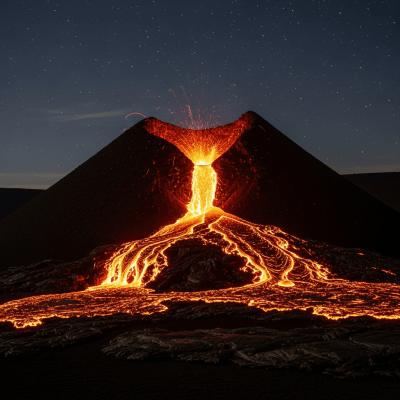
Typical eruptions of cinder cones are Strombolian in style, characterized by moderate explosivity that ejects glowing volcanic fragments into the air. These eruptions produce abundant cinders and ash that accumulate around the vent, building the cone quickly. The activity is generally short-lived, with eruptive episodes lasting from weeks to a few years before ceasing.

While cinder cones are relatively small, they can produce localized hazards including tephra fallout that can affect nearby areas, lava flows that may damage surroundings, and minor pyroclastic surges. Their limited size and eruptive duration typically restrict the scale of impact, but caution is necessary near active cones.
Notable cinder cones include Parícutin in Michoacán, Mexico, which famously emerged in 1943 and erupted for nine years, and Sunset Crater in Arizona, USA, formed around 1085 CE. Both serve as classic examples of this volcano type and attract scientific and tourist interest.
Cinder cones are monitored using seismic activity sensors, satellite imagery, and ground observations to detect signs of renewed activity. Due to their typically short-lived eruptions, monitoring focuses on early warning during formation. Safety measures include establishing exclusion zones around active cones and educating local populations about volcanic hazards.
Cinder cones shape landscapes by depositing loose pyroclastic material that alters local topography. Their rapid formation creates new landforms that can influence drainage patterns and soil development. Over time, erosion breaks down their fragmental structure, contributing to sediment redistribution in surrounding environments.