Caldera
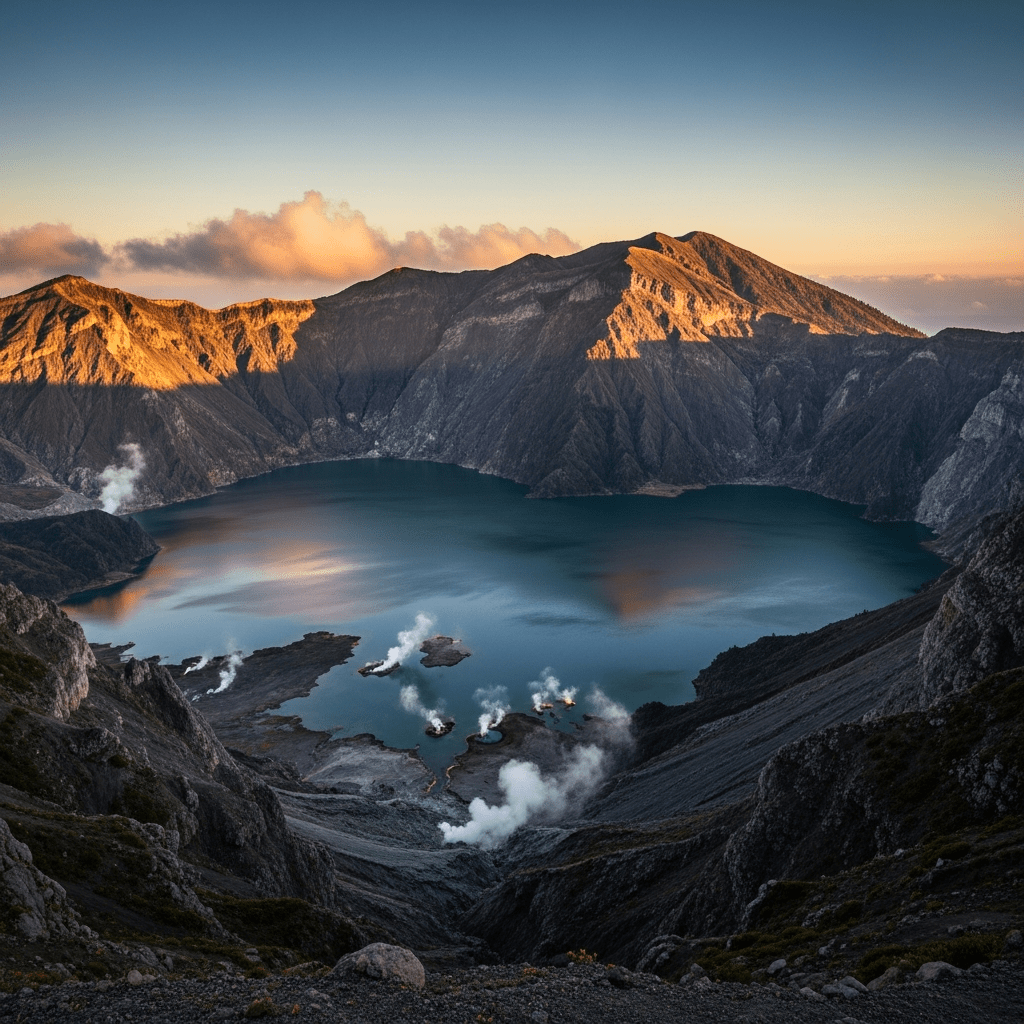
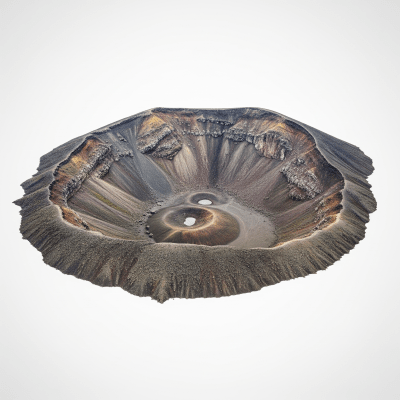
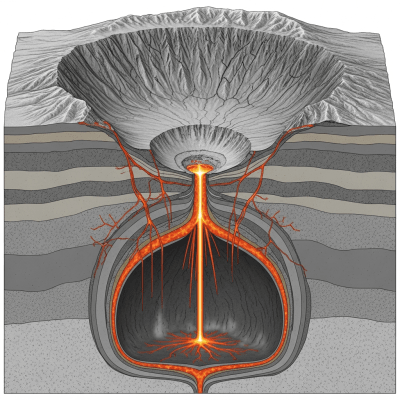
A caldera is a vast, basin-like volcanic depression formed when the ground collapses after a major eruption empties the underlying magma chamber.
A caldera is a vast, basin-like volcanic depression formed when the ground collapses after a major eruption empties the underlying magma chamber.
The term "caldera" comes from the Spanish word for "cauldron," inspired by its broad, cauldron-like shape. This volcanic feature was first formally described in the late 19th and early 20th centuries, notably after the 1883 Krakatoa eruption revealed the dramatic collapse structures that define calderas. They form when explosive eruptions evacuate large volumes of magma, causing the surface above to collapse inward.
Calderas belong to the family of volcanic landforms characterized by collapse structures rather than simple cones or vents. Unlike typical volcanic craters, calderas are distinguished by their immense size and formation process, often associated with highly explosive eruptions. They can form on various volcano types, including stratovolcanoes and shield volcanoes, marking them as unique morphological features within the broader volcano taxonomy.
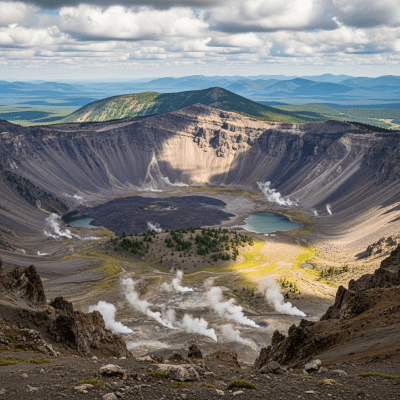
Calderas appear as large, circular or elliptical depressions that can span several kilometers in diameter and reach hundreds of meters deep. Their floors are often flat and may host lakes, resurgent domes, or new volcanic cones formed after collapse. Steep walls typically surround the depression, and some calderas exhibit active geothermal phenomena like geysers and fumaroles, adding dynamic sensory elements to their imposing forms.
While calderas themselves are volcanic landforms rather than active volcanoes, their behavior depends on the magmatic system beneath. Some remain geothermally active for millennia, producing geysers and hot springs that attract scientific study and tourism. Others lie dormant or extinct, serving as natural laboratories for understanding volcanic collapse and eruption cycles. Their immense size and potential for catastrophic eruptions make them critical subjects for hazard assessment and environmental monitoring.
Bring this kind into your world illustrated posters, mugs, and shirts.
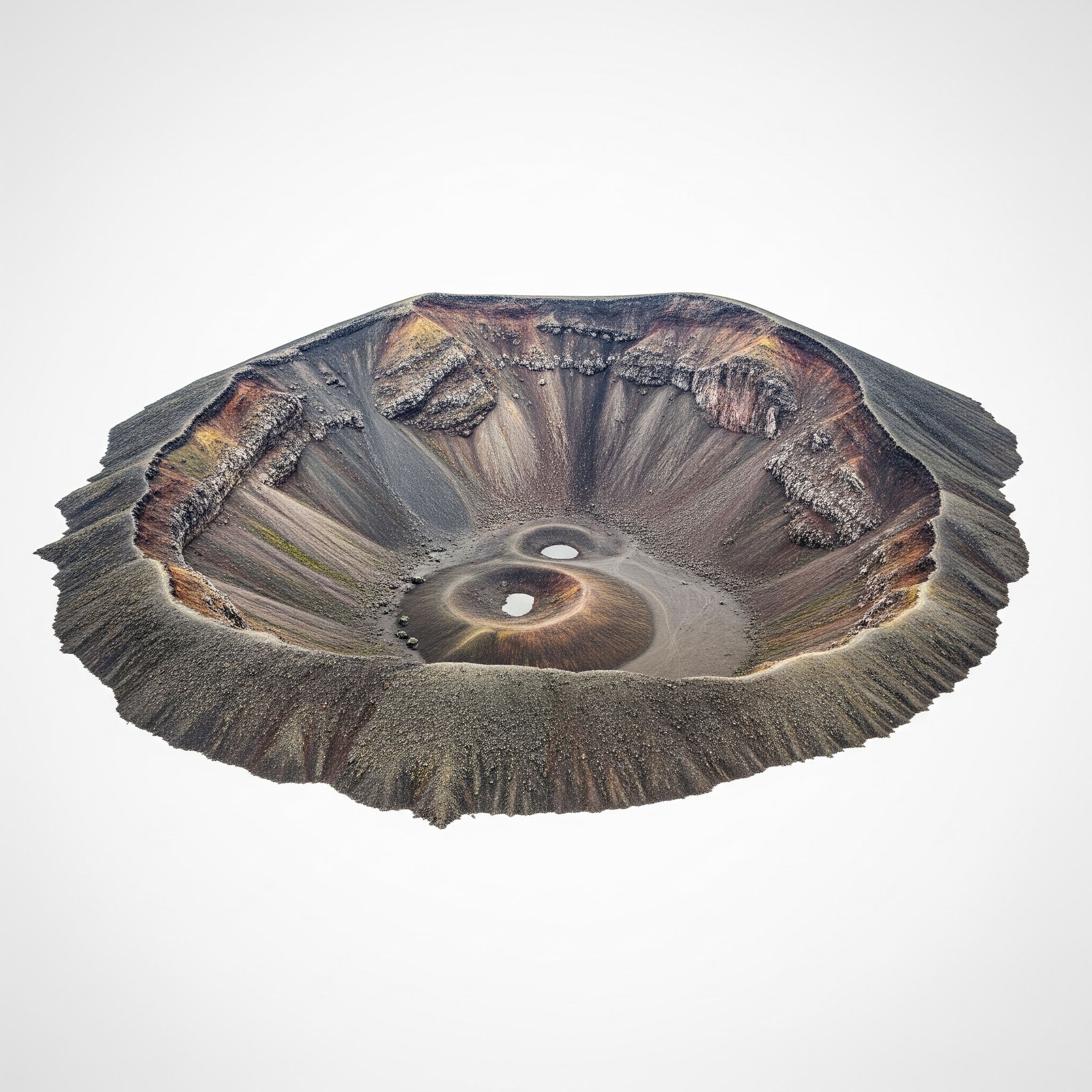
Archival print, museum-grade paper
Buy Poster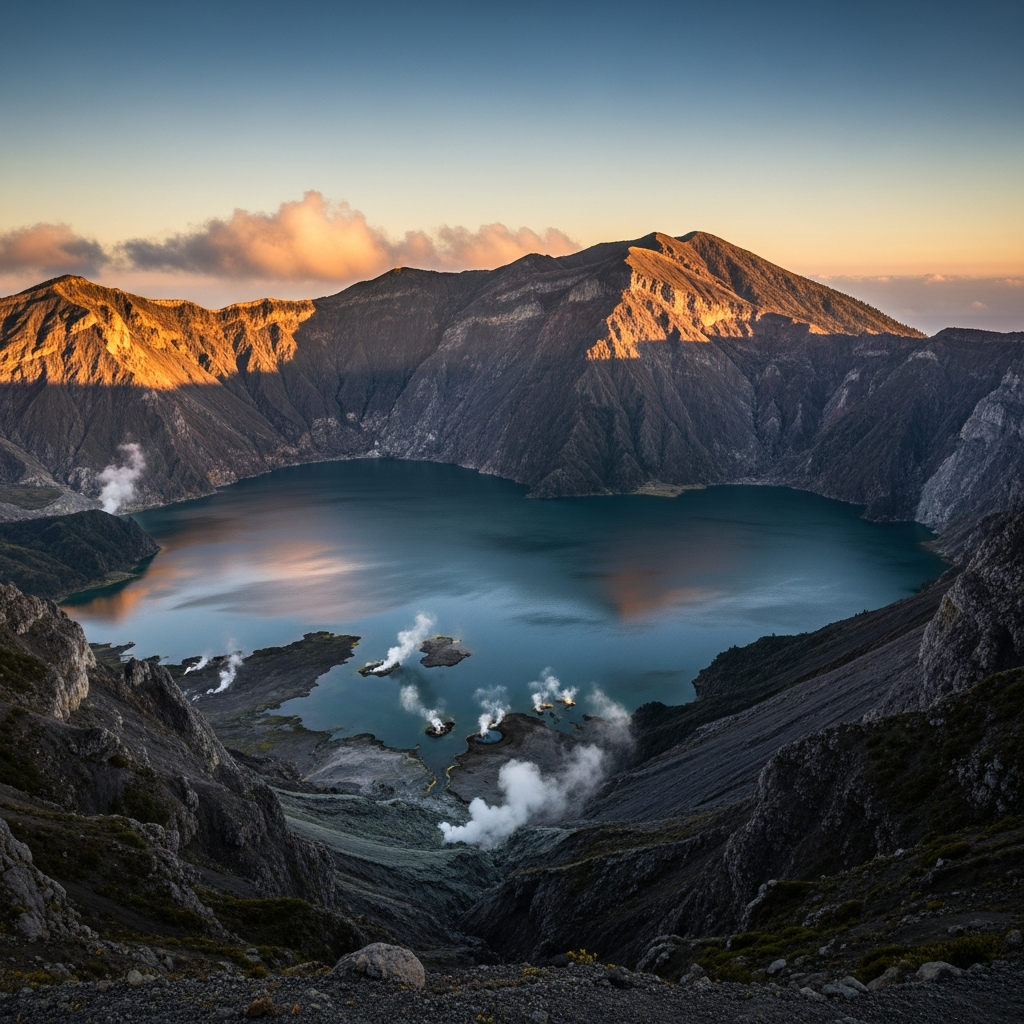
Stoneware mug, dishwasher safe
Buy Mug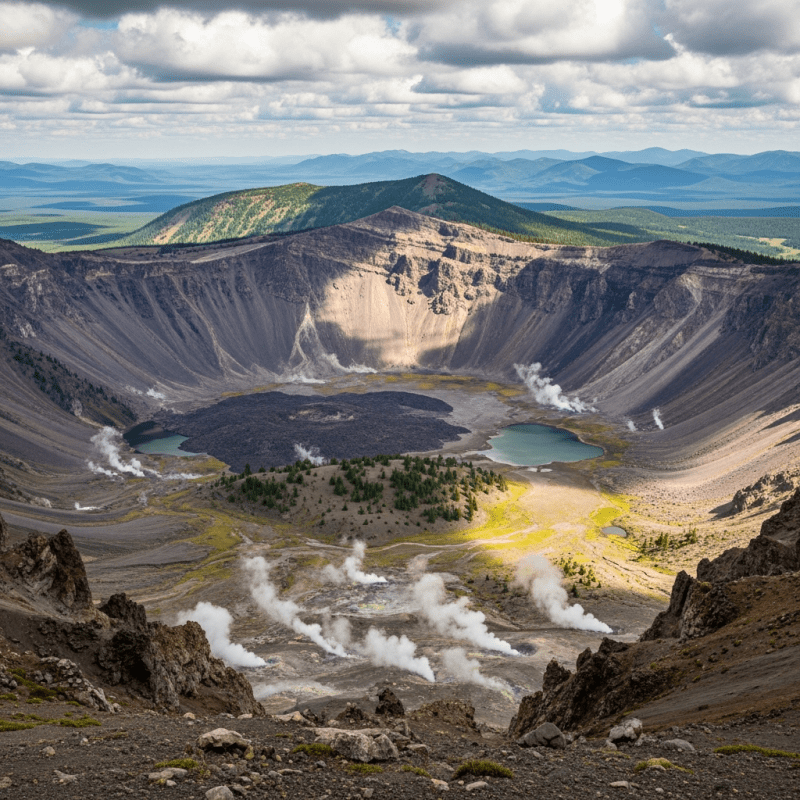
Soft cotton tee, unisex sizes
Buy ShirtCalderas have inspired awe and myth across cultures, often regarded as sacred or mysterious landscapes due to their dramatic scale and geothermal activity. Sites like Yellowstone have become iconic in popular culture and scientific discourse, symbolizing Earth’s powerful inner forces. In some regions, local terms such as "Kawah" in Indonesia reflect the cultural integration of calderas into language and tradition, underscoring their influence beyond geology.
Caldera formation is typically associated with highly explosive eruptions that rapidly evacuate large magma volumes. These eruptions produce vast ash clouds, pyroclastic flows, and widespread tephra deposits. The explosive nature often leads to catastrophic collapse of the volcanic edifice, creating the caldera depression. Such eruptions can be rare but immensely powerful, sometimes classified as supereruptions with global environmental impacts.
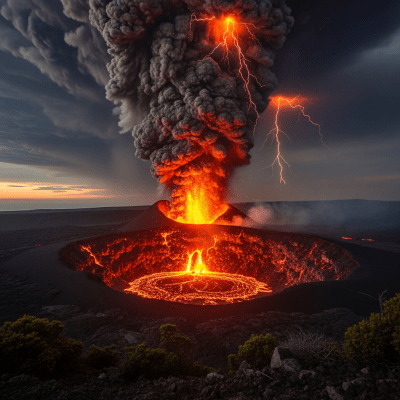
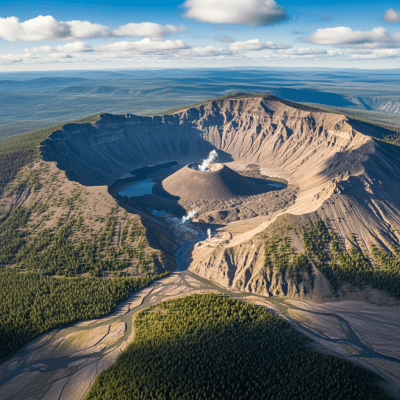
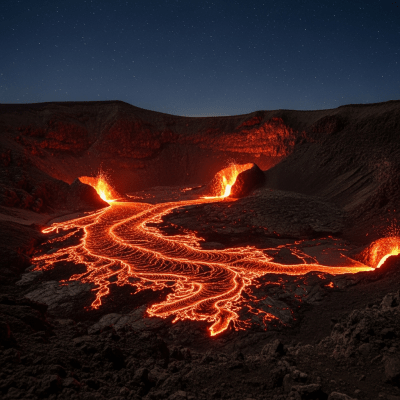
Calderas pose significant hazards including catastrophic eruptions capable of widespread destruction, ground subsidence causing structural damage, hydrothermal explosions, and persistent geothermal activity that can trigger local hazards. Their eruptions can produce pyroclastic flows, ashfall, and lahars, threatening nearby populations and ecosystems. Monitoring and preparedness are vital due to the potential scale of their hazards.
Notable calderas include:
Calderas are closely monitored using seismic networks, ground deformation measurements, gas emissions analysis, and satellite imagery to detect signs of magma movement or unrest. Early warning systems aim to provide alerts for potential eruptions. Safety measures include hazard mapping, evacuation planning, and public education to mitigate risks posed by these powerful volcanic features.
Over time, calderas profoundly reshape landscapes by creating large depressions that influence local hydrology and ecology. Their formation can alter drainage patterns, leading to lake formation and fertile soils. The collapse and subsequent volcanic activity within calderas contribute to complex geological structures, including resurgent domes and new volcanic cones, making them dynamic environments that evolve over thousands of years.