
Taro
Taro is a starchy root vegetable prized for its edible corms and leaves, serving as a staple food across tropical and subtropical regions worldwide.
Taro is a starchy root vegetable prized for its edible corms and leaves, serving as a staple food across tropical and subtropical regions worldwide.
Taro's journey as a cultivated crop began over 5,000 years ago in Southeast Asia or the Indian subcontinent. Its domestication predates recorded history, with propagation occurring primarily through vegetative means rather than seeds. Over centuries, taro spread throughout Asia, the Pacific Islands, Africa, and the Caribbean, adapting to diverse climates and spawning countless local landraces and cultivars. This ancient lineage reflects a rich tapestry of human selection and agricultural tradition, making taro one of the world's oldest and most widely grown root crops.
Taro belongs to the family Araceae, genus Colocasia, and species esculenta. Botanically classified as a perennial, herbaceous plant, taro is grouped among root and tuber vegetables in culinary contexts. Its edible parts include the underground corms and, when cooked, the large, heart-shaped leaves. The crop's classification bridges scientific taxonomy and global culinary traditions, with regional naming conventions adding layers of complexity.
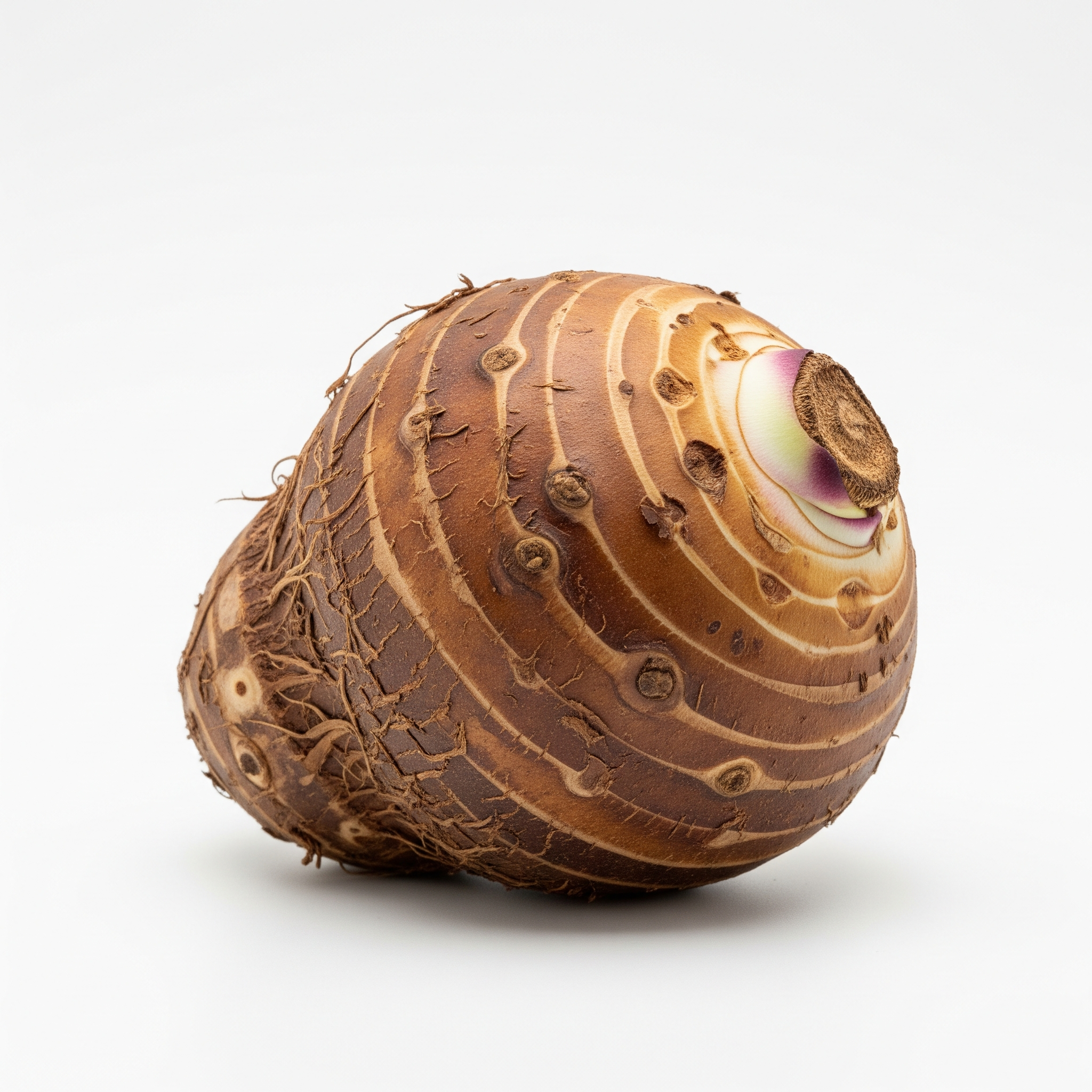
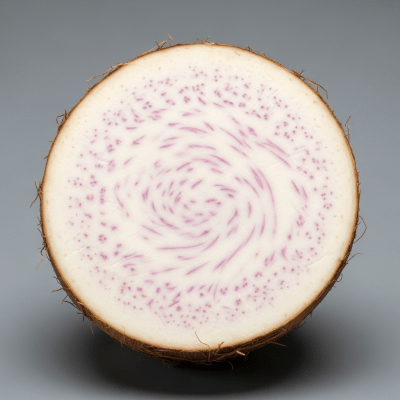
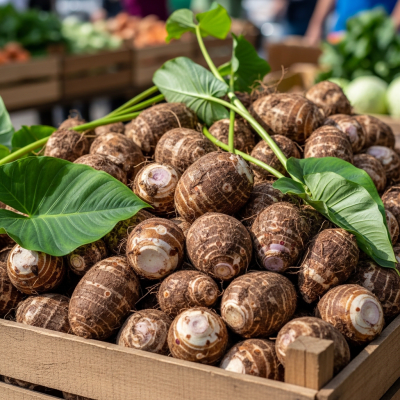
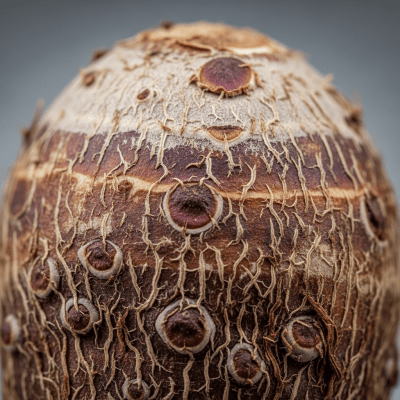
Taro plants typically reach 1–2 meters in height, showcasing broad, heart-shaped leaves often referred to as "elephant ears." The corms, which are the primary edible part, vary from globular to elongated shapes. Their exterior ranges from brown to purplish, while the interior may be white, cream, or flecked with purple depending on the variety. When sliced, the flesh is firm and starchy, sometimes revealing subtle marbling. The leaves are lush and vibrant, but both corms and leaves contain calcium oxalate crystals, requiring thorough cooking to ensure safe consumption.
Taro is cultivated for its versatile corms and edible leaves, which feature prominently in both everyday meals and ceremonial dishes. The plant thrives in warm, humid environments and can be grown in wetland (paddy) or upland (dryland) systems. In the kitchen, taro corms are boiled, steamed, baked, fried, or mashed, while the leaves are used in savory preparations after cooking. Beyond human consumption, taro is sometimes utilized as animal feed. Its adaptability and nutritional value have cemented its role as a dietary staple and cultural symbol in many regions.
Bring this kind into your world illustrated posters, mugs, and shirts.
Archival print, museum-grade paper
Buy Poster
Stoneware mug, dishwasher safe
Buy Mug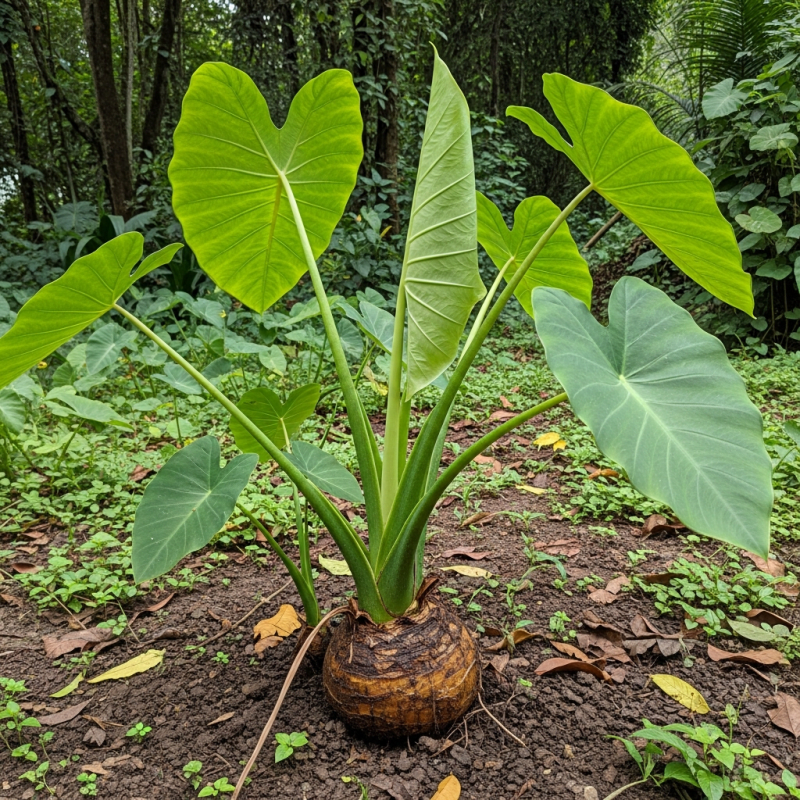
Soft cotton tee, unisex sizes
Buy ShirtTaro holds deep cultural importance across the globe. In Hawaii, "kalo" is revered as an ancestral plant and features in traditional ceremonies and dishes like poi and luau. In the Philippines, taro leaves are central to "laing," a beloved regional specialty. The crop is celebrated in festivals, folklore, and rituals throughout Oceania, West Africa, and the Caribbean, often symbolizing sustenance, resilience, and community. Its presence in both sacred and everyday contexts underscores taro's enduring legacy in human culture.
Taro is a starchy root vegetable rich in complex carbohydrates and dietary fiber, making it a valuable energy source. It provides potassium, vitamin E, vitamin C, and several B vitamins, while remaining low in fat. The corms must be cooked to neutralize calcium oxalate, which can cause irritation if consumed raw. Taro's nutritional profile supports digestive health and contributes essential micronutrients to the diet.

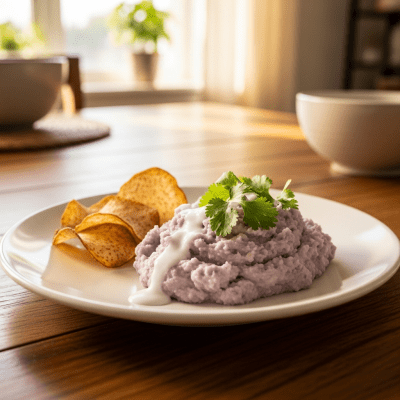
Taro corms are enjoyed boiled, steamed, baked, fried, or mashed in both savory and sweet dishes. In Hawaii, taro is pounded into poi, while in the Philippines, the leaves are cooked in coconut milk for "laing." Taro chips and flour offer processed alternatives, and its mild flavor pairs well with spices, coconut, and meats. The leaves, once cooked, add a unique texture and earthy taste to stews and curries. Taro's versatility makes it a staple ingredient in cuisines across Asia, Oceania, Africa, and the Caribbean.
Taro thrives in warm, humid climates typical of tropical and subtropical regions. It is cultivated in both wetland (paddy) and upland (dryland) systems, preferring well-drained, fertile soils with a pH of 5.5–6.5. Sensitive to frost, taro requires consistent moisture and is often grown by smallholders or in commercial operations. Yields range from 5–10 tonnes per hectare in traditional systems, with optimal conditions producing up to 20 tonnes per hectare. Proper cooking is essential before consumption, and the crop can be processed into flour, chips, and other products for storage and export.
Taro is commonly available in markets as fresh roots, processed flour, snack chips, and as an export crop in regions with established trade.
Taro encompasses numerous landraces and cultivars, often named for local traits or uses. Smaller, firmer varieties are sometimes referred to as "eddo" (Colocasia esculenta var. antiquorum), though nomenclature varies by region. While specific cultivar names may differ globally, local selection has produced a rich diversity of forms adapted to unique climates and culinary preferences.
Taro is susceptible to several pests and diseases, most notably taro leaf blight (Phytophthora colocasiae), root rot, and nematode infestations. Some cultivars display partial resistance, but effective management is essential for healthy crops. Farmers often rotate fields, select resistant varieties, and employ integrated pest management to mitigate losses.
Taro's naming, culinary uses, and popularity vary widely across regions. In Hawaii, it is known as "kalo" and holds spiritual significance; in the Caribbean, "dasheen" and "eddo" refer to distinct types; in Japan, "satoimo" is a favored ingredient in stews. In India and Pakistan, "arbi" or "arvi" is used in curries, while "gabi" is the term in the Philippines. These regional distinctions reflect taro's adaptability and central role in local diets and traditions.
When selecting taro, look for firm, unblemished corms with no signs of mold or soft spots. Store fresh taro in a cool, dry place, and use within a week for optimal quality. Processed forms such as flour and chips offer longer shelf life. Always cook taro thoroughly to neutralize natural irritants, and refrigerate leftovers promptly. Proper handling ensures both safety and flavor in every dish.