Rutabaga
Rutabaga is a hardy root vegetable, distinguished by its round shape, yellow flesh, and purple-tinged skin, valued for its versatility and long storage life in savory cuisine.
Rutabaga is a hardy root vegetable, distinguished by its round shape, yellow flesh, and purple-tinged skin, valued for its versatility and long storage life in savory cuisine.
Rutabaga traces its origin to northern Europe—most likely Scandinavia or Russia—where it emerged between the late 16th and early 17th centuries as a natural hybrid of turnip and cabbage. Its development was not the result of a single breeder but rather traditional agricultural practices, leading to its spread across temperate regions. The vegetable’s scientific name, Brassica napus var. napobrassica, reflects its hybrid lineage and historical roots in cool climates.
Botanically, rutabaga belongs to the Brassicaceae family, within the genus Brassica. It is classified as Brassica napus var. napobrassica, a distinct hybrid species resulting from a cross between turnip (B. rapa) and cabbage (B. oleracea). In culinary terms, rutabaga is grouped as a root vegetable, often compared to turnips but set apart by its larger size, sweeter flavor, and superior storage qualities.
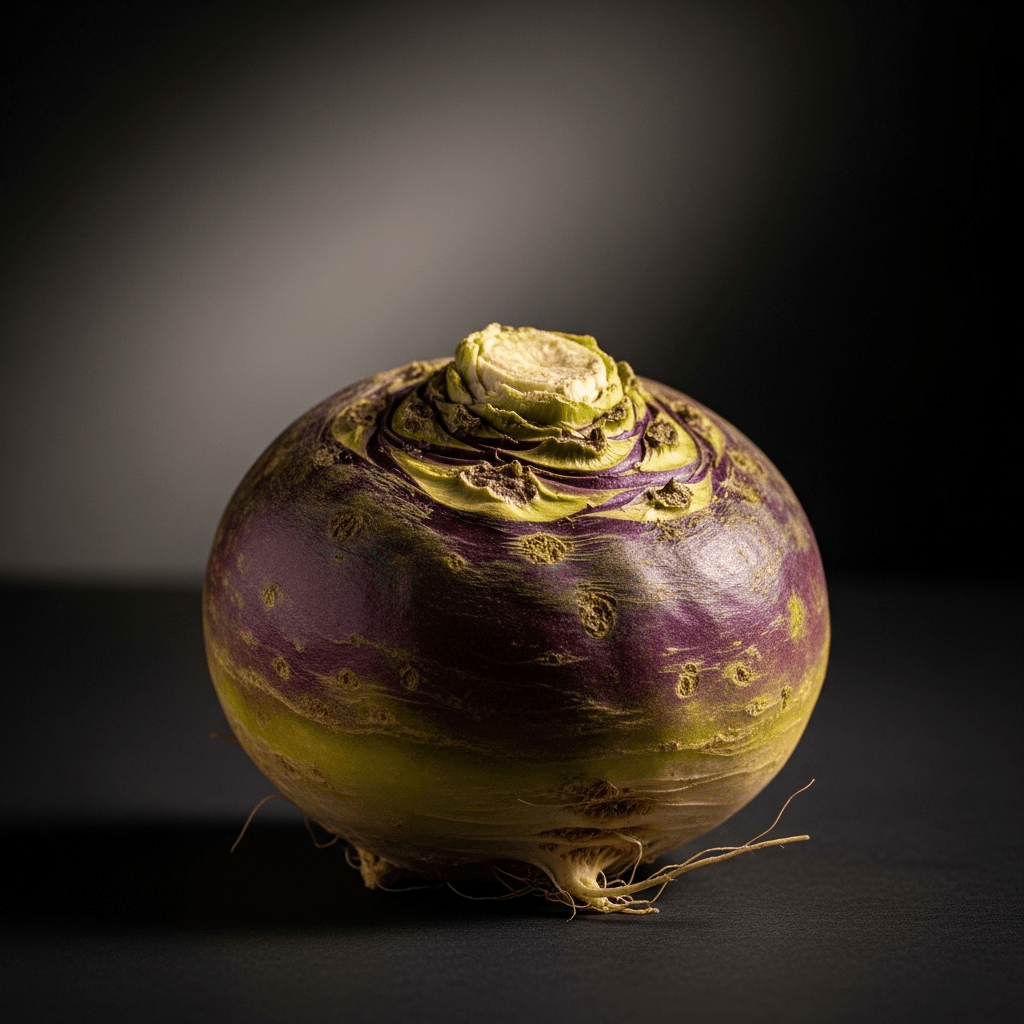
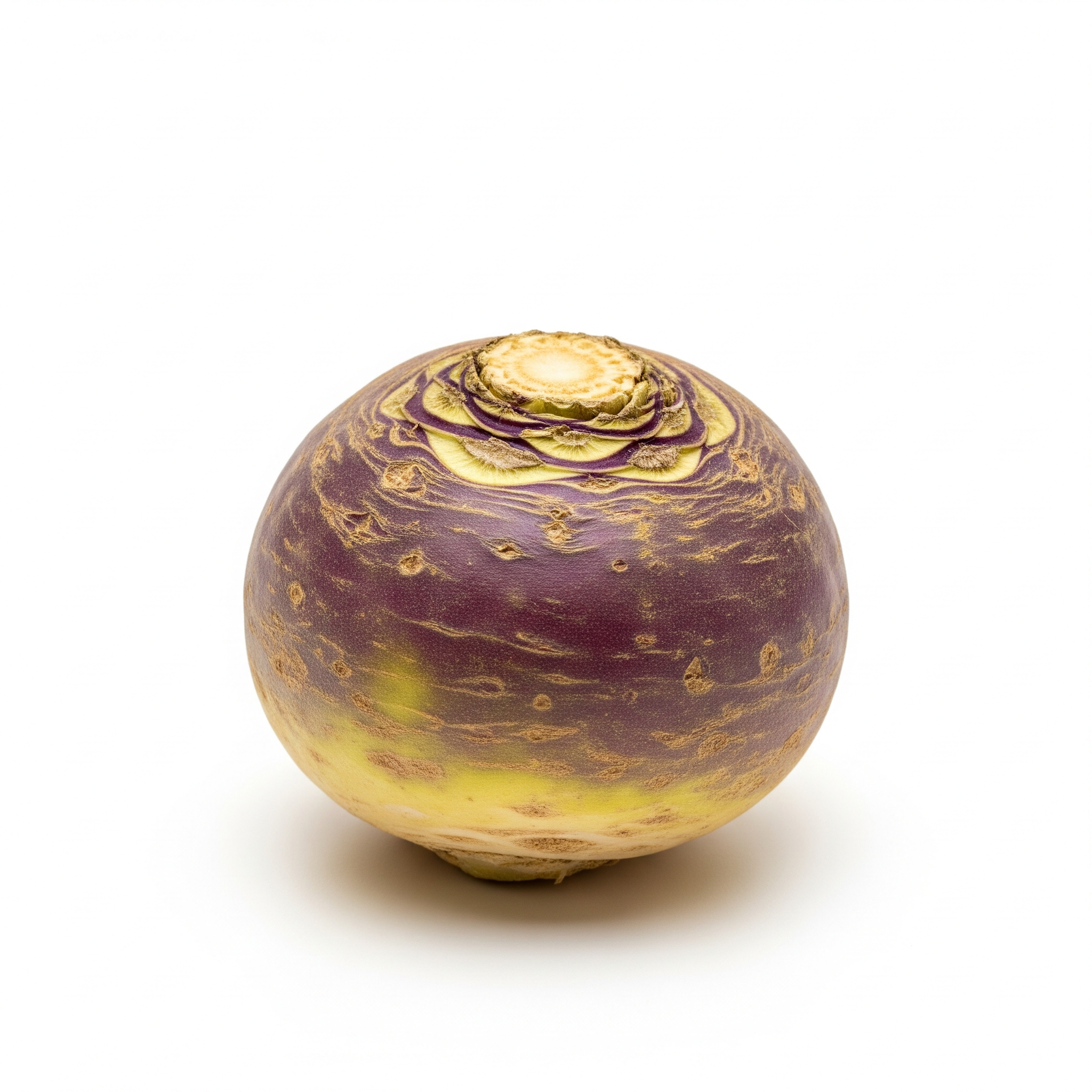
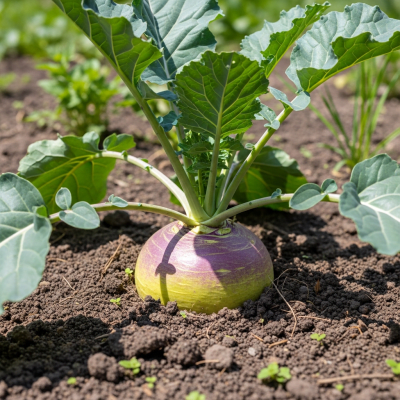
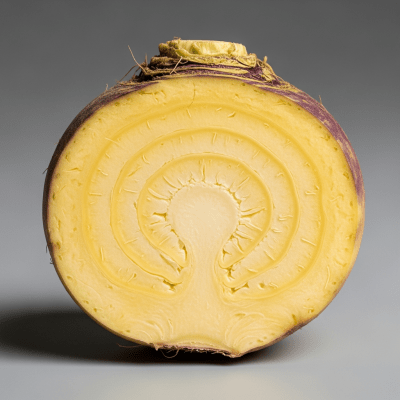
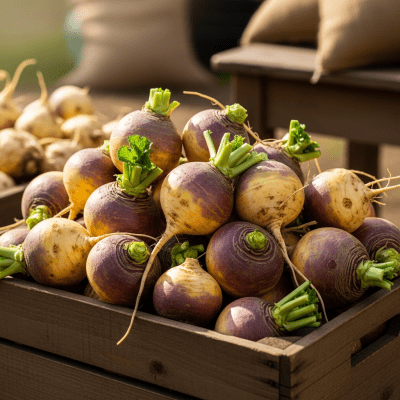
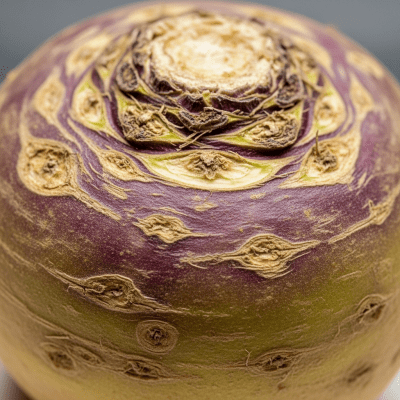
Rutabaga roots are large and globular, typically 8–15 cm in diameter, with a smooth, waxy skin that is purple above ground and yellow below. The flesh inside is firm, pale yellow, and becomes sweet and tender when cooked. Its leaves are bluish-green, lobed, and resemble cabbage foliage, though they are usually trimmed before sale. The overall look is robust, earthy, and inviting—ideal for hearty dishes.
Rutabaga is prized for its adaptability and utility in the kitchen. It is most commonly cooked—boiled, mashed, roasted, or added to soups and stews—where its sweet, earthy flavor shines. The vegetable’s hardiness makes it a staple in regions with cold climates, and its excellent storage properties allow it to be enjoyed throughout the winter months. Rutabaga is also used as a potato substitute and features prominently in mixed root dishes.
Bring this kind into your world illustrated posters, mugs, and shirts.
Archival print, museum-grade paper
Buy Poster
Stoneware mug, dishwasher safe
Buy Mug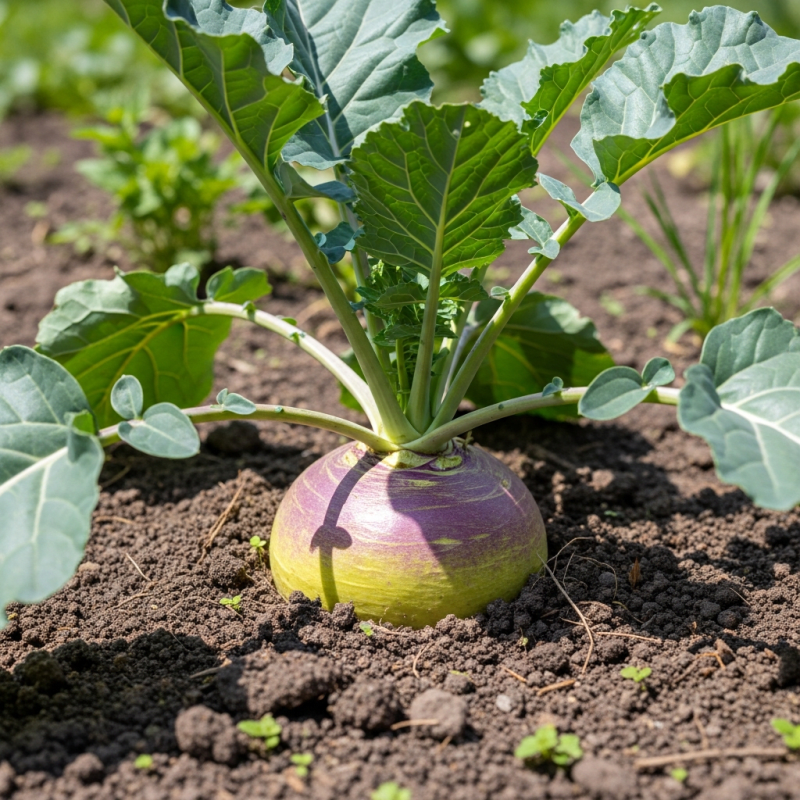
Soft cotton tee, unisex sizes
Buy ShirtRutabaga holds a special place in northern European and Commonwealth culinary traditions. In Scotland, it is known as "neep" and is a classic accompaniment to haggis. Across Scandinavia and the UK, "swede" is a staple in winter stews and festive meals. Its role as a reliable, nutritious crop during lean seasons has made it a symbol of resilience and resourcefulness in rural communities. The vegetable also appears in folklore and harvest festivals, celebrated for its humble yet vital contribution to local diets.
Rutabaga is low in calories and rich in dietary fiber, vitamin C, potassium, and antioxidants. Its nutritional profile supports immune health, digestion, and heart function. The vegetable also provides moderate amounts of calcium, magnesium, and folate, making it a wholesome addition to balanced diets.


Rutabaga is most often cooked—boiled and mashed as a potato alternative, roasted for caramelized sweetness, or diced into soups and stews. In Scotland, mashed rutabaga is served with haggis, while in Scandinavia and the UK, it features in winter casseroles and mixed root dishes. Peeled and cubed rutabaga is also available for convenience, and its mild flavor pairs well with butter, herbs, and spices.
Rutabaga thrives in cool, temperate climates and tolerates frost, making it ideal for northern regions. It is grown as an annual for its roots, with a maturity period of 90–120 days from sowing. Optimal yields are achieved in well-drained, fertile soils with consistent moisture. Commercial cultivation can produce 25–40 tons per hectare. Rutabaga’s robust nature allows for extended storage, and its moderate resistance to clubroot and some fungal diseases supports reliable harvests.
Rutabaga is available in these forms to suit home cooks and commercial buyers alike, with fresh roots being the most common in markets.
Rutabaga exhibits moderate resistance to clubroot (Plasmodiophora brassicae) and some fungal pathogens. However, it is susceptible to root maggots and aphids, which can affect yield and quality. Growers often select cultivars with improved disease tolerance and employ crop rotation and integrated pest management to protect crops.
Regional naming and usage of rutabaga vary widely. In North America, "rutabaga" and "yellow turnip" are common, while "swede" is preferred in the UK, Commonwealth countries, and Scandinavia. In Scotland, "neep" refers to rutabaga, especially in traditional dishes. Despite occasional confusion with turnip, rutabaga is botanically and culinarily distinct, with local cultivars and recipes reflecting regional preferences.
To select the best rutabagas, look for firm, heavy roots with smooth skin and minimal blemishes. Avoid specimens with soft spots or excessive sprouting. Store rutabaga in a cool, humid place—such as a root cellar or refrigerator—where it can keep for several months. For longer preservation, rutabaga can be peeled, cut, and frozen or canned. Proper storage maintains flavor and nutritional value throughout the winter season.