Parsnip
The parsnip is a sweet, nutty-flavored root vegetable (Pastinaca sativa) celebrated for its creamy white taproot and versatility in savory cooking.
The parsnip is a sweet, nutty-flavored root vegetable (Pastinaca sativa) celebrated for its creamy white taproot and versatility in savory cooking.
Parsnip traces its origins to Eurasia, with wild ancestors native to Europe and western Asia. Cultivated since antiquity, it was a staple in Roman and Greek diets and gradually refined by generations of farmers. Its domestication is a story of gradual selection rather than a single event, with modern varieties emerging from centuries of agricultural improvement.
Botanically, parsnip belongs to the Apiaceae family, sharing lineage with carrots and parsley. Its scientific name is Pastinaca sativa, and it is classified as a root vegetable in culinary and market contexts. The edible portion is the taproot, grown as an annual crop for harvest despite its biennial life cycle.
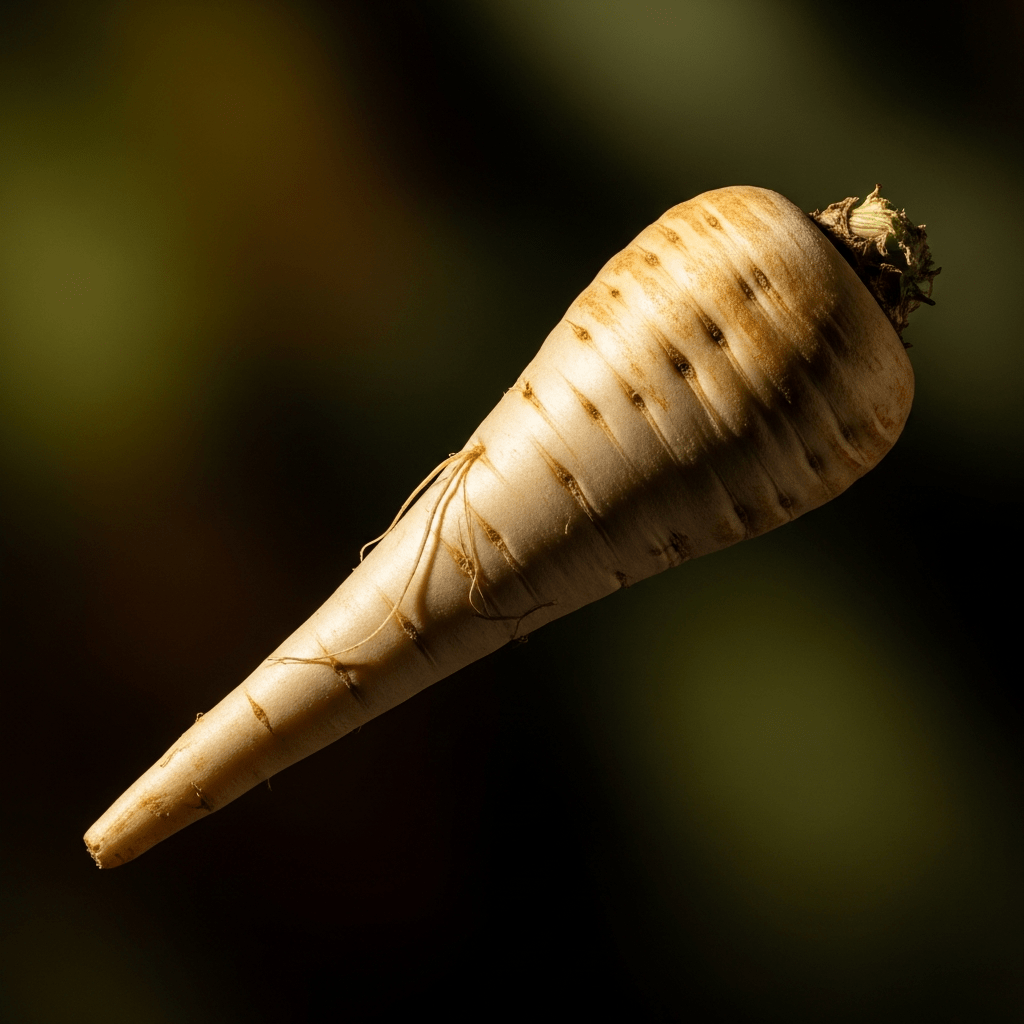
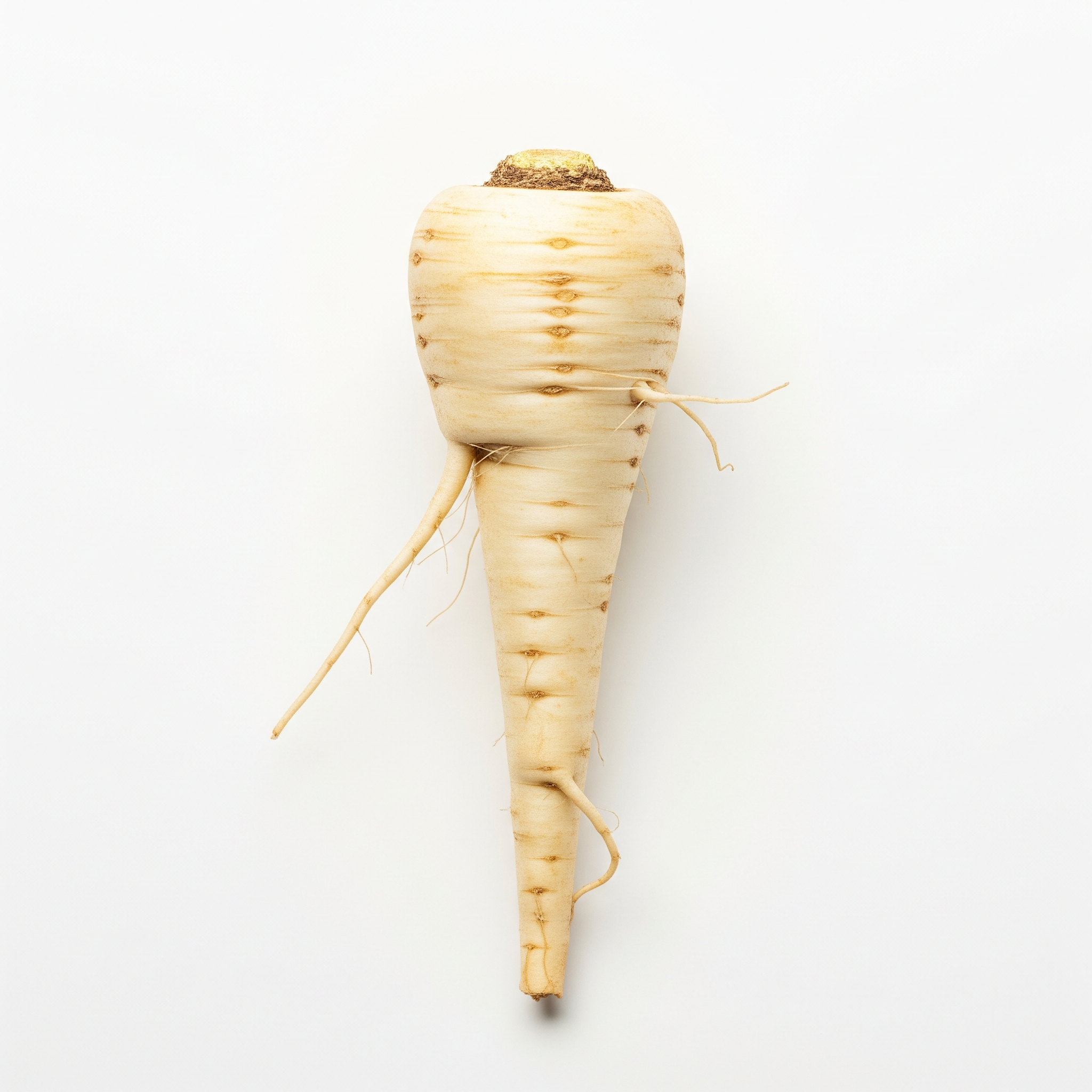
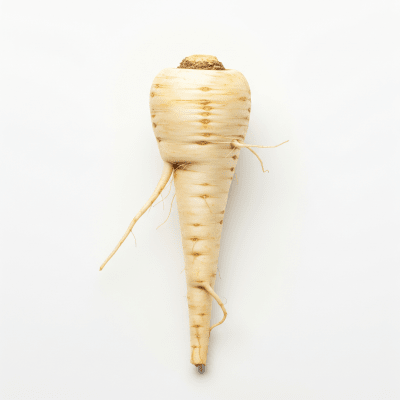
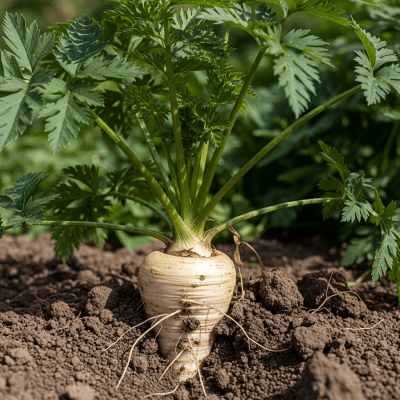
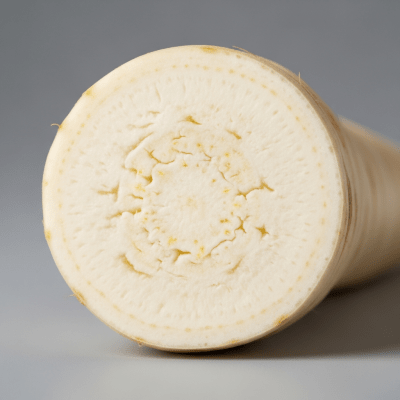
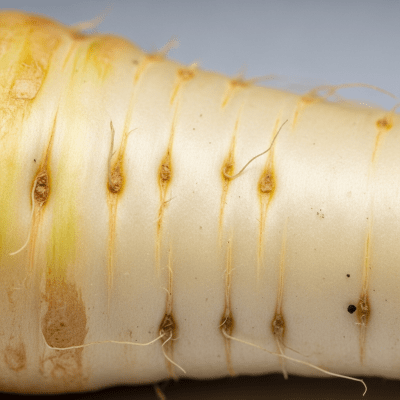
Parsnip roots are long, conical, and range from creamy white to pale yellow. Mature roots typically measure 20–45 cm in length and 5–10 cm in diameter at the shoulder. The plant forms a rosette of parsley-like, pinnate leaves, and if left unharvested, sends up a tall stalk with yellow umbels in its second year. The flesh is firm, dense, and subtly aromatic, with a flavor that intensifies after frost.
Parsnip is prized for its culinary adaptability, especially in cold climates where its sweetness deepens with frost. It is rarely eaten raw due to its fibrous texture and robust flavor, but becomes tender and aromatic when roasted, boiled, or mashed. Its roots store well, making it a reliable winter staple, and its foliage should be handled with care due to compounds that may cause skin irritation.
Bring this kind into your world illustrated posters, mugs, and shirts.
Archival print, museum-grade paper
Buy Poster
Stoneware mug, dishwasher safe
Buy Mug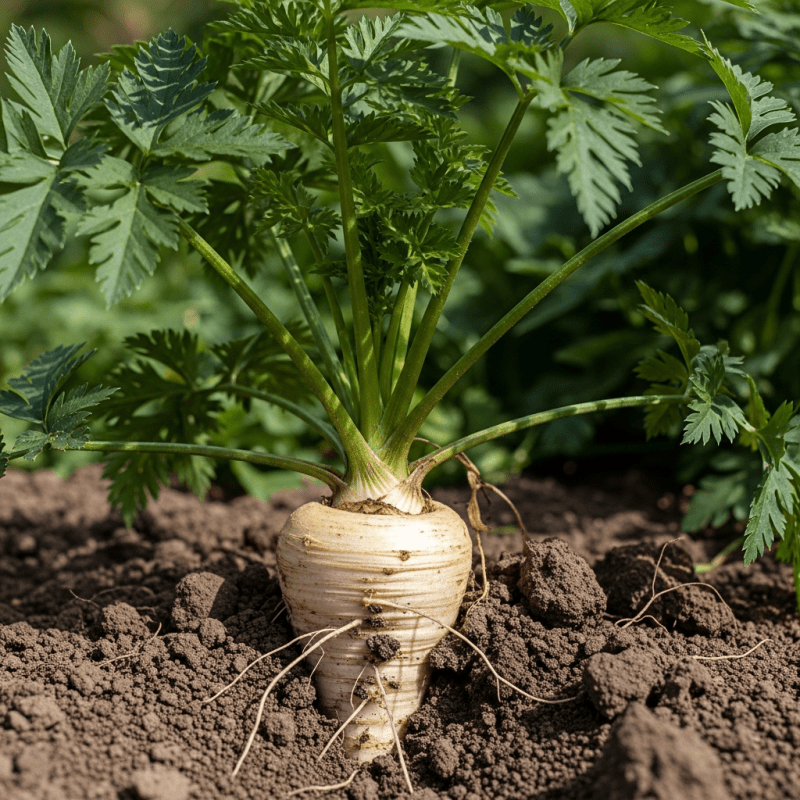
Soft cotton tee, unisex sizes
Buy ShirtHistorically, parsnip was a vital food source in Europe before the widespread adoption of potatoes. It features prominently in traditional winter and holiday meals across the UK, Ireland, and northern Europe, symbolizing comfort and sustenance during colder months. In some regions, it is celebrated in local cuisine and folklore, though its cultural footprint is more modest than that of the carrot or potato.
Parsnip is a nutritious root, offering around 75 kcal per 100g serving. It is rich in dietary fiber (4.9g), potassium (375mg), vitamin C (17mg), and folate (67μg). It also contains small amounts of magnesium, calcium, iron, vitamin E, and B vitamins. Its high fiber content supports digestive health, while its natural sugars provide gentle sweetness without excess calories.
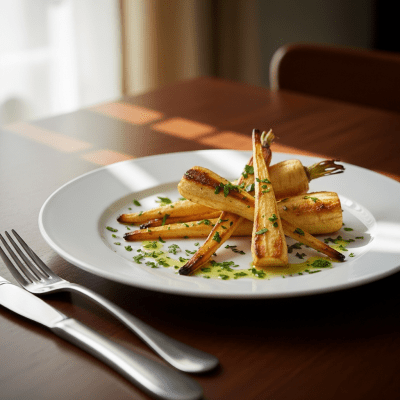
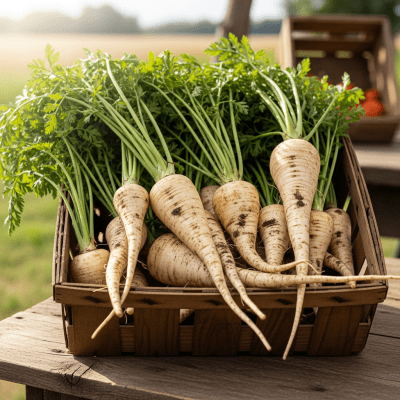
Parsnip shines in cooked dishes—roasted to caramelize its sugars, boiled and mashed for creamy sides, or simmered in soups and stews for depth of flavor. It is a classic ingredient in winter and holiday meals in the UK, Ireland, and parts of Europe. Parsnip also lends itself to purees, gratins, and as a subtle flavoring in stocks. Its versatility makes it a favorite for hearty, comforting recipes.
Parsnip thrives in cool climates with deep, well-drained soils. Sown in spring, it grows through summer and is harvested in autumn or winter, often after the first frost to enhance sweetness. Optimal growth occurs at 16–21°C (60–70°F), with yields of 20–40 tons per hectare. The roots store well under cool, humid conditions, and careful handling of foliage is advised due to skin-irritant compounds. Modern cultivars offer partial resistance to common pests and diseases.
Parsnip is susceptible to root canker (caused by Itersonilia pastinacae), cavity spot, and carrot fly (Psila rosae). Some modern cultivars offer partial resistance to these threats, but careful crop rotation and field hygiene remain important. Handling foliage should be done with caution, as it contains compounds that can cause skin irritation.
Parsnip is known by various names: “panais” (French), “Pastinaken” (German), “chirivía” (Spanish), and “pasternak” (Russian/Polish). In some regions, it is confused with parsley root, though they are distinct species. Its popularity is highest in northern Europe and the British Isles, where it remains a winter staple, while in North America, its prominence declined after the rise of the potato.
Choose parsnips that are firm, smooth, and free of blemishes. Smaller roots tend to be more tender, while larger ones are best for roasting. Store in a cool, humid place—ideally in a refrigerator crisper or root cellar—to maintain freshness for several months. Avoid washing before storage to prevent premature spoilage, and keep away from ethylene-producing fruits to extend shelf life.