Leek
The leek is a stem vegetable from the Allium genus, prized for its long, tender stalk and mild, sweet flavor, making it a versatile ingredient in savory dishes worldwide.
The leek is a stem vegetable from the Allium genus, prized for its long, tender stalk and mild, sweet flavor, making it a versatile ingredient in savory dishes worldwide.
Leeks trace their origins to the eastern Mediterranean and Middle East, with evidence of cultivation dating back to ancient Egypt and Mesopotamia. Over thousands of years, they have been selectively bred from wild Allium ampeloprasum for larger, milder stems, becoming a staple in European and Middle Eastern diets. Their domestication was a gradual process shaped by many cultures, rather than a single breeder or institution.
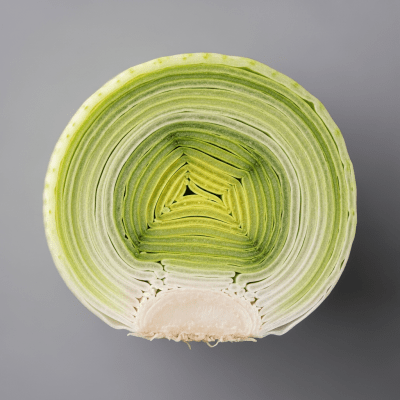
Botanically, the leek is classified as Allium ampeloprasum var. porrum, placing it within the Allium genus alongside onions, garlic, and shallots. In culinary taxonomy, leeks are considered stem or bulb vegetables, valued for their edible stalk formed by tightly layered leaf sheaths. This dual classification highlights both their scientific and culinary importance.
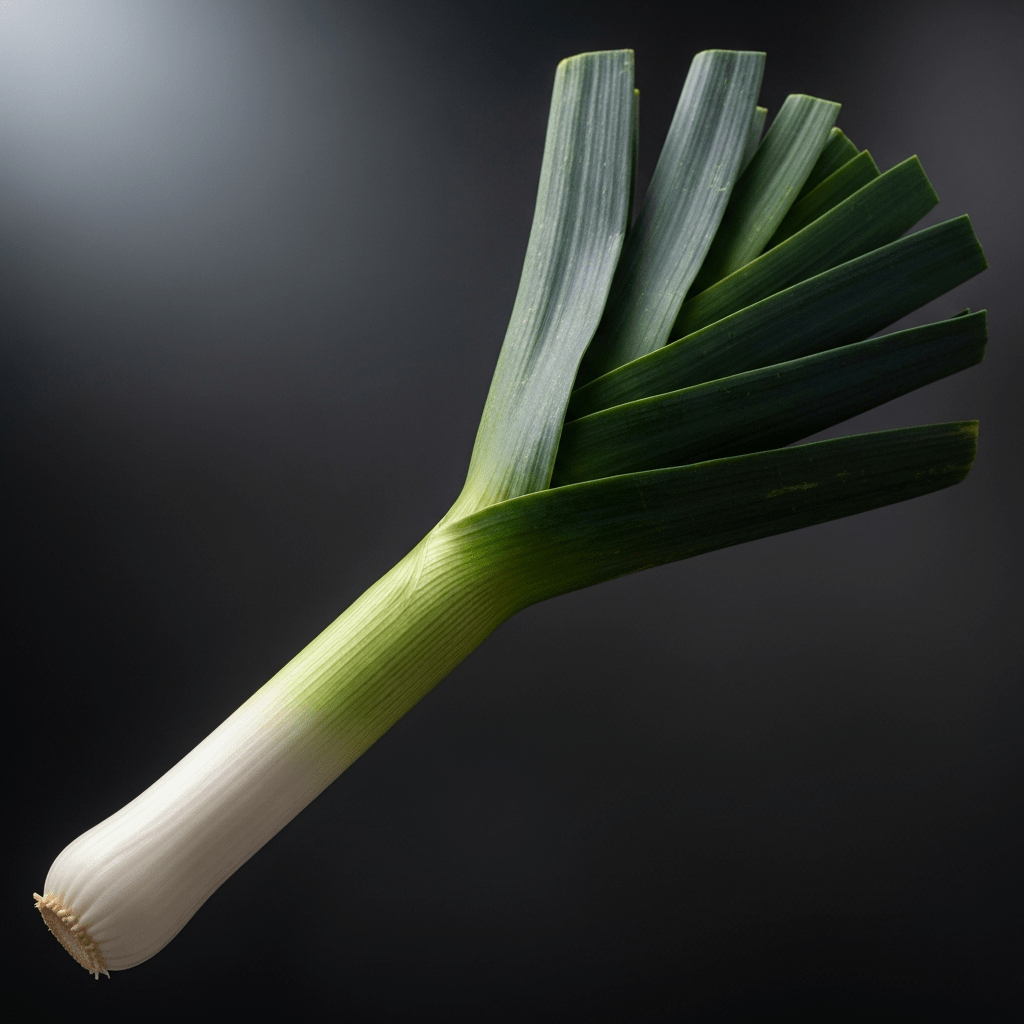
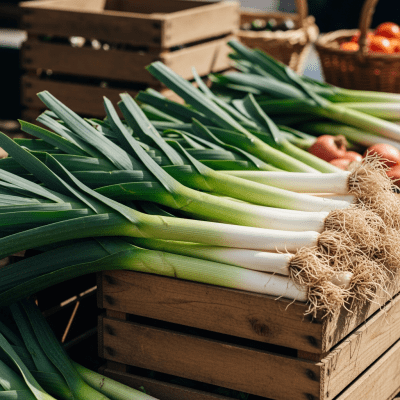
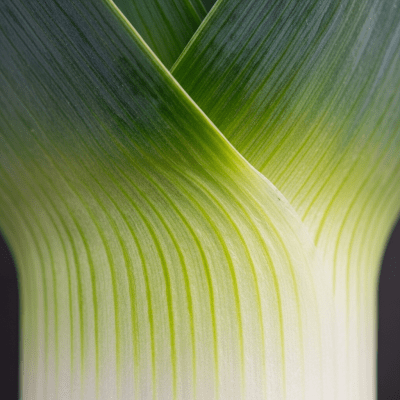
Leeks are distinguished by their long, cylindrical white stalk, which transitions into light green and then dark green, broad, flat leaves. Mature leeks typically measure 30–50 cm in length and 2–5 cm in diameter. The white base is tender and succulent, while the upper green leaves are firmer and more fibrous. Their overall appearance is elegant and upright, with a subtle sheen and a crisp texture when fresh.
Leeks are cultivated for their edible stalks, which are harvested before flowering. They interact with humans primarily as a culinary ingredient, lending a gentle, sweet onion-like flavor to soups, stews, and braises. The white and light green portions are favored for their tenderness, while the tougher dark green leaves are often reserved for making stocks or discarded. Leeks are enjoyed raw, sautéed, or slow-cooked, adapting well to various cooking methods.
Bring this kind into your world illustrated posters, mugs, and shirts.
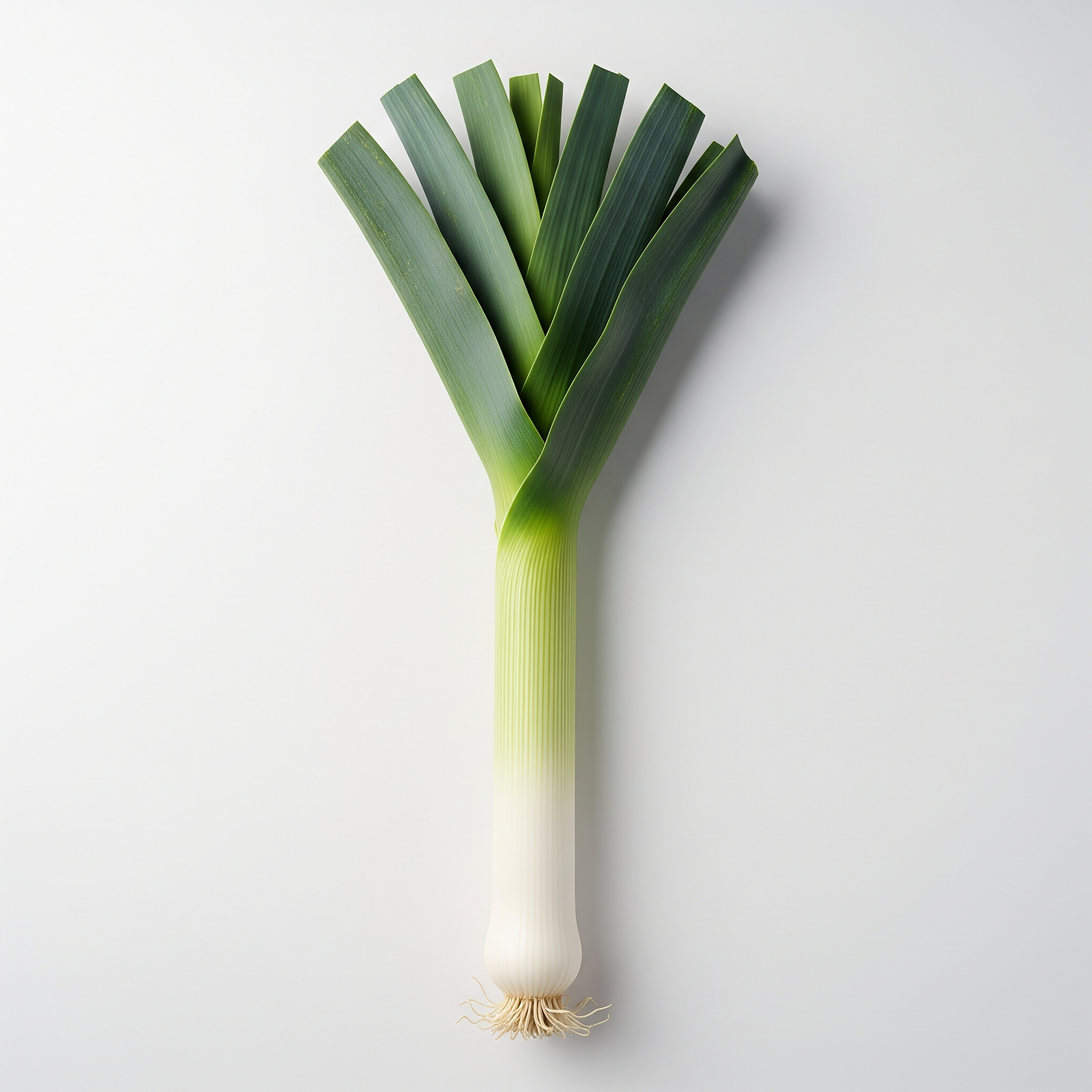
Archival print, museum-grade paper
Buy Poster
Stoneware mug, dishwasher safe
Buy Mug
Soft cotton tee, unisex sizes
Buy ShirtLeeks hold deep cultural symbolism, especially in Wales, where they are a national emblem featured in military insignia and folklore. In French cuisine, leeks are celebrated for their role in classic dishes such as vichyssoise and potage. Their presence in art, myth, and tradition underscores their enduring importance across Europe and beyond, representing resilience, nourishment, and heritage.
Leeks are low in calories and provide dietary fiber, vitamin K, vitamin C, folate, and manganese. They contribute antioxidants that support immune health and may aid in digestion, making them a nutritious addition to a balanced diet.

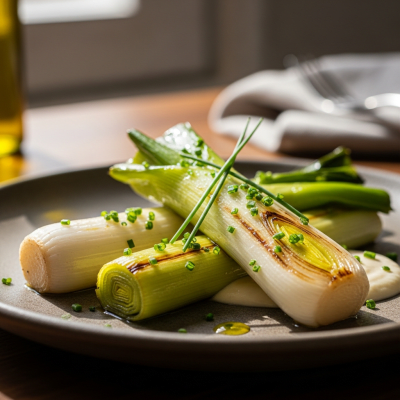
Leeks are widely used in soups, such as vichyssoise and potato-leek soup, as well as in stews, braises, and quiches. Their tender stalks can be eaten raw in salads, sautéed for a gentle sweetness, or slow-cooked to enrich sauces and stocks. The mild flavor pairs well with potatoes, poultry, seafood, and herbs, making leeks a versatile base in both everyday and gourmet cooking.
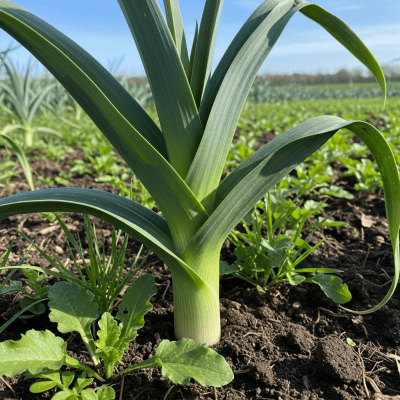
Leeks are grown as annuals from seed or transplants, requiring 120–150 days to reach maturity. They thrive in cool climates and prefer well-drained, fertile soils with consistent moisture. Commercial yields average 20–40 tons per hectare. Leeks are moderately cold-tolerant and can overwinter in mild regions. Key agronomic practices include blanching the stalks by earthing up soil and maintaining high humidity during storage to preserve freshness.
Leeks are susceptible to leek moth (Acrolepiopsis assectella), rust (Puccinia allii), and white rot (Sclerotium cepivorum). While they tolerate moderate cold, growers must monitor for these pests and diseases, employing crop rotation and sanitation to reduce risk.
Leeks are known as 'poireau' in French, 'lauch' or 'porree' in German, 'puerro' in Spanish, and 'porro' in Italian. In Wales, leeks are a cherished national symbol, while in France they are a culinary staple. Regional cultivars and naming conventions reflect local preferences, with some areas referring to leeks as 'long onion.'
Choose leeks with firm, straight stalks and crisp green leaves. Avoid specimens with wilted tops or excessive yellowing. Store leeks unwashed in the refrigerator, wrapped in a damp cloth or plastic to maintain humidity; they will keep for several weeks. For longer preservation, leeks can be sliced and frozen, though this may alter their texture. Always rinse thoroughly before use to remove soil trapped between layers.