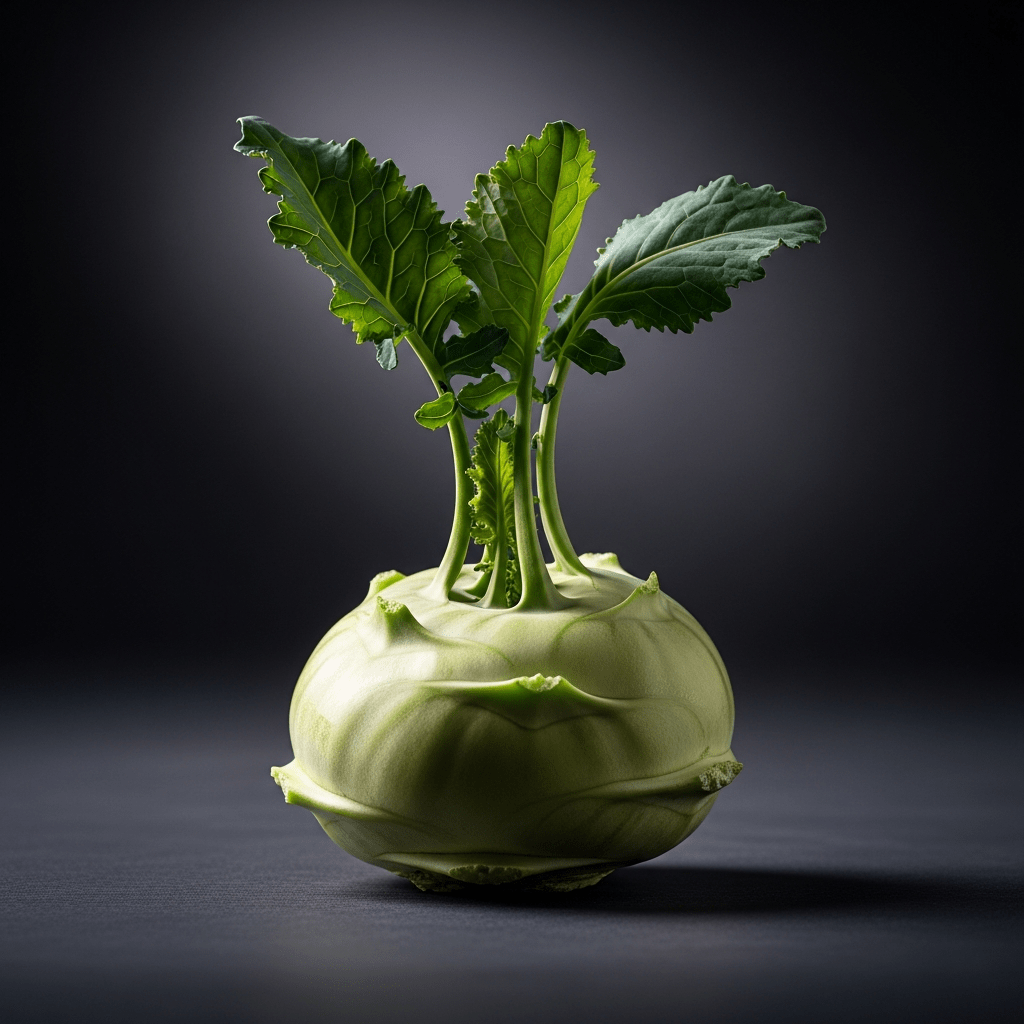
Kohlrabi
Kohlrabi is a crisp, bulbous stem vegetable from the Brassica family, prized for its mild flavor, juicy texture, and versatility in both raw and cooked dishes.
Kohlrabi is a crisp, bulbous stem vegetable from the Brassica family, prized for its mild flavor, juicy texture, and versatility in both raw and cooked dishes.
Kohlrabi traces its roots to northern Europe, where it was domesticated from wild Brassica oleracea populations. Documented cultivation dates back to at least the 16th century, making it a relatively recent addition compared to other Brassicas. Selective breeding within the species complex led to its distinctive swollen stem, setting it apart from relatives like cabbage and broccoli. While the exact breeder or institution is unknown, kohlrabi’s emergence reflects centuries of agricultural innovation in temperate climates.
Kohlrabi belongs to the Brassicaceae family, sharing lineage with cabbage, broccoli, cauliflower, and kale. Its scientific name is Brassica oleracea var. gongylodes, marking it as a unique variety within the species. Botanically, it is classified as an edible stem vegetable, and in culinary terms, it is grouped among root and stem vegetables for its savory applications. This dual frame—botanical and culinary—highlights kohlrabi’s role as both a crop and a kitchen staple.
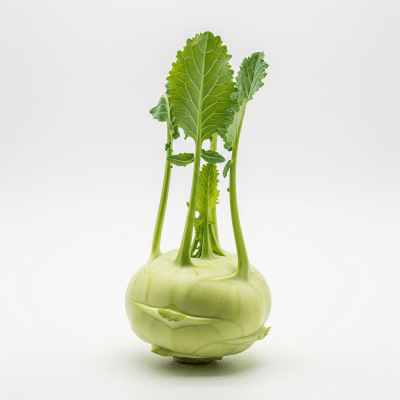
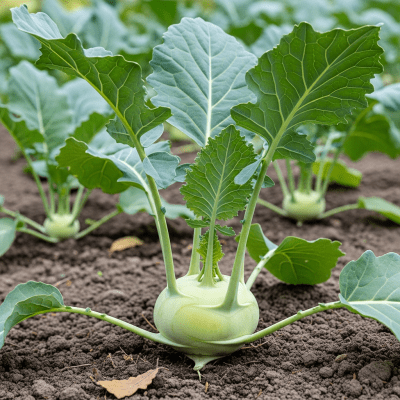
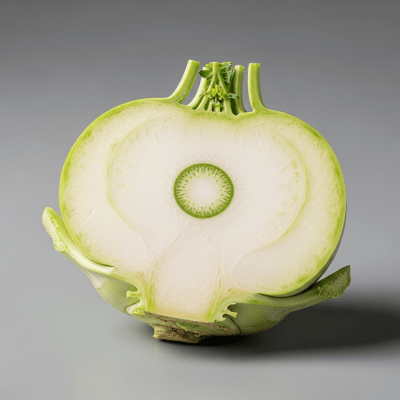
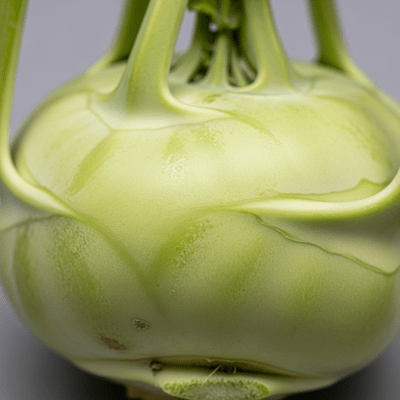
Kohlrabi is instantly recognizable by its swollen, spherical stem—often called a "bulb"—that sits above ground. The skin ranges from pale green to deep purple, while the interior flesh is white, crisp, and juicy. Mature bulbs typically measure 7–10 cm in diameter, with long, leafy petioles sprouting from the top. The plant itself reaches 30–40 cm in height, and its leaves resemble those of other Brassicas. When sliced, kohlrabi reveals a refreshing, crunchy texture reminiscent of a mild radish or apple.
Kohlrabi is valued for its adaptability in the kitchen and its ease of cultivation. The bulb can be eaten raw—peeled and sliced for salads or slaws—or cooked by roasting, steaming, stir-frying, or pureeing into soups. Its leaves are also edible and can be prepared like kale or collard greens. In the garden, kohlrabi grows rapidly and is harvested within 45–60 days of sowing, making it a favorite for home gardeners and commercial growers alike.
Bring this kind into your world illustrated posters, mugs, and shirts.
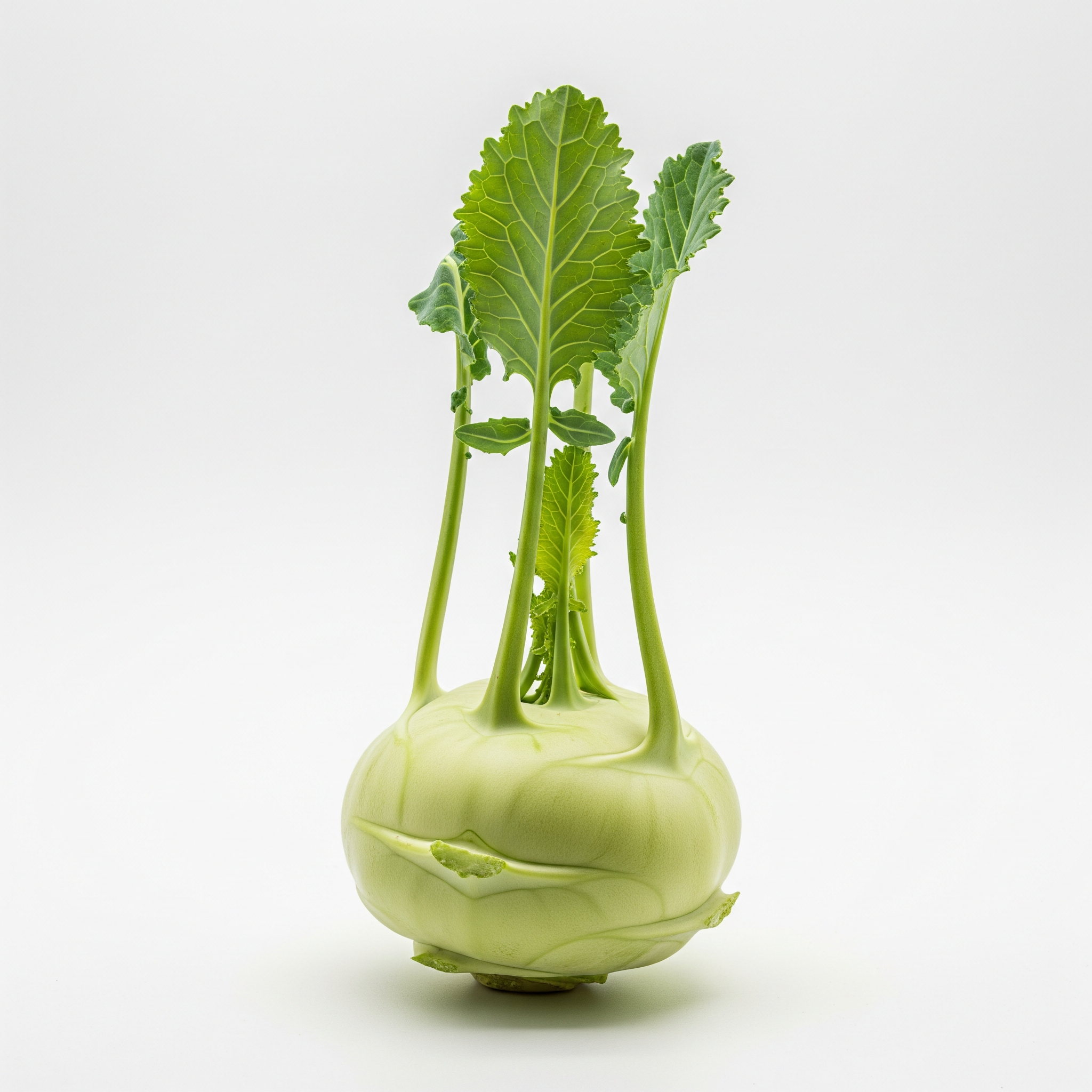
Archival print, museum-grade paper
Buy Poster
Stoneware mug, dishwasher safe
Buy Mug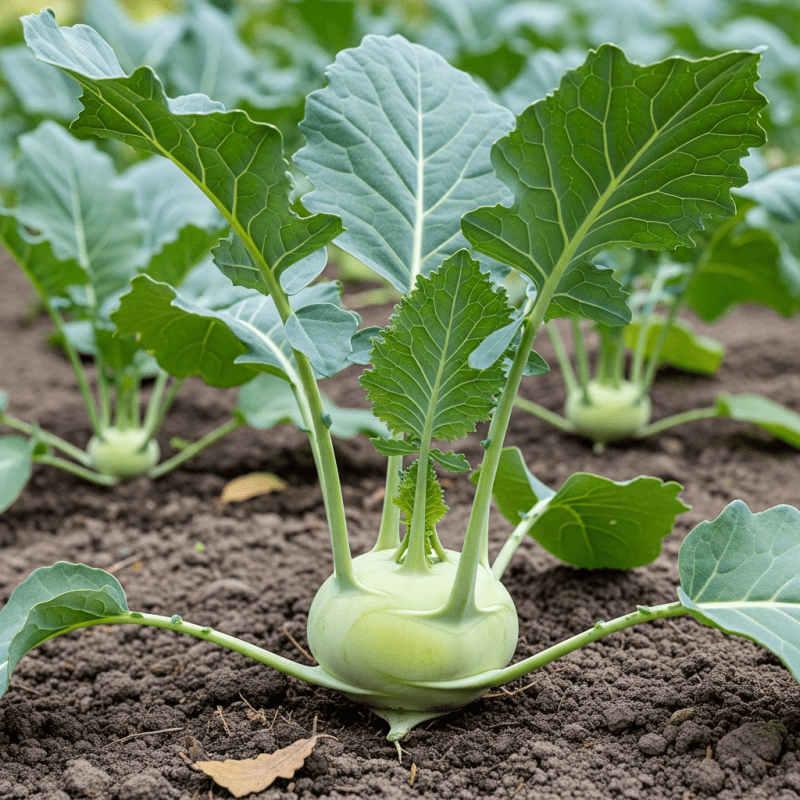
Soft cotton tee, unisex sizes
Buy ShirtKohlrabi holds a special place in Central and Eastern European cuisines, where it is featured in traditional salads, stews, and side dishes. In India, it is known as "Knol-Khol" and is used in curries and stir-fries, while in Germany and France, it appears as "Grünkohlrabi" and "Chou-rave" respectively. Though less prominent in art or myth, kohlrabi’s regional names and culinary roles reflect its integration into diverse food cultures, often symbolizing resourcefulness and seasonal abundance.
Kohlrabi is a nutrient-dense vegetable, notably high in vitamin C and dietary fiber. Its crisp, juicy flesh is low in calories, making it an excellent choice for healthy diets. Regular consumption supports immune function, digestion, and overall wellness, with additional minerals and antioxidants present in both the bulb and leaves.
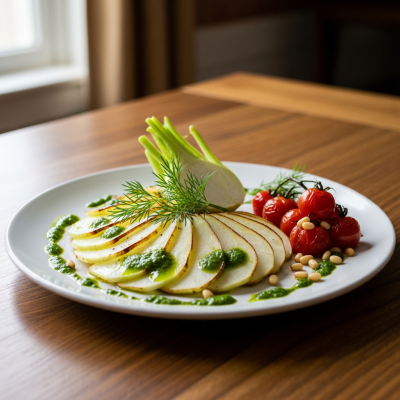
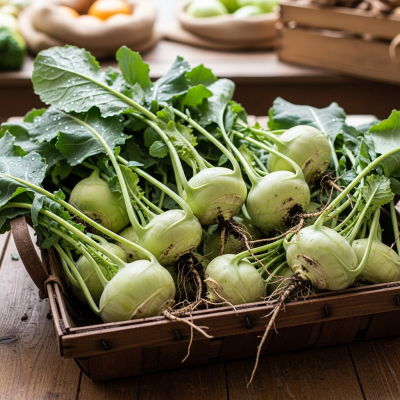
Kohlrabi’s versatility shines in the kitchen. The bulb can be peeled and sliced for fresh salads, shredded into slaws, or served as crunchy crudités. When cooked, it becomes tender and subtly sweet—ideal for roasting, steaming, stir-frying, or pureeing into soups. The leaves, similarly, can be sautéed or added to stews. Kohlrabi features in dishes across Central and Eastern Europe, India, and East Asia, adapting easily to local flavors and techniques.
Kohlrabi is a cool-season crop, thriving in temperate climates and tolerating light frosts. It grows rapidly, with harvest possible 45–60 days after sowing. Optimal yields reach 20–30 tons per hectare under good conditions. The plant prefers well-drained, fertile soils and consistent moisture. High temperatures can cause the stem to become woody, so timing and climate are crucial. Bulbs store moderately well, remaining fresh for several weeks under refrigeration.
While specific cultivar names are not detailed, kohlrabi is commonly available in green and purple forms, each offering subtle differences in appearance and sometimes flavor. Regional specialty cultivars may exist, tailored to local preferences and growing conditions.
Kohlrabi is susceptible to common Brassica pests such as cabbage worms and aphids. Some cultivars offer resistance to diseases like clubroot and black rot, but vigilant crop management is important. Proper rotation, pest monitoring, and selection of resistant varieties can help maintain healthy crops and minimize losses.
Kohlrabi is known by many names worldwide: "Knol-Khol" in India, "Grünkohlrabi" in Germany, and "Chou-rave" in France. Its popularity and culinary uses vary, with raw preparations favored in Europe and cooked dishes common in India and East Asia. In some regions, kohlrabi is confused with turnip due to similar appearance, but it remains botanically distinct.
When selecting kohlrabi, look for firm, unblemished bulbs with fresh, green leaves. Smaller bulbs tend to be more tender and less woody. Store kohlrabi in the refrigerator, where it will keep for several weeks. To preserve quality, remove leaves before storage and keep bulbs in a perforated bag to maintain moisture. Kohlrabi is best enjoyed fresh but can be cooked or added to soups and stews if nearing the end of its shelf life.