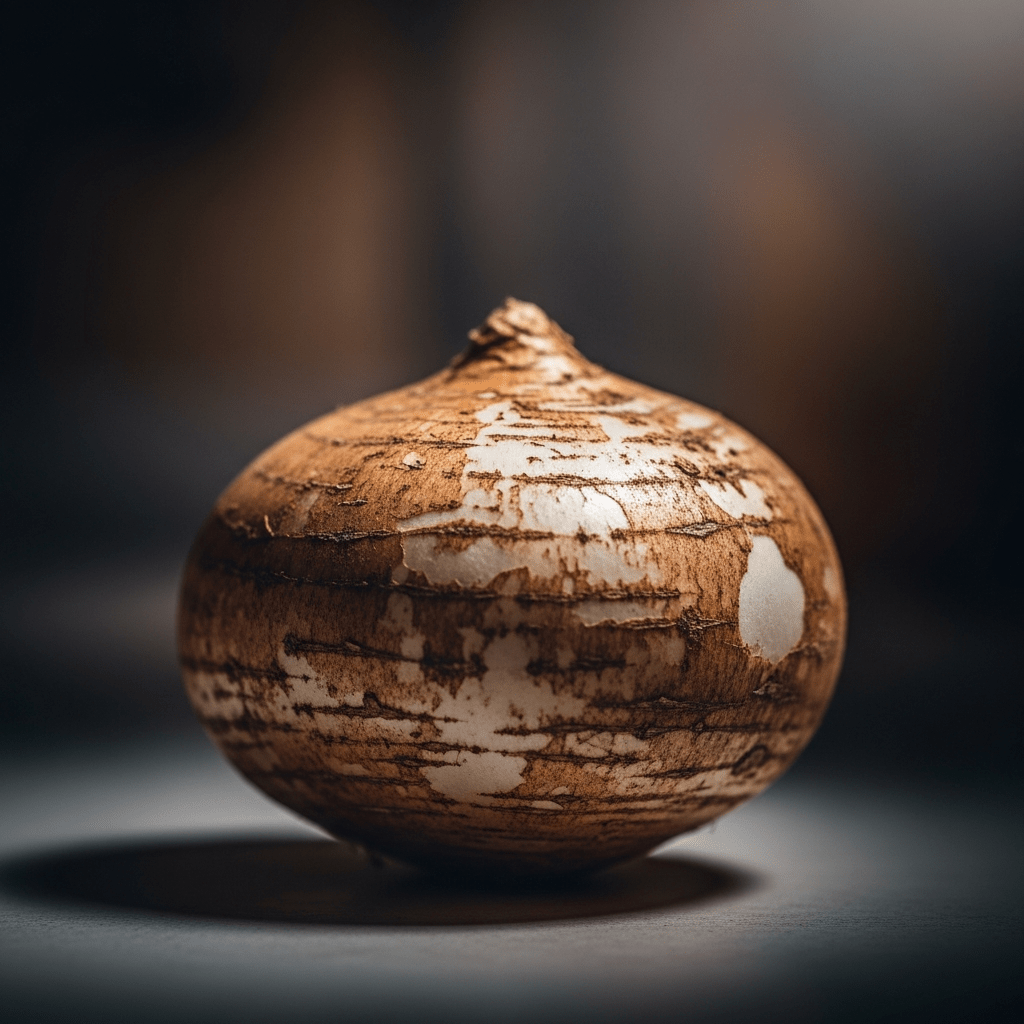
Jicama
Jicama is a crisp, sweet root vegetable prized for its refreshing texture and versatility in both Latin American and Asian cuisines.
Jicama is a crisp, sweet root vegetable prized for its refreshing texture and versatility in both Latin American and Asian cuisines.
Jicama traces its roots to Mexico and Central America, where it has been cultivated for centuries from wild Pachyrhizus species native to tropical and subtropical regions of the Americas. Though the precise details of its initial domestication remain undocumented, jicama’s journey from indigenous staple to global ingredient reflects its adaptability and enduring appeal. Over time, growers have selected for larger, sweeter roots, resulting in the varieties most commonly found in today’s markets.
Botanically, jicama belongs to the Fabaceae family, genus Pachyrhizus, species erosus. It is classified as a root vegetable in both culinary and agricultural contexts. While its edible part is the large taproot, jicama’s above-ground foliage and seeds are toxic and not consumed. In international trade and regulatory databases, jicama is grouped with other root vegetables, and its scientific name is Pachyrhizus erosus (L.) Urb.
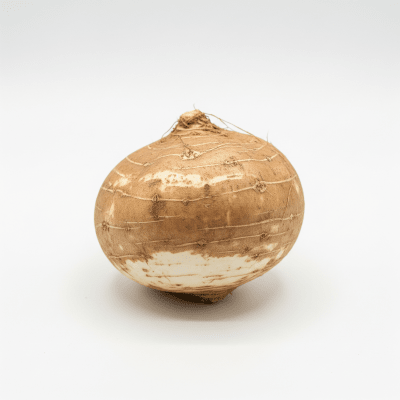
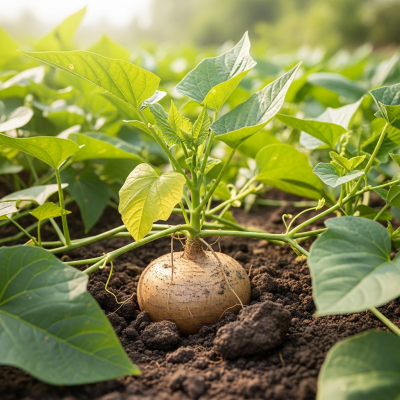
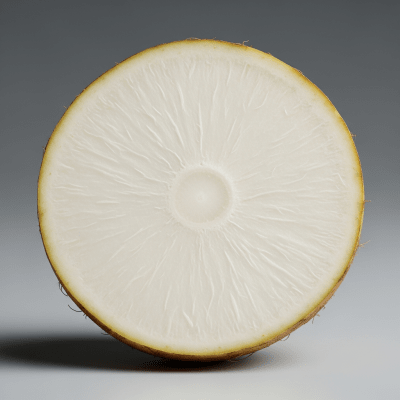
Jicama features a large, bulbous, globular taproot typically weighing between 0.5 and 2 kilograms, though it can reach up to 5 kilograms under optimal conditions. Its thin, papery brown skin conceals a crisp, juicy white flesh that offers a satisfying crunch. The plant itself is a vigorous climbing vine with trifoliate leaves and blue to white flowers, but only the root is edible; all other parts contain toxins.
Jicama is celebrated for its functional versatility and refreshing crunch. Most commonly enjoyed raw—sliced, julienned, or cubed—it adds texture and mild sweetness to salads, slaws, and snacks. It is also lightly cooked in stir-fries, soups, and spring rolls, especially in Southeast Asian cuisines. Its high water content and dietary fiber make it a popular choice for health-conscious diets, and its ability to store well for weeks enhances its role in both home kitchens and commercial supply chains.
Bring this kind into your world illustrated posters, mugs, and shirts.
Archival print, museum-grade paper
Buy Poster
Stoneware mug, dishwasher safe
Buy Mug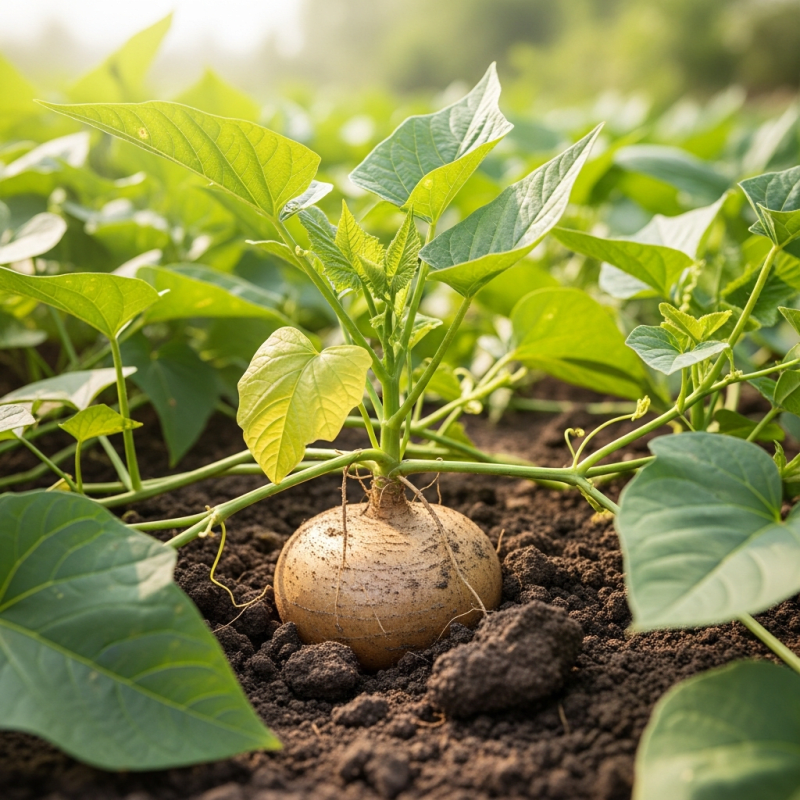
Soft cotton tee, unisex sizes
Buy ShirtJicama holds a special place in the culinary traditions of Mexico, where it is a staple in street food—often served with lime and chili powder. Its popularity has spread across Asia, featuring in festive dishes and everyday meals in countries like Vietnam, Indonesia, and the Philippines. Known by many names, jicama bridges cultures, symbolizing both heritage and modern fusion in global cuisine.
Jicama is low in calories (about 38 kcal per 100g) and high in water (approximately 90%), making it hydrating and light. It provides significant dietary fiber (4.9g/100g), vitamin C (20.2 mg/100g), potassium (150 mg/100g), and small amounts of iron, calcium, and folate. Its gluten-free nature and suitability for vegan, vegetarian, and diabetic diets make it a healthful addition to many eating patterns.
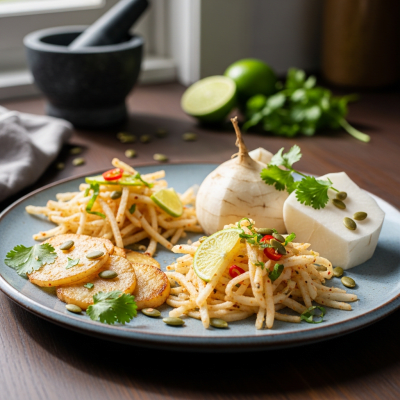
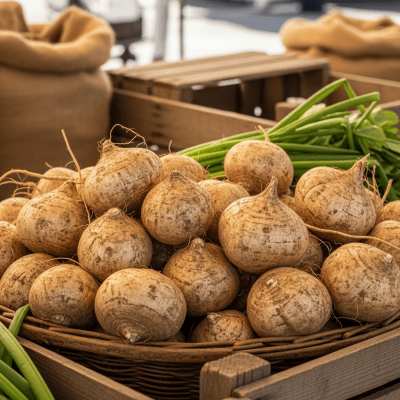
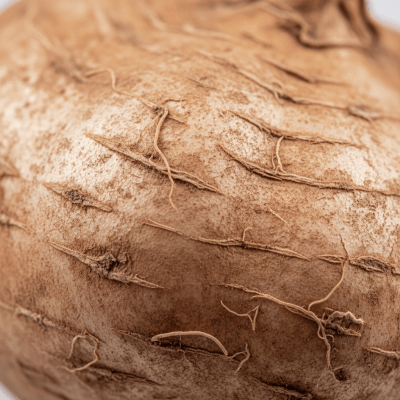
Jicama shines in raw preparations—sliced for salads, slaws, or as a crunchy snack often paired with lime and chili. In Asian cuisines, it is julienned for spring rolls, added to stir-fries, or included in soups. Its mild sweetness and crisp texture complement both savory and sweet dishes, and while most commonly sold fresh, jicama is occasionally processed into chips or pickled for added variety.
Jicama is grown as an annual from a perennial vine, thriving in warm climates with temperatures of 25–30°C. It prefers well-drained soils and requires a growing period of 5–9 months. Yields range from 20 to 40 metric tons per hectare, depending on region and cultivar. The root stores well for several weeks in cool, dry conditions. While moderately drought-resistant and tolerant of some soil-borne pathogens, jicama is susceptible to root rot if grown in poorly drained soils.
Commercially, jicama is primarily sold as fresh root, with market grading based on size, shape, and absence of blemishes. Processed forms, such as chips or pickled jicama, are less common but available in specialty markets.
While specific named cultivars are not widely documented, regional landraces and Asian types (such as Pachyrhizus tuberosus) vary in root size and sweetness. Modern selections focus on larger, sweeter roots for improved market appeal.
Jicama shows moderate resistance to drought and some soil-borne pathogens but is vulnerable to root rot in poorly drained soils. No widely recognized disease-resistant cultivars are currently documented, so growers must manage soil conditions carefully to prevent losses.
Jicama is known by many names around the world, including "yam bean" in English, "sengkuang" in Malaysia and Singapore, "bangkuang" in Indonesia, and "paa khao" in Thailand. In Asian markets, the term "yam bean" may also refer to related species. Regional variants differ in root size and sweetness, reflecting local preferences and cultivation practices.
When selecting jicama, look for firm, heavy roots with smooth, unblemished skin. Avoid roots with soft spots or shriveled areas. Store jicama in a cool, dry place; once cut, refrigerate the unused portion wrapped to prevent dehydration. Properly stored, whole jicama can last several weeks, maintaining its crisp texture and mild flavor.