Garlic
Garlic is a bulb vegetable famed for its pungent flavor, health-promoting properties, and essential role as both seasoning and ingredient in cuisines worldwide.
Garlic is a bulb vegetable famed for its pungent flavor, health-promoting properties, and essential role as both seasoning and ingredient in cuisines worldwide.
Garlic (Allium sativum) traces its roots to Central Asia, particularly the regions of northeastern Iran and Turkmenistan. Its domestication began over 5,000 years ago, likely from wild Allium longicuspis, making it one of the oldest cultivated vegetables. While the precise details of its early cultivation remain debated, garlic’s spread across continents was propelled by its culinary appeal and medicinal reputation, embedding it deeply in the food traditions of Asia, Europe, Africa, and the Americas.
Botanically, garlic belongs to the family Amaryllidaceae, genus Allium, and species sativum. It is classified as a bulb vegetable within the culinary taxonomy, sharing its group with onions, leeks, and shallots. Garlic’s sterile cultivated forms are propagated vegetatively, distinguishing it from seed-grown relatives. In commercial contexts, garlic is recognized as a fresh bulb, with additional market classes for dehydrated and processed products.
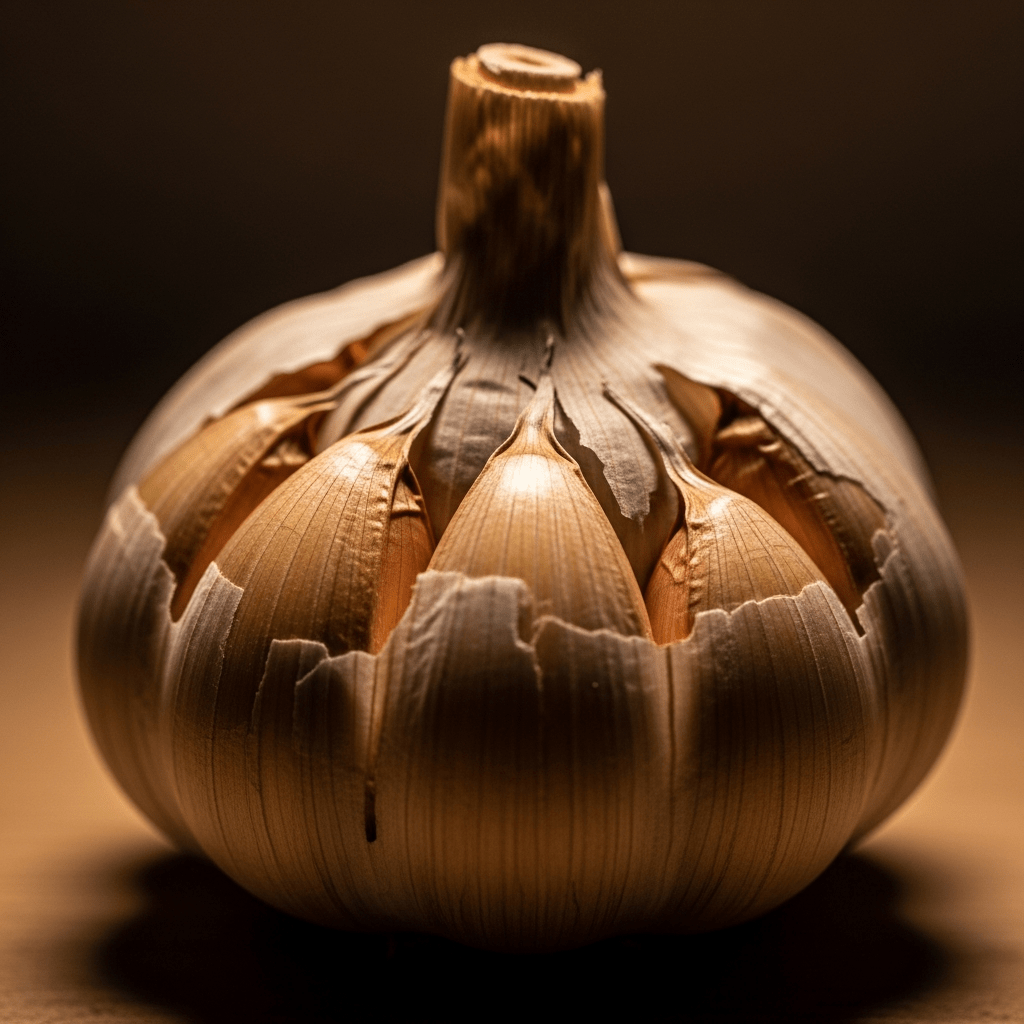
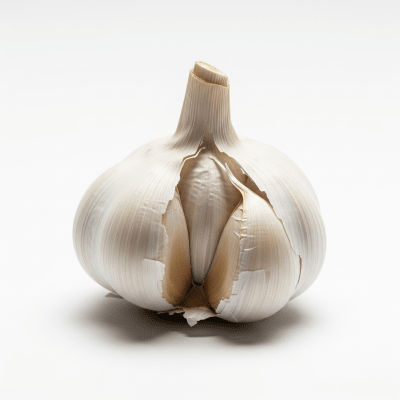
Garlic presents as an underground bulb, typically 4–8 cm in diameter, comprised of 10–20 individual cloves tightly packed and wrapped in papery white or purple-tinged skin. Above ground, the plant features flat, linear green leaves and, in hardneck varieties, a curling flowering stalk known as a scape. When handled, garlic emits a distinctive, sharp aroma that intensifies upon crushing or chopping.
Garlic’s primary function is as a flavor enhancer in savory dishes. It is used fresh, dried, powdered, or processed into oils and pastes, imparting depth and complexity to meats, vegetables, sauces, and breads. Beyond the bulb, garlic scapes are consumed in some regions. Its bioactive compounds, notably allicin, contribute to its reputation for supporting cardiovascular health and possessing antimicrobial properties, making garlic both a culinary and functional food.
Bring this kind into your world illustrated posters, mugs, and shirts.
Archival print, museum-grade paper
Buy Poster
Stoneware mug, dishwasher safe
Buy Mug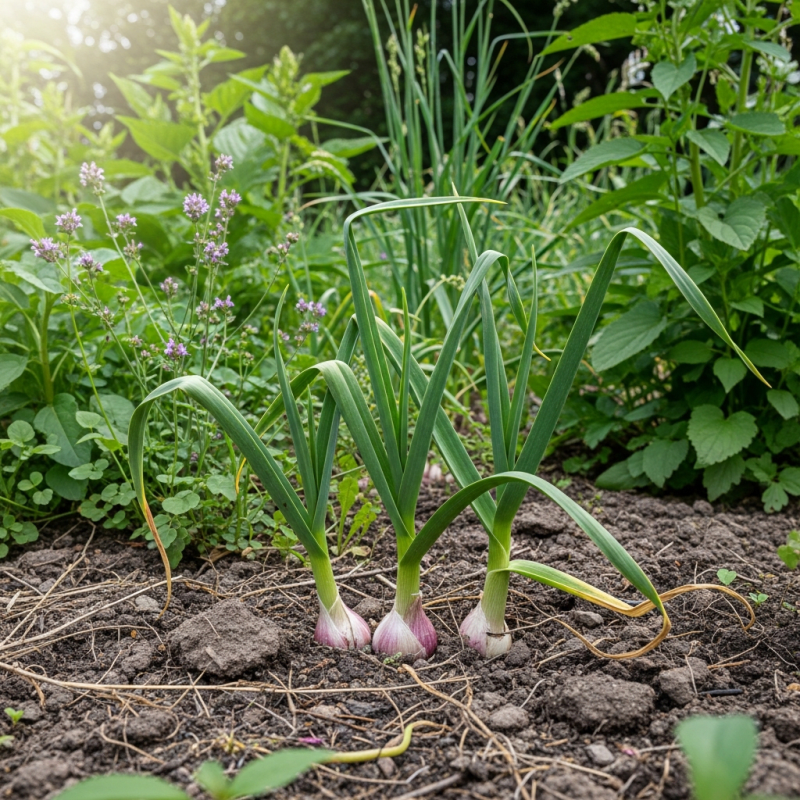
Soft cotton tee, unisex sizes
Buy ShirtGarlic has held symbolic and practical importance throughout history. Revered in ancient Egypt, Greece, and Rome for its medicinal and protective qualities, it was believed to ward off evil and illness. In modern times, garlic features in folklore, religious rituals, and popular culture—often cited as a remedy and even as a mythical repellent against vampires. Its enduring presence in global cuisines underscores its cultural resonance, from Mediterranean aioli to Chinese stir-fries and Indian curries.
Garlic is low in calories yet rich in vitamin C, vitamin B6, manganese, selenium, and a suite of bioactive compounds, most notably allicin. These nutrients contribute to its antioxidant properties and its reputation for supporting heart health and immune function. While garlic is not typically consumed in large quantities, its potent compounds have made it a subject of interest in nutritional science.

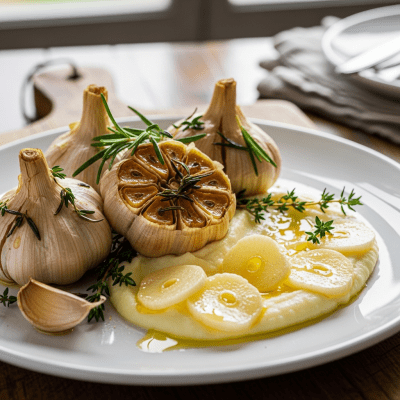

Garlic’s versatility shines in the kitchen. It is used raw for sharp, spicy notes in dressings and salsas, roasted for mellow sweetness, sautéed to build flavor bases, and incorporated into sauces, marinades, and breads. Garlic can be dried, powdered, or processed into oils and pastes. In some cuisines, garlic scapes are stir-fried or pickled. Its ability to transform dishes makes it indispensable in Asian, Mediterranean, African, and Latin American cooking.
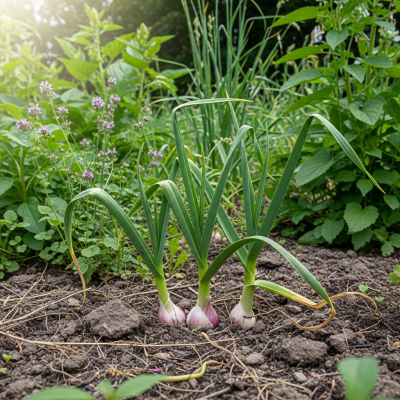
Garlic is grown as an annual crop, despite its perennial nature. It thrives in moderate climates and prefers well-drained soils. Planting is typically done in autumn or early spring, using individual cloves as seed material. Most cultivated garlic is sterile, so propagation relies on vegetative methods. Yields average 7–10 metric tons per hectare, varying by cultivar and region. After harvest, bulbs are cured and stored in cool, dry conditions for extended shelf life. Garlic is moderately resistant to pests but vulnerable to fungal diseases such as white rot and rust.
Garlic is moderately resistant to most pests but is susceptible to several fungal diseases, notably white rot and rust. These diseases can impact bulb quality and yield, especially in poorly drained soils or humid climates. Good crop rotation, soil management, and careful selection of disease-resistant cultivars are key strategies for growers.
Garlic is known by many names worldwide, including "Ajo" (Spanish), "Ail" (French), "Knoblauch" (German), "Suan" (Chinese), and "Lasun" (Hindi/Marathi). Regional preferences influence the choice of cultivars, with hardneck types favored in colder climates and softneck varieties prevalent in milder regions. In some cultures, garlic scapes are a seasonal delicacy, and local heritage varieties are celebrated, though comprehensive lists are not widely available.
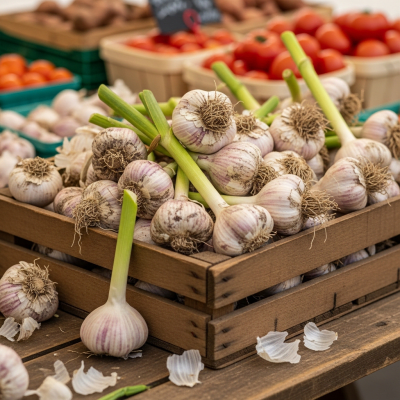
When selecting garlic, look for firm, plump bulbs with dry, intact skins and no signs of sprouting or mold. Store whole bulbs in a cool, dry, and well-ventilated place—avoid refrigeration, which can encourage sprouting. Once separated, cloves should be used promptly. For longer preservation, garlic can be dried, pickled, or processed into paste or oil. Proper storage ensures bulbs remain viable for up to 6–8 months.