Cassava
Cassava is a starchy, tuberous root vegetable (Manihot esculenta) that serves as a vital staple food for millions across tropical and subtropical regions, prized for its resilience and high carbohydrate content.
Cassava is a starchy, tuberous root vegetable (Manihot esculenta) that serves as a vital staple food for millions across tropical and subtropical regions, prized for its resilience and high carbohydrate content.
Cassava originated in the Amazon basin of South America, where it was domesticated between 8,000 and 10,000 years ago. Its spread beyond the Americas began in the 16th century, when Portuguese traders introduced the crop to Africa, Asia, and other tropical regions. The wild ancestor of cassava is believed to be Manihot flabellifolia, and its cultivation history is marked by centuries of traditional selection. Today, global breeding programs—such as those led by the International Center for Tropical Agriculture (CIAT) and the International Institute of Tropical Agriculture (IITA)—continue to develop improved varieties for food security and resilience.
Cassava belongs to the family Euphorbiaceae, genus Manihot, and species Manihot esculenta. In culinary terms, it is classified as a root vegetable and a staple carbohydrate. Its taxonomy places it among other edible tubers, but its unique agronomic traits and cultural roles distinguish it within the vegetable kingdom.
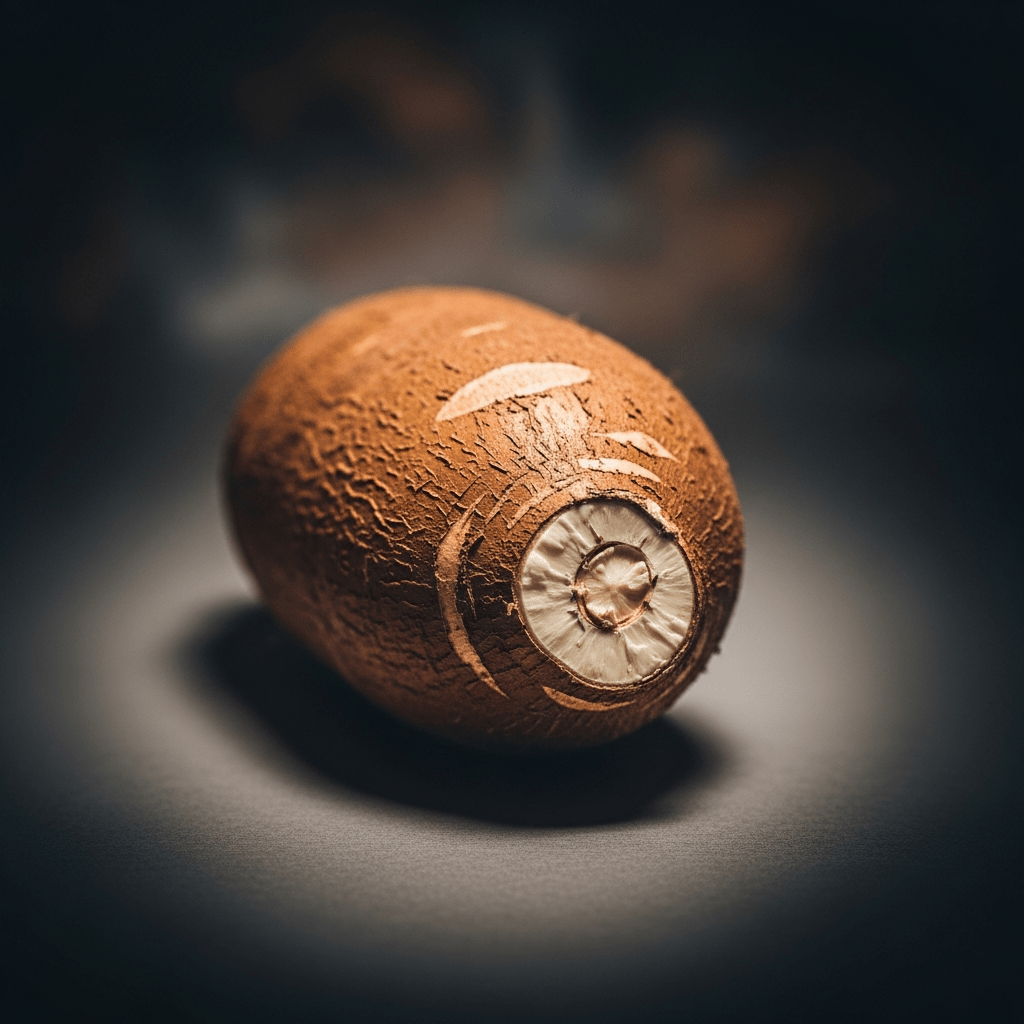
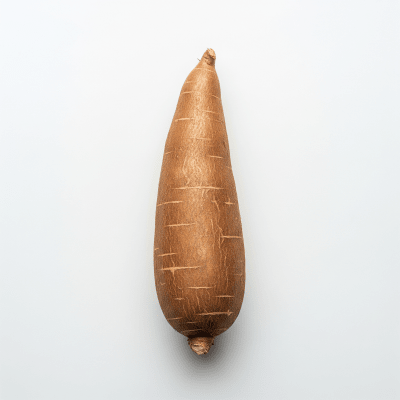
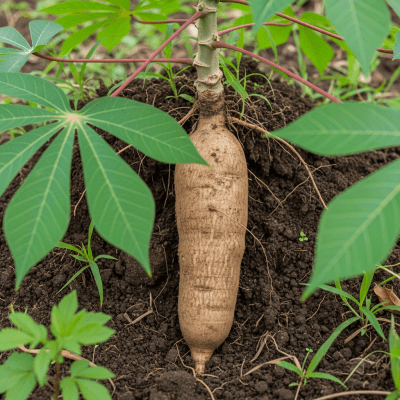
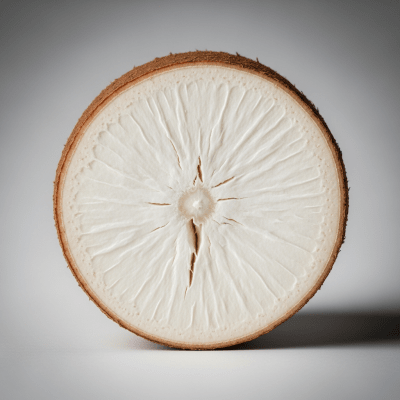
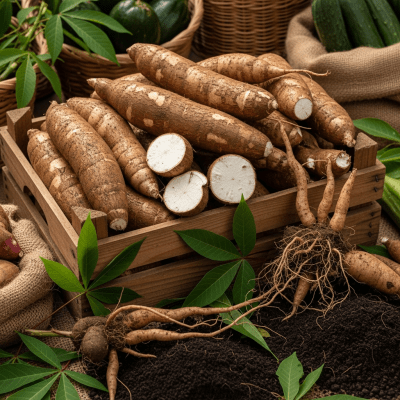
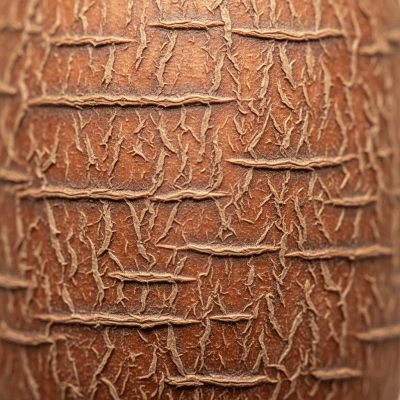
Cassava plants grow as perennial shrubs, reaching heights of 1–3 meters. The edible roots are large, elongated, and starchy, typically measuring 5–15 cm in diameter and up to 1 meter in length. The skin is brown, rough, and fibrous, while the interior flesh ranges from white to yellowish. When freshly harvested, cassava roots are firm and heavy, but they become highly perishable and must be processed or consumed quickly.
Cassava is cultivated primarily for its roots, which are a major source of dietary energy in many tropical diets. The plant thrives in poor soils and is drought-tolerant, making it invaluable for food security where other crops may fail. Cassava is propagated from stem cuttings and matures in 8–24 months, depending on variety and climate. Its roots require careful processing—such as soaking, drying, cooking, or fermenting—to remove naturally occurring toxins and ensure safe consumption.
Bring this kind into your world illustrated posters, mugs, and shirts.

Archival print, museum-grade paper
Buy Poster
Stoneware mug, dishwasher safe
Buy Mug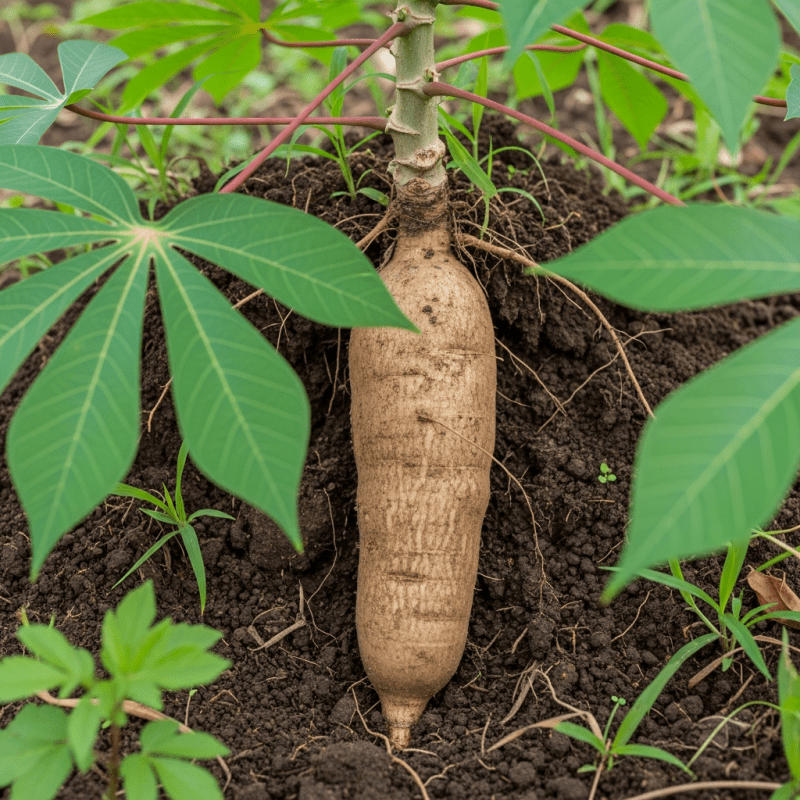
Soft cotton tee, unisex sizes
Buy ShirtCassava holds deep cultural importance in regions where it is a staple, featuring prominently in traditional dishes, rituals, and local economies. In Africa, Latin America, and Southeast Asia, cassava is not only a food source but also a symbol of resilience and adaptability. Its many names—yuca, manioc, balinghoy, mogo, and tapioca—reflect its integration into diverse languages and cuisines. Cassava-based foods such as gari, fufu, and tapioca are central to communal gatherings and daily meals.
Cassava is a major source of carbohydrates and calories, making it a vital energy food in many diets. However, it is relatively low in protein and micronutrients compared to cereals and legumes. While the roots are rich in starch, they also contain cyanogenic glycosides, which must be removed by processing. Cassava leaves, when properly cooked, provide additional vitamins and minerals, including vitamin A and iron.
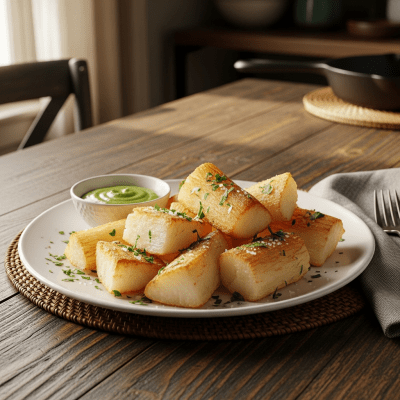
Cassava is highly versatile in the kitchen. The roots are commonly boiled, steamed, fried, or roasted, and are processed into staple foods such as gari, fufu, tapioca, and cassava flour. In some regions, the leaves are cooked and served as a nutritious green vegetable. Industrially, cassava is used to produce starch, sweeteners, animal feed, and bioethanol, expanding its utility beyond household cooking.
Cassava is grown as a perennial shrub, propagated from stem cuttings rather than seeds. It is well-suited to tropical climates and can tolerate drought and poor, acidic soils with minimal inputs. The crop matures in 8–24 months, depending on variety and environment, and yields can reach 10–40 tonnes per hectare under optimal management. After harvest, cassava roots are highly perishable and must be processed or consumed quickly to prevent spoilage. Breeding programs focus on improving disease resistance and yield stability.
These forms are commonly found in local markets and international trade, each serving different culinary and industrial needs.
Cassava is grown in countless local varieties and landraces, often distinguished by their cyanogenic potential as "sweet" or "bitter" types. While specific cultivar names are less standardized than in other crops, breeding institutions such as CIAT and IITA have developed improved varieties with enhanced yield, disease resistance, and reduced toxicity. Regional preferences and naming conventions further diversify the landscape of cassava cultivars.
Cassava is vulnerable to several major diseases and pests, including cassava mosaic disease, cassava brown streak disease, and mealybugs. These threats can severely impact yield and crop quality. Ongoing breeding efforts have produced some varieties with improved resistance, but integrated pest management and careful selection remain essential for sustainable production.
Cassava is known by many names around the world: "yuca" in Spanish-speaking regions, "manioc" in French and Portuguese, "balinghoy" in the Philippines, "mogo" in East Africa, and "tapioca" in parts of Asia. Regional culinary traditions shape how cassava is used, from fermented products in West Africa to starch-based desserts in Southeast Asia. The distinction between "sweet" and "bitter" cassava varieties is especially important in local food cultures, reflecting differences in processing and safety.
When selecting cassava, look for firm, unblemished roots with intact skin. Because cassava is highly perishable, it should be used or processed within a few days of harvest. Store fresh roots in a cool, dry place, and avoid refrigeration, which can accelerate spoilage. Processed forms—such as dried chips, flour, and starch—offer longer shelf life and greater convenience. Always ensure cassava is properly prepared to remove toxins before consumption.