Travel Umbrella
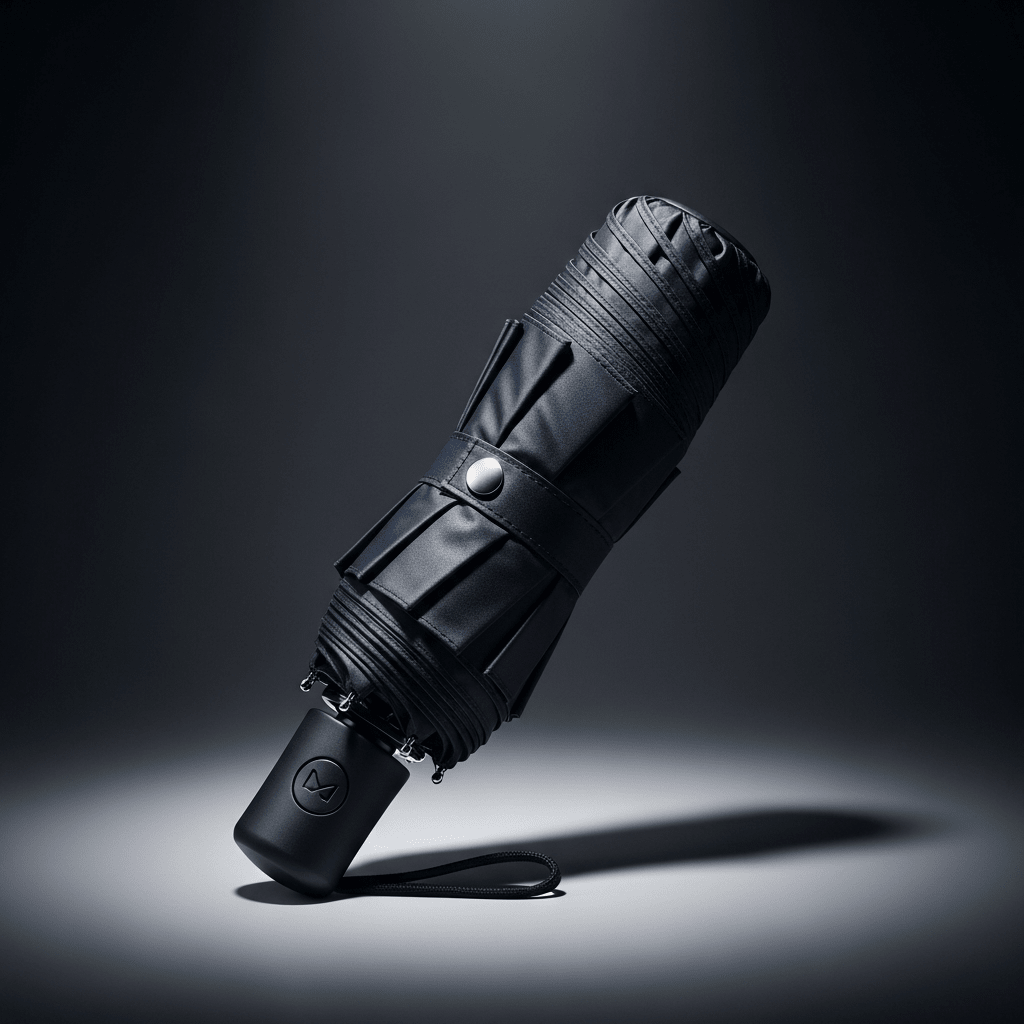
The travel umbrella is a highly portable, lightweight folding umbrella designed for convenient transport during travel, offering reliable protection from rain and sun while fitting easily into small bags or pockets.
The travel umbrella is a highly portable, lightweight folding umbrella designed for convenient transport during travel, offering reliable protection from rain and sun while fitting easily into small bags or pockets.
Emerging in the late 20th century, the travel umbrella developed alongside advances in lightweight materials and compact folding mechanisms. Early contributions came from Japanese and Chinese manufacturers, with brands like Totes in the USA, Fulton in the UK, and Senz in the Netherlands shaping its design evolution. Rooted in the mini and pocket umbrella tradition, the travel umbrella refined frame engineering and canopy fabrics to meet the demands of modern urban mobility and global tourism.
Classified within the umbrella family as a folding, compact form factor, the travel umbrella belongs to the broader category of handheld weather protection devices. It is distinguished by its collapsible design and lightweight construction, fitting into the subset of portable umbrellas optimized for ease of carry and storage.
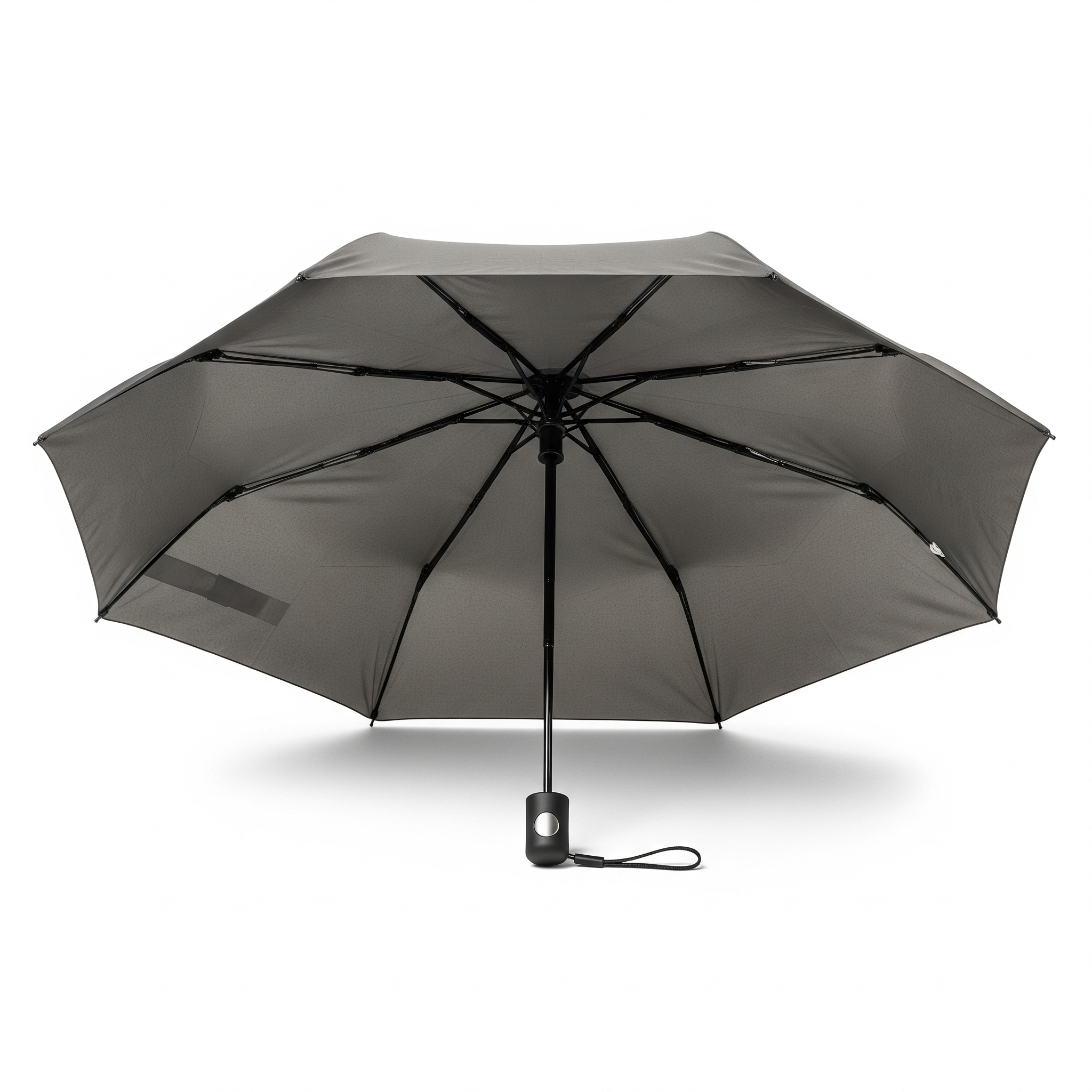
Typically ultra-compact and collapsible, the travel umbrella folds down to about 15 centimeters in length and opens to a canopy diameter near 85 centimeters. Its tri-fold or multi-fold structure allows it to compress into a minimal size, making it discreet and easy to carry. The canopy is usually crafted from lightweight polyester or pongee fabric, often treated for water repellency, while the frame and shaft combine aluminum, fiberglass, and high-strength plastics for a balance of durability and lightness.
Designed primarily for rain protection, travel umbrellas also serve as sunshields, especially in regions with strong UV exposure. Their compactness and light weight make them ideal for urban commuters, tourists, and business travelers who require dependable weather protection on the go. They are commonly stored in handbags, backpacks, or luggage, ready to deploy quickly when needed.
Bring this kind into your world illustrated posters, mugs, and shirts.
Archival print, museum-grade paper
Buy Poster
Stoneware mug, dishwasher safe
Buy Mug
Soft cotton tee, unisex sizes
Buy ShirtMore than a practical tool, the travel umbrella symbolizes preparedness and modern mobility. It features prominently in travel guides and promotional campaigns as an essential accessory for the contemporary traveler. In places like Japan, travel umbrellas are so ingrained in daily life that they are widely available in convenience stores and vending machines, reflecting their cultural integration and importance.
Travel umbrellas primarily employ manual opening mechanisms, requiring the user to slide the runner up the shaft to deploy the canopy. Some models incorporate automatic systems, where a spring-loaded button opens the umbrella instantly, while hybrid variants combine manual opening with automatic closing for convenience. The folding design often includes tri-fold or multi-fold joints that collapse the shaft and ribs into a compact bundle, allowing easy storage without compromising canopy size when open.

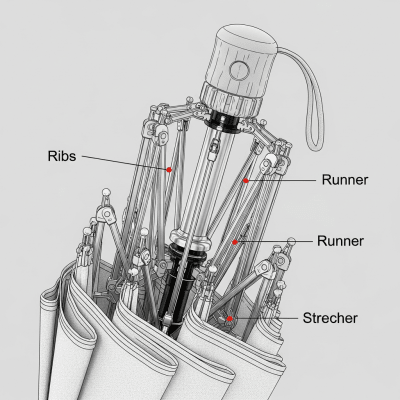
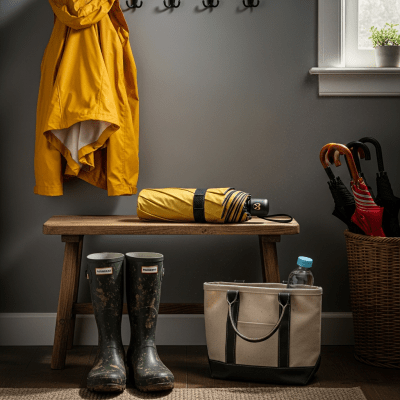
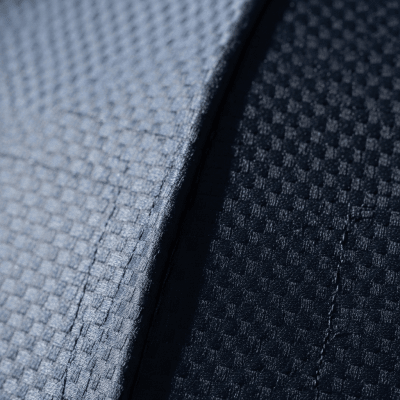
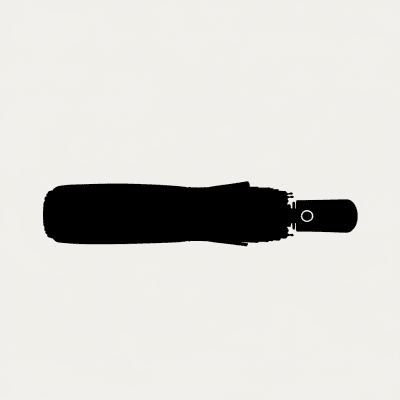
The canopy of a travel umbrella is commonly made from lightweight polyester or pongee fabrics, often treated for water repellency and UV protection. Frames and ribs utilize aluminum, fiberglass, or high-strength plastics to achieve a balance between durability and minimal weight. Shafts are constructed from similar materials, ensuring flexibility and resistance to bending. Handles may feature ergonomic designs with slip-resistant grips, enhancing comfort during use. Windproof reinforcements, such as flexible ribs or vented canopies, are sometimes integrated to improve resilience against gusts.
Travel umbrellas come in various styles, predominantly folding types with tri-fold or multi-fold mechanisms. Regional variants reflect local needs: in Asia, emphasis is placed on UV-protective canopies, while European models often prioritize wind resistance. Color and pattern options range from solid hues to intricate prints and branded designs. Synonyms such as mini umbrella, pocket umbrella, and compact umbrella overlap with travel umbrellas, though the latter typically denotes enhanced durability and user comfort. Colloquial terms include "brolly" in the UK and "折りたたみ傘" (oritata-migasa) in Japan.
To prolong a travel umbrella's lifespan, it is best to allow it to dry fully before folding and storing to prevent mold and fabric damage. Regularly check the frame and ribs for any bends or breaks, and gently clean the canopy with mild soap and water to remove dirt. Avoid forcing the opening or closing mechanism to prevent spring or joint damage. Storing the umbrella in a protective sleeve can shield it from scratches and maintain its compact form.
When selecting a travel umbrella, consider the canopy size to ensure adequate coverage while maintaining portability. Look for durable frame materials like fiberglass or aluminum for better wind resistance. Decide between manual, automatic, or hybrid opening mechanisms based on personal convenience preferences. Features such as ergonomic, slip-resistant handles and windproof reinforcements add comfort and durability. Additionally, consider canopy fabric treatments for water repellency and UV protection if sun shielding is desired. Finally, assess weight and folded length to ensure the umbrella fits your travel needs.