Origin Story

Originating in Europe and Asia during the 18th and 19th centuries, the straight umbrella traces its lineage to early umbrella designs documented as early as the 1700s. Its enduring form evolved through incremental improvements in materials and ergonomics, with modern production centered in China, Japan, and the United Kingdom. Esteemed manufacturers such as Fulton and Senz continue to uphold its traditional craftsmanship.

Classification

The straight umbrella belongs to the full-size, non-collapsible category of handheld umbrellas, distinguished by a rigid, non-telescoping shaft and manual opening mechanism. It is classified within the broader umbrella family as a traditional rain protection device, often contrasted with folding or compact variants.

Appearance or Form

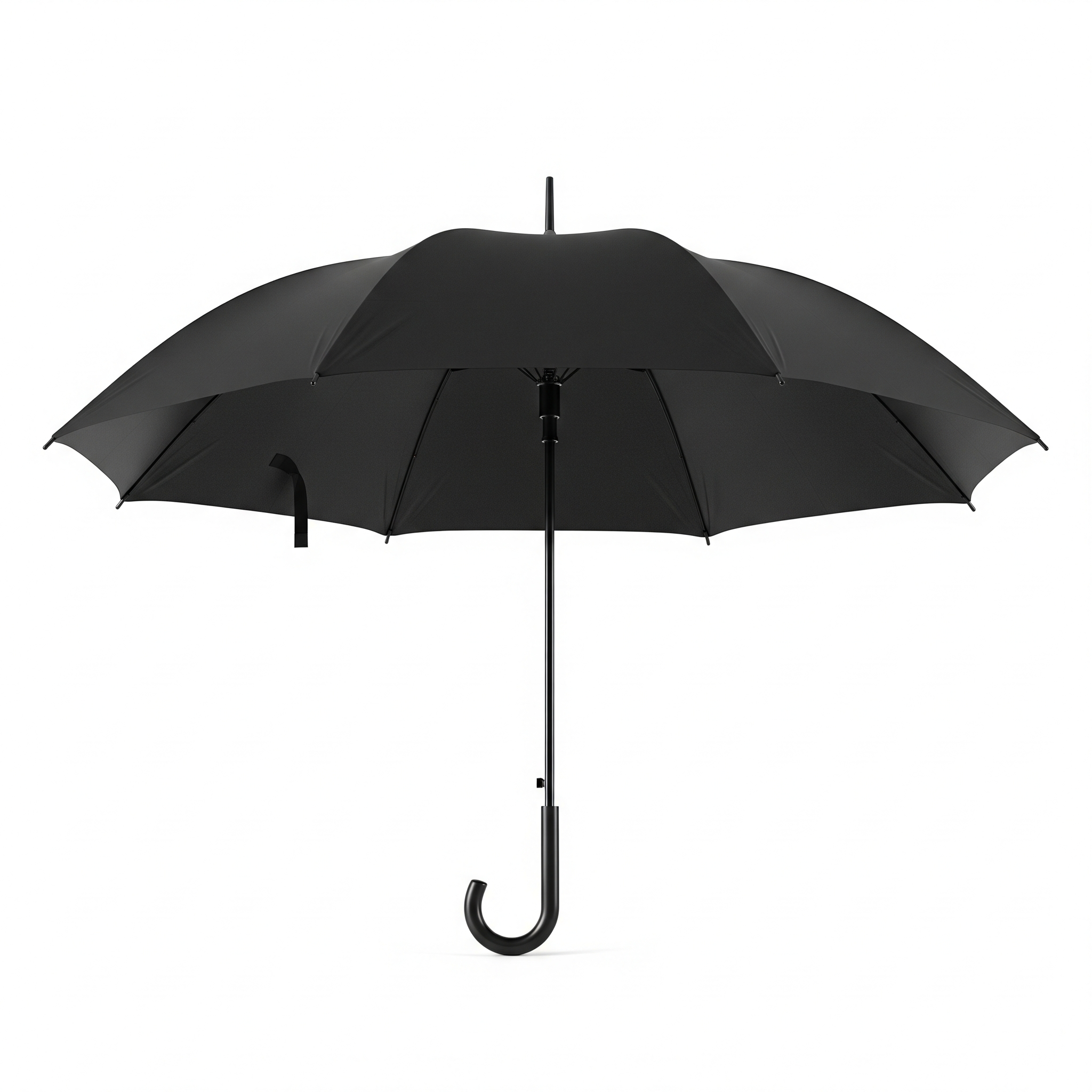
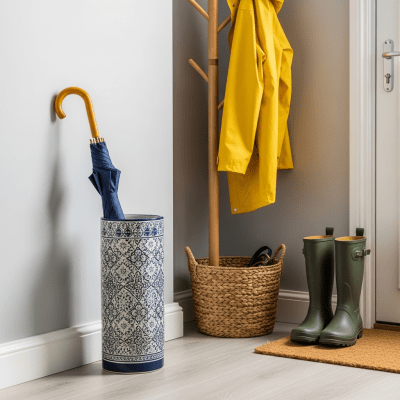
Typically featuring a long shaft measuring between 80 and 100 centimeters, the straight umbrella boasts a wide, dome-shaped canopy spanning approximately 110 centimeters in diameter. Its handle may be curved or straight, crafted in classic colors like black or navy, though patterned and ornate designs appear in ceremonial or fashion variants.

Behavior or Usage

Primarily used to shield individuals from rain, the straight umbrella provides reliable, broad coverage through its fixed canopy. Some versions also offer sun protection, ceremonial use, or serve as fashion accessories. Its sturdy construction and full-size form make it a favored choice for professional and formal settings.

Merchandise & Prints

Bring this kind into your world � illustrated posters, mugs, and shirts.

Straight Umbrella Straight Umbrella Poster

Straight Umbrella Poster

Archival print, museum-grade paper

Straight Umbrella Straight Umbrella Mug

Straight Umbrella Mug

Stoneware mug, dishwasher safe

Straight Umbrella Straight Umbrella Shirt

Straight Umbrella Shirt

Soft cotton tee, unisex sizes

Attributes & Insights

Taxon-Specific Insights

🌍Cultural Significance

Across cultures, the straight umbrella symbolizes tradition and status. In England, it is emblematic of the "gentleman’s umbrella," while in Japan, the traditional wagasa variant plays a vital role in festivals and ceremonies. In India and Southeast Asia, straight umbrellas are integral to religious and royal processions, underscoring their cultural and symbolic importance.

📌Notable Facts

  • Straight umbrellas often feature wind-resistant designs with reinforced ribs and vented canopies.
  • Many incorporate UV protection coatings for sun defense.
  • Water-repellent treatments are standard to enhance durability.
  • Traditional variants like the Japanese wagasa use natural materials such as bamboo and paper.
  • They predate folding umbrellas, with documented use dating back over 300 years.

⚙️Mechanism Details

Most straight umbrellas employ a manual opening and closing mechanism, where the user slides a runner along the shaft to extend or retract the canopy. Unlike folding umbrellas, the shaft is fixed and non-telescoping, providing structural stability. Some modern models incorporate automatic opening systems that release the canopy with a button press, though manual operation remains standard.

Visual Variations

High quality studio photograph of a Straight Umbrella
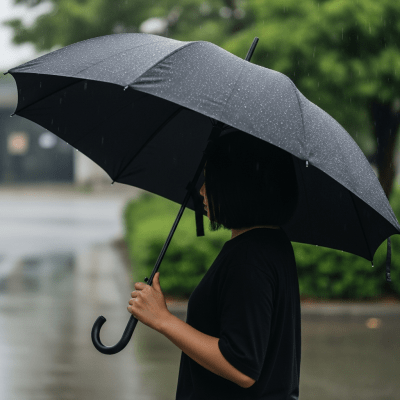
A realistic image of a Straight Umbrella (umbrellas) being used outdoors during a light rain, with droplets visible on the umbrella surface
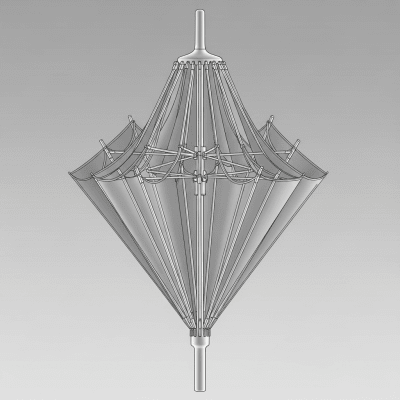
Detailed cross-sectional illustration of a Straight Umbrella, showing the internal structure such as ribs, shaft, and canopy fabric
Image of a Straight Umbrella displayed alongside typical items it is paired with (e
A close-up macro photograph focusing on the texture and pattern of the canopy fabric of a Straight Umbrella (umbrellas)
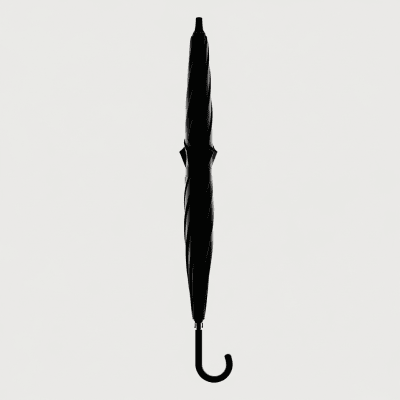
A minimalist side profile silhouette of a closed Straight Umbrella, set against a light grey background

Composition & Context

Taxon-Specific Insights

🧵Materials And Construction

The canopy is commonly made from durable fabrics such as polyester, nylon, or pongee, with occasional use of cotton or silk in ceremonial or fashion umbrellas. Frames and ribs utilize steel, fiberglass, aluminum, or composite materials to balance strength and flexibility. Shafts are crafted from solid wood (like maple or oak), aluminum, steel, or fiberglass, while handles vary among wood, plastic, rubberized coatings, or metal, often ergonomically shaped for comfort.

🎨Styles And Variants

While the classic straight umbrella maintains a consistent form, regional and stylistic variants exist. In the UK, the "gentleman’s umbrella" often features a crook handle and understated design. Japan’s traditional wagasa is crafted from bamboo and oil-paper, used in cultural ceremonies. Chinese straight umbrellas serve both everyday and ceremonial purposes. In France, the straight umbrella is known as "parapluie droit," reflecting local terminology.

🧼Care And Maintenance

To prolong a straight umbrella’s life, it is best to allow it to dry fully before closing to prevent fabric mildew and rust on metal parts. Cleaning the canopy with mild soap and water removes dirt and maintains water repellency. Periodic inspection of ribs and joints helps identify wear or damage early. Storing the umbrella in a dry, ventilated area and avoiding excessive force when opening or closing preserves its mechanism and structure.

🛒Buying Guide

When selecting a straight umbrella, consider canopy size for adequate coverage and the sturdiness of the frame and ribs for wind resistance. Material quality in the shaft and handle affects durability and comfort. Features like UV protection coatings and water repellency enhance functionality. Choose a manual or automatic mechanism based on personal preference. For formal or ceremonial use, style and traditional craftsmanship may be key factors. Reliable brands such as Fulton and Senz offer trusted options.

Faq

Q: What distinguishes a straight umbrella from a folding umbrella?
A: A straight umbrella has a rigid, non-collapsible shaft and fixed canopy, whereas folding umbrellas have telescoping shafts and collapsible frames for compact storage.

Q: Are straight umbrellas suitable for sun protection?
A: Yes, some straight umbrellas are designed as parasols with UV protective coatings to shield against sunlight.

Q: How durable are straight umbrellas compared to other types?
A: Their solid construction and reinforced ribs generally make them more durable and wind-resistant than many folding umbrellas.