Origin Story

Originating in East Asia, particularly China and Japan, the pagoda umbrella draws its design inspiration from the multi-eaved pagoda architecture prominent in the region. Emerging in the early 20th century, it blends traditional Asian motifs with Western umbrella construction techniques. Today, pagoda umbrellas are produced mainly in China and Japan by both mass-market brands like Fulton and specialty manufacturers.

Classification

Classified within the broader family of handheld umbrellas, the pagoda umbrella falls under the full-size, manual-opening category. It is recognized as a specialized style distinguished by its tiered canopy form, setting it apart from conventional round or dome-shaped umbrellas.

Appearance or Form

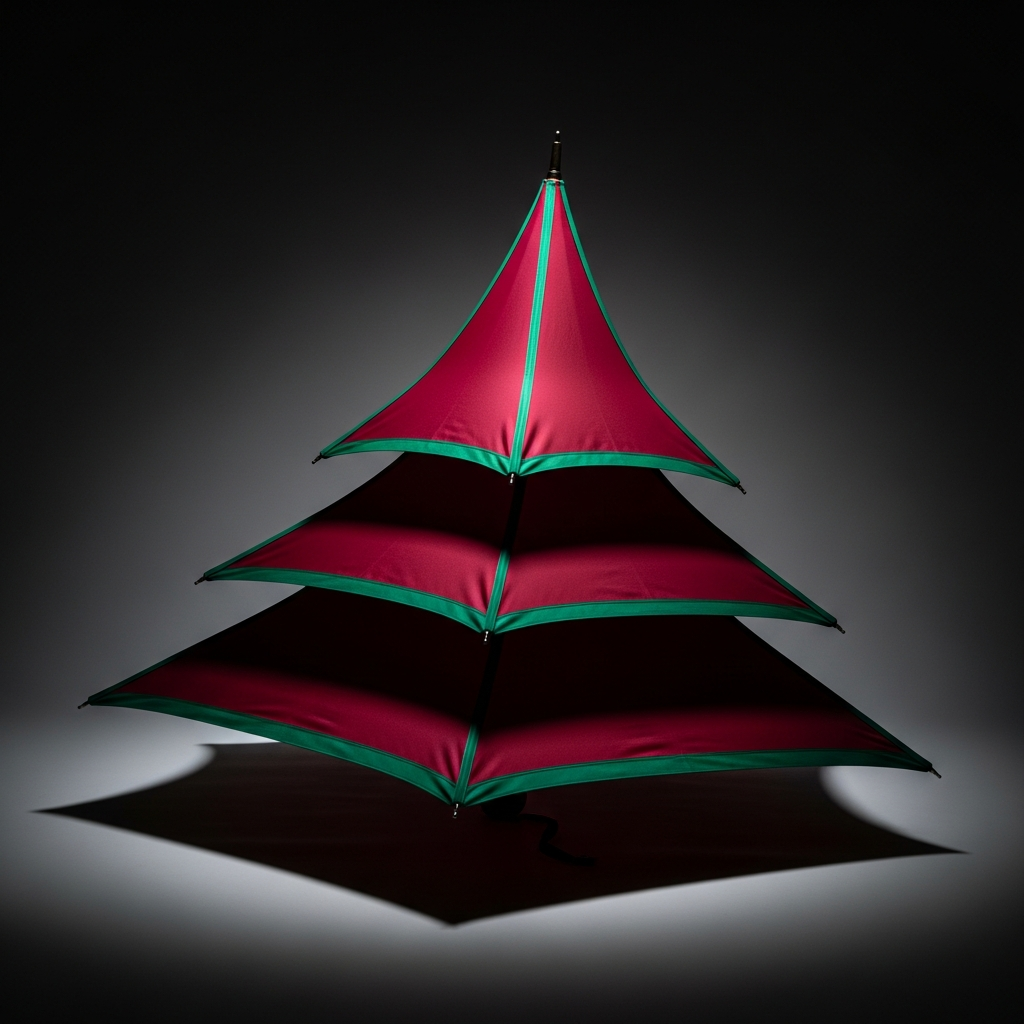
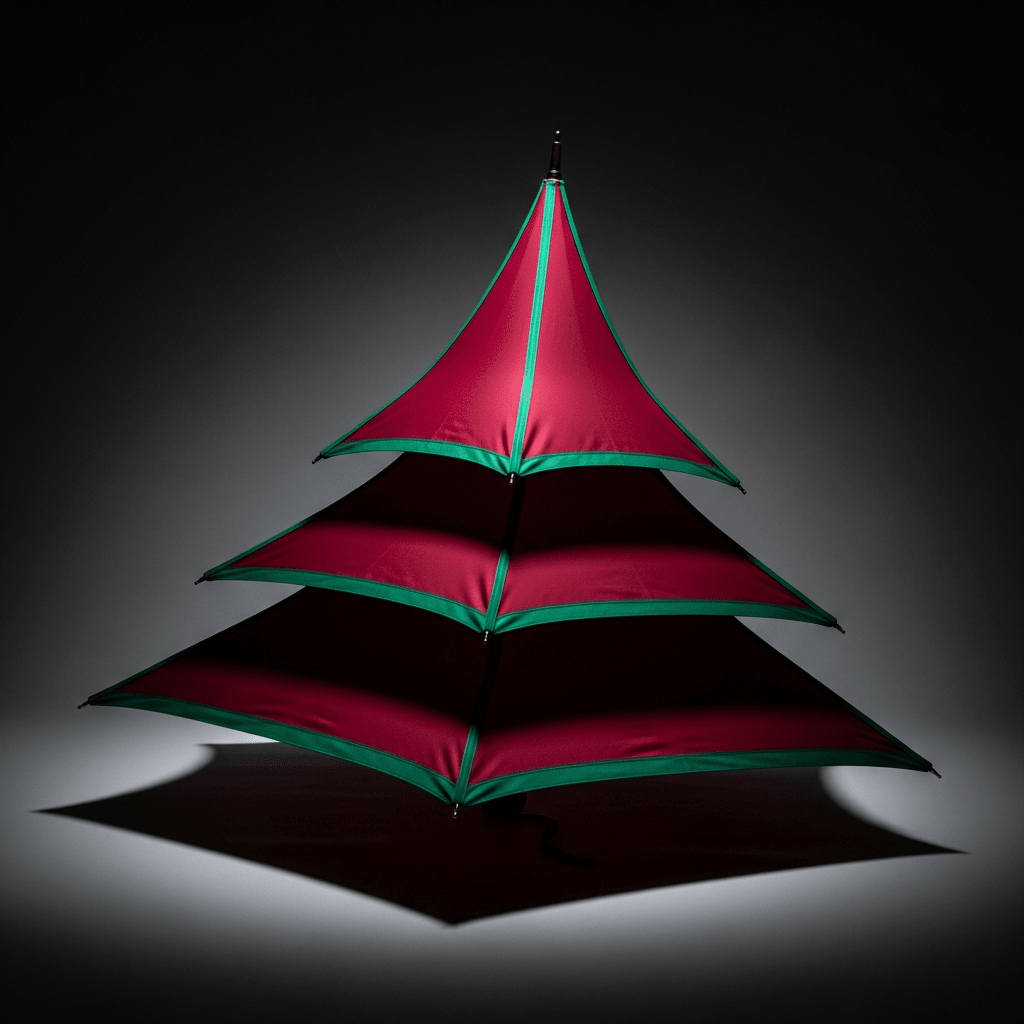
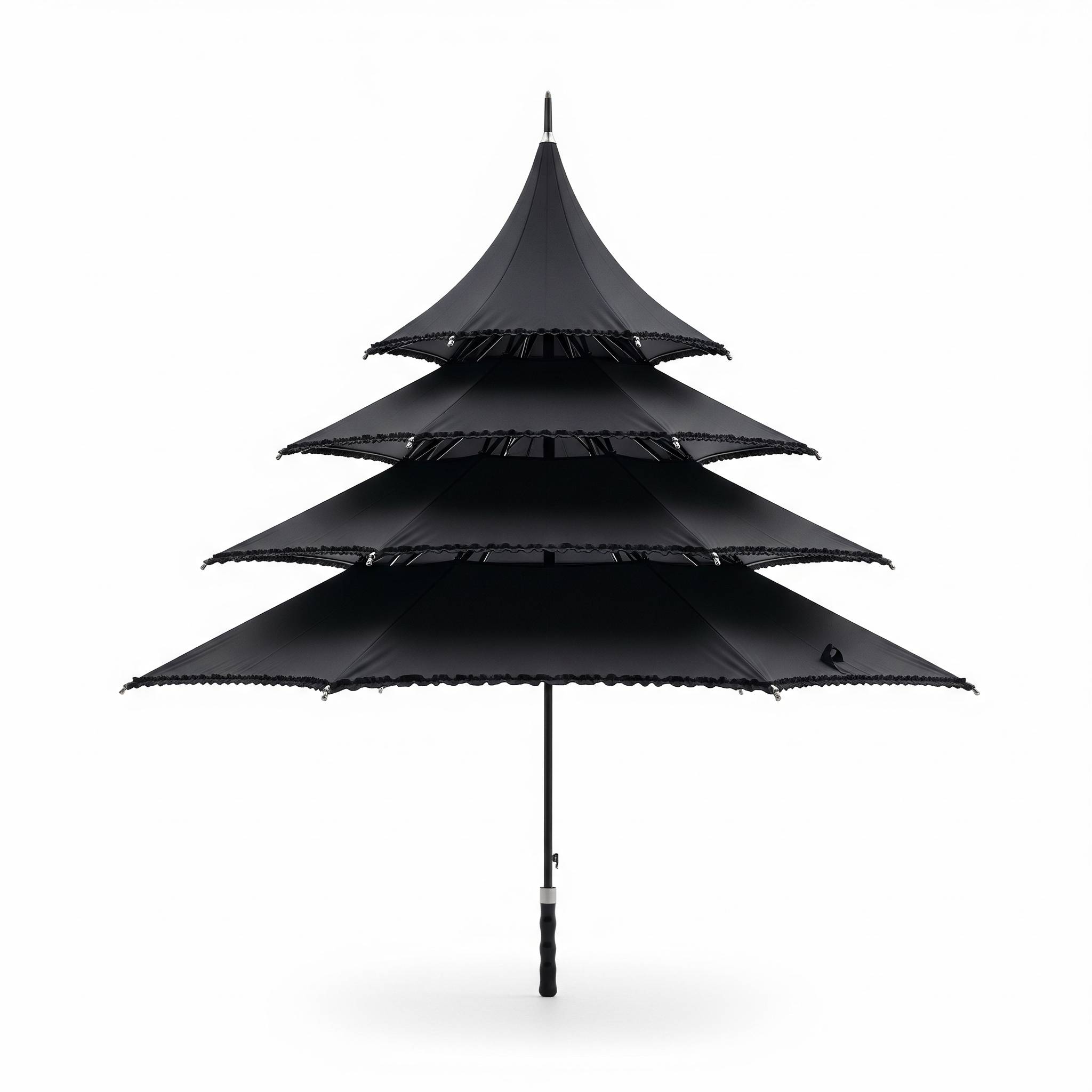
Visually, the pagoda umbrella features a pointed apex with three to five concentric, downward-curving tiers that mimic the layered roofs of East Asian pagodas. Typically, its canopy spans about 85 centimeters in diameter when open and measures around 80 centimeters in length when closed. The canopy fabric ranges from polyester and nylon to luxurious silk in ceremonial versions, often adorned with pastel colors, floral patterns, or traditional Asian motifs. The frame and ribs are crafted from durable materials such as steel, fiberglass, or aluminum, while shafts may be wood, metal, or composite. Handles are frequently decorative, curved, or stylized to complement the umbrella's elegant form.
Behavior or Usage

Primarily, pagoda umbrellas serve as protective devices against rain and sunlight, with some models offering UV protection. Beyond their practical use, they function as fashion accessories and ceremonial items, especially in East Asian cultures. Users often carry them during festivals, weddings, and formal occasions, appreciating both their utility and refined appearance.

Merchandise & Prints

Bring this kind into your world � illustrated posters, mugs, and shirts.

Pagoda Umbrella Pagoda Umbrella Poster

Pagoda Umbrella Poster

Archival print, museum-grade paper

Pagoda Umbrella Pagoda Umbrella Mug

Pagoda Umbrella Mug

Stoneware mug, dishwasher safe

Pagoda Umbrella Pagoda Umbrella Shirt

Pagoda Umbrella Shirt

Soft cotton tee, unisex sizes

Attributes & Insights

Taxon-Specific Insights

🌍Cultural Significance

In Japan and China, the pagoda umbrella symbolizes elegance and femininity, frequently appearing in cultural events and traditional ceremonies. Its distinctive tiered design connects it to architectural heritage, enhancing its symbolic value. In Western markets, it enjoys popularity as a vintage or retro-style umbrella, prized for its unique silhouette and decorative charm.

📌Notable Facts

  • Pagoda umbrellas typically feature 3 to 5 concentric canopy tiers, a design unique among umbrella types.
  • They often incorporate wind-resistant rib structures and UV-protective coatings.
  • High-end models may use silk canopies and elaborately decorative handles.
  • The design merges traditional East Asian aesthetics with modern umbrella engineering.
  • Popular manufacturers include Fulton and various Amazon-listed brands.

⚙️Mechanism Details

Pagoda umbrellas predominantly use manual opening mechanisms, requiring the user to slide a runner along the shaft to extend the ribs and open the canopy. While automatic variants exist, the traditional manual system offers precise control and aligns with the umbrella’s classic aesthetic. The tiered canopy is supported by a robust frame of steel, fiberglass, or aluminum ribs that maintain the distinctive stepped shape when open.

Visual Variations

High quality studio photograph of a Pagoda Umbrella
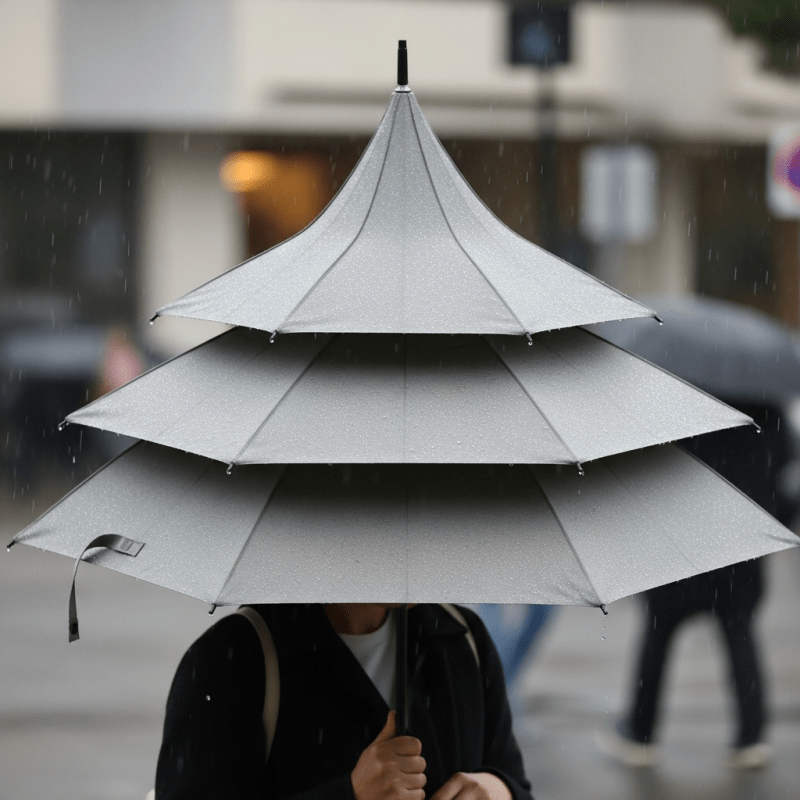
A realistic image of a Pagoda Umbrella (umbrellas) being used outdoors during a light rain, with droplets visible on the umbrella surface
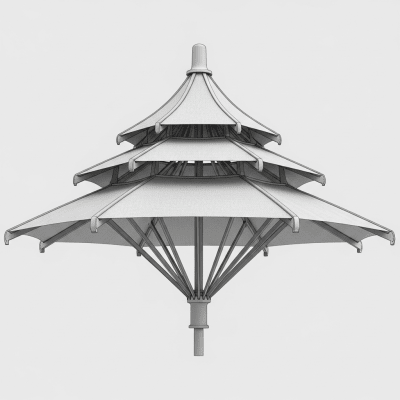
Detailed cross-sectional illustration of a Pagoda Umbrella, showing the internal structure such as ribs, shaft, and canopy fabric
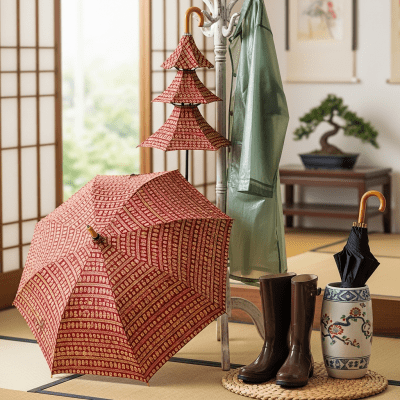
Image of a Pagoda Umbrella displayed alongside typical items it is paired with (e
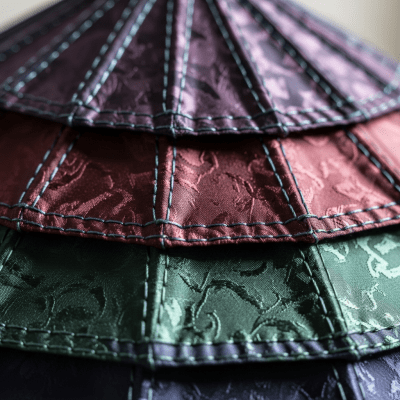
A close-up macro photograph focusing on the texture and pattern of the canopy fabric of a Pagoda Umbrella (umbrellas)
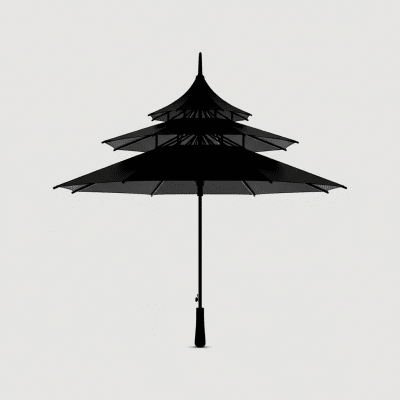
A minimalist side profile silhouette of a closed Pagoda Umbrella, set against a light grey background

Composition & Context

Taxon-Specific Insights

🧵Materials And Construction

The canopy of a pagoda umbrella is commonly made from polyester or nylon, chosen for durability and water resistance, with premium models using silk for ceremonial elegance. The frame and ribs combine steel, fiberglass, and aluminum to balance strength and flexibility, ensuring the tiered canopy retains its shape under wind and rain. Shafts vary from wood for traditional appeal to metal or composite materials for modern durability. Handles are crafted from decorative materials, often curved or stylized to complement the umbrella’s refined design.

🎨Styles And Variants

Pagoda umbrellas come in several styles and regional variants. In Japan, known as "pagoda-gata kasa," they often feature delicate floral patterns and silk canopies for ceremonial use. Chinese variants, called "ta-xing san," may emphasize tower-like shapes with distinctive decorative motifs. Western adaptations tend to favor pastel or solid colors and incorporate modern materials while preserving the tiered silhouette. Variations also include differences in handle design and canopy fabric, ranging from practical polyester to luxurious silk.

🧼Care And Maintenance

To maintain a pagoda umbrella, gently shake off water after use and allow it to dry fully open to prevent mildew and fabric damage. Clean the canopy with mild soap and water, avoiding harsh chemicals that could degrade coatings or silk. Inspect the ribs and frame periodically for bends or corrosion, and store the umbrella in a dry place away from direct sunlight to preserve colors and materials. For decorative handles, wipe with a soft cloth to maintain their finish.

🛒Buying Guide

When selecting a pagoda umbrella, consider canopy material based on intended use—polyester or nylon for everyday rain protection, silk for ceremonial or fashion purposes. Check the frame construction for durability, favoring steel or fiberglass ribs. Decide between manual or automatic opening mechanisms according to personal preference. Pay attention to canopy size and closed length for portability. Finally, evaluate decorative elements and handle design to match your style, especially if the umbrella will serve as a fashion accessory or collectible.

Faq

Q: What makes a pagoda umbrella different from a regular umbrella?
A: Its multi-tiered, pointed canopy inspired by East Asian pagoda architecture sets it apart visually and stylistically.

Q: Are pagoda umbrellas suitable for both rain and sun protection?
A: Yes, they are designed for rain and sun, with some models offering UV protection.

Q: How do I identify an authentic pagoda umbrella?
A: Look for the distinctive tiered canopy shape, quality materials like polyester or silk, and often decorative handles reflecting traditional motifs.