
Manual Folding Umbrella
The manual folding umbrella is a compact, portable device designed for personal protection against rain or sun, distinguished by its collapsible frame and manual open/close mechanism.
The manual folding umbrella is a compact, portable device designed for personal protection against rain or sun, distinguished by its collapsible frame and manual open/close mechanism.
Manual folding umbrellas emerged in the late 19th to early 20th centuries as inventors in Europe and Japan sought to enhance umbrella portability. Early patents for folding mechanisms laid the groundwork for this innovation, which gained momentum through mass production in mid-20th century China and Japan. Rooted in the classic stick umbrella design, these folding models evolved alongside advances in lightweight alloys and synthetic fabrics, enabling their widespread adoption.
Belonging to the broader family of handheld umbrellas, the manual folding umbrella is classified by its manual opening and closing mechanism combined with a folding form factor. It fits within the portable umbrella category, distinguished from automatic or hybrid mechanism types and from full-size or stick umbrellas by its collapsible structure.
Typically featuring a telescoping shaft and collapsible ribs, the manual folding umbrella folds down to a compact length of around 20 centimeters, expanding to a canopy diameter near 100 centimeters. Designs vary between 2-fold, 3-fold, and even 5-fold models, allowing for diverse compactness levels. The canopy fabric often includes polyester, pongee, or nylon, while frames and ribs are crafted from aluminum, steel, fiberglass, or composite plastics. Handles may be made of plastic, rubberized materials, wood, or metal, sometimes ergonomically shaped or decorated.
Users manually operate the umbrella by sliding the runner along the shaft to open or close the canopy. Its primary function is to shield individuals from rain and sun, with some models offering UV protection. Its compactness and portability make it ideal for daily commuters, travelers, and urban dwellers who need convenient weather protection that fits easily into bags or backpacks.
Bring this kind into your world illustrated posters, mugs, and shirts.

Archival print, museum-grade paper
Buy Poster
Stoneware mug, dishwasher safe
Buy Mug
Soft cotton tee, unisex sizes
Buy ShirtThe manual folding umbrella symbolizes modern convenience and practicality across many cultures. It is a common accessory during rainy seasons, notably in Japan where local design standards influence its manufacture. While less prevalent in ceremonial contexts, it often serves as a fashion statement or promotional item worldwide, reflecting both utility and style.
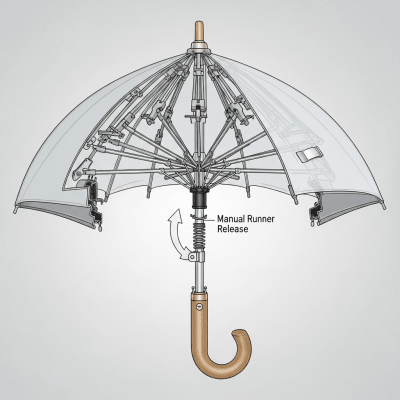
Manual folding umbrellas operate through a simple mechanical system where the user slides a runner along the shaft to extend or retract the ribs and canopy. The ribs fold inward when closing and expand outward when opening, supported by a telescoping shaft that collapses in segments. Unlike automatic umbrellas, no springs or buttons are involved, relying solely on user force to position the canopy.
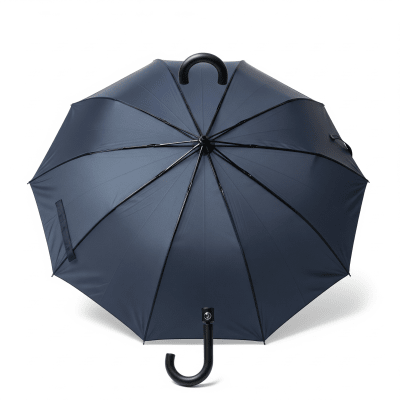

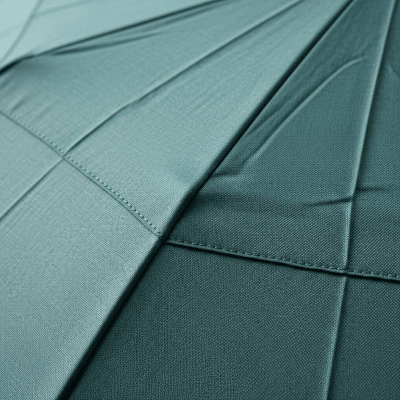

Constructed for durability and portability, manual folding umbrellas combine lightweight and resilient materials. Canopies are typically woven from polyester, pongee, or nylon fabrics treated for water repellency and sometimes UV resistance. The frame and ribs utilize metals like aluminum and steel or flexible fiberglass and composite plastics to balance strength with flexibility. Shafts are made from metal or reinforced plastics to withstand repeated folding. Handles vary widely, including plastic, rubberized grips, wood, or metal, often designed for ergonomic comfort and aesthetic appeal.
Manual folding umbrellas come in various styles, including 2-fold, 3-fold, and 5-fold designs, which dictate how compactly they collapse. Regional variants reflect local preferences and terminology, such as the British "brolly" or the Japanese "折りたたみ傘" (oritata-migasa). Canopies range from solid colors to intricate prints, and some models incorporate windproof or vented designs to improve performance in adverse weather.
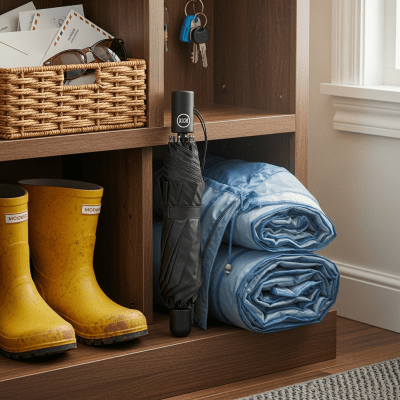
To prolong the life of a manual folding umbrella, it is best to dry it fully before storage to prevent mold and fabric damage. Avoid forcing the mechanism if it resists opening or closing, and periodically check for bent ribs or loose joints. Cleaning the canopy with mild soap and water helps maintain water repellency, while lubricating the shaft and runner can ensure smooth operation.
When selecting a manual folding umbrella, consider canopy size for adequate coverage, fold count for desired compactness, and materials for durability and weight. Features such as windproof ribs, UV protection, and ergonomic handles enhance functionality. Assess the quality of the opening mechanism for smooth operation, and choose styles that suit your personal taste and typical weather conditions. Trusted brands like Totes, Fulton, and Senz offer reliable options across price ranges.