Origin Story

Emerging in the early 20th century, the golf umbrella was developed as a specialized adaptation of the standard rain umbrella to meet the demands of golfers exposed to prolonged weather conditions on open courses. Its origins trace back to the United Kingdom, United States, and Japan—regions with established golfing traditions. Over time, its design evolved to feature larger canopies, reinforced frames, and windproof technologies, reflecting both practical needs and advances in materials and manufacturing.

Classification

Classified within the broader umbrella family as a full-size, manual-mechanism umbrella, the golf umbrella belongs to the category of sporting umbrellas distinguished by its extra-large canopy and robust construction. It fits under the functional group of rain and sun protection devices, often noted for its wind-resistant features and durability tailored to outdoor sporting environments.

Appearance or Form

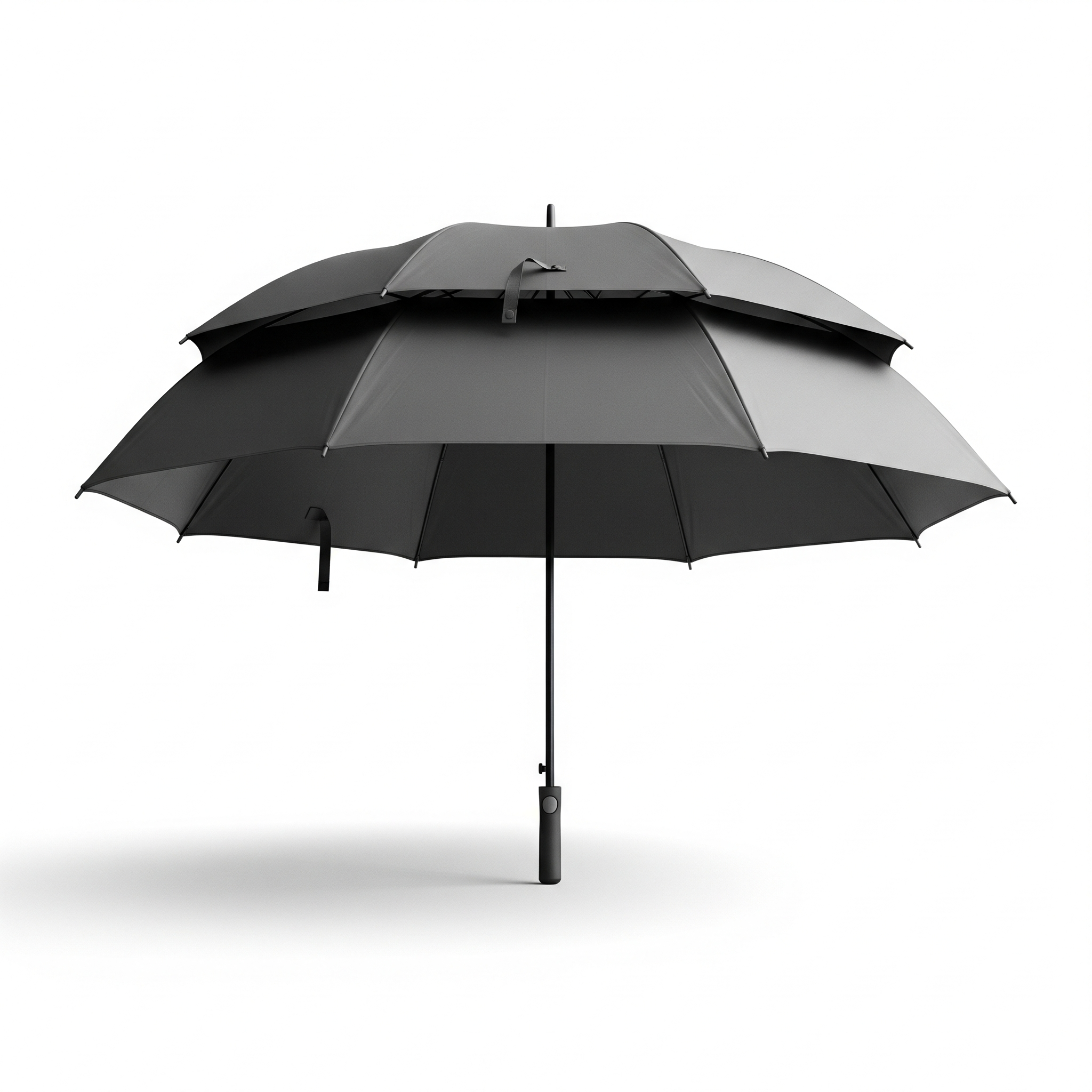
Golf umbrellas typically feature a large, round or slightly oval canopy measuring around 152 centimeters (60 inches) in diameter, providing ample coverage for both the user and their golf bag. The umbrella’s shaft is full-length, usually between 102 to 114 centimeters (40 to 45 inches), with a straight, non-collapsible form. Handles are ergonomically designed for comfort, often crafted from EVA foam, rubber, or wood, complementing the sturdy frame made of fiberglass, reinforced aluminum, or steel.

Behavior or Usage

Designed primarily to shield golfers from rain and sun during play, the golf umbrella’s large canopy and durable frame ensure protection against harsh weather and strong winds. Its size also makes it popular among spectators and for general outdoor activities requiring broad coverage. Users typically carry it on the course or at outdoor events, benefiting from its windproof venting and UV protection features.

Merchandise & Prints

Bring this kind into your world � illustrated posters, mugs, and shirts.

Golf Umbrella Golf Umbrella Poster

Golf Umbrella Poster

Archival print, museum-grade paper

Golf Umbrella Golf Umbrella Mug

Golf Umbrella Mug

Stoneware mug, dishwasher safe

Golf Umbrella Golf Umbrella Shirt

Golf Umbrella Shirt

Soft cotton tee, unisex sizes

Attributes & Insights

Taxon-Specific Insights

🌍Cultural Significance

Within golfing culture, the golf umbrella is considered essential equipment, often supplied by clubs or branded by sponsors as promotional items. Beyond its practical role, it has gained cultural significance as a fashion statement and symbol of outdoor leisure, particularly in Japan and the United Kingdom, where it is embraced for both utility and style.

📌Notable Facts

  • Golf umbrellas typically have canopies measuring 60 to 68 inches, much larger than standard umbrellas.
  • They often feature double-canopy venting to resist winds exceeding 55 mph.
  • Common materials include high-density polyester or nylon for the canopy and fiberglass or reinforced aluminum for the frame.
  • Major manufacturers include Titleist, Callaway, and GustBuster.
  • In the UK and Commonwealth countries, the golf umbrella is colloquially called a "golf brolly."

⚙️Mechanism Details

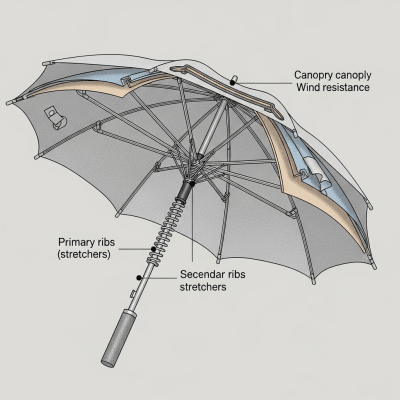
Golf umbrellas predominantly employ manual opening mechanisms, where the user slides a runner up the shaft to extend the ribs and canopy. This manual system ensures robust control and durability, essential for the larger frame. While automatic open variants exist, they are less common due to the size and strength requirements. Hybrid mechanisms combining manual closing with automatic opening are rare in golf umbrellas, as the emphasis remains on structural reliability over convenience.

Visual Variations

High quality studio photograph of a Golf Umbrella
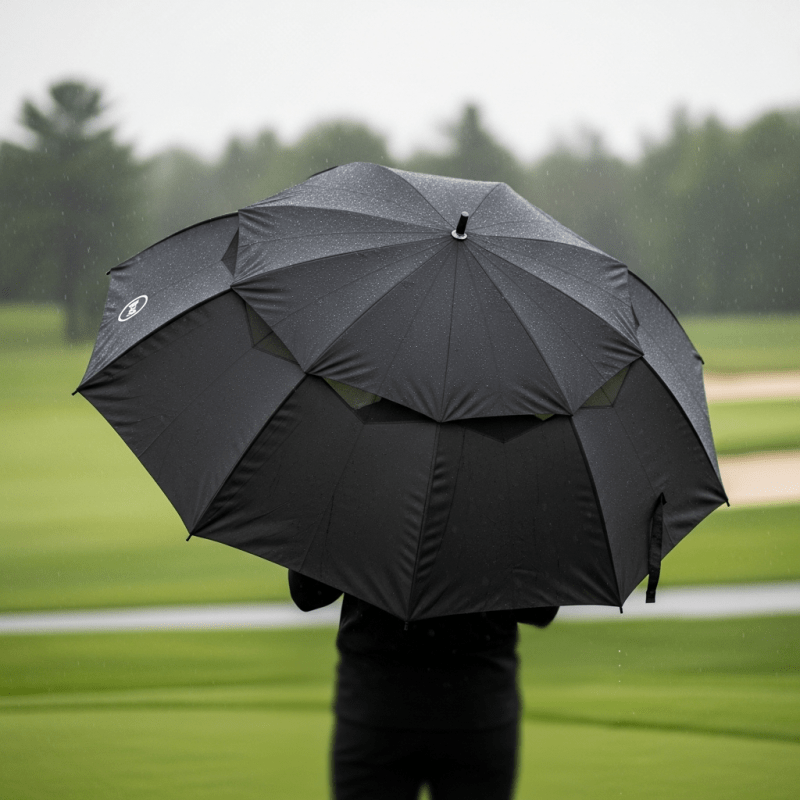
A realistic image of a Golf Umbrella (umbrellas) being used outdoors during a light rain, with droplets visible on the umbrella surface
Detailed cross-sectional illustration of a Golf Umbrella, showing the internal structure such as ribs, shaft, and canopy fabric
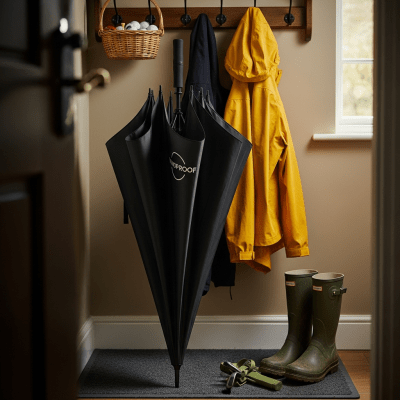
Image of a Golf Umbrella displayed alongside typical items it is paired with (e
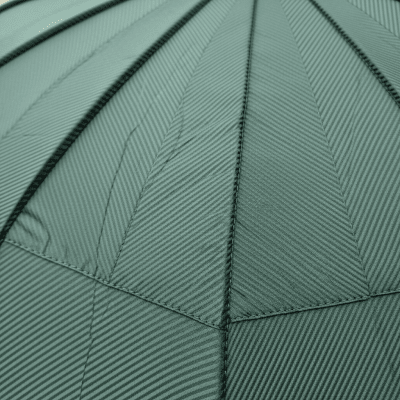
A close-up macro photograph focusing on the texture and pattern of the canopy fabric of a Golf Umbrella (umbrellas)
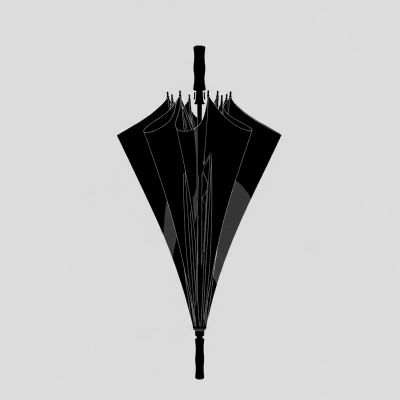
A minimalist side profile silhouette of a closed Golf Umbrella, set against a light grey background

Composition & Context

Taxon-Specific Insights

🧵Materials And Construction

Constructed for strength and longevity, golf umbrellas use high-density polyester or nylon fabrics treated for water repellency and UV protection. The frame and ribs are made from fiberglass, reinforced aluminum, or steel to withstand strong winds, often featuring double-canopy venting to reduce wind pressure. Shafts are typically fiberglass or aluminum, balancing weight and durability. Handles are ergonomically shaped, crafted from EVA foam, rubber, or wood to provide comfortable grip during extended use.

🎨Styles And Variants

Golf umbrellas mainly appear in full-size, non-collapsible stick forms with large canopies. Variants include differences in canopy shape—round or slightly oval—and in windproofing features like double-canopy vents. Regional styles vary, with Japanese models sometimes incorporating distinctive branding or color schemes, while UK versions may emphasize traditional aesthetics. Branding often reflects golf manufacturers, and color options range from classic black to vibrant, multi-colored designs.

🧼Care And Maintenance

To prolong a golf umbrella’s life, it is advisable to dry it fully before storage to prevent mold and fabric degradation. Cleaning with mild soap and water helps maintain canopy appearance. Regularly checking and tightening frame joints ensures structural integrity, especially after exposure to strong winds. Avoid forcing the mechanism to open or close, and store the umbrella in a dry place away from direct sunlight to preserve materials.

🛒Buying Guide

When selecting a golf umbrella, consider canopy size for adequate coverage, aiming for at least 60 inches in diameter. Look for windproof features such as double-canopy venting and reinforced ribs. Material quality matters—opt for durable canopy fabrics with water-repellent and UV-protective coatings, and sturdy frames made from fiberglass or reinforced metals. Comfort is key, so choose an ergonomic handle. Brand reputation, warranty, and ease of use (manual vs. automatic) are additional factors to weigh for long-term satisfaction.

Faq

Q: What makes a golf umbrella different from a regular umbrella?
A: Golf umbrellas are larger, sturdier, and often windproof, designed to cover both the user and golf equipment.

Q: Are golf umbrellas automatic or manual?
A: Most golf umbrellas use manual opening mechanisms, though some automatic variants exist.

Q: Can golf umbrellas be used outside of golfing?
A: Yes, their large size and durability make them popular for general outdoor use and events.