Origin Story

Full-size umbrellas trace their origins to ancient civilizations such as Egypt, China, and Greece as early as the first millennium BCE, where early forms served both ceremonial and sun-shielding purposes. Their modern evolution took shape in 18th and 19th century Europe, particularly in England and France, where manufacturing refined the design into the rain-protective models familiar today. This lineage connects ceremonial parasols to the standardized full-size umbrellas widely used in the 20th century and beyond.

Classification

As a member of the umbrella family, the full-size umbrella belongs to the category defined by a rigid, elongated form factor with a non-collapsible shaft. It is distinguished from folding or compact umbrellas by its fixed length and broad canopy, typically featuring a manual opening mechanism. This type is often classified under rain or dual-purpose umbrellas, serving both weather protection and ceremonial or fashion roles.

Appearance or Form

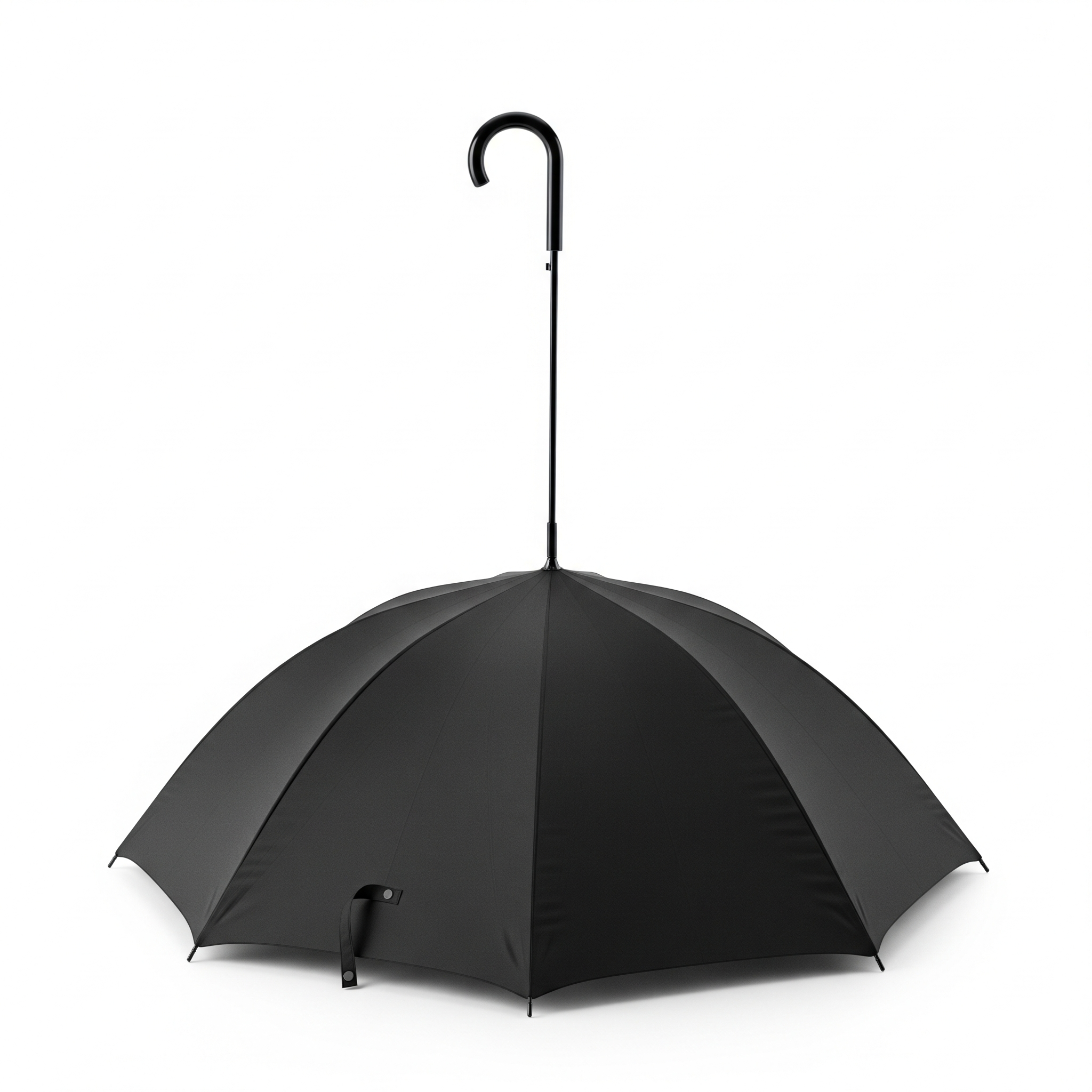
Full-size umbrellas typically present a rounded, sometimes pagoda-shaped canopy spanning about 115 centimeters in diameter when open. Their shafts measure around 80 centimeters when closed, maintaining a straight, non-collapsible profile. The canopy fabric ranges widely in color and pattern, supported by steel or fiberglass ribs, while shafts and handles are crafted from wood, aluminum, or plastic, combining classic aesthetics with sturdy construction.

Behavior or Usage

Primarily used to shield individuals from rain and sun, full-size umbrellas offer generous coverage suitable for one or two users. They are manually operated by sliding a runner along the shaft to open or close the canopy, though some variants include spring-loaded automatic opening. Beyond practical weather protection, they serve ceremonial functions in processions and religious events, and act as fashion accessories, particularly in formal or professional settings.

Merchandise & Prints

Bring this kind into your world � illustrated posters, mugs, and shirts.

Full-size Umbrella Full-size Umbrella Poster

Full-size Umbrella Poster

Archival print, museum-grade paper

Full-size Umbrella Full-size Umbrella Mug

Full-size Umbrella Mug

Stoneware mug, dishwasher safe

Full-size Umbrella Full-size Umbrella Shirt

Full-size Umbrella Shirt

Soft cotton tee, unisex sizes

Attributes & Insights

Taxon-Specific Insights

🌍Cultural Significance

Throughout history, the full-size umbrella has symbolized status and refinement in many cultures, often appearing in art, ceremonial occasions, and fashion. Its classic silhouette is associated with elegance and tradition, and it remains a cultural icon in regions with frequent rainfall. Museums and cultural institutions recognize its historical importance, while contemporary markets continue to embrace its blend of utility and symbolism.

📌Notable Facts

  • Full-size umbrellas often feature windproof construction with reinforced ribs and vented canopies to withstand gusts.
  • They may include UV-protective coatings, making them effective sunshields as well as rain protectors.
  • Common synonyms include stick umbrella, long-shaft umbrella, and classic umbrella.
  • Regional variants include the Japanese naga-gasa (長傘) and the French parapluie droit.
  • Handles vary regionally, from curved wood in England to decorative lace-trimmed canopies in China.

⚙️Mechanism Details

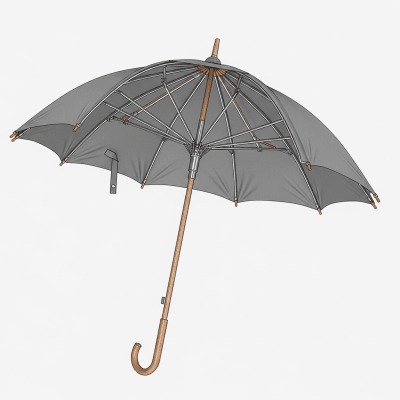
Full-size umbrellas predominantly use a manual sliding mechanism, where the user pushes a runner up the shaft to expand the ribs and open the canopy, then slides it down to close. Some models incorporate spring-loaded automatic opening systems, allowing the canopy to snap open with the press of a button. Unlike folding umbrellas, the shaft remains rigid and does not collapse, providing a stable and durable structure.

Visual Variations

High quality studio photograph of a Full-size Umbrella
A realistic image of a Full-size Umbrella (umbrellas) being used outdoors during a light rain, with droplets visible on the umbrella surface
Detailed cross-sectional illustration of a Full-size Umbrella, showing the internal structure such as ribs, shaft, and canopy fabric
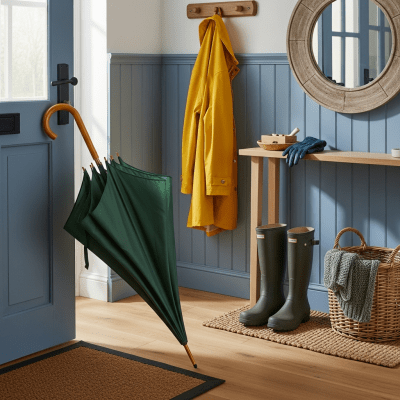
Image of a Full-size Umbrella displayed alongside typical items it is paired with (e
A close-up macro photograph focusing on the texture and pattern of the canopy fabric of a Full-size Umbrella (umbrellas)
A minimalist side profile silhouette of a closed Full-size Umbrella, set against a light grey background

Composition & Context

Taxon-Specific Insights

🧵Materials And Construction

The canopy of full-size umbrellas is commonly made from polyester or nylon fabrics, chosen for their water resistance and durability. The supporting ribs and frame utilize steel or fiberglass to balance strength with flexibility, enhancing wind resistance. Shafts and handles are crafted from wood, aluminum, or plastic, combining traditional aesthetics with lightweight, sturdy materials. Notable features often include ergonomic handles for comfort, UV-protective coatings on fabric, and reinforced ribs to improve windproof performance.

🎨Styles And Variants

Full-size umbrellas come in various styles, including the classic rounded canopy and the pagoda-shaped canopy favored for its elegant silhouette. Regional variants reflect cultural preferences: Japan’s naga-gasa features traditional designs, France’s parapluie droit often emphasizes refined craftsmanship, while England is known for curved wooden handles. Decorative elements such as lace-trimmed parasols in China highlight the umbrella’s role beyond mere utility, blending fashion and tradition.

🧼Care And Maintenance

To prolong a full-size umbrella’s lifespan, it should be dried fully open after use to prevent fabric mildew and rust on metal parts. Regularly check ribs and frame for damage, tightening loose screws if applicable. Store the umbrella in a dry place away from direct sunlight to preserve canopy colors and coatings. For stubborn stains, gentle cleaning with mild soap and water is recommended, avoiding harsh chemicals that can degrade fabric or coatings.

🛒Buying Guide

When selecting a full-size umbrella, consider canopy size to ensure adequate coverage, typically around 100–130 cm in diameter. Choose materials based on durability and weight—fiberglass ribs offer wind resistance, while polyester or nylon canopies balance water repellency and UV protection. Decide between manual or automatic opening mechanisms depending on convenience preferences. Look for ergonomic handles and reinforced frames if you expect windy conditions. Finally, consider style and cultural features that align with your personal or professional needs.

Faq

Q: What distinguishes a full-size umbrella from a folding umbrella?
A: Full-size umbrellas have a fixed, non-collapsible shaft and larger canopy, while folding umbrellas collapse into a compact form for portability.

Q: Are full-size umbrellas suitable for sun protection?
A: Yes, many full-size umbrellas feature UV-protective coatings and are used as parasols to shield from sunlight.

Q: How do you open a full-size umbrella?
A: Most are manually opened by sliding a runner along the shaft, though some models include automatic opening mechanisms.