Origin Story

Children's umbrellas have been produced globally since at least the early 20th century, evolving as scaled-down adaptations of adult umbrellas to suit child ergonomics and safety. Notable manufacturing centers include China, Japan, and Europe. The design development is market-driven, responding to the needs of families and schools, with no single inventor credited. Prominent manufacturers include Fulton Umbrellas (UK), Totes (USA), and various OEMs in China.

Classification

Falling within the broader umbrella family, children's umbrellas are classified as handheld, portable umbrellas intended specifically for young users. They typically belong to the full-size form factor category, albeit scaled down, and predominantly feature manual opening mechanisms. Their classification emphasizes ergonomic design, safety features, and lightweight construction tailored for children aged roughly 3 to 10 years.

Appearance or Form

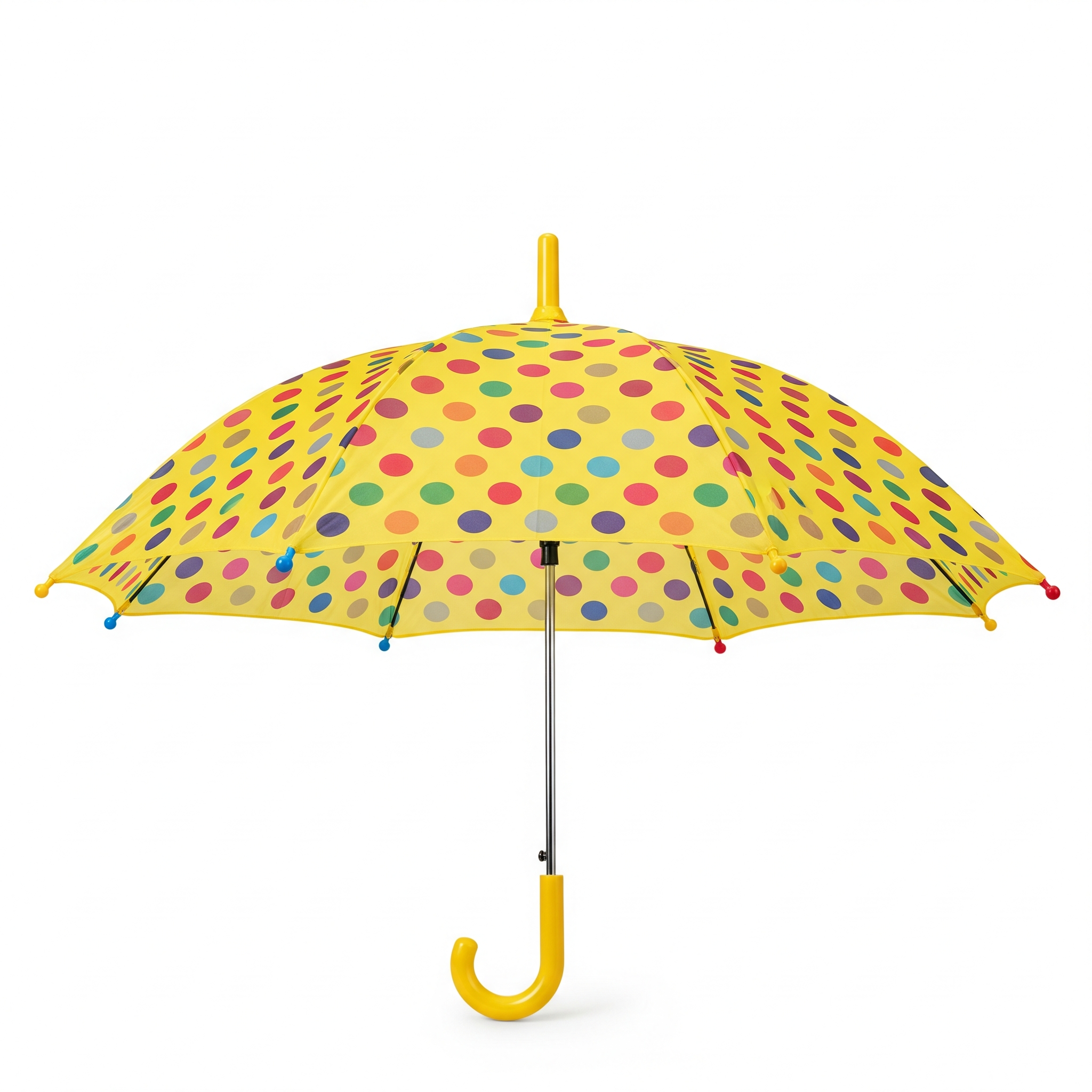
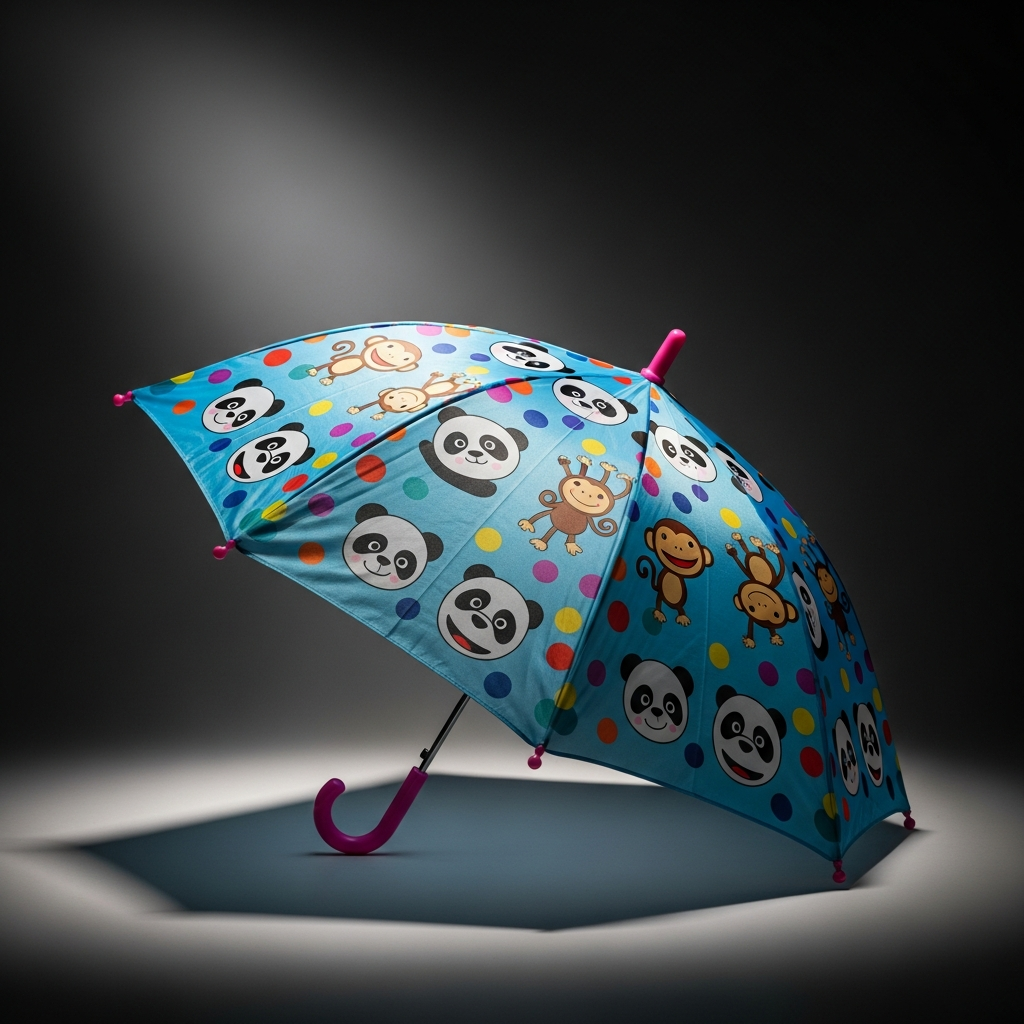
Children's umbrellas are visually distinct through their smaller dimensions, usually featuring a canopy diameter around 60 centimeters and a shorter shaft length to suit small hands. They often showcase bright colors, cartoon characters, animal motifs, or transparent panels to appeal to children and improve visibility. Handles are ergonomically shaped with rubberized or textured grips to prevent slipping, and structural elements are designed with rounded or capped rib ends to enhance safety.

Behavior or Usage

Designed primarily to shield children from rain and sometimes sun, children's umbrellas are used widely in school environments, family outings, and as fashion accessories. Their lightweight construction and manageable size make them easy for young users to handle. Safety features such as pinch-proof opening mechanisms and absence of sharp metal components ensure secure use. While mostly functional, these umbrellas also serve as playful items that engage children through their colorful and thematic designs.

Merchandise & Prints

Bring this kind into your world � illustrated posters, mugs, and shirts.

Children's Umbrella Children's Umbrella Poster

Children's Umbrella Poster

Archival print, museum-grade paper

Children's Umbrella Children's Umbrella Mug

Children's Umbrella Mug

Stoneware mug, dishwasher safe

Children's Umbrella Children's Umbrella Shirt

Children's Umbrella Shirt

Soft cotton tee, unisex sizes

Attributes & Insights

Taxon-Specific Insights

🌍Cultural Significance

In many cultures, children's umbrellas hold practical and symbolic value. For example, in Japan, they are a common part of school supplies, often regulated for safety and visibility. Beyond everyday use, children's umbrellas occasionally appear in themed events or performances as fashion or ceremonial accessories. Their presence in popular culture and marketing reflects their dual role as protective tools and playful, identity-expressing items for children.

📌Notable Facts

  • Children's umbrellas typically have a canopy diameter around 60 cm, smaller than adult umbrellas.
  • Most use manual opening mechanisms to ensure safety.
  • Safety features include rounded rib ends and pinch-proof mechanisms to protect young users.
  • Designs often incorporate bright colors, cartoon characters, and animal motifs to appeal to children.
  • In Japan, transparent canopies and reflective strips are common for visibility and safety.

⚙️Mechanism Details

Children's umbrellas predominantly feature manual opening and closing systems, typically a simple push-up or pull-down runner that is easy for small hands to operate. Automatic mechanisms are less common due to safety concerns, as they can pose pinch hazards. The opening mechanism is designed to be pinch-proof, minimizing the risk of injury. The ribs and frame expand smoothly to support the canopy, while the closing action is controlled to prevent sudden snaps or sharp edges.

Visual Variations

High quality studio photograph of a Children's Umbrella
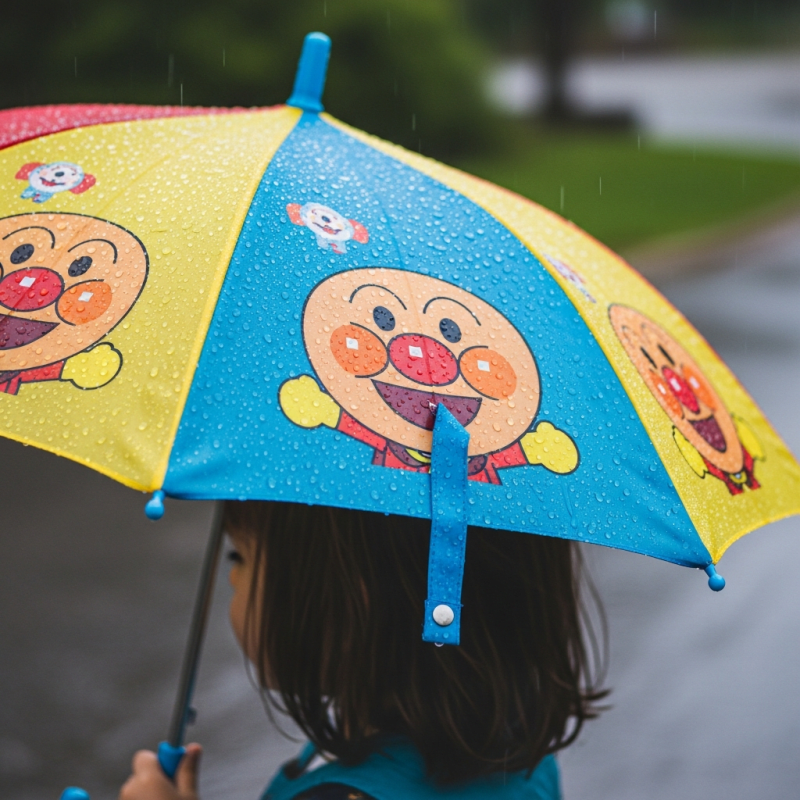
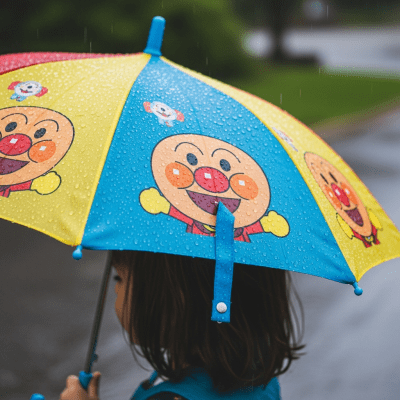
A realistic image of a Children's Umbrella (umbrellas) being used outdoors during a light rain, with droplets visible on the umbrella surface
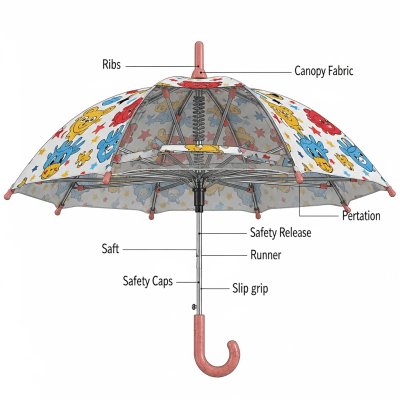
Detailed cross-sectional illustration of a Children's Umbrella, showing the internal structure such as ribs, shaft, and canopy fabric
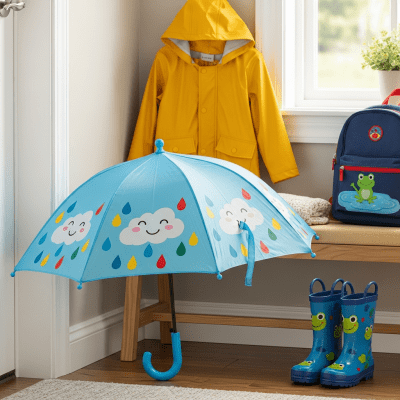
Image of a Children's Umbrella displayed alongside typical items it is paired with (e
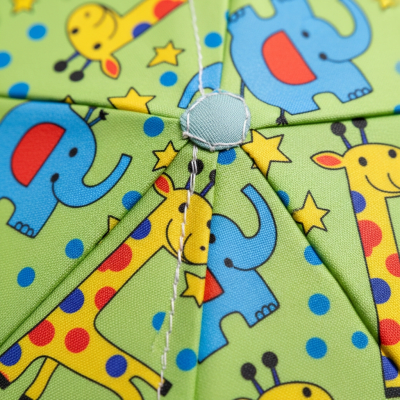
A close-up macro photograph focusing on the texture and pattern of the canopy fabric of a Children's Umbrella (umbrellas)
A minimalist side profile silhouette of a closed Children's Umbrella, set against a light grey background

Composition & Context

Taxon-Specific Insights

🧵Materials And Construction

Constructed with lightweight and durable materials, children's umbrellas use polyester or nylon fabrics for the canopy, chosen for water resistance and quick drying. The frame and ribs are commonly made of fiberglass or aluminum, offering flexibility and strength while remaining light enough for children to handle. Shafts are typically plastic or coated metal to balance sturdiness with safety. Handles are molded plastic with rubberized or textured grips to ensure a secure hold and prevent slipping. Safety is enhanced by rounded or capped rib ends and the absence of sharp metal parts.

🎨Styles And Variants

Popular styles of children's umbrellas include full-size, scaled-down versions of adult umbrellas and folding variants for portability. Regional variants feature unique design elements such as transparent canopies common in Japan, animal-shaped handles popular in Europe, and reflective strips added for safety in various regions. Designs often embrace playful themes with bright colors, cartoon characters, and motifs that resonate with children’s interests.

🧼Care And Maintenance

To prolong the life of a children's umbrella, it is recommended to dry it fully after use to prevent mold and fabric degradation. Avoid forcing the mechanism to open or close, as this can damage the ribs or runner. Cleaning the canopy with mild soap and water helps maintain its appearance. Regularly check for loose ribs or sharp edges to ensure continued safety. Storing the umbrella in a protective sleeve or dry place prevents wear and tear.

🛒Buying Guide

When selecting a children's umbrella, consider size and weight to ensure it is manageable for the child. Safety features such as rounded rib ends, pinch-proof mechanisms, and absence of sharp components are essential. Look for durable materials like fiberglass frames and water-resistant canopy fabrics. Designs with bright colors or reflective elements enhance visibility. Choose between full-size or folding styles based on portability needs. Trusted brands and compliance with safety standards can provide added assurance.

Faq

Q: What age group are children's umbrellas designed for?
A: Typically for children aged 3 to 10 years, with size and safety features suited to young users.

Q: Are children's umbrellas automatic or manual?
A: Most children's umbrellas use manual opening mechanisms to reduce safety risks.

Q: What materials are commonly used in children's umbrellas?
A: Canopies are usually polyester or nylon; frames often use fiberglass or aluminum; shafts and handles are made from plastic or coated metal with rubberized grips.