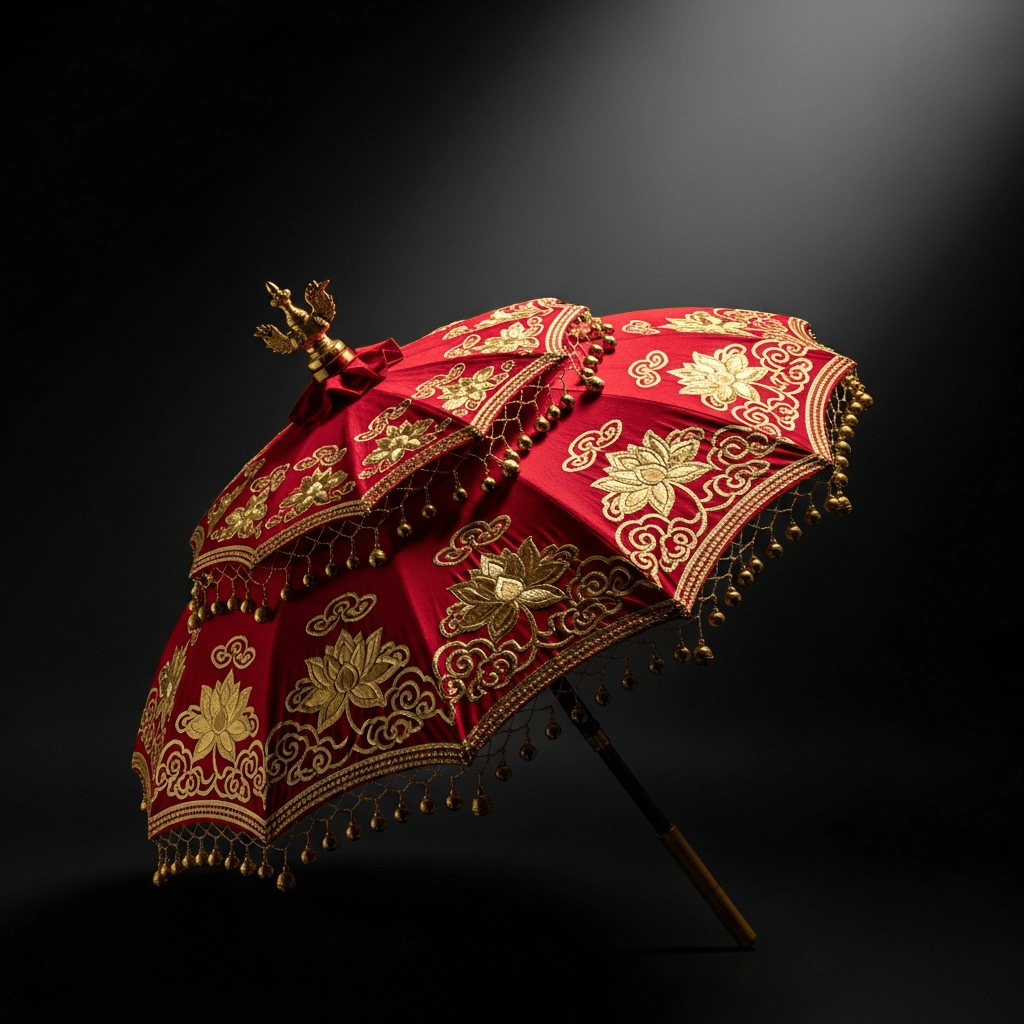
Ceremonial Umbrella
Ceremonial umbrellas are ornate handheld devices used in religious, royal, or state rituals, symbolizing status and spiritual authority rather than practical weather protection.
Ceremonial umbrellas are ornate handheld devices used in religious, royal, or state rituals, symbolizing status and spiritual authority rather than practical weather protection.
Originating millennia ago across Asia, Africa, and Europe, ceremonial umbrellas have deep historical roots. They appear in the royal courts of Southeast Asia, Hindu and Buddhist traditions of India and Nepal, and in Roman Catholic ceremonies such as the papal parasol. Traditionally crafted by artisans or state-sponsored workshops, these umbrellas often carry rich provenance linked to temples, monarchies, and religious institutions. Many surviving examples date from the 18th to 20th centuries, though the tradition remains vibrant today.
Classified within the broader umbrella family as specialized ceremonial types, these umbrellas belong to the full-size, manual-mechanism category. Unlike everyday rain or sun umbrellas, they serve symbolic and ritualistic functions and are distinguished by their elaborate decoration and fixed, non-collapsible frames.
Ceremonial umbrellas typically feature large canopies exceeding one meter in diameter, often multi-tiered, richly adorned with embroidery, gold or silver threads, tassels, fringe, and symbolic motifs like lotus flowers, suns, or royal insignia. Their shafts and frames are made from wood, metal, or composite materials, designed for durability and visual impact during processions and rituals.
Primarily used as symbolic objects, ceremonial umbrellas denote rank, sanctity, and spiritual protection. They are held aloft in religious ceremonies, royal processions, and state events to visually emphasize authority and reverence. Unlike practical umbrellas, their function is emblematic rather than protective against weather.
Bring this kind into your world illustrated posters, mugs, and shirts.
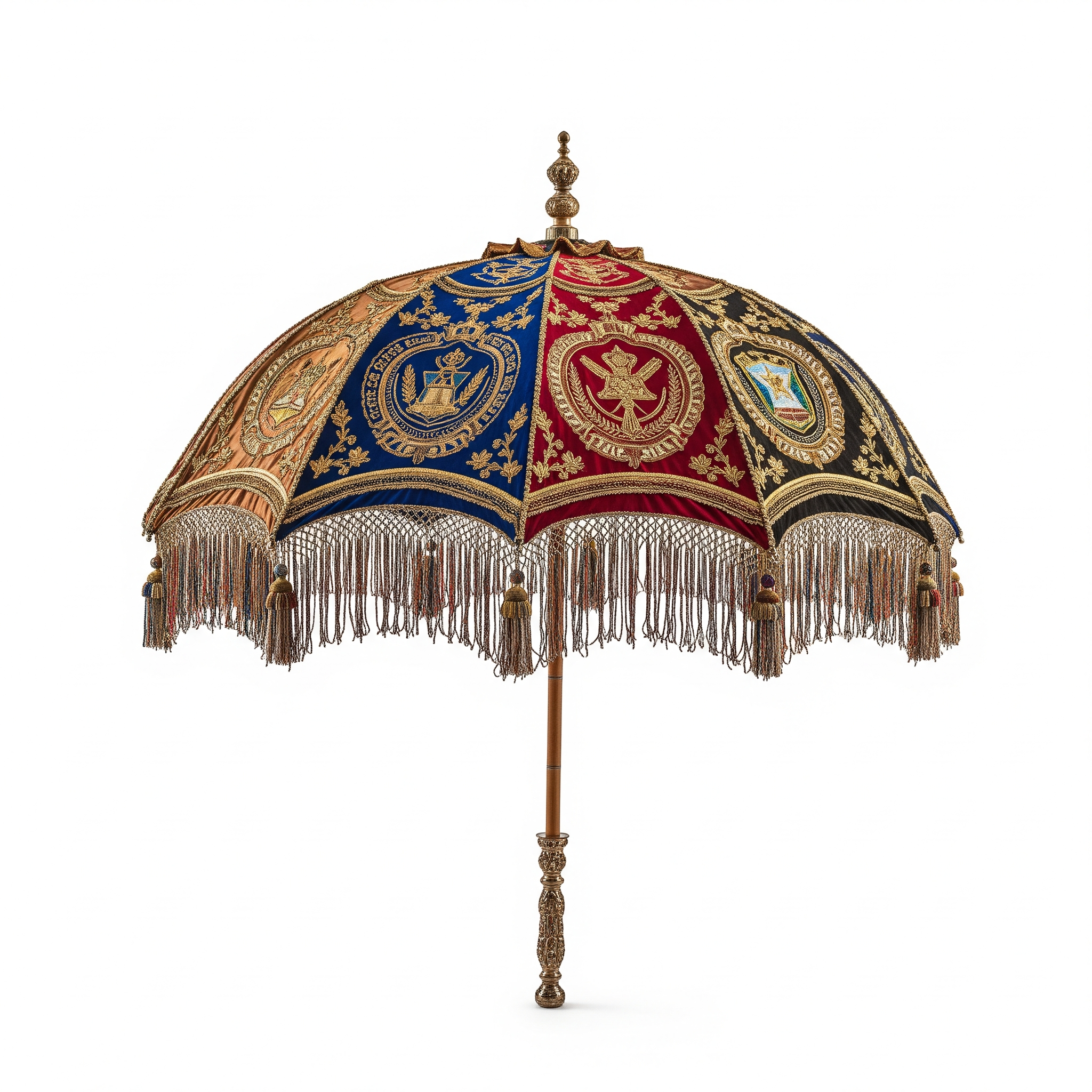
Archival print, museum-grade paper
Buy Poster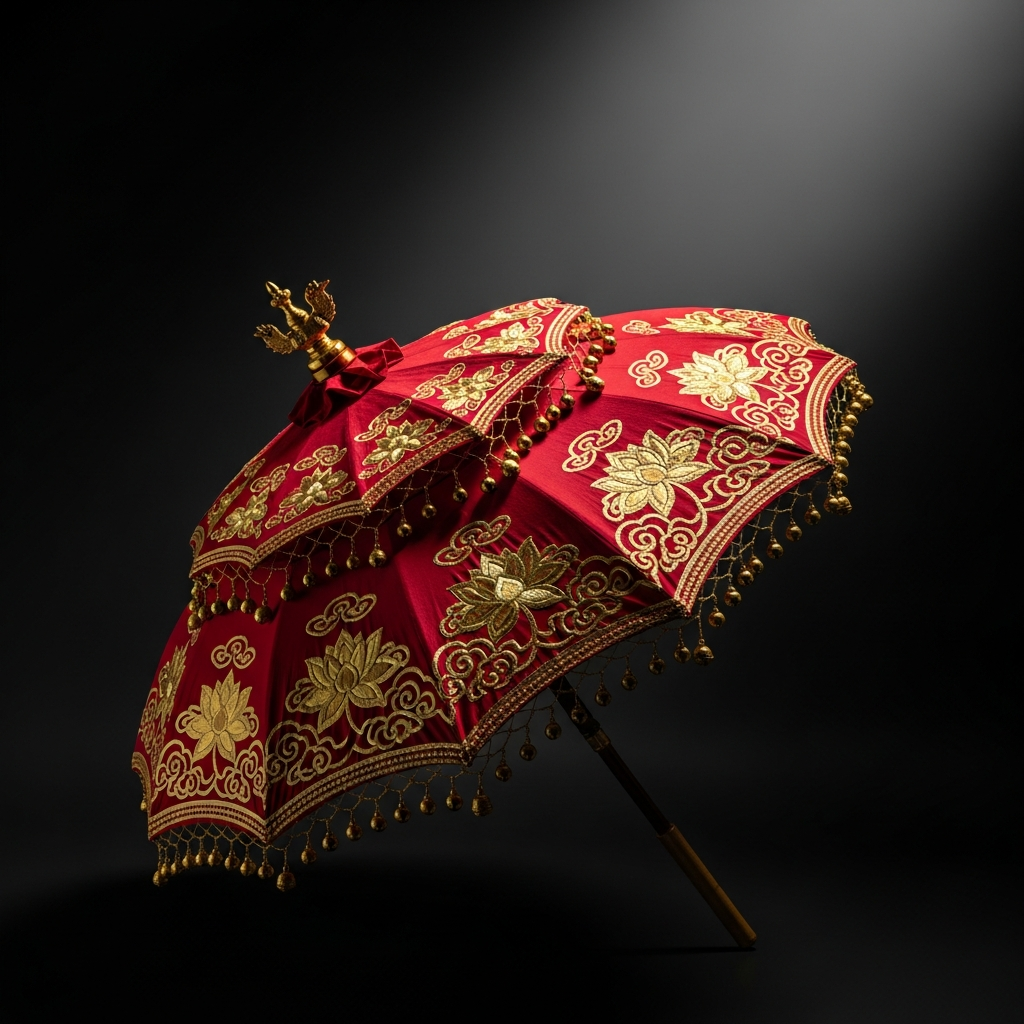
Stoneware mug, dishwasher safe
Buy Mug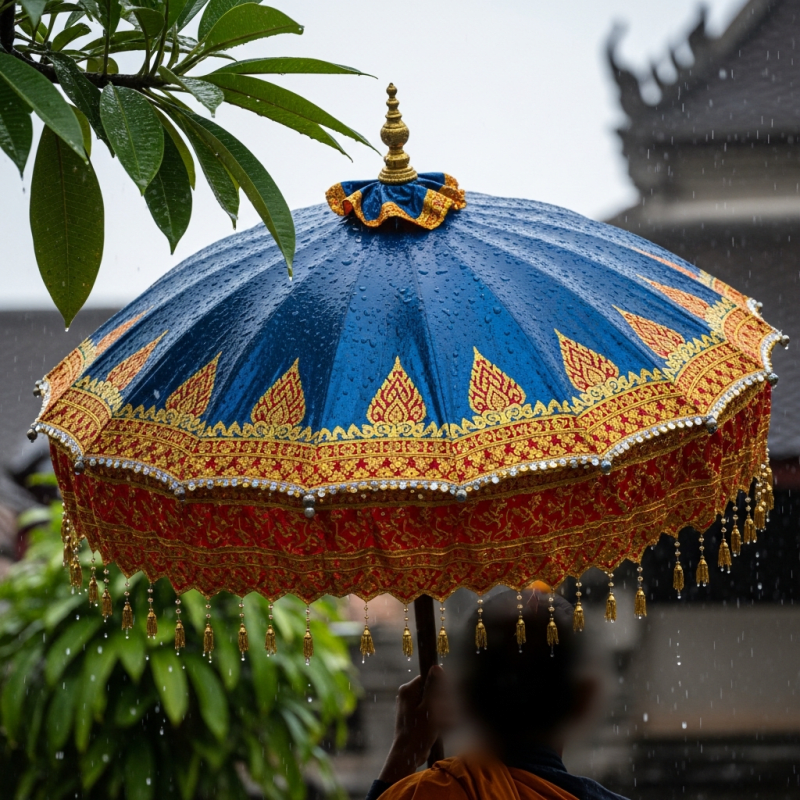
Soft cotton tee, unisex sizes
Buy ShirtIntegral to cultural heritage worldwide, ceremonial umbrellas embody spiritual authority in Hindu and Buddhist contexts, royal status in African kingdoms, and ecclesiastical symbolism in European traditions. They appear in sacred art, mythology, and official ceremonies, reinforcing social hierarchies and religious devotion.
Typically, ceremonial umbrellas employ a manual opening mechanism with a fixed, non-collapsible shaft and frame. This design ensures stability and durability during processions and rituals, prioritizing visual grandeur over portability or ease of use.

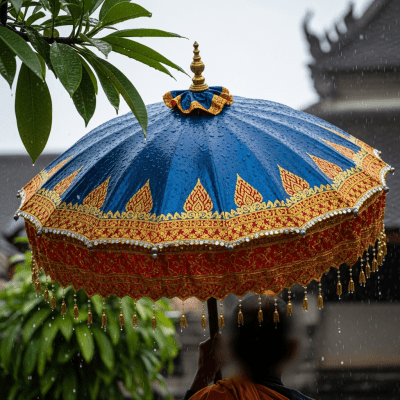
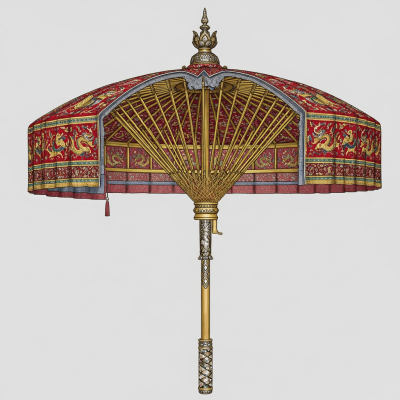
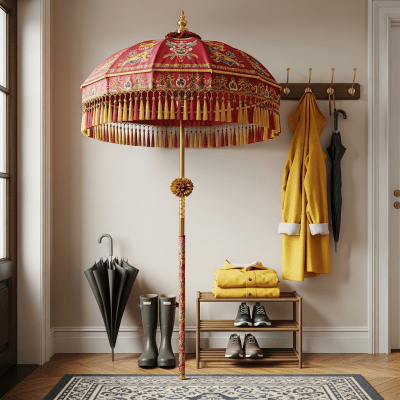
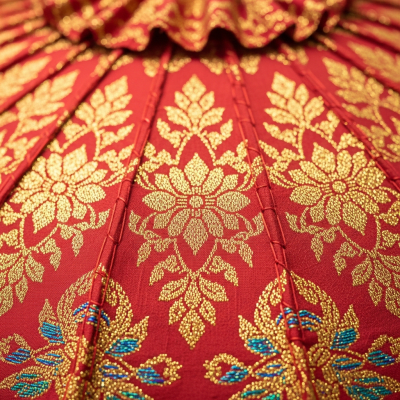
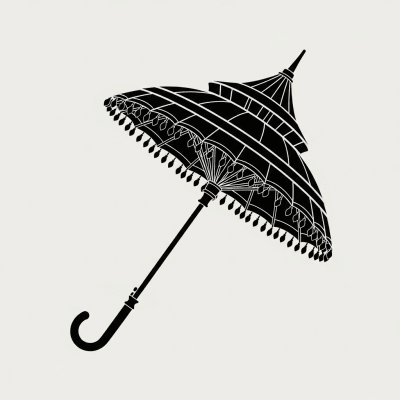
Constructed from premium materials, ceremonial umbrellas feature canopies made of silk, brocade, cotton, velvet, and metallic threads for rich ornamentation. Frames and ribs are crafted from wood, metal, or composite materials, while shafts are usually wooden or metallic. These choices balance durability with elaborate aesthetics, supporting multi-tiered designs and ceremonial colors like white, red, and gold.
Styles vary regionally, including the multi-tiered chatra of Thailand, the ombrellino used in Vatican liturgy, and gold-fringed umbrellas of West African royal courts. Each variant reflects local cultural motifs, materials, and ceremonial protocols, showcasing a rich diversity within the ceremonial umbrella tradition.
Maintaining ceremonial umbrellas involves careful preservation of delicate fabrics and intricate decorations. They should be stored in dry, stable environments away from direct sunlight to prevent fading and deterioration. Repairs typically require skilled artisans familiar with traditional materials and techniques to preserve authenticity.
When acquiring a ceremonial umbrella, consider authenticity, craftsmanship, and cultural provenance. Buyers should seek reputable artisans or institutions specializing in traditional designs, ensuring materials and construction align with ceremonial standards. Given their bespoke nature, these umbrellas are often commissioned rather than mass-produced.