Origin Story

Emerging in the mid-20th century during the 1950s and 1960s, the bubble umbrella was developed primarily in Europe and Japan. Its design arose from a desire to improve rain protection and introduce visual novelty. While no single manufacturer claims exclusive rights, notable brands such as Fulton in the UK, Totes in the USA, and Japanese makers like Wpc. and Uniqlo have popularized the style. Over time, advances in plastics and frame engineering refined the design, yet the iconic dome shape and transparent canopy have remained central.

Classification

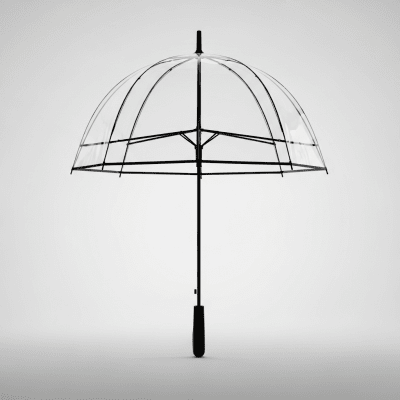
Classified within the umbrella family as a full-size, manual mechanism umbrella, the bubble umbrella belongs to the broader group of rain umbrellas distinguished by its unique hemispherical canopy. It contrasts with traditional flat umbrellas by its deep dome form, prioritizing enhanced coverage and visibility.

Appearance or Form

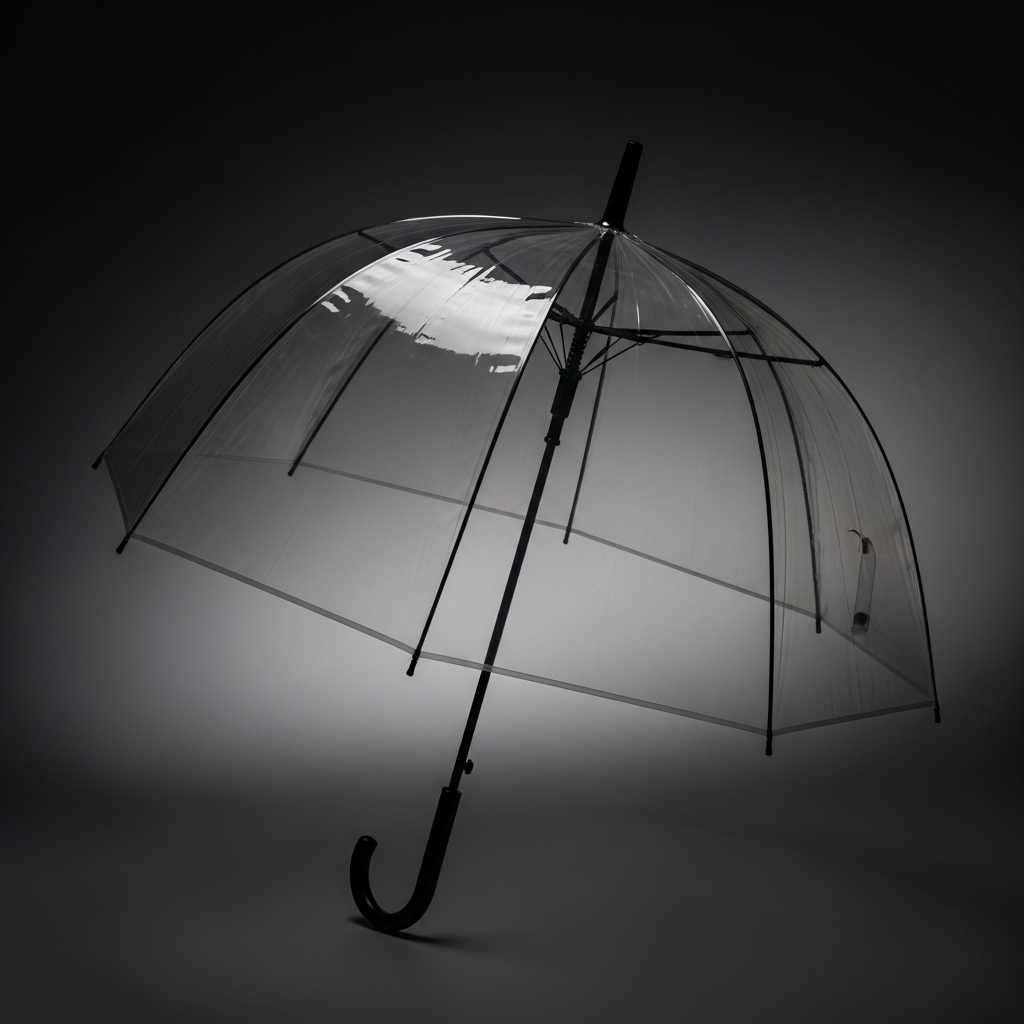
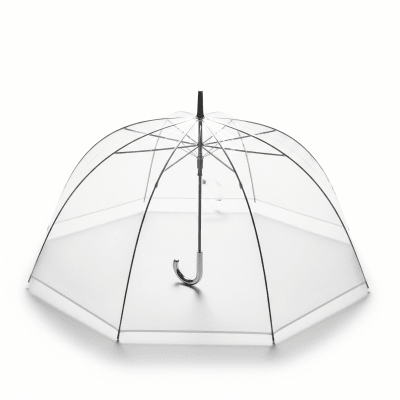
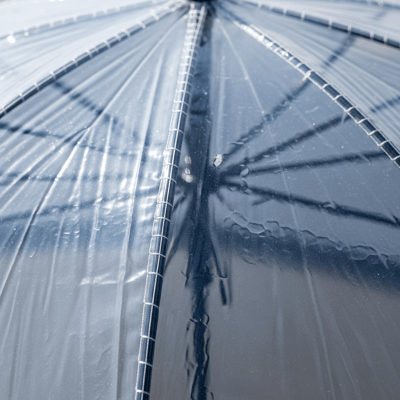
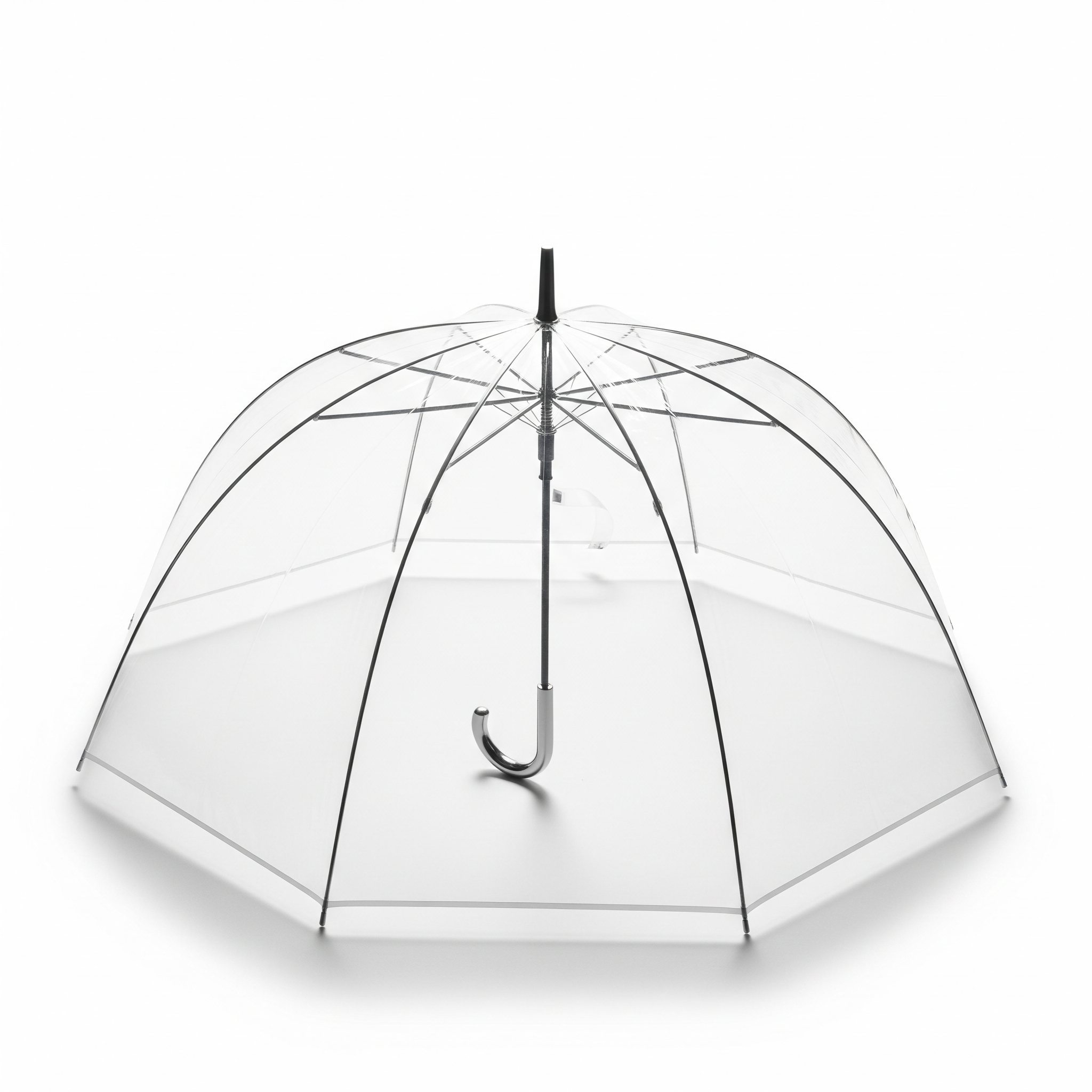
Visually, the bubble umbrella is characterized by a deep, hemispherical canopy that extends below the head to shoulder or chest level, creating a protective bubble around the user. Typically transparent or semi-transparent, the canopy is often made from clear PVC or POE plastic, sometimes accented with colored trims or printed motifs. The frame is supported by steel or fiberglass ribs, with shafts crafted from steel, aluminum, or plastic. Handles are usually plastic or rubberized, often curved in a classic crook style for comfortable carrying.

Behavior or Usage

Designed primarily for personal rain protection, the bubble umbrella excels in urban environments where wind-driven rain is frequent. Its deep canopy minimizes rain intrusion from the sides while maintaining clear visibility through its transparent material. Users benefit from its superior coverage, making it especially popular among children and city dwellers. The umbrella is typically opened and closed manually and is carried much like traditional umbrellas.

Merchandise & Prints

Bring this kind into your world � illustrated posters, mugs, and shirts.

Bubble Umbrella Bubble Umbrella Poster

Bubble Umbrella Poster

Archival print, museum-grade paper

Bubble Umbrella Bubble Umbrella Mug

Bubble Umbrella Mug

Stoneware mug, dishwasher safe

Bubble Umbrella Bubble Umbrella Shirt

Bubble Umbrella Shirt

Soft cotton tee, unisex sizes

Attributes & Insights

Taxon-Specific Insights

🌍Cultural Significance

The bubble umbrella holds a notable place in fashion and culture, especially within Japanese and Korean street style, where it symbolizes youthful, fashion-forward aesthetics. In the UK, it is a favored accessory at weddings and royal events, valued for its ability to shield guests without obscuring their faces. Its transparent surface also makes it a popular choice for promotional and ceremonial purposes, allowing for customization and high visibility.

📌Notable Facts

  • The bubble umbrella’s dome shape offers enhanced wind and rain protection compared to traditional umbrellas.
  • Its transparent canopy allows unobstructed vision for both user and bystanders.
  • Some models include UV protection coatings and decorative trims or prints.
  • Popular brands like Fulton have associations with royal warrants and historic events.
  • In Japan, clear bubble umbrellas are a ubiquitous convenience store item, known locally as "binīru-gasa".

⚙️Mechanism Details

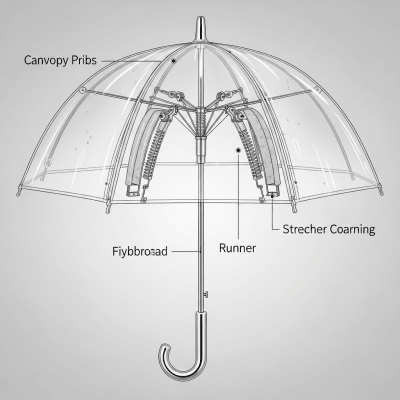
Bubble umbrellas predominantly employ a manual opening and closing mechanism. The user slides a runner along the central shaft to expand or collapse the canopy, which is supported by steel or fiberglass ribs. Some modern variants incorporate automatic or hybrid mechanisms, enabling quicker deployment with a button press, though these are less common. The robust frame design accommodates the deep dome shape, ensuring stability against wind gusts.

Visual Variations

High quality studio photograph of a Bubble Umbrella
A realistic image of a Bubble Umbrella (umbrellas) being used outdoors during a light rain, with droplets visible on the umbrella surface
Detailed cross-sectional illustration of a Bubble Umbrella, showing the internal structure such as ribs, shaft, and canopy fabric
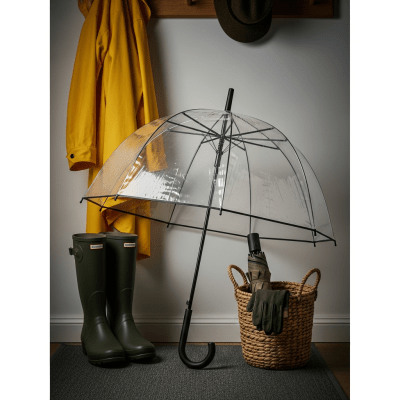
Image of a Bubble Umbrella displayed alongside typical items it is paired with (e
A close-up macro photograph focusing on the texture and pattern of the canopy fabric of a Bubble Umbrella (umbrellas)
A minimalist side profile silhouette of a closed Bubble Umbrella, set against a light grey background

Composition & Context

Taxon-Specific Insights

🧵Materials And Construction

The canopy of a bubble umbrella is typically crafted from clear PVC or POE plastic, materials chosen for their transparency, flexibility, and water resistance. The frame and ribs are made from steel or fiberglass, providing a balance of strength and flexibility to withstand wind. Shafts may be steel, aluminum, or plastic, selected for durability and weight considerations. Handles often feature plastic or rubberized coatings, shaped ergonomically for grip and comfort. Some models include UV protection coatings or decorative elements applied to the canopy surface.

🎨Styles And Variants

While the bubble umbrella maintains a consistent dome shape, variations exist primarily in size, canopy color, and mechanism type. In Japan, the "clear umbrella" variant is widely sold and used, often with simple, utilitarian designs. In the UK, brands like Fulton market the "birdcage umbrella," a style synonymous with the bubble form but sometimes featuring reinforced frames for wind resistance. In the US, the bubble umbrella is marketed as a "dome" or "bubble" umbrella, with occasional decorative prints or colored trims. Automatic opening models and windproof enhancements represent popular functional variants.

🧼Care And Maintenance

To prolong the life of a bubble umbrella, it is advisable to rinse the canopy with clean water after use to remove dirt and prevent plastic degradation. Avoid prolonged exposure to direct sunlight when not in use to minimize material brittleness. Store the umbrella dry and fully closed to prevent mold and frame corrosion. Inspect ribs and joints regularly for damage, and gently straighten any bent components. For plastic canopies, avoid folding too tightly to prevent creasing or cracking.

🛒Buying Guide

When selecting a bubble umbrella, consider canopy size to ensure adequate coverage, typically around 80 cm in diameter. Check the canopy material for clarity and durability—PVC and POE plastics are standard. Evaluate the frame and ribs for sturdy materials like fiberglass or steel, which offer better wind resistance. Decide between manual or automatic mechanisms based on convenience preferences. Additional features such as UV protection, decorative trims, and ergonomic handles may enhance comfort and style. Finally, consider brand reputation and warranty for quality assurance.

Faq

  • Q: What makes a bubble umbrella different from a regular umbrella?
    A: Its deep, dome-shaped transparent canopy extends lower to cover the head and shoulders, offering better protection from wind-driven rain.
  • Q: Are bubble umbrellas automatic or manual?
    A: Most bubble umbrellas use a manual open and close mechanism, though some automatic variants exist.
  • Q: Why is the canopy transparent?
    A: Transparency allows for clear visibility, making it safer and more fashionable in crowded or urban settings.