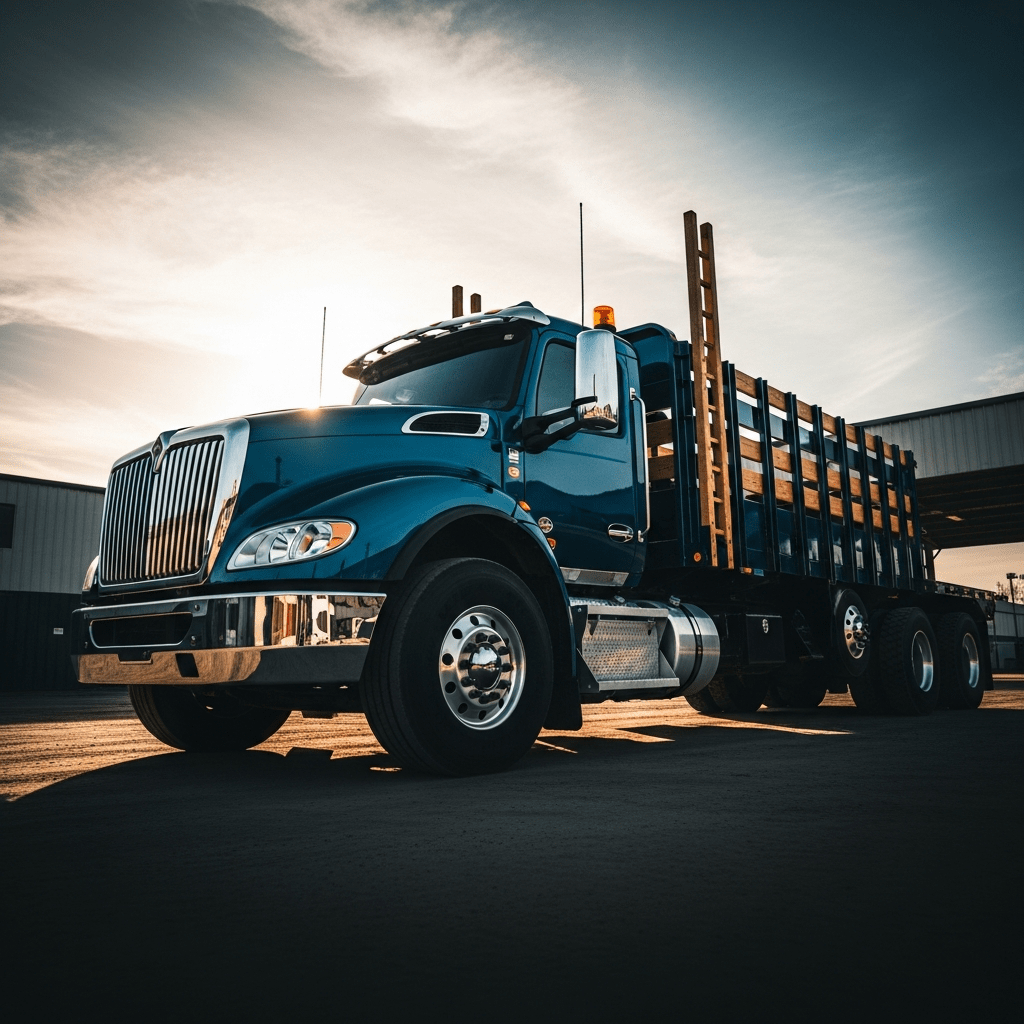
Stake Truck
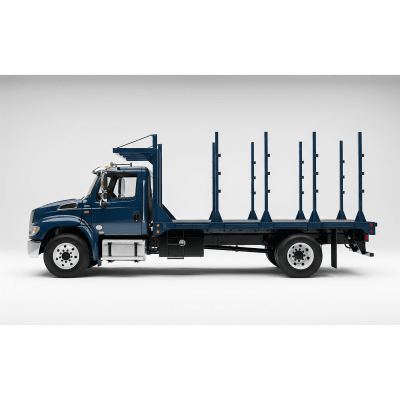
A stake truck is a flatbed truck equipped with removable vertical stakes along its sides, designed to securely transport bulk or irregular cargo without full enclosure.
A stake truck is a flatbed truck equipped with removable vertical stakes along its sides, designed to securely transport bulk or irregular cargo without full enclosure.
The stake truck body configuration emerged in the early 20th century as an evolution of basic flatbed trucks, adding removable stakes to improve cargo security and versatility. Rather than originating from a single manufacturer, this design has been adapted by numerous brands including Ford, Chevrolet, Freightliner, and Isuzu, fitted onto various truck chassis over many decades.
Stake trucks belong to the broader category of flatbed trucks within the commercial vehicle family. They are classified under multiple regulatory classes depending on weight and region, such as US FMCSA Classes 3 through 7 and European N2 and N3 categories, reflecting their range from light- to heavy-duty applications.
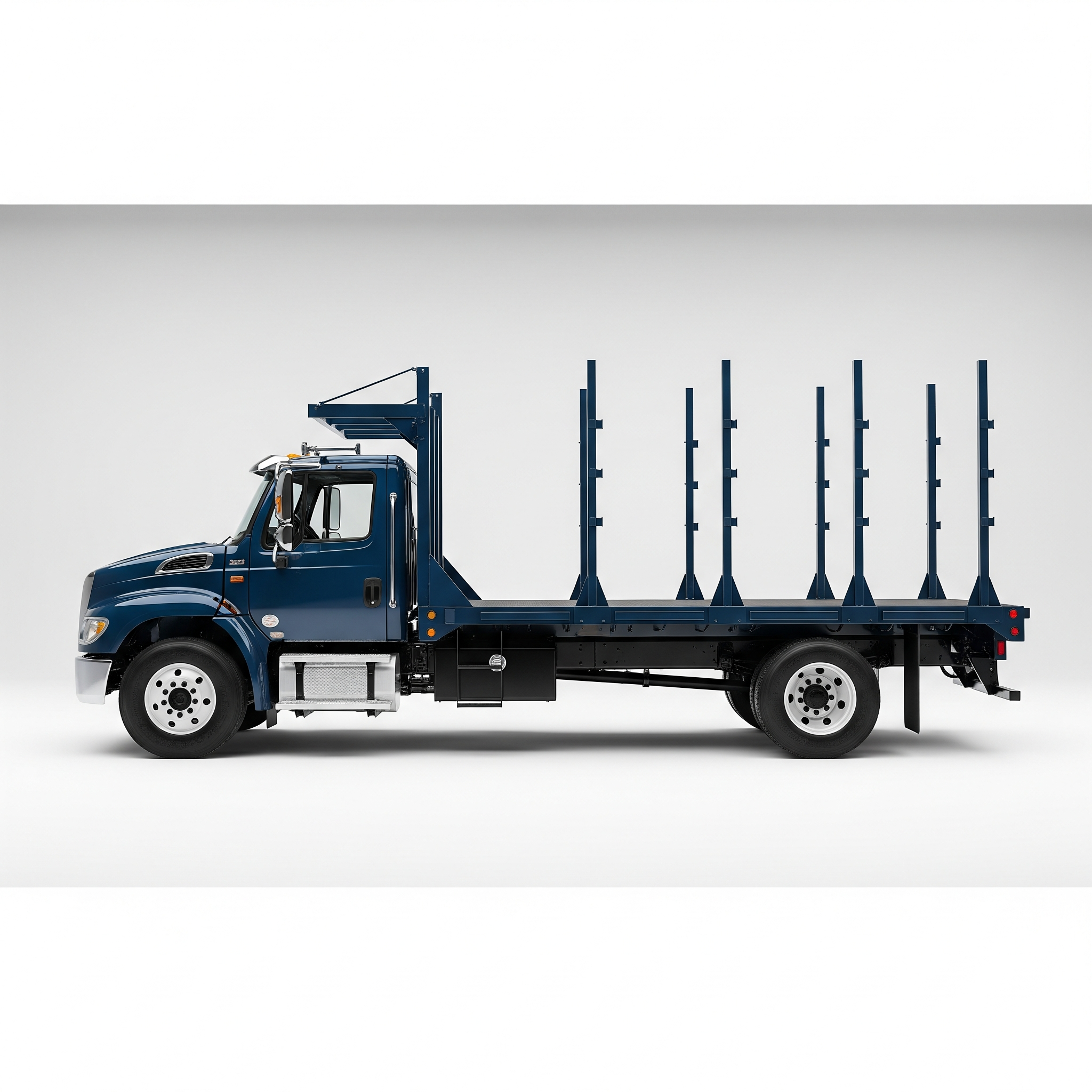
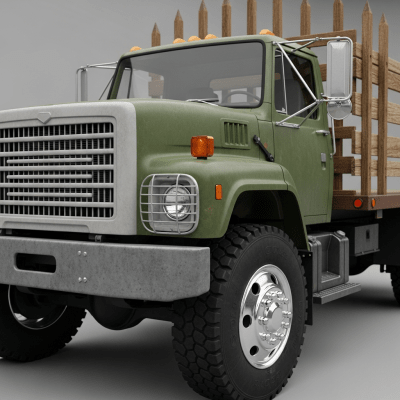
Visually, a stake truck features a flat, open cargo bed framed by removable vertical stakes made of steel or wood, inserted into pockets along the bed's perimeter. These stakes create a partial enclosure that can be quickly removed to convert the truck into a standard flatbed. Typical bed lengths range from 3 to 8 meters, with cab styles varying from standard to crew and extended cabs.
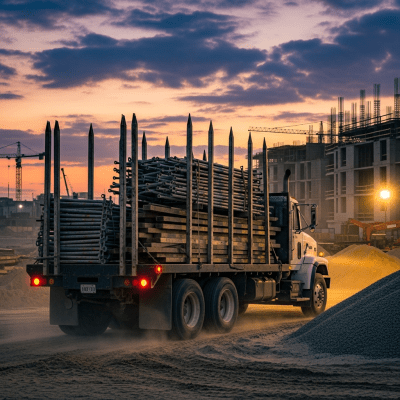
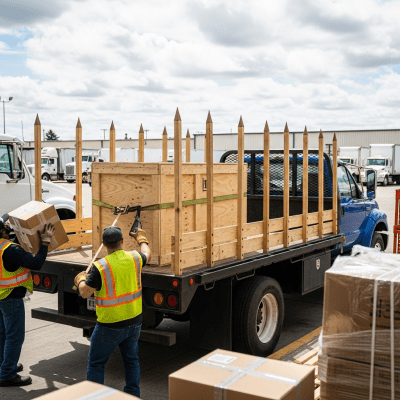
Designed for transporting bulk, palletized, or irregularly shaped cargo, stake trucks provide side containment without the need for a fully enclosed body. Their removable stakes facilitate rapid loading and unloading, making them ideal for construction materials, landscaping supplies, agricultural products, and local freight. They are widely used by contractors, small businesses, and fleet operators seeking adaptable and cost-effective transport solutions.
Bring this kind into your world illustrated posters, mugs, and shirts.
Archival print, museum-grade paper
Buy Poster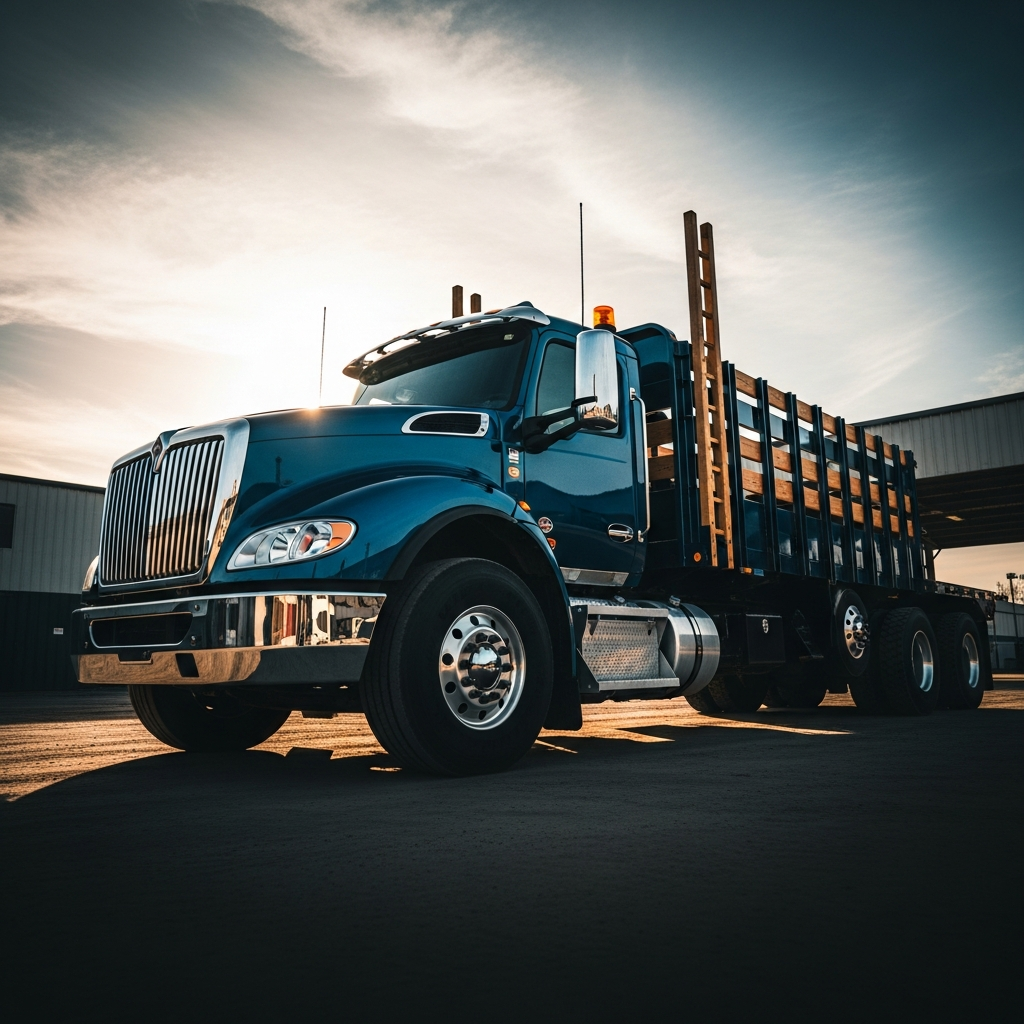
Stoneware mug, dishwasher safe
Buy Mug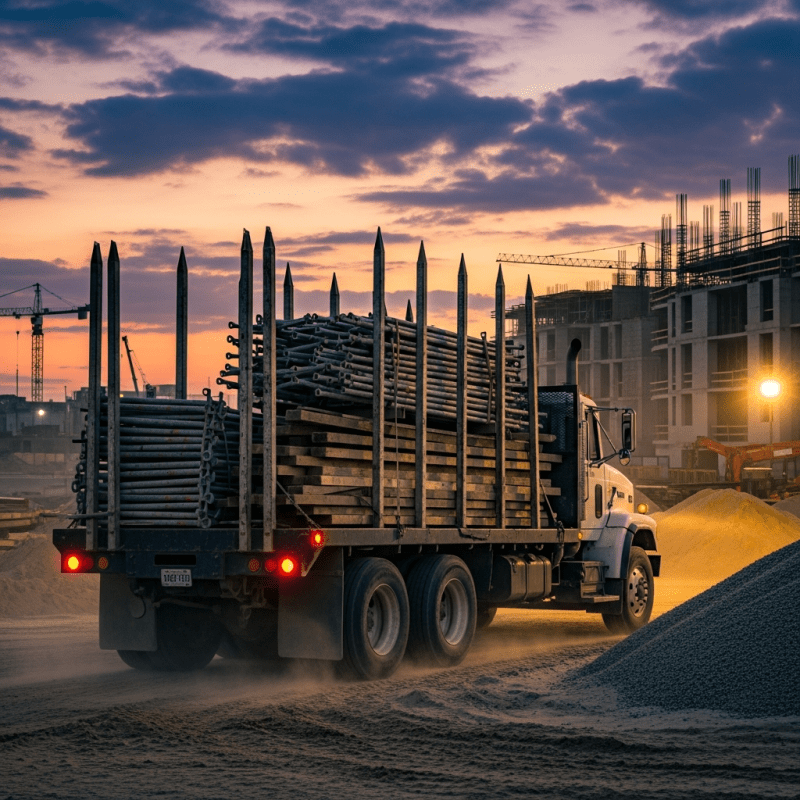
Soft cotton tee, unisex sizes
Buy ShirtWhile stake trucks are primarily utilitarian, they hold a steady presence in industries central to economic development such as construction and agriculture. In regions like North America, Europe, Australia, and Asia, they symbolize the hardworking backbone of local freight and trade. Their straightforward design occasionally appears in industrial art and documentary photography, representing practical ingenuity in commercial transport.
⚙️ Technical Specifications: Stake trucks typically feature flatbed lengths from 3 to 8 meters, with removable vertical stakes made of steel or wood. They fall under US FMCSA Classes 3 to 7 and EU N2/N3 regulatory categories. Gross Vehicle Weight Ratings range from approximately 4,500 kg to 15,000 kg. Payload capacities span from 1,360 kg to 6,800 kg. Engine options include gasoline, diesel, and electric types. Axle configurations usually include two axles (4x2 or 4x4), with some heavier models having three axles. Common cab types are standard, crew, and extended cabs.
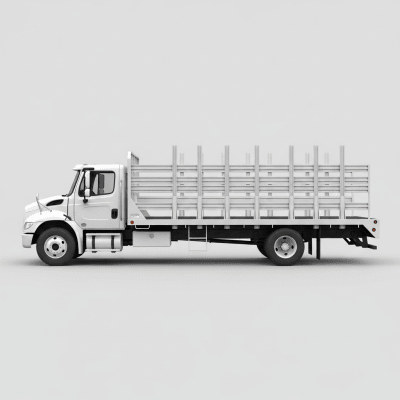
🚛 Common Models: Stake truck bodies are fitted on chassis from leading manufacturers such as Ford, Chevrolet, Freightliner, and Isuzu. While the stake body is a configuration rather than a single model, popular base trucks include the Ford F-Series, Chevrolet Silverado, Freightliner M2, and Isuzu NPR, all frequently adapted with stake beds for diverse commercial uses.
🛠️ Maintenance and Care: Regular inspection of the removable stakes and their mounting pockets is essential to ensure secure cargo containment. The flatbed surface should be checked for corrosion or damage, especially if exposed to heavy or abrasive loads. Routine chassis and engine maintenance follows the base truck manufacturer’s guidelines. Proper care extends the versatility and lifespan of stake trucks, ensuring safe operation across varied cargo types.
🌿 Environmental Impact: Stake trucks contribute to efficient cargo transport by enabling flexible loading and reducing the need for multiple vehicle types. Modern versions increasingly incorporate cleaner engine technologies, including electric powertrains, which reduce emissions. However, their environmental footprint depends largely on the underlying chassis and fuel type. Proper maintenance and adoption of greener drivetrains can mitigate ecological effects associated with commercial trucking.