Logging Truck
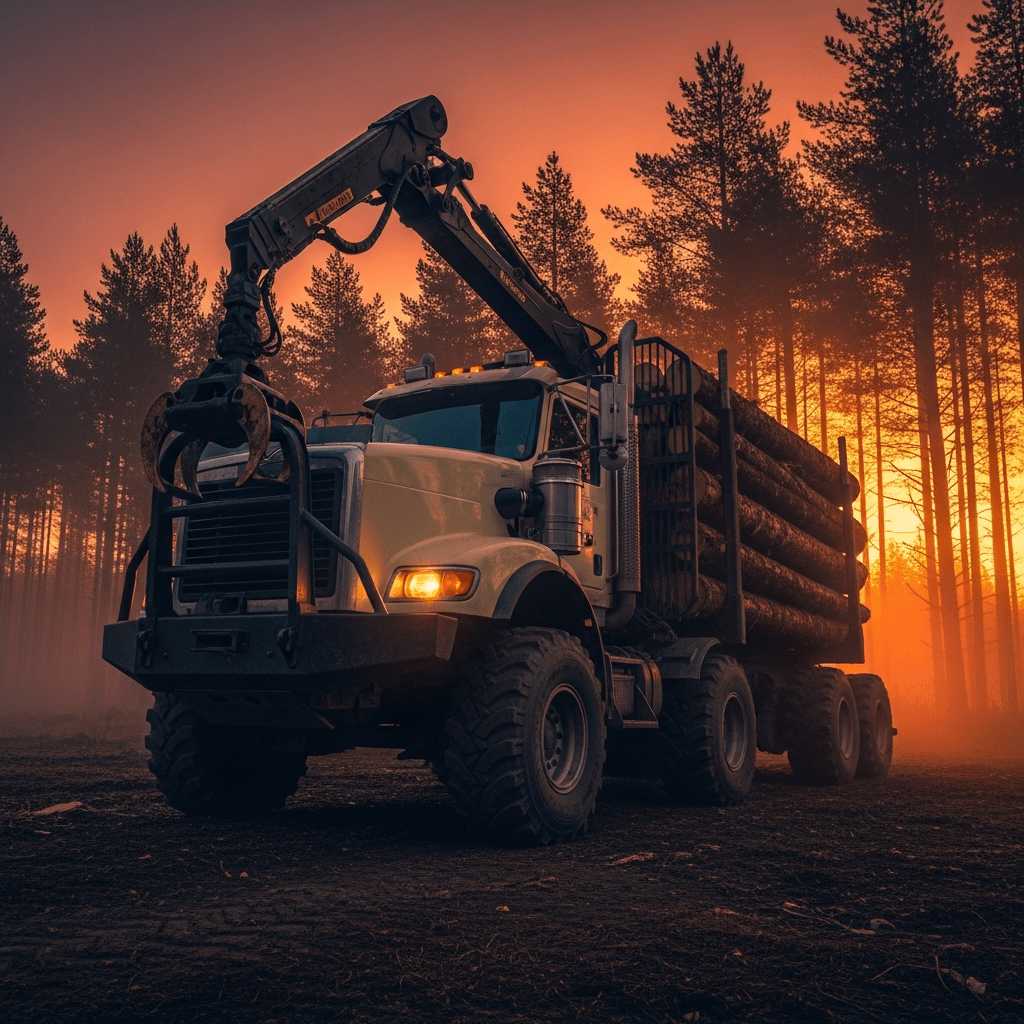
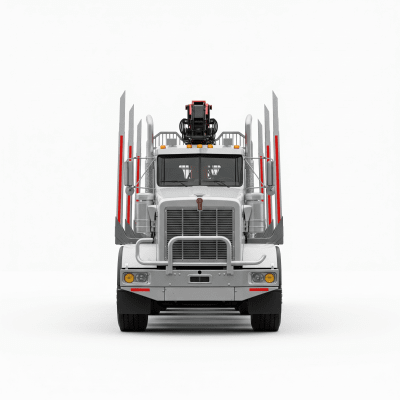
A logging truck is a heavy-duty vehicle specially designed to transport felled logs from forests to processing facilities, featuring an open-frame chassis with bolsters and stakes to secure heavy, irregular timber loads.
A logging truck is a heavy-duty vehicle specially designed to transport felled logs from forests to processing facilities, featuring an open-frame chassis with bolsters and stakes to secure heavy, irregular timber loads.
Logging trucks emerged alongside the mechanization of forestry in the early 20th century, evolving to meet the demands of timber industries worldwide. Their design has continuously adapted through contributions from manufacturers like Kenworth, Volvo, and Mack, reflecting regional forestry practices and advances in vehicle technology.
Classified as heavy-duty trucks, logging trucks typically fall within US DOT Classes 7 and 8 or EU N3 and N3G categories. They belong to the broader family of commercial vehicles engineered for cargo transport, distinguished by their specialization in carrying raw timber over challenging terrain.
Logging trucks feature a robust, open-frame chassis equipped with adjustable bolsters and stakes to hold logs securely. They often have reinforced frames and off-road tires, with cab options ranging from day cabs to sleeper cabs. Their length varies between 8 and 12 meters, designed to accommodate long timber loads.
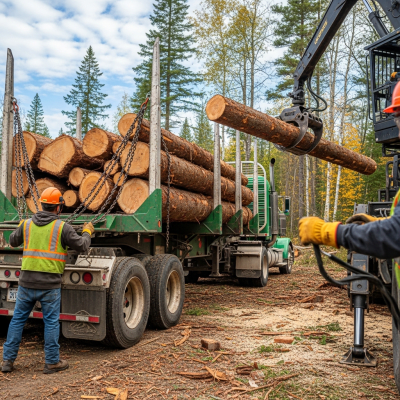
Primarily, logging trucks transport felled logs from remote forest sites to sawmills or pulp mills. Built for rugged environments, they navigate unpaved roads and steep grades, often carrying payloads between 20 and 40 metric tons. Some variants include hydraulic loaders or cranes for self-loading capabilities, enhancing operational efficiency.
Bring this kind into your world illustrated posters, mugs, and shirts.
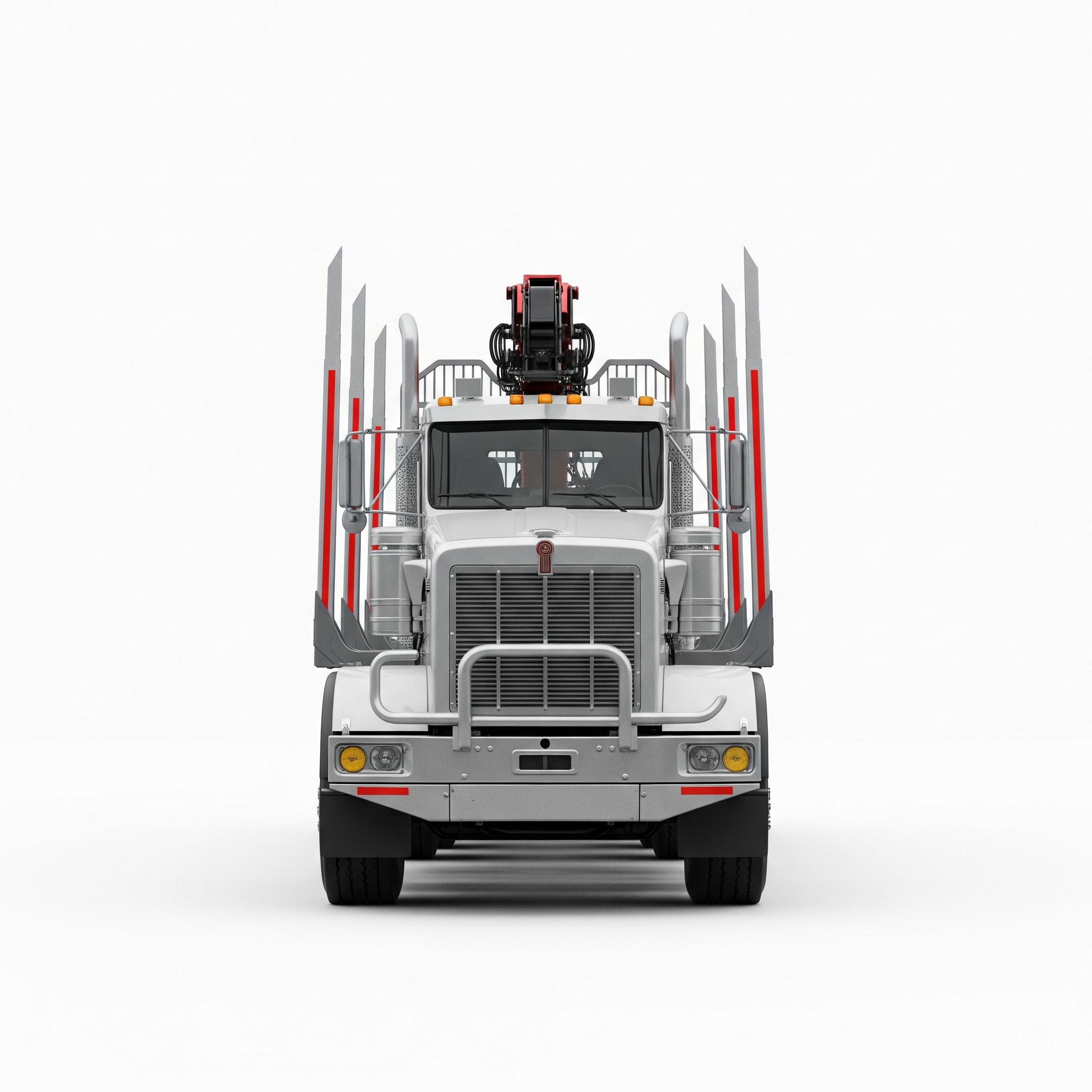
Archival print, museum-grade paper
Buy Poster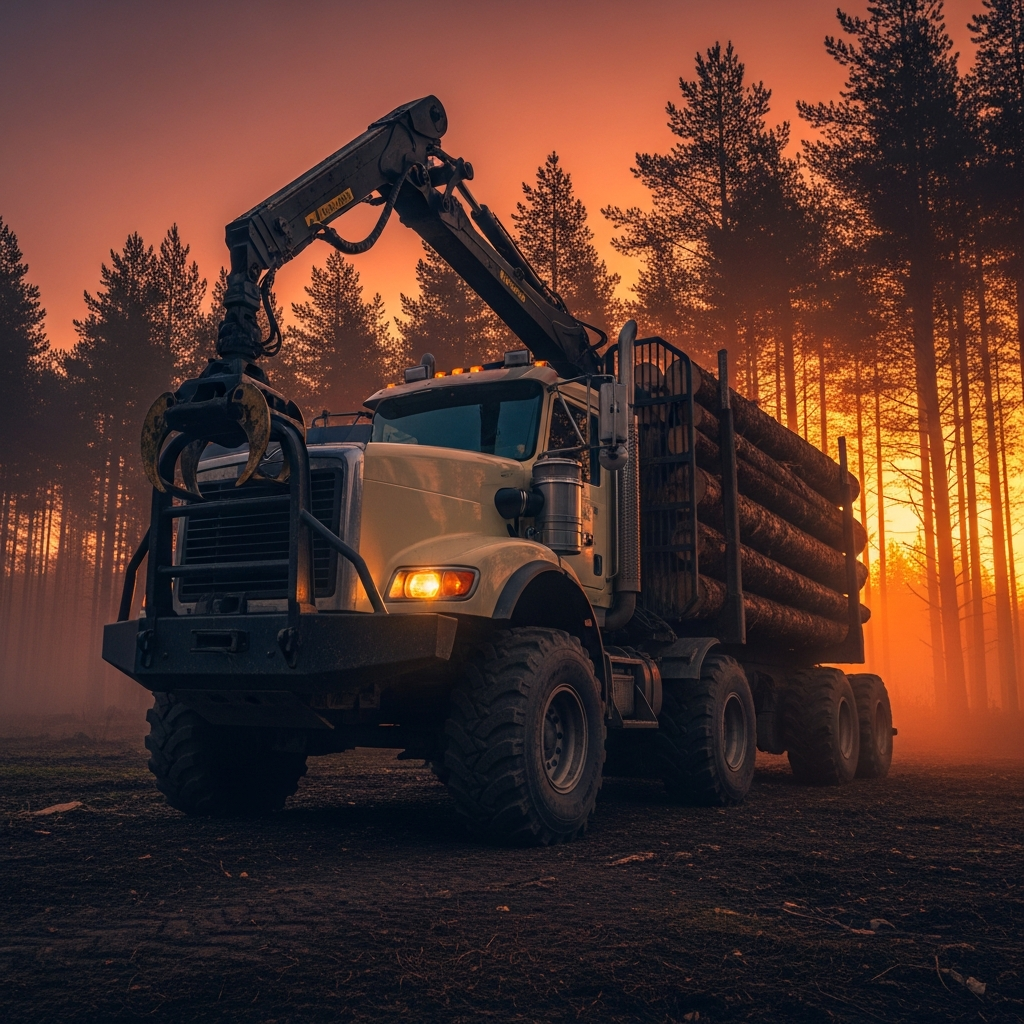
Stoneware mug, dishwasher safe
Buy Mug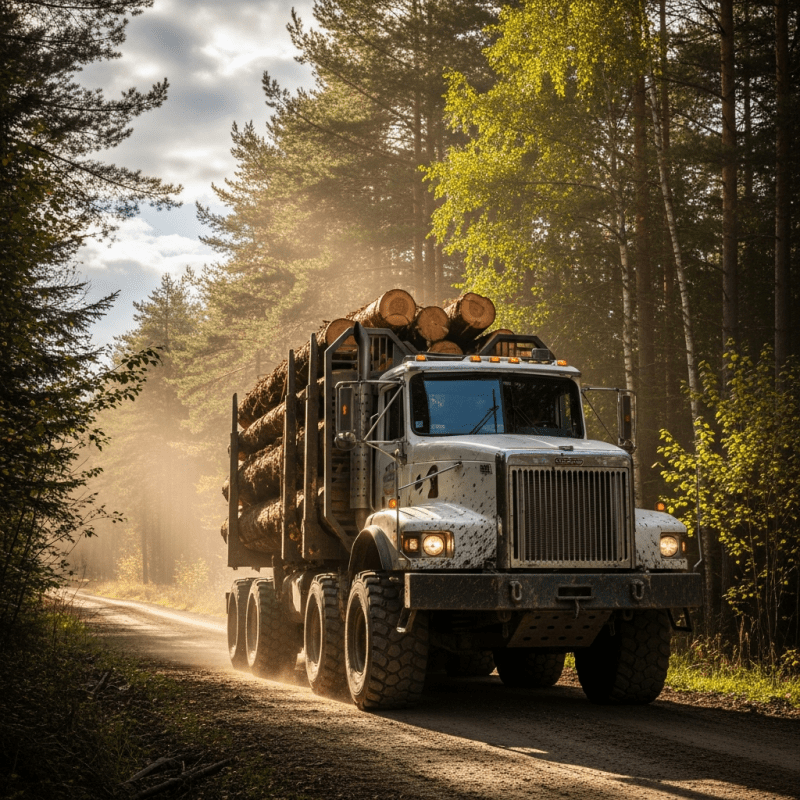
Soft cotton tee, unisex sizes
Buy ShirtLogging trucks symbolize the vital link between natural resources and industry, often depicted in regional art and media as icons of rugged labor and forestry heritage. In areas reliant on timber, they represent economic lifelines and the challenges of working in remote, demanding landscapes.
⚙️ Technical Specifications: Logging trucks usually weigh between 11,793 and 36,287 kilograms GVWR, with payload capacities from 20,000 to 40,000 kilograms. Length ranges from 8 to 12 meters. Engine types are diesel-powered, delivering 300 to 600 horsepower. Typical axle configurations include 3 to 5 axles, with drivetrains such as 6x4, 8x4, and 10x4. Cab options include day cabs and sleeper cabs. Cargo areas consist of open-frame chassis with adjustable bolsters, stakes, and sometimes hydraulic loaders or cranes.
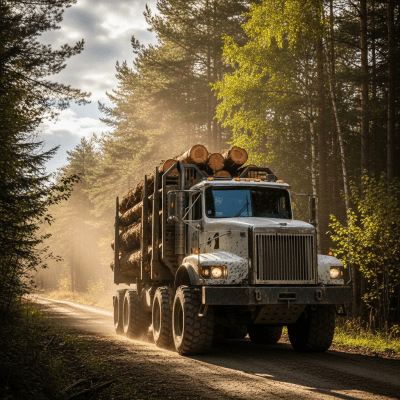
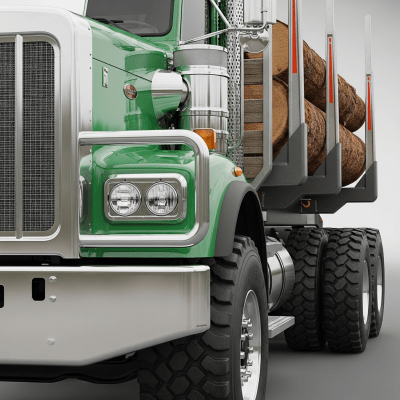
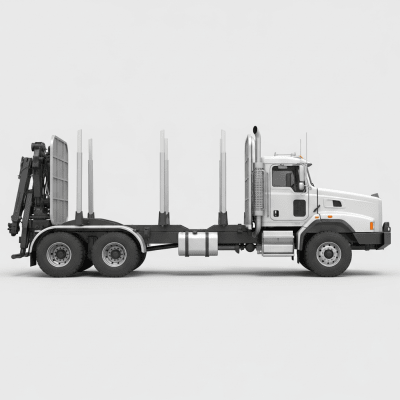
Popular logging truck models include the Kenworth T800, Volvo FH, Mack Granite, Peterbilt heavy-duty trucks, Scania forestry vehicles, and Mercedes-Benz heavy trucks. These models are favored for their durability, power, and adaptability to diverse forestry conditions worldwide.
Maintaining a logging truck involves regular inspection of the reinforced chassis, bolsters, and stakes to ensure secure cargo transport. Engine and drivetrain upkeep is critical due to heavy loads and off-road use. Hydraulic systems on self-loading variants require routine checks for leaks and pressure. Tire condition is vital given the rough terrain, and compliance with safety and environmental regulations demands consistent servicing.
Logging trucks contribute to environmental impacts through fuel consumption and emissions typical of heavy diesel vehicles. However, advances in engine technology and regulatory standards have improved their efficiency and reduced pollutants. Their role in sustainable forestry depends on responsible logging practices and adherence to road use regulations that minimize damage to sensitive forest ecosystems.