Origin Story

Emerging in the early 20th century, logging trailer trucks evolved to meet the forestry industry's demand for efficient large-scale timber transport. These vehicles pair robust tractor units from manufacturers like Kenworth, Volvo, and Scania with purpose-built trailers, allowing flexible operations and adaptation to regional transport regulations.

Classification

Classified as heavy-duty articulated trucks, logging trailer trucks belong to the broader family of commercial freight vehicles. They fall under regulatory categories such as US DOT Class 8, EU N3, and Australian ADR heavy vehicle standards, reflecting their significant weight and specialized function.

Appearance or Form

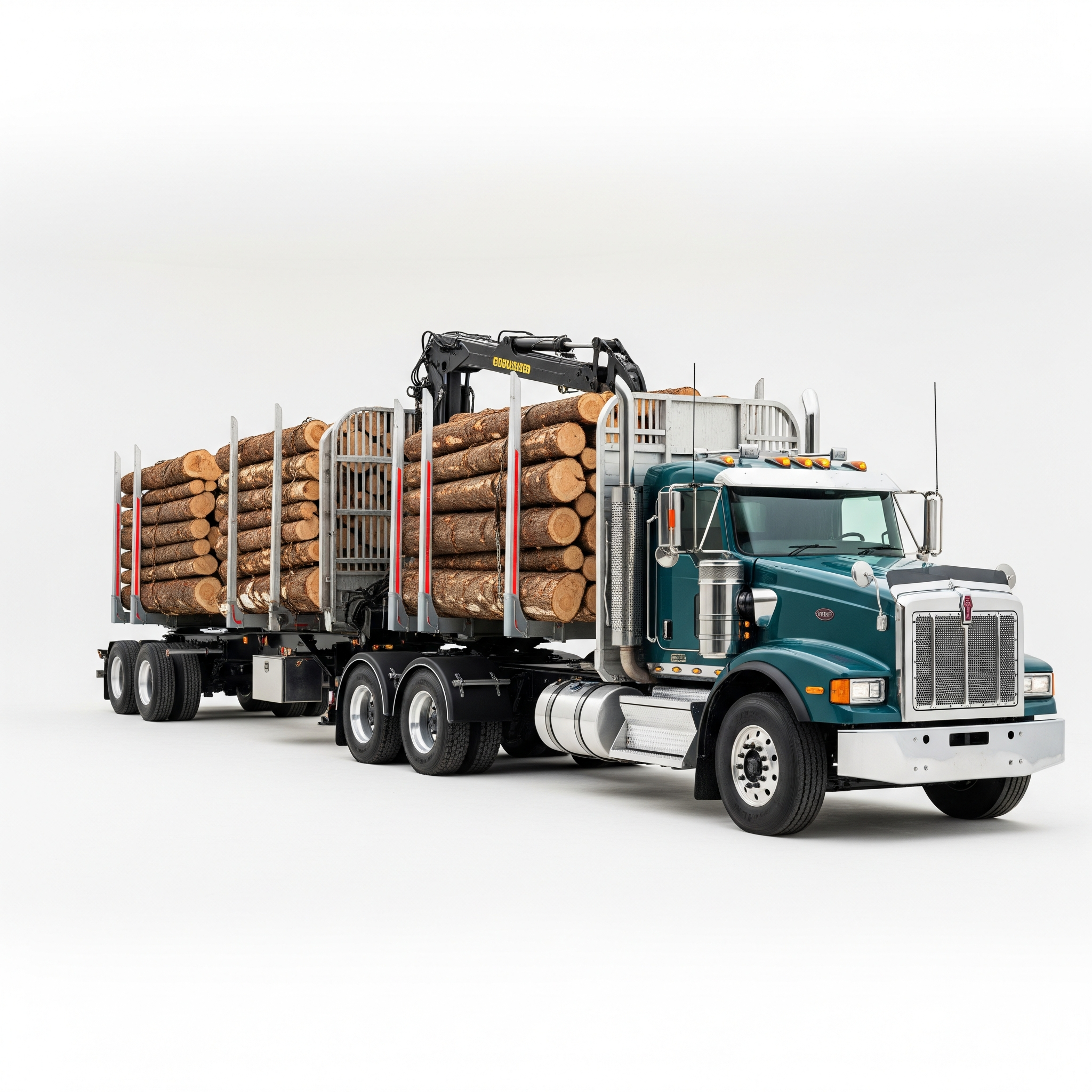
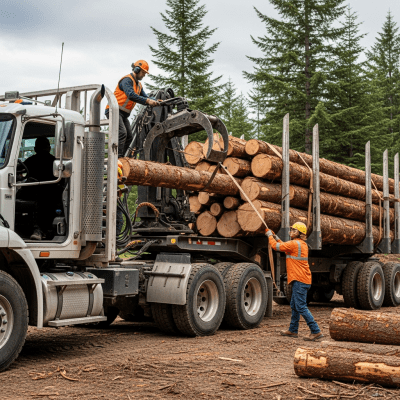
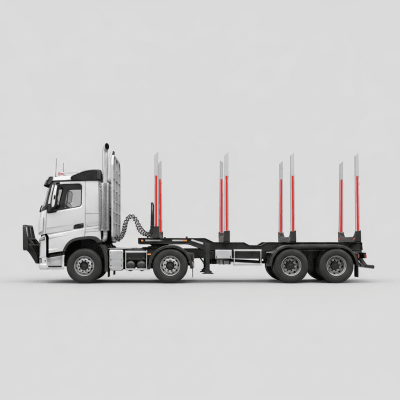
Logging trailer trucks feature a conventional or cab-over-engine tractor unit connected to a skeletal logging trailer equipped with bunks or bolsters to cradle logs. The trailers often include self-loading cranes or loader arms, reinforced chassis, high ground clearance, off-road tires, and advanced braking systems, creating a rugged and utilitarian profile suited for forest terrain and highway travel.

Behavior or Usage

Primarily used in forestry, logging trailer trucks transport raw timber from remote felling sites to sawmills, pulp mills, or export terminals. Their articulated design enhances maneuverability on narrow forest roads and maximizes payload efficiency on highways, supporting both large commercial operations and smaller logging enterprises across diverse regions.

Merchandise & Prints

Bring this kind into your world � illustrated posters, mugs, and shirts.

Logging Trailer Truck Logging Trailer Truck Poster

Logging Trailer Truck Poster

Archival print, museum-grade paper

Logging Trailer Truck Logging Trailer Truck Mug

Logging Trailer Truck Mug

Stoneware mug, dishwasher safe

Logging Trailer Truck Logging Trailer Truck Shirt

Logging Trailer Truck Shirt

Soft cotton tee, unisex sizes

Attributes & Insights

Taxon-Specific Insights

🌍Cultural Significance

In timber-producing regions, logging trailer trucks symbolize the backbone of the forestry economy, often appearing in rural art, documentaries, and industry narratives. They represent ruggedness and the vital connection between natural resource harvesting and industrial processing, embodying a key element of cultural identity in communities dependent on logging.

📌Notable Facts

  • Logging trailer trucks can carry payloads between 20 and 40 metric tons, depending on configuration and regulations.
  • They typically have 5 to 9 axles, combining tractor and trailer counts for weight distribution.
  • Diesel engines powering these trucks range from 350 to 600 horsepower, with emerging trials of hybrid and electric variants.
  • In Australia, multi-trailer "road trains" are used for extended timber transport routes.
  • The modular tractor-trailer setup allows separation for flexible loading, unloading, and compliance with regional laws.

⚙️Technical Specifications

⚙️ Technical Specifications

  • Weight: GVWR ranges from 36,000 to 63,500 kg.
  • Payload Capacity: Typically 20,000 to 40,000 kg of logs.
  • Dimensions: Overall length between 18 and 25 meters when coupled.
  • Engine: Diesel engines with 350 to 600 horsepower.
  • Axle Count: Between 5 and 9 axles total.
  • Cab Configurations: Conventional (bonneted) or cab-over-engine.
  • Drivetrain: Common setups include 6x4, 8x4, 8x6, and articulated configurations.
  • Trailer Features: Skeletal design with bunks or bolsters, self-loading cranes, reinforced chassis, high ground clearance, off-road tires, and advanced braking systems including ABS and engine brakes.

Visual Variations

High quality studio photograph of a single Logging Trailer Truck from the trucks taxonomy
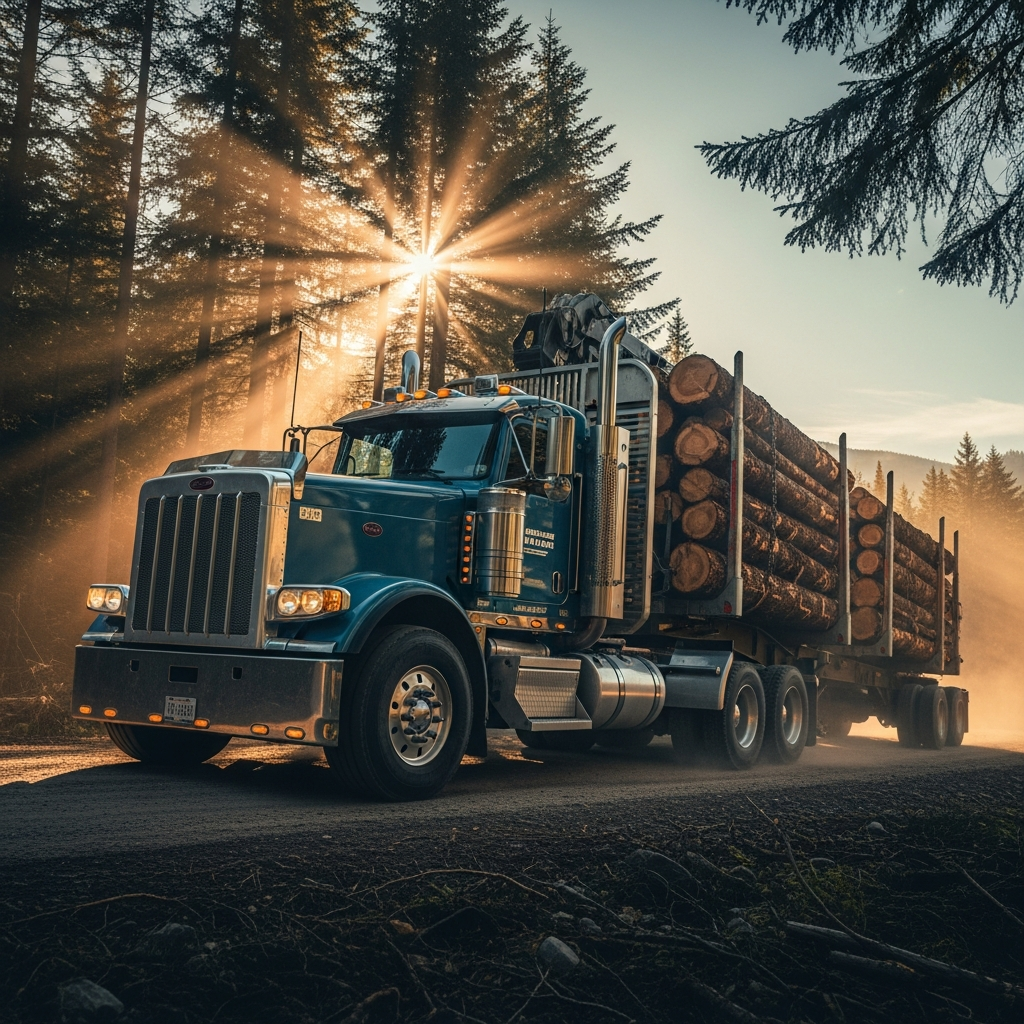
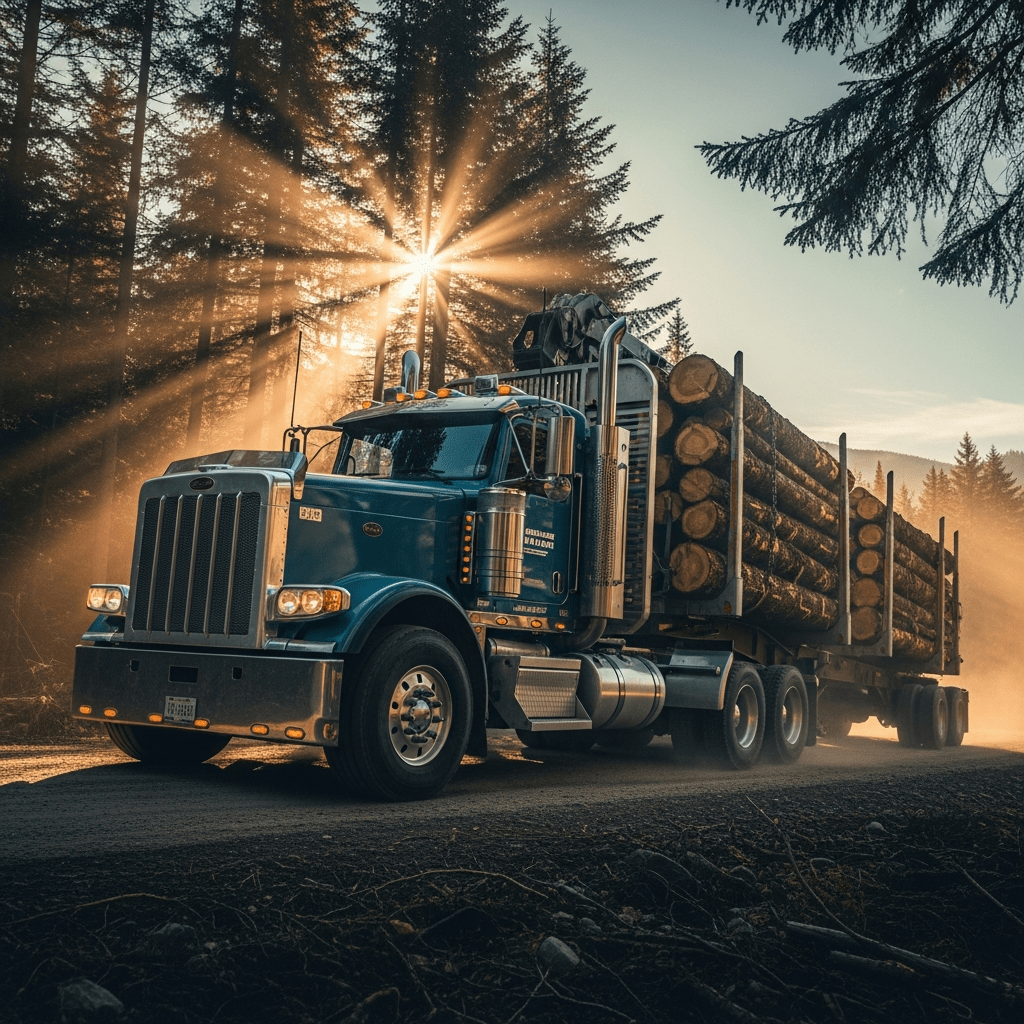
Photorealistic image of a Logging Trailer Truck (trucks) in its typical working environment
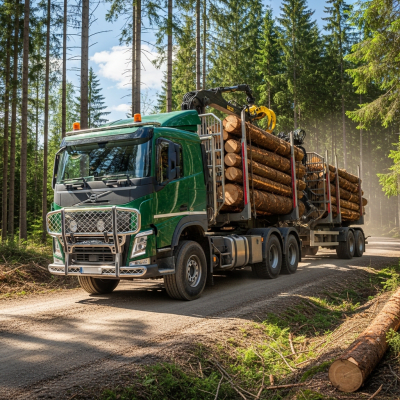
Image of a Logging Trailer Truck (trucks) being used by people in a real-world scenario
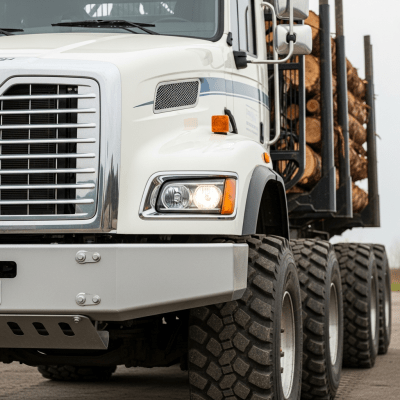
Close-up photograph focusing on distinctive details of a Logging Trailer Truck from the trucks taxonomy
Clean side profile view of a Logging Trailer Truck, part of the trucks

Composition & Context

Taxon-Specific Insights

🚛Common Models

Popular logging trailer truck models are often based on heavy-duty tractor units from manufacturers such as Kenworth's W900 series, Volvo's FH series, Scania's R-series, Freightliner's Cascadia, and Western Star's 4900. These tractors are paired with specialized logging trailers tailored to regional requirements and load capacities.

🛠️Maintenance And Care

Maintaining logging trailer trucks involves regular inspection of the reinforced chassis and trailer bunks to prevent structural fatigue. Engine upkeep focuses on diesel system health, while off-road tires require frequent checks for damage due to rugged terrain. Brake systems, including ABS and engine brakes, must be routinely serviced to ensure safety on steep or uneven forest roads. Proper lubrication of articulated joints and secure load fastening are critical to operational reliability.

🌿Environmental Impact

Logging trailer trucks contribute to environmental impacts primarily through diesel emissions and road wear in sensitive forest areas. However, their efficient payload capacity reduces the number of trips needed for timber transport, mitigating some ecological footprint. Emerging hybrid and electric tractor units aim to lower emissions further. Sustainable forestry practices and regulated transport routes help minimize habitat disruption caused by logging operations.

Faq

Q: What distinguishes a logging trailer truck from a rigid logging truck?
A: Logging trailer trucks have an articulated tractor and trailer combination, offering greater maneuverability and payload capacity than rigid trucks with a fixed frame.

Q: Which manufacturers are known for producing logging trailer trucks?
A: Leading manufacturers include Kenworth, Volvo, Scania, Freightliner, and Western Star.

Q: Are logging trailer trucks used worldwide?
A: Yes, they are prevalent in regions with significant forestry industries such as North America, Scandinavia, Russia, Australia, and South America.