Chassis Cab Truck
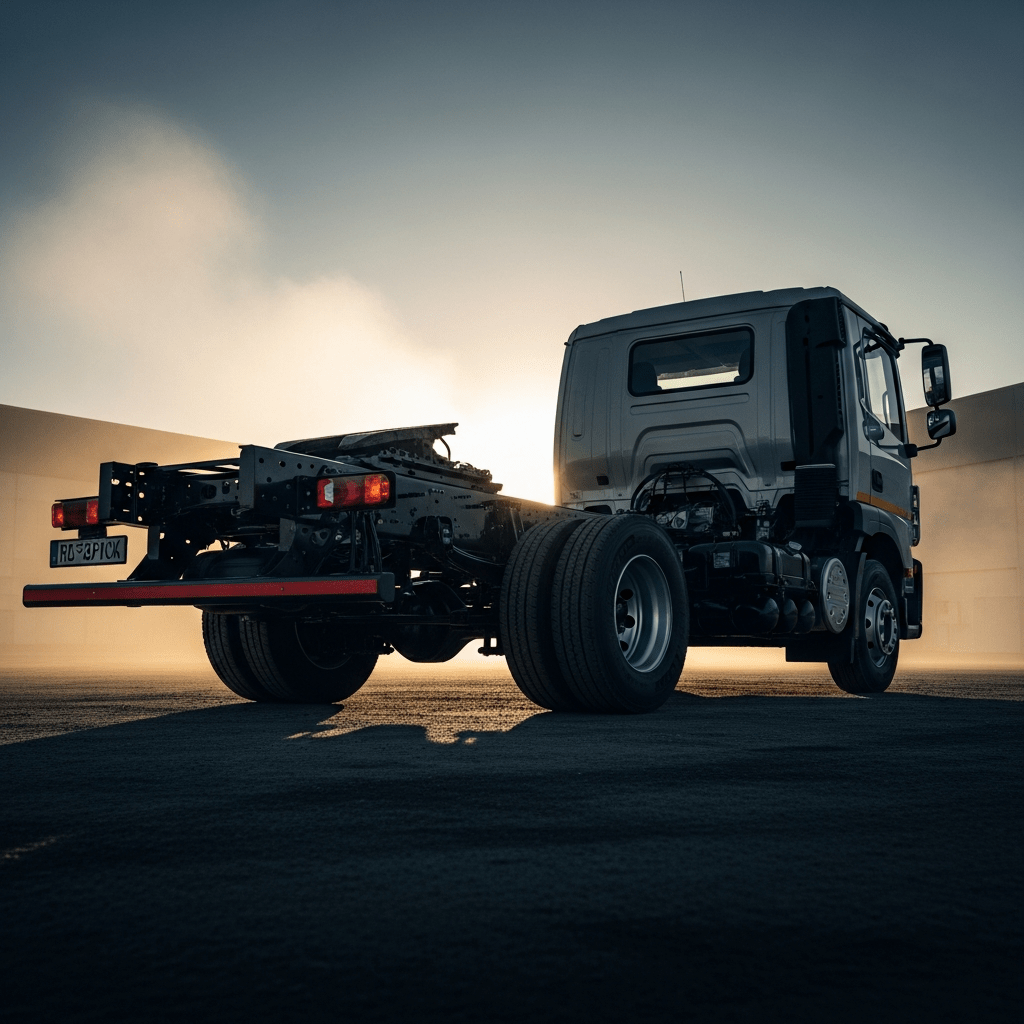
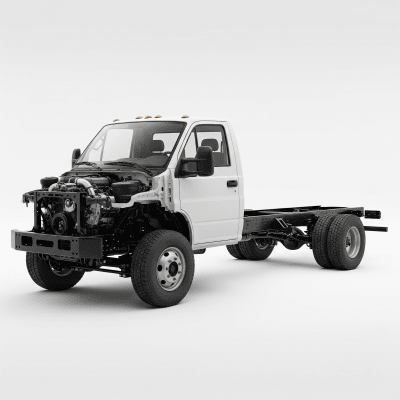
A chassis cab truck is a versatile commercial vehicle featuring a complete driver cab mounted on a bare chassis, designed to be customized with a wide variety of specialized bodies for diverse vocational uses.
A chassis cab truck is a versatile commercial vehicle featuring a complete driver cab mounted on a bare chassis, designed to be customized with a wide variety of specialized bodies for diverse vocational uses.
Emerging in the early to mid-20th century, the chassis cab truck was developed to meet the growing demand for adaptable work vehicles. Major manufacturers worldwide, including Ford, General Motors, Daimler (Mercedes-Benz), Isuzu, Iveco, Hino, and Tata, have continuously refined this design to align with evolving safety, emissions, and comfort standards, making it a staple in commercial fleets globally.
Chassis cab trucks belong to the broader category of commercial trucks and are classified by their incomplete factory configuration—offering a finished cab but no cargo body. They span regulatory classes from light to heavy-duty, such as US DOT Classes 2 through 8 and EU categories N1 to N3, fitting within the vocational truck family as foundational platforms for numerous specialized vehicle types.
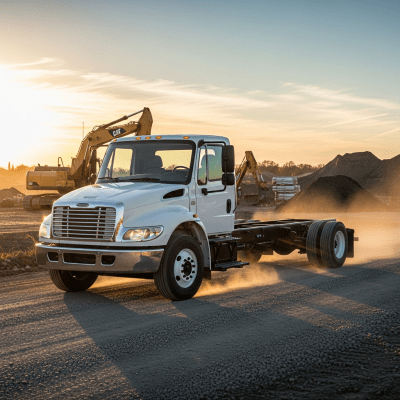
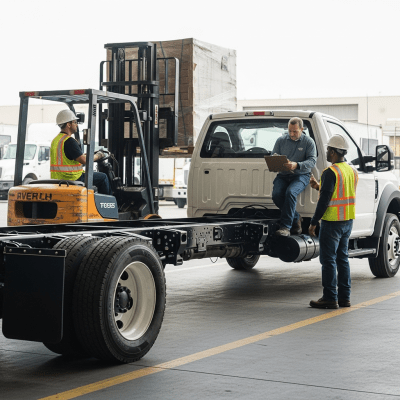
Visually, a chassis cab truck presents a fully enclosed cab—available in regular, extended, or crew configurations—mounted on a robust, exposed ladder or modular frame. The rear chassis is bare, featuring mounting points and electrical connections ready for aftermarket body installation. These trucks typically have two to three axles and come in various lengths, generally ranging from 3 to 6 meters, with reinforced frames and configurable suspensions to support diverse upfitting needs.
Designed for maximum adaptability, chassis cab trucks serve as the base for a broad spectrum of vocational vehicles, including box trucks, ambulances, tow trucks, utility bodies, flatbeds, dump trucks, and fire apparatus. Fleet operators and upfitters customize the bare chassis to meet specific operational demands, making these trucks indispensable in commercial, municipal, and emergency service sectors worldwide.
Bring this kind into your world illustrated posters, mugs, and shirts.
Archival print, museum-grade paper
Buy Poster
Stoneware mug, dishwasher safe
Buy Mug
Soft cotton tee, unisex sizes
Buy ShirtWhile not often spotlighted in popular culture, chassis cab trucks underpin many essential services and industries, symbolizing practicality and versatility. Their presence in emergency vehicles, delivery fleets, and municipal services reflects their quiet but critical role in modern infrastructure and community support.
⚙️ Technical Specifications
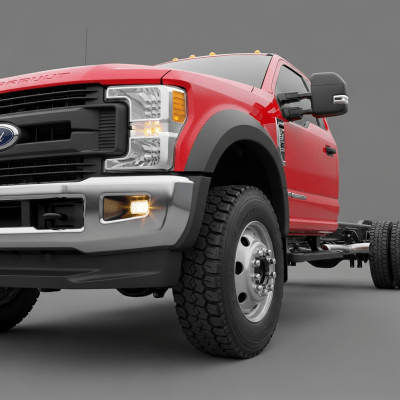
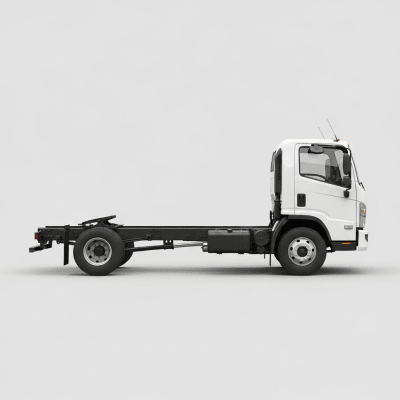
Popular chassis cab trucks are produced by leading manufacturers such as Ford, General Motors, Daimler (Mercedes-Benz), Isuzu, Iveco, Hino, and Tata. Each offers a range of models tailored to various weight classes and applications, maintaining the chassis cab as a core product line for vocational customization worldwide.
Maintenance of chassis cab trucks focuses on both the cab and the exposed chassis frame. Regular inspection of mounting points, electrical connections, and suspension components is essential, especially after upfitting. Routine engine and drivetrain servicing follows manufacturer guidelines, while attention to corrosion protection on the bare chassis helps ensure longevity. Upfitters and fleet managers should also monitor PTO units and any specialized equipment installed on the chassis.
Chassis cab trucks contribute to environmental challenges typical of commercial vehicles, including emissions and resource consumption. However, advances in powertrain technology have introduced electric and hybrid options, reducing their carbon footprint. Their adaptability also supports efficient fleet management by enabling right-sized vehicles for specific tasks, potentially lowering overall environmental impact through optimized usage.