Teak
Teak (Tectona grandis) is a large, deciduous tropical hardwood tree celebrated for its exceptionally durable, water-resistant timber and global economic importance.
Teak (Tectona grandis) is a large, deciduous tropical hardwood tree celebrated for its exceptionally durable, water-resistant timber and global economic importance.
Teak originated in the forests of South and Southeast Asia, with its natural range spanning India, Myanmar, Thailand, Laos, and Indonesia. First described scientifically by Carl Linnaeus in 1782, teak has been cultivated for centuries and is now grown in tropical regions worldwide. While wild teak lacks a formal cultivar pedigree, improved clones have been developed for plantations, especially in India and Indonesia, to meet rising global demand for its prized wood.
Teak belongs to the genus Tectona within the family Lamiaceae, order Lamiales, class Magnoliopsida, division Magnoliophyta, and kingdom Plantae. It is classified as an angiosperm, or flowering plant, and is recognized as one of the most commercially significant timber trees among the woody plant group known as trees.
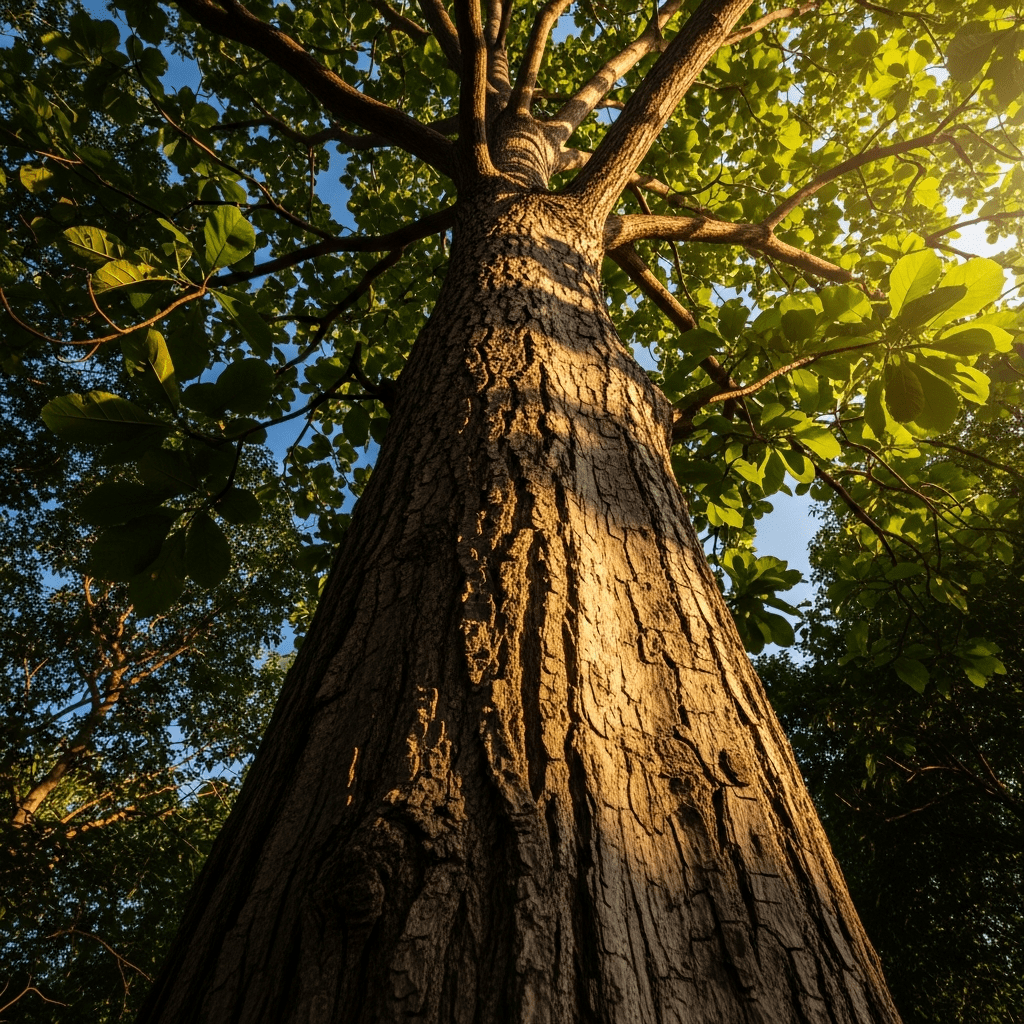
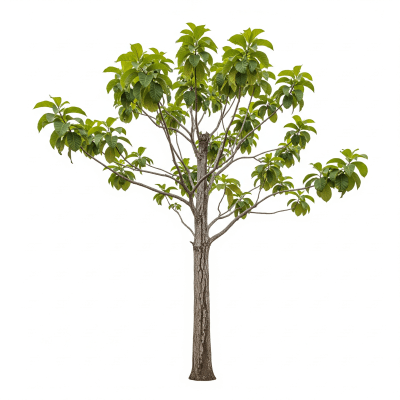
Teak trees are imposing, often reaching heights of 30–40 meters with a straight, robust trunk up to 1–1.5 meters in diameter. Their bark is gray to brown, scaly, and fibrous. The large, papery leaves—opposite, ovate to elliptic, and 30–60 cm long—are shed annually. During the rainy season, teak produces small, white to pale blue, fragrant flowers in showy terminal panicles. The fruit is a round drupe, 1.5–2 cm in diameter, containing several seeds. Teak wood itself is golden to medium brown, straight-grained, and naturally oily, contributing to its signature luster and resilience.
Teak's primary interaction with humans is through its timber, which is highly sought after for outdoor furniture, shipbuilding, flooring, and decorative woodwork due to its strength and resistance to rot, termites, and marine borers. The tree is cultivated in plantations for sustainable harvest, and its leaves are occasionally used for traditional food wrapping and dyeing. Teak is also valued in ecological restoration and landscaping for its robust growth and adaptability to tropical climates.
Bring this kind into your world illustrated posters, mugs, and shirts.

Archival print, museum-grade paper
Buy Poster
Stoneware mug, dishwasher safe
Buy Mug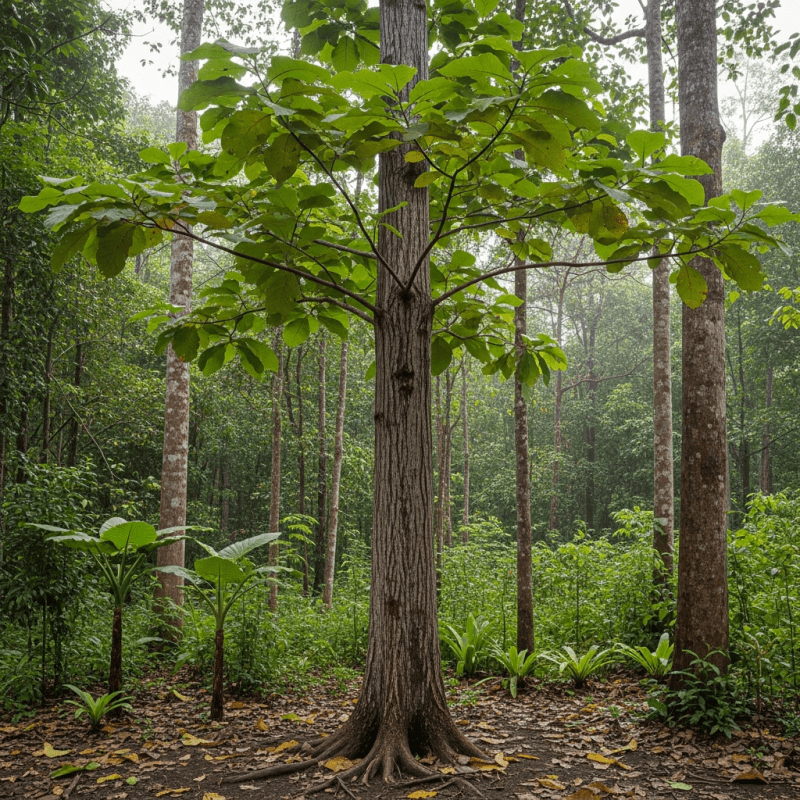
Soft cotton tee, unisex sizes
Buy ShirtTeak has been revered across Asia for centuries, symbolizing durability, prestige, and craftsmanship. Its wood has been used in royal palaces, temples, and ships, notably in Burmese and Indian traditions. In Indonesia, "jati" furniture is a hallmark of quality. Teak’s presence in art and architecture reflects its status as a material of choice for enduring beauty and strength, while its leaves and timber feature in local customs and artisanal practices.
In its native forests, teak plays a vital ecological role by providing canopy cover, stabilizing soils, and supporting diverse wildlife. Its large leaves contribute to nutrient cycling, while its flowers attract pollinators. The tree’s resilience and adaptability make it valuable in reforestation and habitat restoration projects, although large-scale monoculture plantations can reduce biodiversity compared to natural forests.
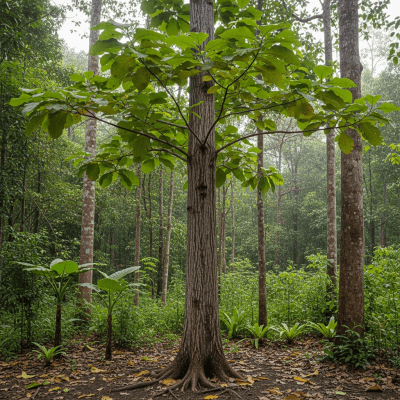
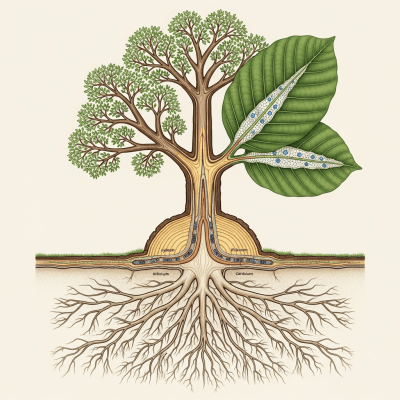

Teak is native to tropical regions of South and Southeast Asia, thriving in countries such as India, Myanmar, Thailand, Laos, and Indonesia. It prefers deep, well-drained alluvial soils, full sunlight, and climates with annual rainfall between 1,200–2,500 mm at altitudes up to 1,000 meters. Today, teak is widely cultivated in tropical zones around the world, including Africa and Latin America, primarily in managed plantations.
Teak grows best in tropical climates with abundant rainfall and sunlight. For optimal growth, plant in deep, well-drained soils and ensure full sun exposure. Propagation is typically by seed, though improved clones can be established via cuttings or tissue culture. Regular monitoring for leaf skeletonizer, powdery mildew, and root rot is recommended, but teak’s natural oils confer broad resilience. Plantation teak is often harvested at 20–30 years, though longer growth yields superior timber quality. Sustainable management, including certification, is crucial to prevent overharvesting.
Teak faces threats from illegal logging, overharvesting, and habitat loss, particularly in its native range. Disease and pests such as leaf skeletonizer and root rot can affect plantations, though the species is generally resilient. Conservation efforts focus on sustainable forestry practices, trade restrictions, and certification schemes like FSC to ensure responsible sourcing and protect natural teak forests from depletion.
Teak’s golden-brown, straight-grained timber is prized for outdoor furniture, shipbuilding, decking, flooring, veneer, cabinetry, doors, window frames, and carving. Its durability and resistance to weathering make it a preferred material for high-end applications. While the leaves are used for food wrapping and dyeing in some cultures, teak’s direct culinary value is limited. The global market for teak is robust, with major exports from Myanmar, Indonesia, India, and African plantations, all subject to sustainability standards due to historic overexploitation.
Teak is a symbol of strength, longevity, and prestige in many Asian cultures. Its wood has adorned royal palaces and temples, and is often associated with prosperity and craftsmanship. In folklore, teak is sometimes credited with protective qualities, and its majestic presence in forests is celebrated in regional stories and traditions. The tree’s enduring nature and beauty have made it a cultural icon in countries where it grows.