Sandalwood
Sandalwood is the name given to a group of trees in the genus Santalum, renowned for their fragrant heartwood and essential oil prized in perfumery, ritual, and medicine.
Sandalwood is the name given to a group of trees in the genus Santalum, renowned for their fragrant heartwood and essential oil prized in perfumery, ritual, and medicine.
The story of sandalwood begins in the forests of southern India, Sri Lanka, and Southeast Asia, where Santalum album has grown for centuries. The genus Santalum was first formally described by Carl Linnaeus in 1753. Over time, other species such as Australian sandalwood (Santalum spicatum) and Hawaiian sandalwood (Santalum paniculatum) were recognized, each adapted to their native regions. While wild populations have no formal breeding lineage, modern plantations sometimes select trees for higher oil yield and faster growth.
Sandalwood trees belong to the family Santalaceae within the order Santalales. The genus Santalum includes several species, all classified as perennial, woody trees with a hemiparasitic growth habit. Their botanical hierarchy is: Kingdom Plantae > Division Magnoliophyta > Class Magnoliopsida > Order Santalales > Family Santalaceae > Genus Santalum.
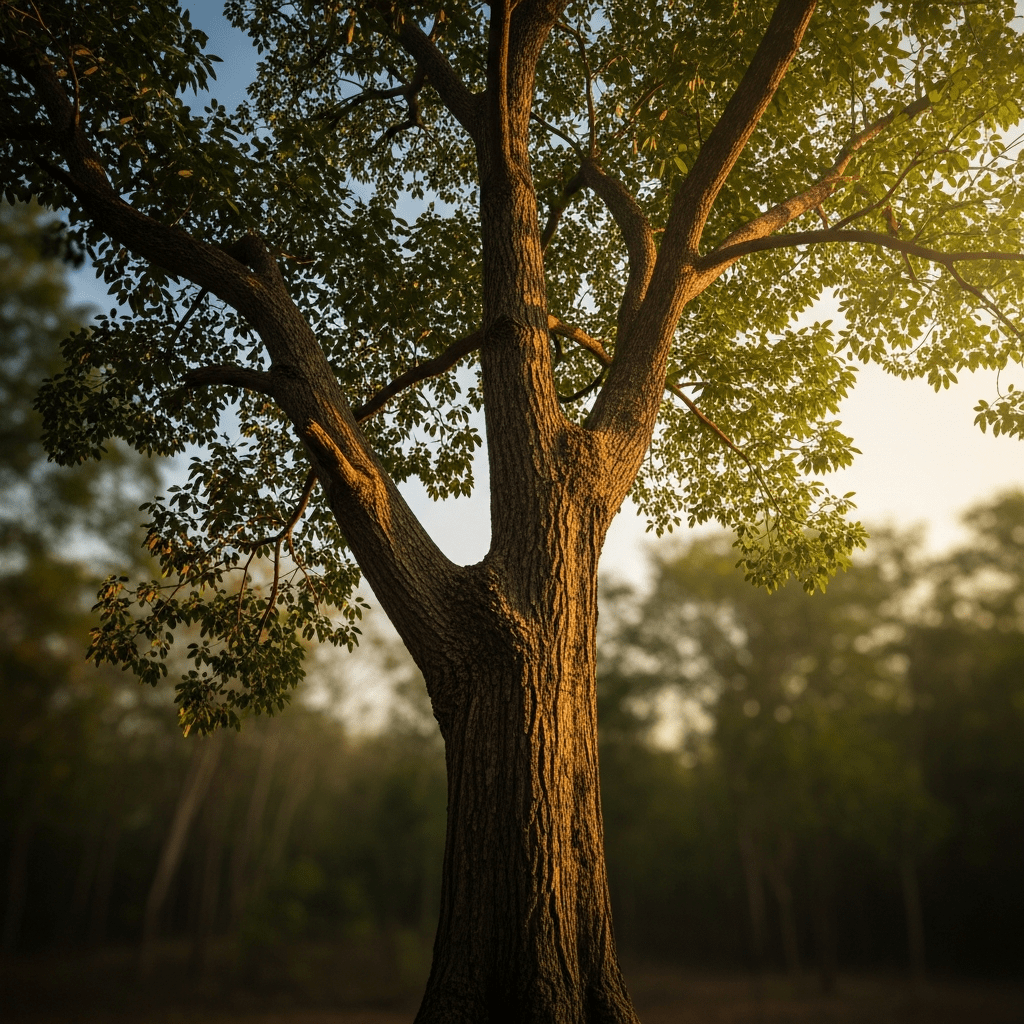
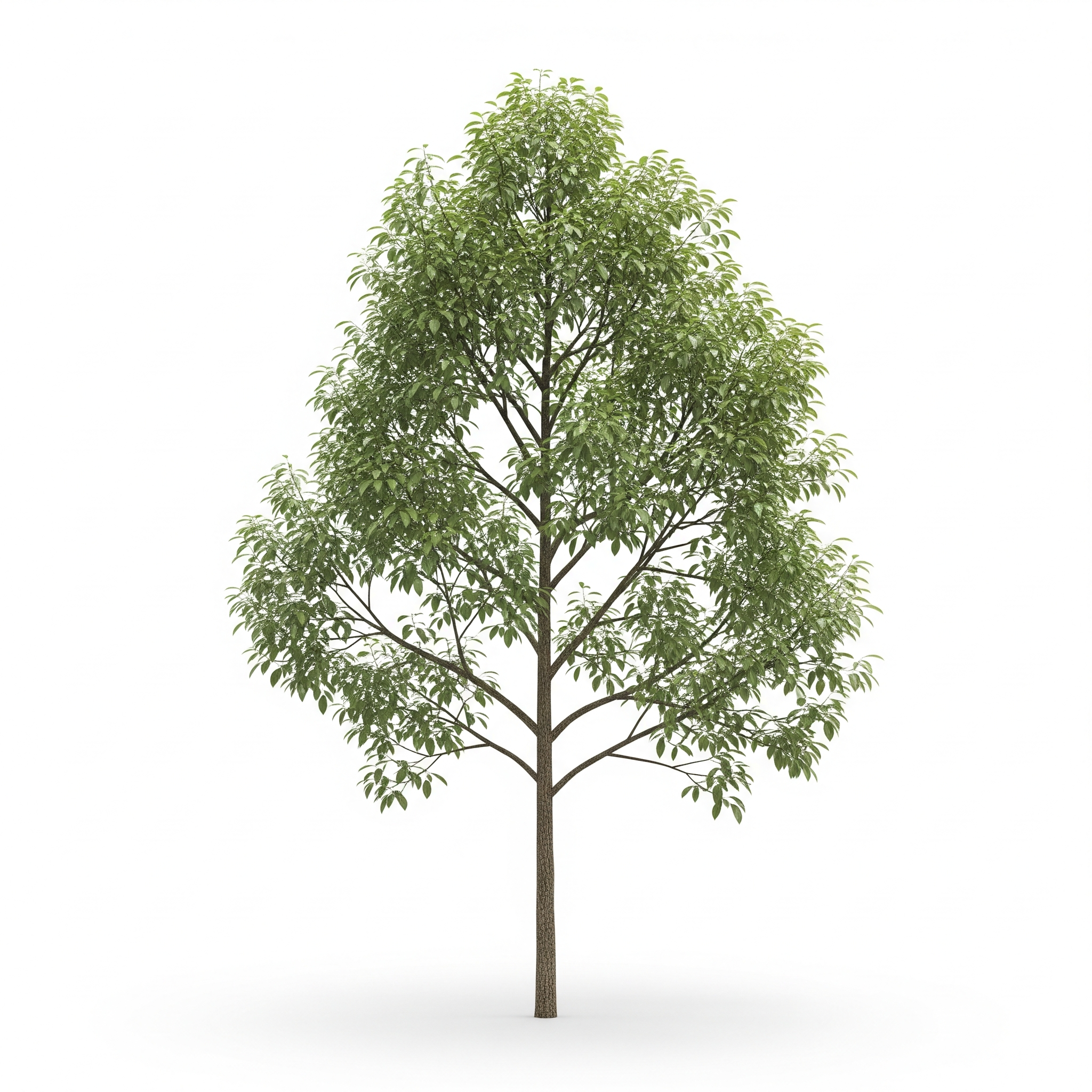
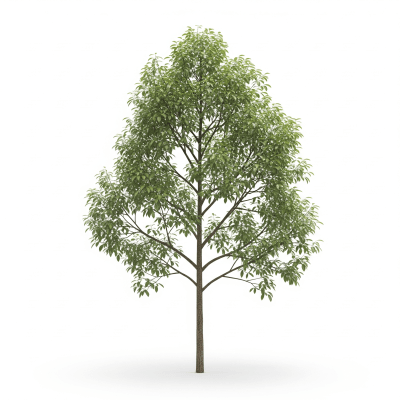
Sandalwood trees are typically small to medium-sized, reaching 4–9 meters in height. They feature slender trunks with grayish bark and leathery, glossy green leaves arranged oppositely. The flowers are small and subtle, clustered in panicles, with colors ranging from white to reddish. The heartwood, hidden within, develops a rich, lingering aroma over many years, which is the tree's most celebrated trait.
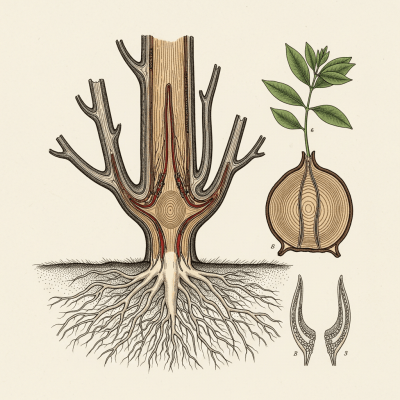
Sandalwood trees exhibit a unique hemiparasitic behavior, attaching their roots to nearby host plants to draw water and nutrients. Their slow growth and the gradual development of aromatic compounds in the heartwood make them highly sought after. Humans interact with sandalwood primarily by harvesting the heartwood for essential oil, carving wood for religious and decorative objects, and using powdered wood in rituals and medicine.
Bring this kind into your world illustrated posters, mugs, and shirts.
Archival print, museum-grade paper
Buy Poster
Stoneware mug, dishwasher safe
Buy Mug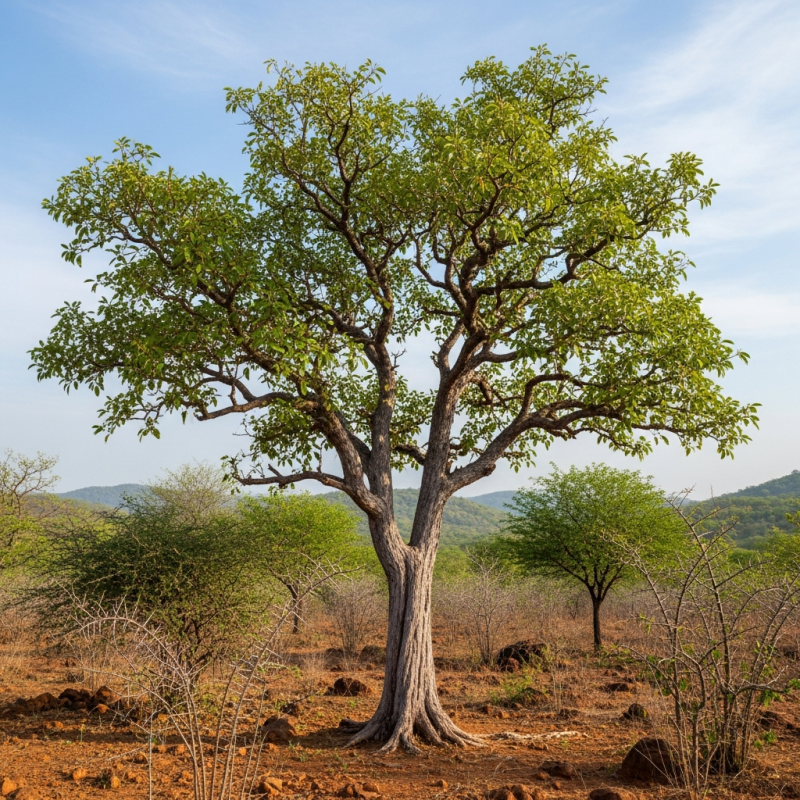
Soft cotton tee, unisex sizes
Buy ShirtSandalwood has deep cultural roots, especially in South Asian traditions. Its wood and oil are central to Hindu and Buddhist rituals, used in incense, meditation, and religious carvings. In India, Mysore sandalwood is revered for its quality and heritage. The calming scent of sandalwood is woven into spiritual practices, ceremonies, and traditional medicine across Asia and beyond.
Sandalwood trees play a distinctive role in their ecosystems as hemiparasites, forming connections with host plants to supplement their water and nutrient needs. This relationship influences the composition of surrounding plant communities. Their flowers attract small pollinators, and mature trees provide habitat and resources for various insects and birds. The decline of wild populations can disrupt these ecological interactions.
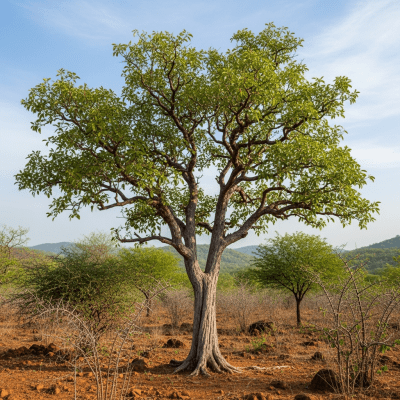

Sandalwood species are native to southern India, Sri Lanka, and Southeast Asia, with related species in Australia and Hawaii. They thrive in tropical and subtropical woodlands, often growing in dry, well-drained soils. The trees require proximity to suitable host plants for optimal growth, and their natural habitats are increasingly fragmented due to human activity.
Growing sandalwood requires patience and careful site selection. Propagation is usually by seed, though tissue culture and grafting are used in commercial plantations. Young trees must be planted near suitable host species to support their hemiparasitic needs. Protection from fungal diseases and root rot is important, and sustainable harvesting practices are essential to ensure long-term yields. Optimal oil production takes decades, so growers must plan for the long term.
Wild sandalwood populations face serious threats from overharvesting, habitat loss, and disease. The high market value of sandalwood oil has led to illegal logging and depletion of natural stands, especially in India and Southeast Asia. Conservation efforts include legal protection, reforestation, and the establishment of managed plantations to reduce pressure on wild trees and ensure the species' survival.
Sandalwood is economically vital for its essential oil, a luxury ingredient in perfumes, incense, and cosmetics. The wood is carved into religious icons and decorative objects, especially in India. Powdered sandalwood is used in rituals, while extracts are valued in Ayurvedic and Chinese medicine for their calming and anti-inflammatory properties. Australian sandalwood also supports local industries, though its oil differs in composition and market value.
Sandalwood carries rich symbolic meaning in many cultures. In Hinduism and Buddhism, its scent is associated with purity, meditation, and spiritual elevation. Sandalwood paste is applied during religious ceremonies and rites of passage. Folklore often regards sandalwood as a tree of peace and healing, its aroma believed to calm the mind and invite blessings.