Rowan
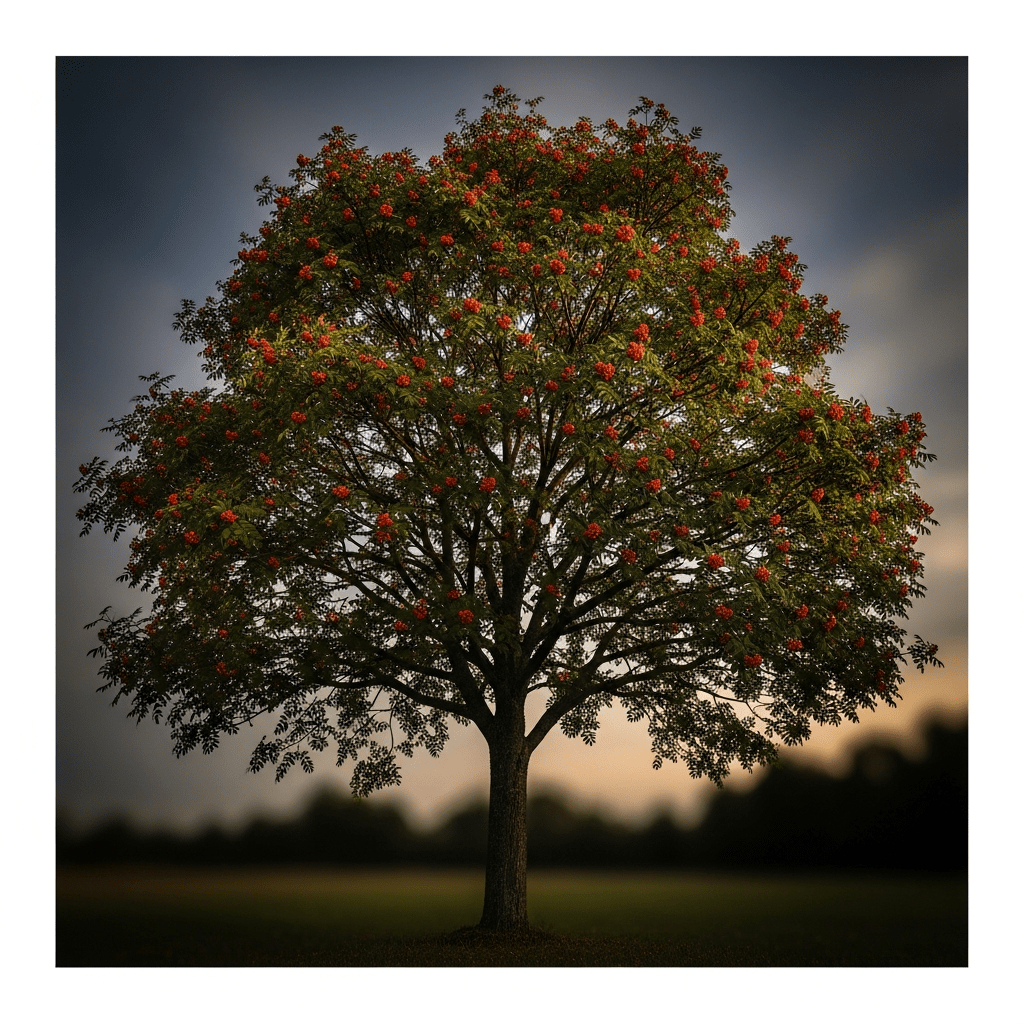
Rowan is a medium-sized deciduous tree of the genus Sorbus, celebrated for its elegant pinnate leaves, clusters of white spring flowers, and vivid red or orange berries that brighten landscapes and sustain wildlife.
Rowan is a medium-sized deciduous tree of the genus Sorbus, celebrated for its elegant pinnate leaves, clusters of white spring flowers, and vivid red or orange berries that brighten landscapes and sustain wildlife.
Native to Europe and temperate Asia, rowan trees trace their formal botanical origins to 1753, when Carl Linnaeus described the genus Sorbus. The lineage is rich and intricate, with many species, hybrids, and microspecies evolving across the continent, particularly in diverse European habitats. While wild rowans have no single breeder, cultivated varieties have been selected for ornamental appeal and adaptability.
Rowan belongs to the family Rosaceae, within the order Rosales. Its genus, Sorbus, is part of the class Magnoliopsida in the division Magnoliophyta, kingdom Plantae. While commonly called "mountain ash," rowans are not related to true ashes (Fraxinus); their classification is firmly rooted among flowering trees of the rose family.
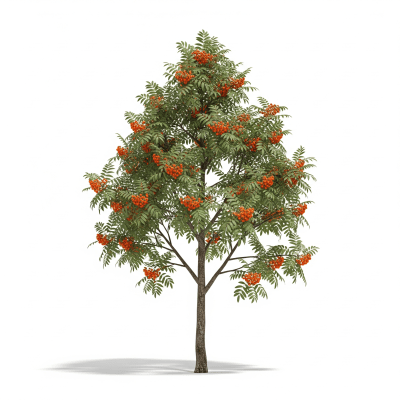
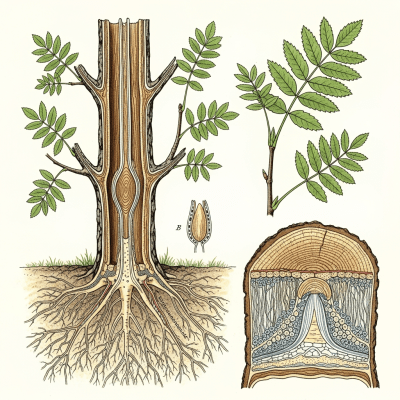
Rowan trees typically reach heights of 10–15 meters, featuring a slender trunk and an open, rounded crown. Their leaves are alternate and pinnate, composed of 9–19 serrated leaflets that flutter gracefully in the breeze. In late spring, the branches burst into showy corymbs of small white flowers, followed by globose berries in brilliant shades of red or orange that persist into winter, creating a striking visual contrast against bare branches or snow.
Rowans are highly valued as ornamental trees for their decorative foliage, flowers, and fruit. Their berries are a vital winter food source for birds and small mammals, while humans use the fruit in jams, jellies, and spirits after proper preparation. Hardy and tolerant of various soils and urban pollution, rowans are commonly planted in parks, gardens, and streetscapes, providing both beauty and ecological benefits.
Bring this kind into your world illustrated posters, mugs, and shirts.

Archival print, museum-grade paper
Buy Poster
Stoneware mug, dishwasher safe
Buy Mug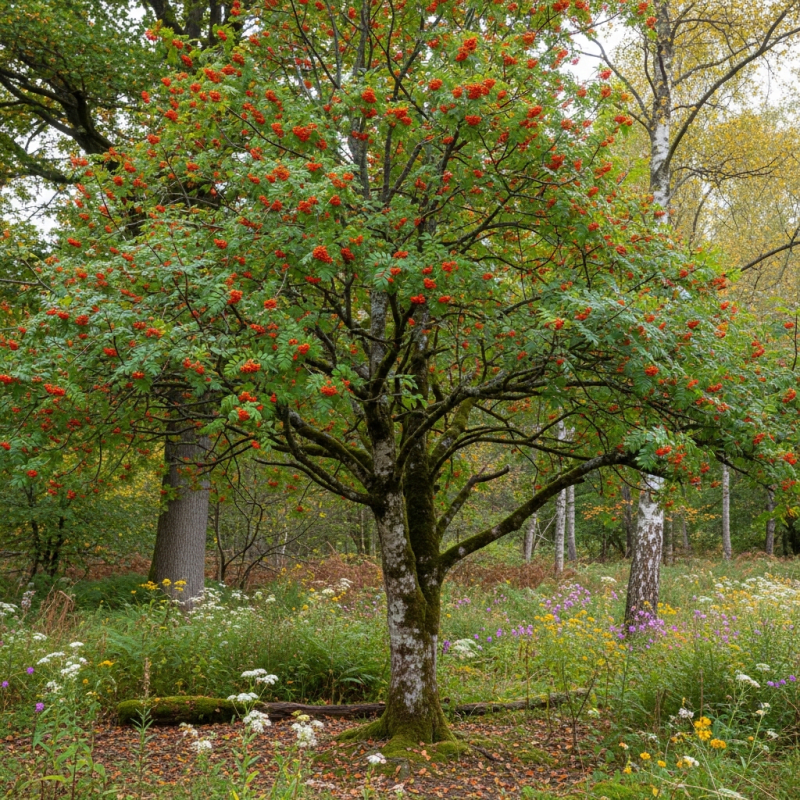
Soft cotton tee, unisex sizes
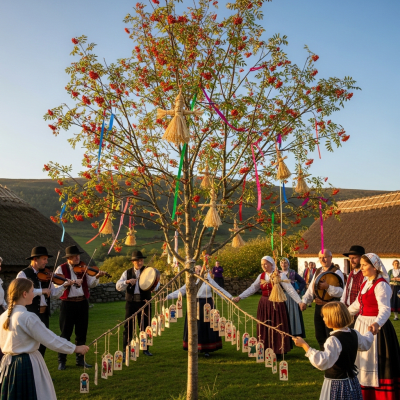
Buy ShirtRowan trees hold a special place in European folklore and mythology, often symbolizing protection, magic, and resilience. They appear in countless legends as guardians against evil, and their wood and berries are woven into rituals and traditions. The tree's presence in art and literature reflects its enduring role as a cultural touchstone across northern Europe and beyond.
Rowan trees play a vital ecological role by providing food and habitat for birds, especially thrushes and waxwings, which feed on their berries through winter. The persistent fruit supports wildlife when other sources are scarce, and the tree's flowers attract pollinators in spring. Rowans also contribute to soil stabilization and biodiversity in woodland edges and open landscapes.
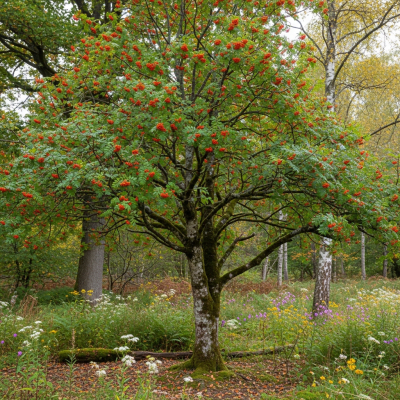
Rowans are native to Europe and temperate Asia, thriving in woodlands, mountains, and open landscapes. They are widely distributed across the UK, continental Europe, and parts of northern Asia, and have been introduced to North America and other temperate regions. Rowans prefer well-drained soils and tolerate both sun and partial shade, often found at forest edges, hillsides, and urban parks.
Rowans are easy to cultivate, requiring minimal care once established. Plant in well-drained soil with access to sunlight or light shade. Water regularly during establishment, but mature trees tolerate drought and cold well. Prune to maintain shape and remove diseased branches. Watch for fireblight and fungal diseases, and harvest berries in late summer or autumn for culinary use.
While rowans are generally hardy, they are susceptible to fireblight (Erwinia amylovora) and various fungal diseases. Habitat loss and changes in land use can impact wild populations, especially rare microspecies. Conservation efforts focus on maintaining genetic diversity and protecting woodland habitats, with rowans benefiting from their adaptability and widespread planting.
Rowan berries are used in jams, jellies, preserves, and alcoholic beverages, valued for their tart flavor after cooking. The wood, though not widely commercialized, is hard and fine-grained, suitable for carving and tool handles. Rowans are popular ornamentals in landscaping, appreciated for their year-round beauty and ecological benefits.
Rowan trees are steeped in symbolism, especially in Celtic and Norse traditions, where they are seen as protectors against evil and sources of magical power. The tree's red berries and graceful form have inspired countless myths, from warding off witches to serving as a charm for good fortune. Rowan wood was historically used in protective amulets and rituals, reinforcing its reputation as a mystical guardian.