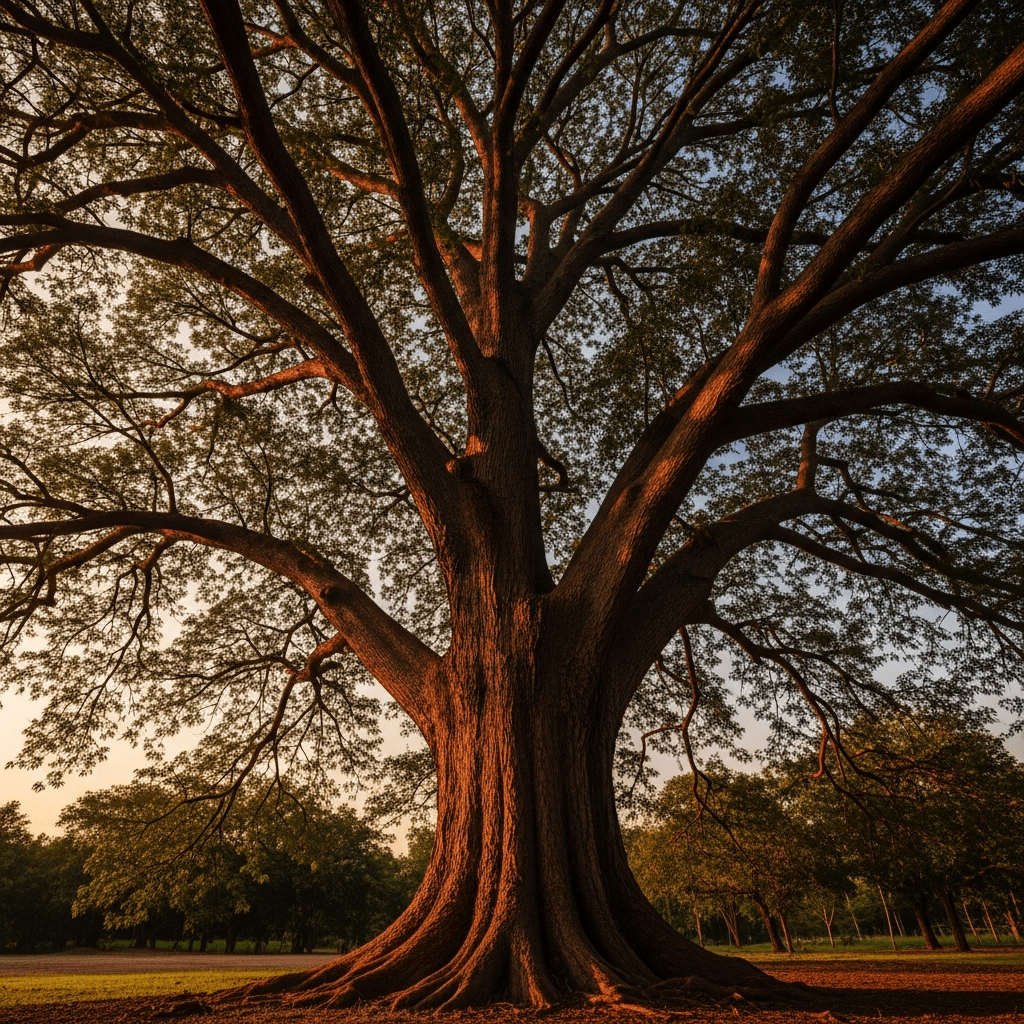
Mahogany
Mahogany is a group of large, evergreen trees in the genus Swietenia, celebrated worldwide for their rich, reddish-brown timber prized in fine furniture and cabinetry.
Mahogany is a group of large, evergreen trees in the genus Swietenia, celebrated worldwide for their rich, reddish-brown timber prized in fine furniture and cabinetry.
Mahogany's story begins in the lush tropical forests of Central and South America, where the genus Swietenia was first described in 1760 by Nikolaus Joseph von Jacquin. The principal species, Swietenia macrophylla, was discovered spanning southern Mexico, Central America, and deep into the Amazon basin. These trees evolved in the Neotropics, thriving in humid lowland forests and forming a distinct lineage within the Meliaceae family.
Botanically, mahogany belongs to the family Meliaceae and the genus Swietenia, within the order Sapindales and class Magnoliopsida. The group is strictly angiosperm and is distinguished by its unique wood properties and ecological roles among tropical hardwoods.
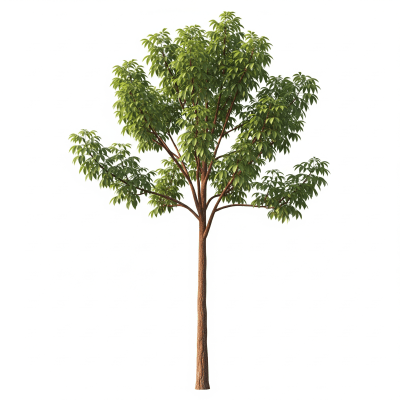
Mahogany trees are imposing and elegant, often reaching heights of 30–60 meters with straight, cylindrical trunks up to 2 meters in diameter. Their bark is grayish to reddish-brown and deeply fissured. The leaves are pinnate, glossy, and dark green, providing a lush canopy. Small, white to greenish flowers appear in panicles, while the fruit is a large, woody capsule that splits open to release winged seeds, carried away by the wind.
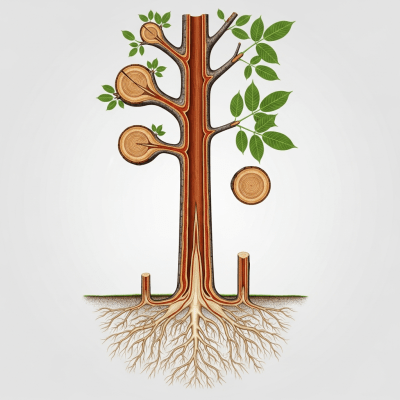
Mahogany's most celebrated role is as a source of premium timber, renowned for its durability, workability, and beautiful grain. The wood is used extensively in furniture, musical instruments, boat building, and decorative veneers. In tropical cities and landscapes, mahogany trees are also valued ornamentally for shade and aesthetic appeal. Ecologically, they contribute to forest structure and provide habitat for numerous species.
Bring this kind into your world illustrated posters, mugs, and shirts.
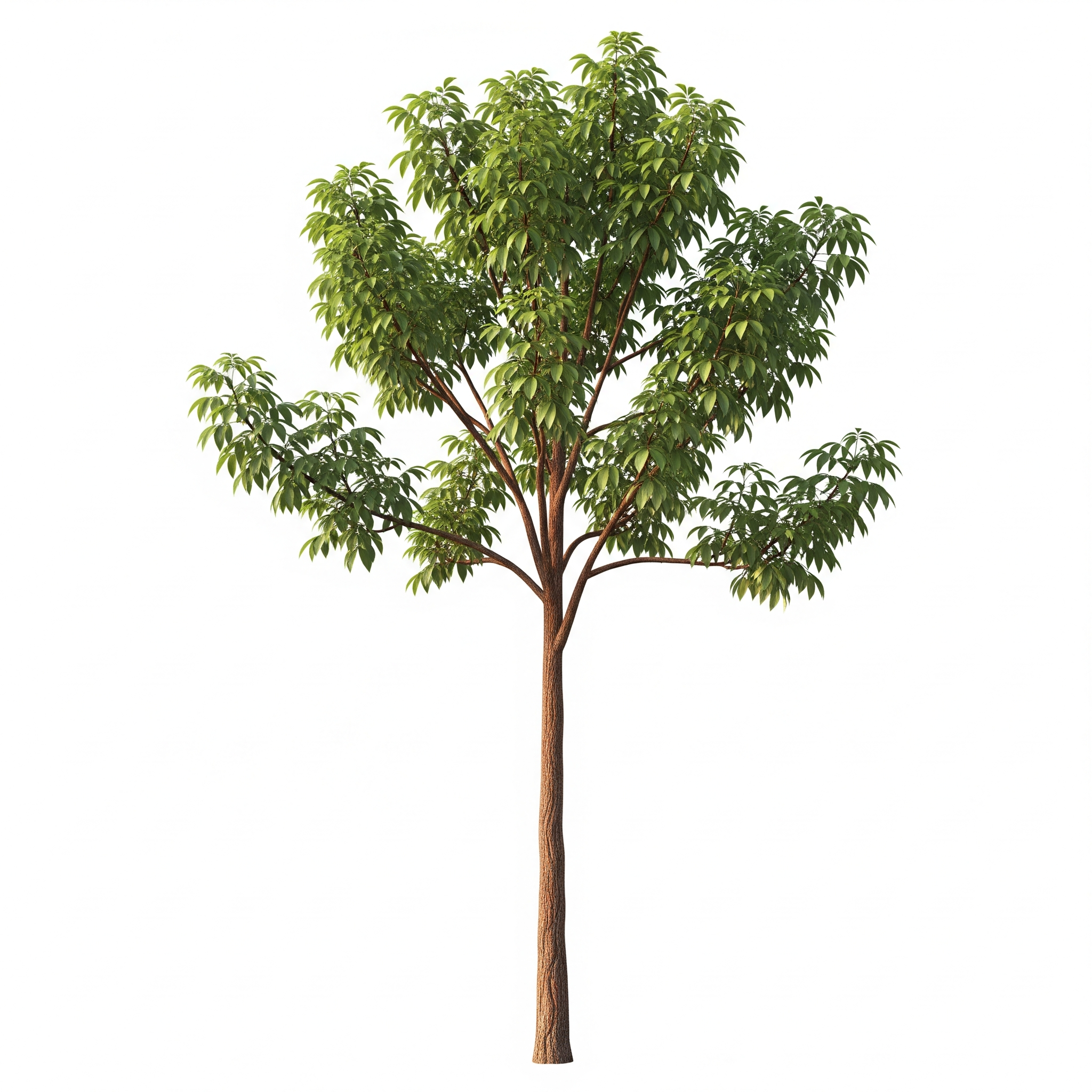
Archival print, museum-grade paper
Buy Poster
Stoneware mug, dishwasher safe
Buy Mug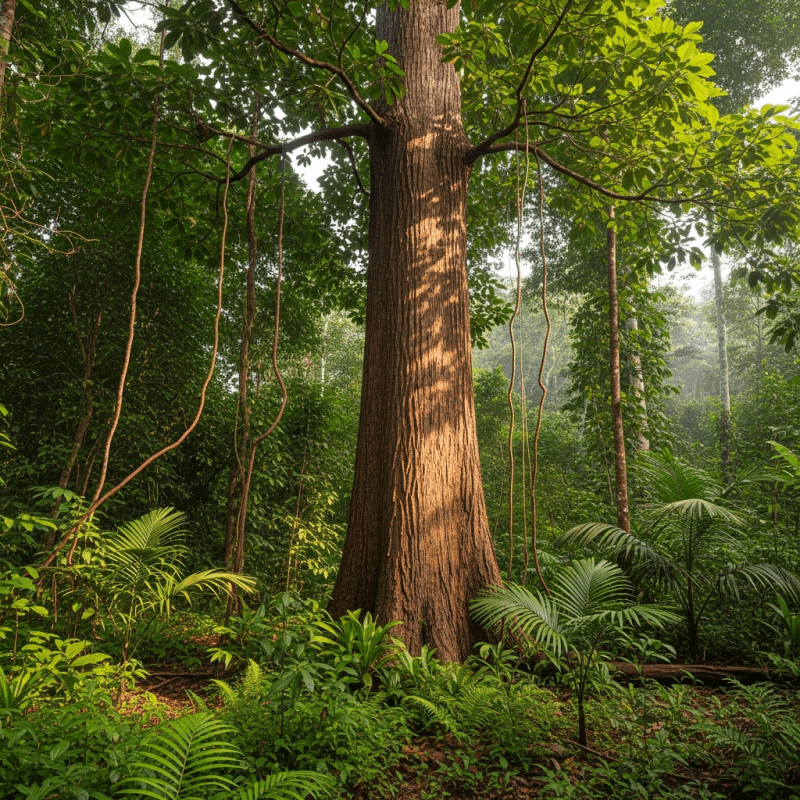
Soft cotton tee, unisex sizes
Buy ShirtMahogany has long been a symbol of luxury and craftsmanship, shaping the aesthetics of classic furniture, grand pianos, and historic interiors. Its wood has adorned royal palaces, ships, and stately homes, and continues to evoke notions of elegance and heritage. The name "mahogany" itself is often associated with authenticity and prestige in the timber trade, though sometimes misapplied to unrelated woods.
Mahogany trees are keystone species in tropical forests, contributing to canopy structure and providing shelter for birds, mammals, and insects. Their large seeds are dispersed by wind, aiding forest regeneration. The trees' resistance to decay and pests helps maintain forest health, but they are vulnerable to the shoot borer, which can impact young plantations.
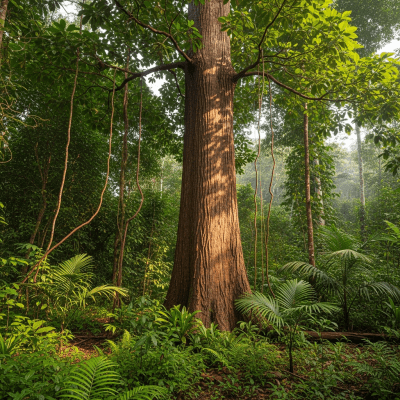
Mahogany trees are native to the Neotropics, with natural populations extending from southern Mexico through Central America to the Amazon basin in Brazil, Bolivia, and Peru. They thrive in humid, lowland tropical forests, often along riverbanks and well-drained soils. Some species have been introduced to other tropical regions for plantation and ornamental use.
Mahogany is best grown in warm, humid climates with deep, well-drained soils. Young trees require protection from drought, frost, and the shoot borer pest. Regular monitoring and integrated pest management are essential for healthy plantations. While moderately fast-growing under optimal conditions, mahogany benefits from spacing to encourage straight trunks and maximize timber yield. Propagation is typically by seed, which should be sown fresh for best results.
Major threats to mahogany include illegal logging, habitat loss, and infestation by the shoot borer (Hypsipyla grandella). Overharvesting has led to population declines, prompting international regulation of trade under CITES Appendix II. Conservation efforts focus on sustainable forestry, habitat protection, and research into pest-resistant varieties to ensure the future of these iconic trees.
Mahogany wood is highly sought after for its beauty, strength, and ease of working, making it a staple in high-end furniture, cabinetry, musical instruments, boat building, and decorative paneling. The timber's attractive grain and color enhance its appeal in luxury markets. Mahogany is also planted ornamentally in parks and urban landscapes throughout the tropics. It is not used for food or medicine.
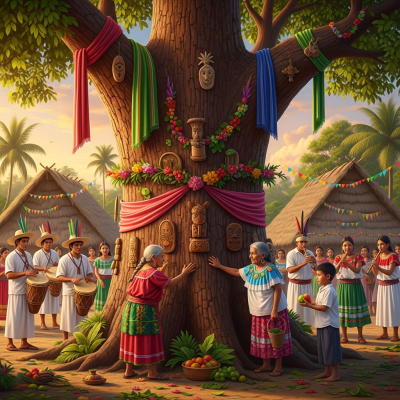
Mahogany has come to symbolize durability, prestige, and refined taste. Its wood has featured in legends of shipbuilding and colonial trade, and is often associated with wealth and craftsmanship. In some cultures, mahogany trees are revered for their longevity and stately presence, embodying the spirit of tropical forests and the legacy of natural resources.