Cornus
Dogwood is the common name for trees and shrubs in the genus Cornus, celebrated for their showy spring flowers, distinctive bark, and important ecological and cultural roles across temperate regions of the Northern Hemisphere.
Dogwood is the common name for trees and shrubs in the genus Cornus, celebrated for their showy spring flowers, distinctive bark, and important ecological and cultural roles across temperate regions of the Northern Hemisphere.
The genus Cornus was first formally described by Carl Linnaeus in 1753. Its most iconic species, Cornus florida (flowering dogwood), is native to eastern North America and has been cultivated since the 18th century. Over time, horticultural institutions such as the Arnold Arboretum and the U.S. National Arboretum have developed numerous cultivars, expanding dogwood's presence in gardens and landscapes worldwide. Other species are indigenous to Eurasia and western North America, reflecting the genus's broad temperate origins.
Dogwoods belong to the family Cornaceae within the order Cornales. The genus Cornus encompasses both tree and shrub forms, with species classified as angiosperms (flowering plants) in the division Magnoliophyta. Notable members include Cornus florida, Cornus nuttallii, Cornus mas, and Cornus officinalis, each distinguished by unique morphological and ecological traits.
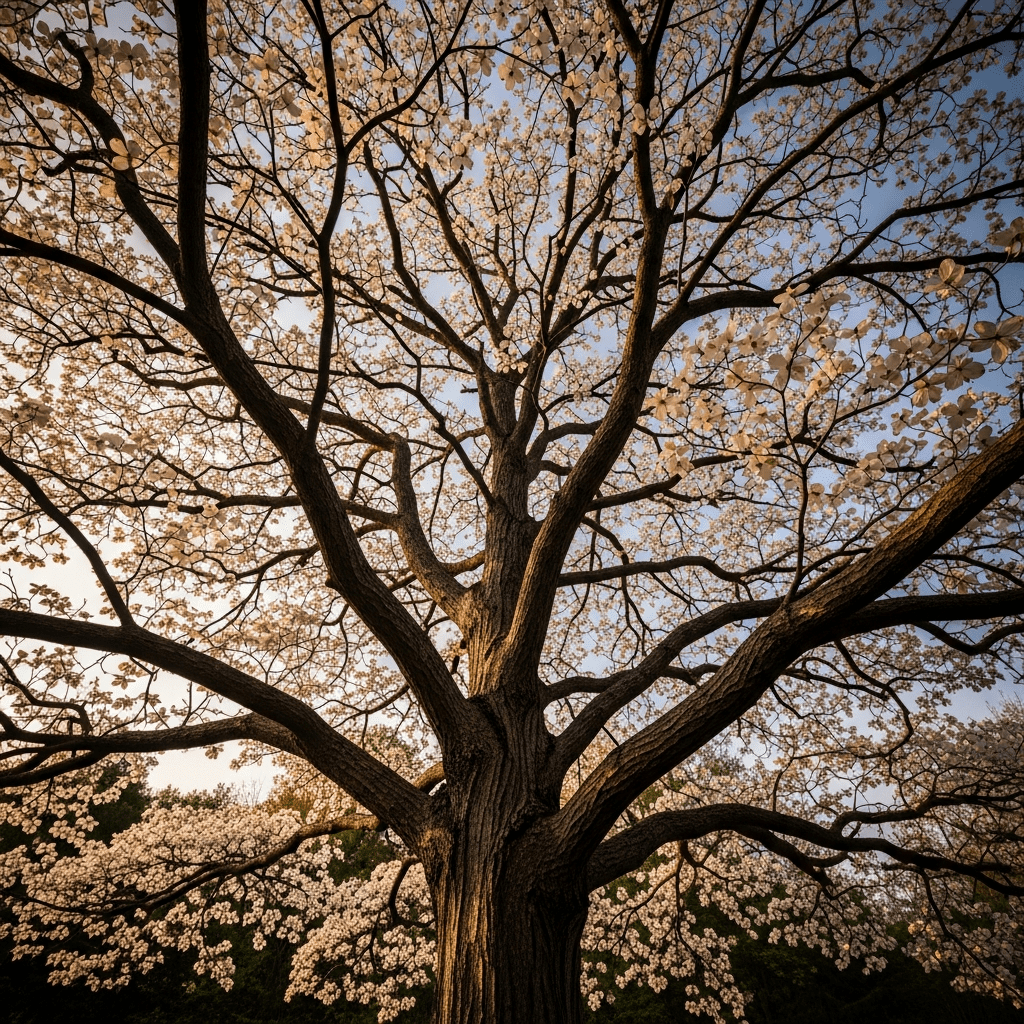
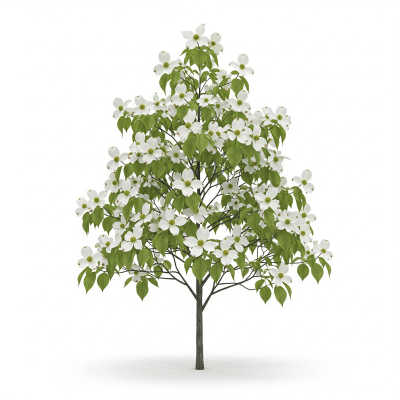
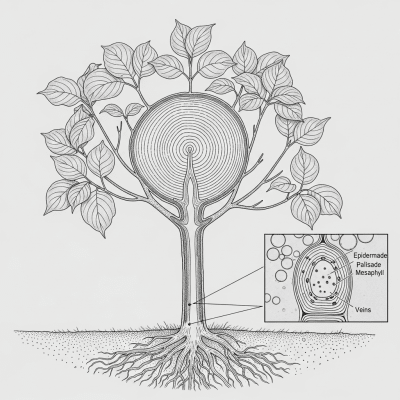
Dogwoods typically present as small to medium-sized deciduous trees, reaching heights of 5–15 meters (16–50 feet). Their form is characterized by a single main trunk, spreading branches, and a rounded crown. Leaves are simple, opposite, and ovate with pronounced veins, often turning vibrant shades in autumn. In spring, dogwoods are adorned with large white or pink bracts that frame clusters of tiny, inconspicuous flowers. Mature trees display scaly, blocky bark reminiscent of alligator skin, while their red drupes attract birds and add seasonal interest.
Dogwoods are prized as ornamental trees in parks, gardens, and urban landscapes, especially for their spectacular spring blooms and autumn color. Their fruit provides food for wildlife, and some species offer edible berries for human use. Historically, the hard, dense wood of certain dogwoods was crafted into tool handles and weaving shuttles. In ecological terms, dogwoods contribute to understorey diversity and serve as host plants for various insects and birds.
Bring this kind into your world illustrated posters, mugs, and shirts.
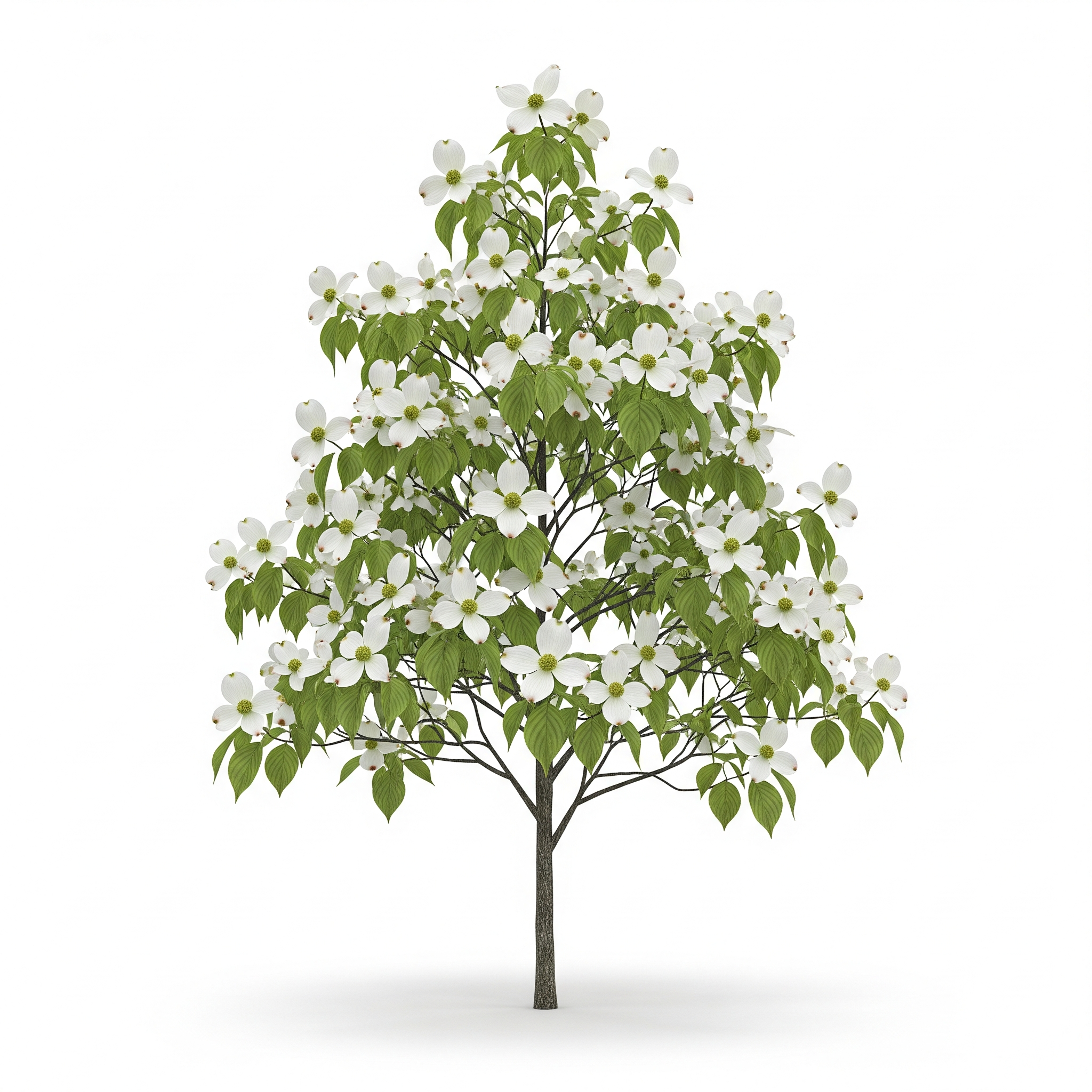
Archival print, museum-grade paper
Buy Poster
Stoneware mug, dishwasher safe
Buy Mug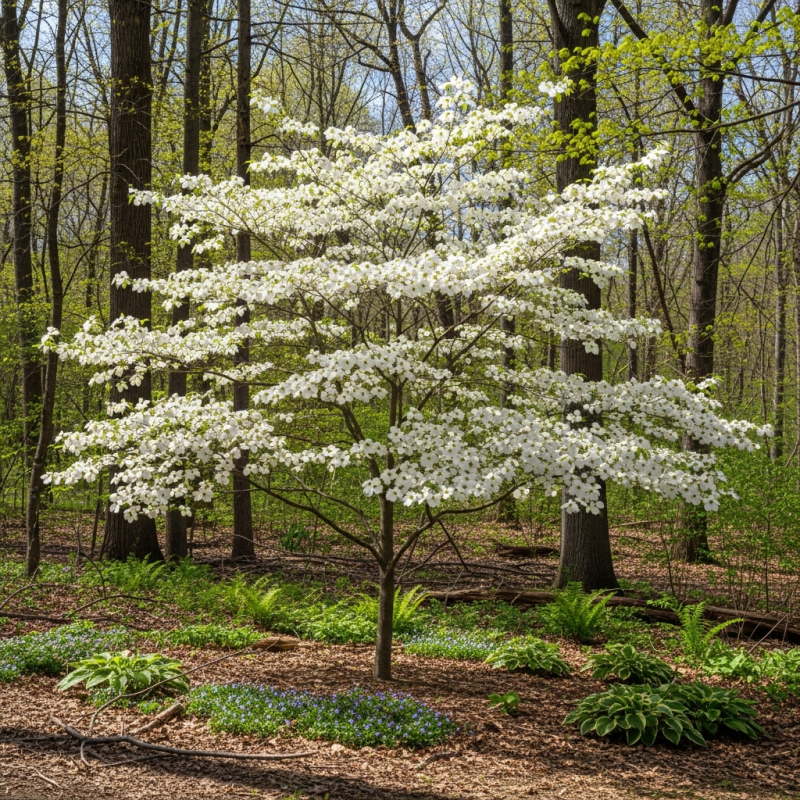
Soft cotton tee, unisex sizes
Buy ShirtDogwood trees hold symbolic value in North America, representing renewal and beauty. Cornus florida is the state tree of Virginia and North Carolina, and dogwood motifs appear in art, literature, and folklore. In Eurasia, the fruits of Cornus mas and Cornus officinalis are used in traditional medicine and cuisine, further underscoring the genus's cultural reach.
Dogwoods play a vital role in forest and woodland ecosystems. Their flowers attract pollinators, while the red drupes provide food for birds and small mammals. As understorey trees, dogwoods contribute to habitat complexity, sheltering wildlife and supporting insect populations. Their presence enhances biodiversity and stabilizes soil in shaded, moist environments.
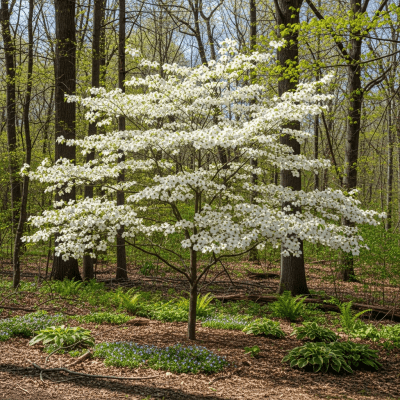
Dogwoods are distributed across temperate regions of the Northern Hemisphere, including North America, Europe, and Asia. Cornus florida is native to eastern North America, thriving in moist, well-drained, acidic soils and partial shade. Other species occupy woodlands, forest edges, and open sites, often forming part of the understorey in mixed forests.
To cultivate dogwoods successfully, plant them in moist, well-drained, acidic soils with partial shade, though they can tolerate full sun if adequately watered. Mulch to maintain soil moisture and protect roots. Prune dead or diseased branches to improve air circulation and reduce disease risk. Monitor for signs of anthracnose, powdery mildew, and borers, choosing disease-resistant cultivars when possible. Propagation is typically by seed, softwood cuttings, or grafting for selected varieties.
Major threats to dogwoods include fungal diseases such as dogwood anthracnose (Discula destructiva), powdery mildew, and insect borers. Habitat loss and environmental stressors also impact wild populations. Conservation efforts focus on breeding disease-resistant cultivars, monitoring wild stands, and promoting responsible landscaping practices to preserve genetic diversity and ecosystem roles.
Dogwoods are economically significant as ornamental trees, valued for their spring flowers and autumn color in landscaping and public spaces. The dense wood of some species has historic uses in toolmaking and crafts. Fruits from Cornus mas and Cornus officinalis are harvested for jams, syrups, and traditional medicines in Eurasia, while dogwoods also contribute to ecological restoration and wildlife support.
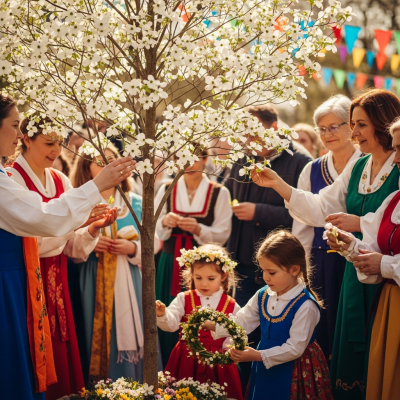
Dogwoods symbolize renewal, endurance, and beauty in North American culture, appearing in state emblems and local folklore. Legends often associate the dogwood with themes of rebirth and transformation, and its blossoms are celebrated in festivals and art. In Eurasia, the Cornelian cherry is linked to health and longevity, reflecting its medicinal uses and cultural esteem.