Cork Oak
The Cork Oak (Quercus suber) is an evergreen Mediterranean tree famed for its thick, harvestable bark—the world's primary source of commercial cork.
The Cork Oak (Quercus suber) is an evergreen Mediterranean tree famed for its thick, harvestable bark—the world's primary source of commercial cork.
Native to the western Mediterranean Basin, the Cork Oak was formally described by Carl Linnaeus in 1753. Its natural range spans Portugal, Spain, Morocco, Algeria, Tunisia, Italy, and France, where wild and managed stands thrive. The species evolved to withstand the region's hot, dry summers and poor soils, becoming a cornerstone of traditional agroforestry landscapes such as the Portuguese montados and Spanish dehesas.
Cork Oak belongs to the family Fagaceae, genus Quercus, and species suber. It sits within the order Fagales, class Magnoliopsida, division Magnoliophyta, and kingdom Plantae. As an angiosperm (flowering plant), it shares lineage with other oaks but is distinguished by its unique bark and evergreen foliage.
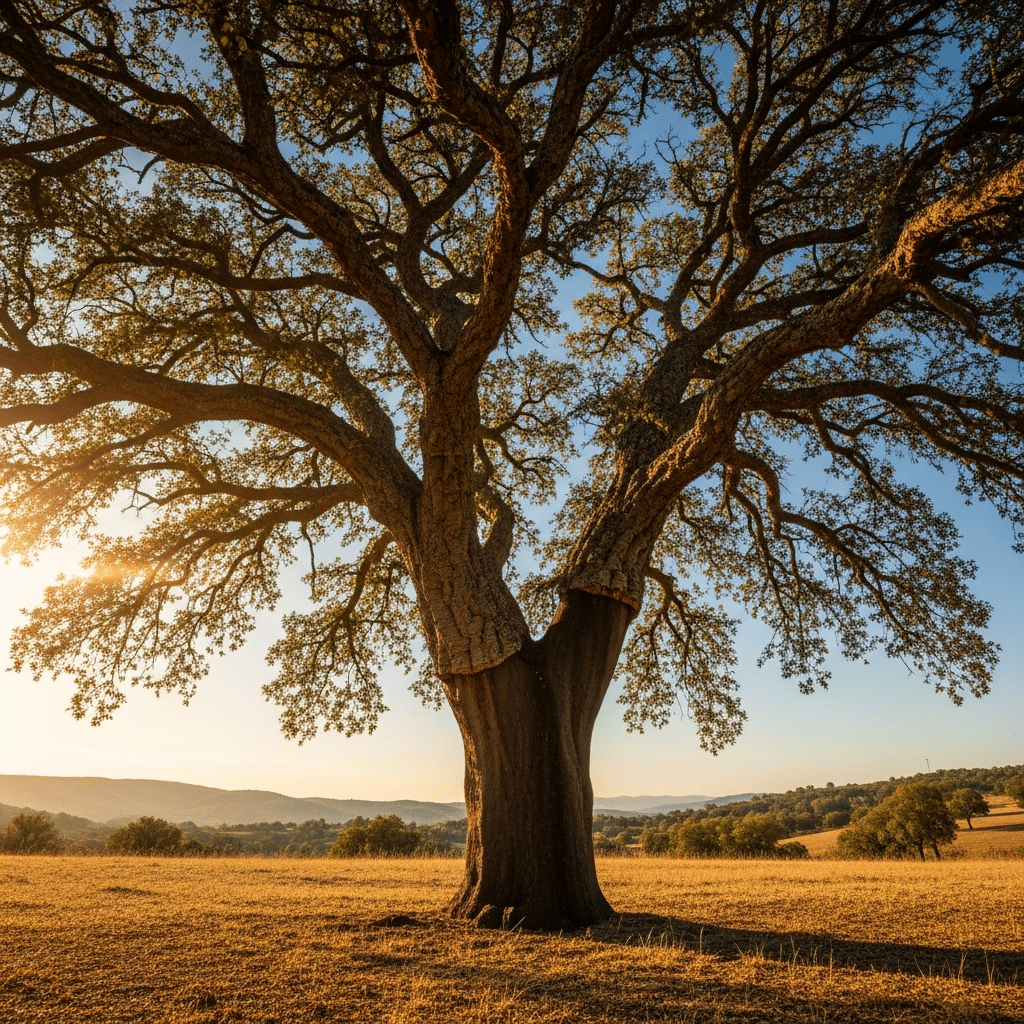
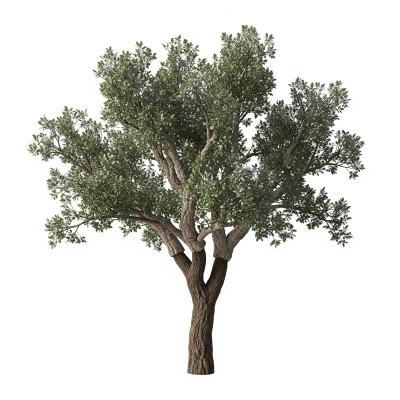
A mature Cork Oak stands 10–20 meters tall, with a broad, rounded crown and a sturdy single trunk. Its bark is thick, spongy, and deeply fissured—soft to the touch and easily recognizable. The evergreen leaves are leathery, dark green above and pale beneath, measuring 4–7 cm long with variable margins. In spring, inconspicuous male catkins and female spikes appear, followed by acorns that mature in autumn.
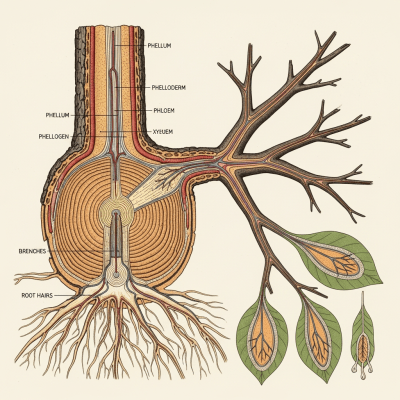
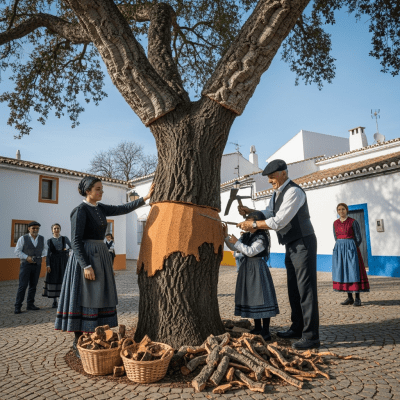
The Cork Oak's defining feature is its bark, which can be sustainably harvested every 9–12 years without harming the tree. This practice supports rural economies and biodiversity. Its acorns feed wildlife and livestock, while the tree itself provides shade, stabilizes soil, and resists fire thanks to its insulating bark. Though not prized for timber, its wood is occasionally used for fuel or charcoal.
Bring this kind into your world illustrated posters, mugs, and shirts.
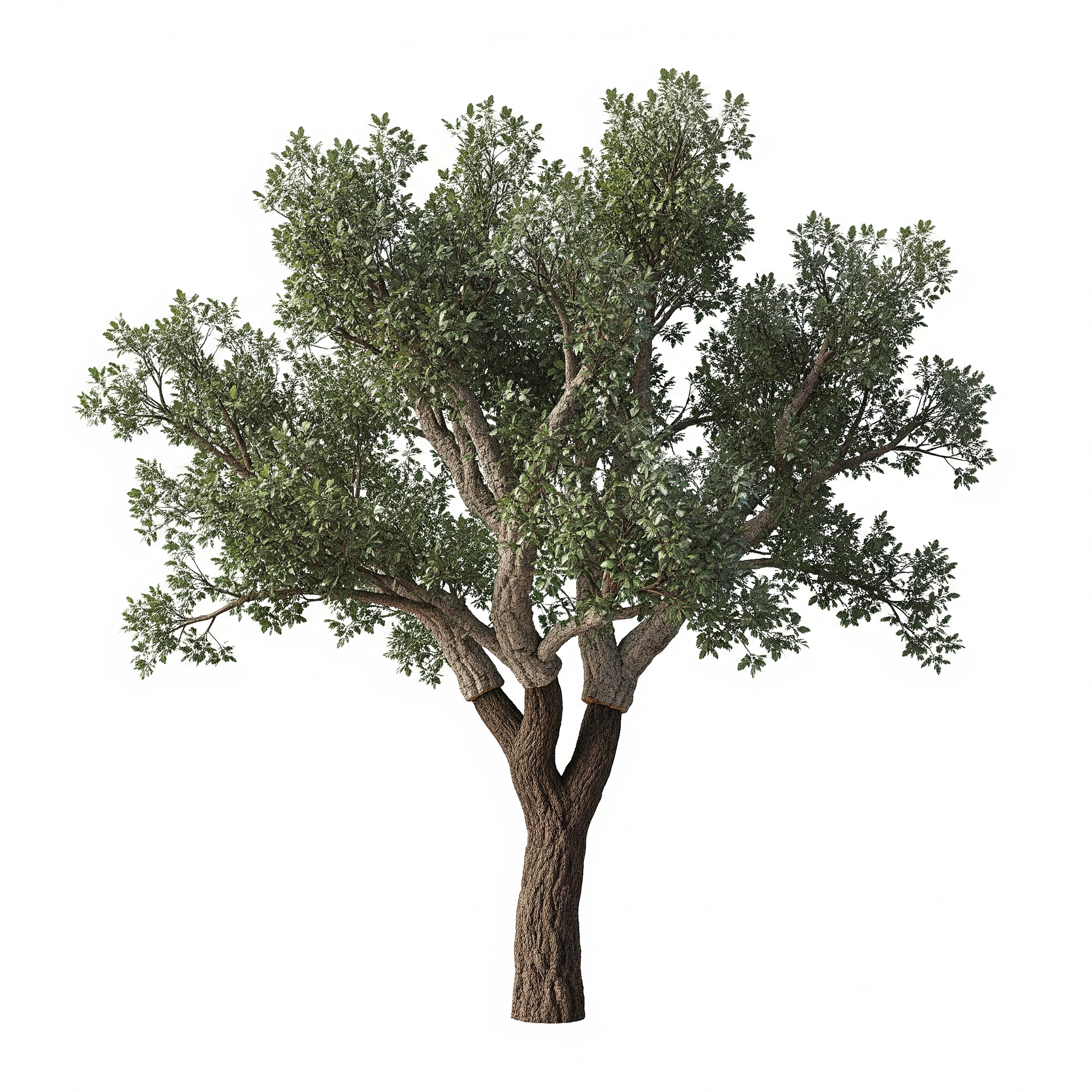
Archival print, museum-grade paper
Buy Poster
Stoneware mug, dishwasher safe
Buy Mug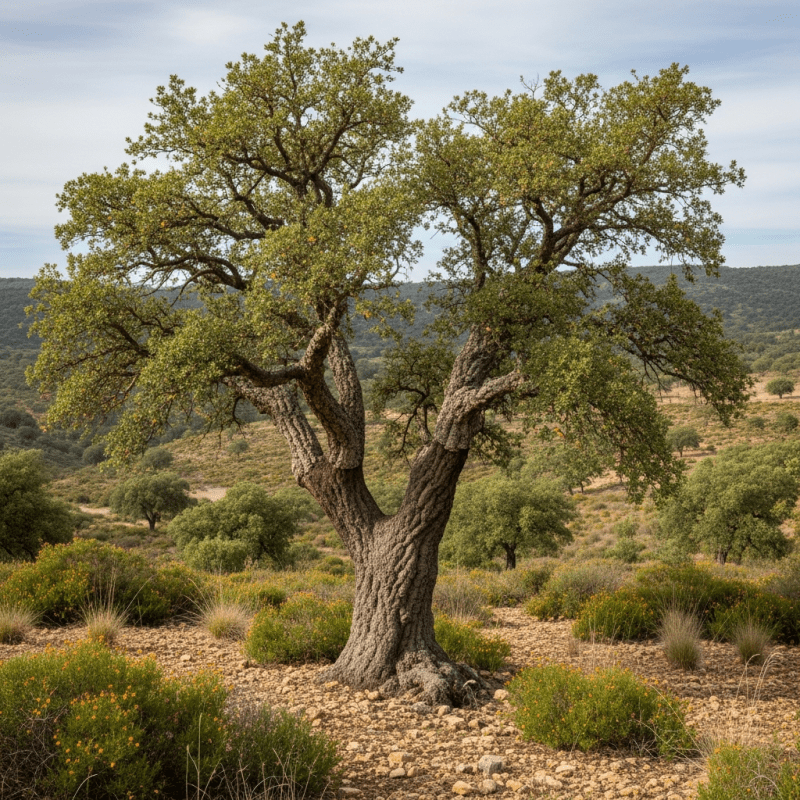
Soft cotton tee, unisex sizes
Buy ShirtCork Oak forests are deeply woven into Mediterranean culture, especially in Portugal and Spain, where cork harvesting is a centuries-old tradition. These landscapes are celebrated for their biodiversity, rural livelihoods, and iconic role in wine culture. The tree is a symbol of resilience and sustainable use, often featured in regional folklore and art.
Cork Oak trees anchor rich Mediterranean ecosystems, supporting diverse wildlife with their acorns and providing nesting sites in their rugged bark. Their evergreen canopy offers shade and microclimates for understory plants. The bark’s fire resistance protects forests from frequent wildfires, while deep roots stabilize soil and prevent erosion. Cork Oak stands are vital for maintaining regional biodiversity and landscape resilience.
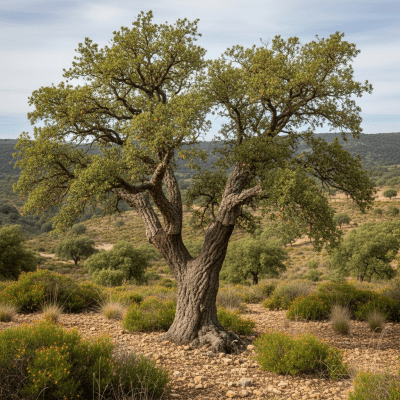
Cork Oak is native to southwestern Europe and northwestern Africa, thriving in Portugal, Spain, Morocco, Algeria, Tunisia, Italy, and France. It prefers poor, acidic soils and open woodlands with hot, dry summers and mild winters. These trees are most commonly found in lowland forests, hillsides, and traditional agroforestry systems known as montados and dehesas.
Cork Oaks are best propagated from seed, with young trees requiring protection from grazing and frost. They thrive in well-drained, acidic soils and tolerate drought once established. Regular pruning helps shape the crown, and bark harvesting should only begin after the tree reaches 25–30 years. Monitoring for fungal pathogens and insect pests is essential, but overall, Cork Oak is a resilient species in its native habitat.
Cork Oak faces threats from habitat loss, overgrazing, disease (notably fungal pathogens like Diplodia corticola), and climate change. Conversion of forests to agriculture and urban areas reduces its range. Conservation efforts focus on sustainable cork harvesting, protection of traditional agroforestry systems, and disease management. The species is not currently endangered but is considered vital for ecosystem and cultural preservation.
The Cork Oak’s bark is harvested for cork, used globally in wine stoppers, insulation, flooring, and crafts. Cork production is a cornerstone of rural economies in Portugal and Spain, supporting thousands of jobs. The tree also provides shade, erosion control, and habitat for wildlife. While its acorns feed livestock, the wood is rarely used commercially except for fuel or charcoal.
Cork Oak symbolizes resilience, sustainability, and the harmonious relationship between people and nature. In Mediterranean folklore, it represents endurance and prosperity, with cork harvesters celebrated for their skill and stewardship. The tree is often depicted in regional art and stories as a guardian of the land and a source of life.