
Theobroma Cacao
Theobroma cacao, commonly known as cacao, is a tropical evergreen tree prized as the source of cocoa beans for chocolate and valued for its unique cauliflorous pods and glossy foliage.
Theobroma cacao, commonly known as cacao, is a tropical evergreen tree prized as the source of cocoa beans for chocolate and valued for its unique cauliflorous pods and glossy foliage.
Cacao originated in the upper Amazon basin, spanning present-day Ecuador, Peru, Colombia, and Brazil. Its domestication dates back at least 3,000 years, with the Olmec, Maya, and Aztec civilizations cultivating and venerating the tree. First described scientifically by Carl Linnaeus in 1753, cacao's journey from wild forest understory to global commodity has involved centuries of selection, breeding, and adaptation, resulting in diverse cultivars and hybrids.
Cacao belongs to the genus Theobroma within the family Malvaceae. It is classified as an angiosperm (flowering plant), order Malvales, and is recognized as a true tree due to its perennial woody structure and single main trunk. Its scientific name is Theobroma cacao L., and it is closely related to other tropical trees in the Malvaceae family.
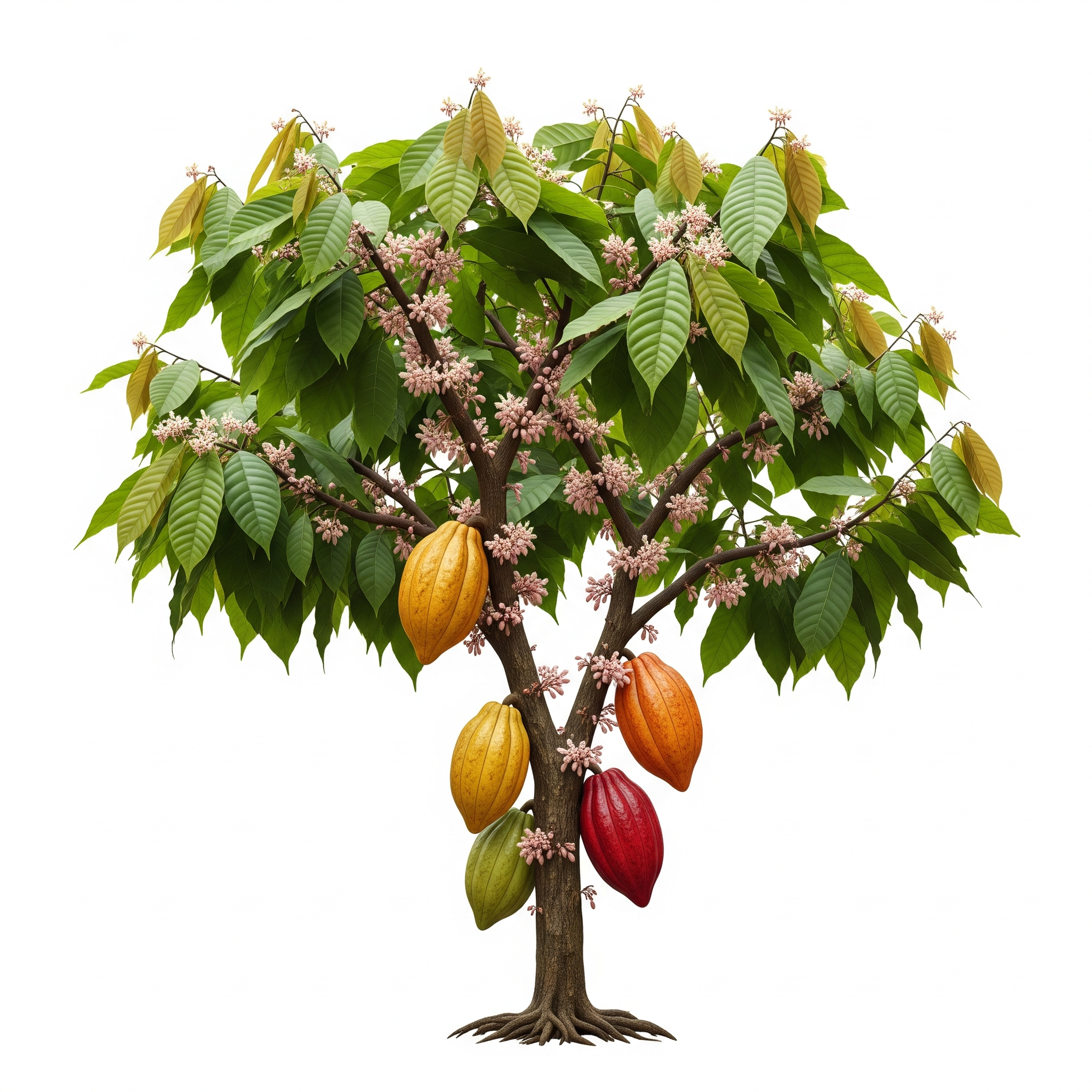
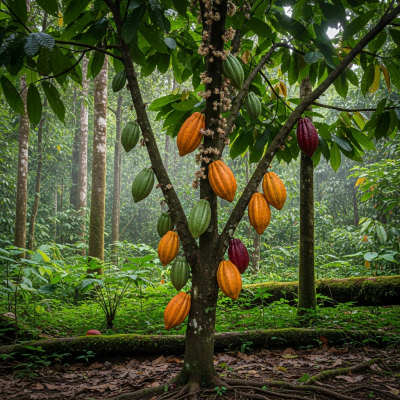
Cacao trees are small to medium-sized, typically reaching 4–8 meters in height. They feature a slender trunk and a dense, leafy canopy. The leaves are large, alternate, and glossy, measuring up to 40 cm long. One of cacao's most distinctive traits is cauliflory: it produces clusters of small, pinkish-white flowers directly on its trunk and branches. The fruit pods are ovoid, thick-rinded, and ripen in vibrant hues from green and yellow to red and purple, each containing 20–60 seeds surrounded by sweet, mucilaginous pulp.
Cacao is cultivated primarily for its seeds, or beans, which are fermented, dried, and processed into cocoa mass, cocoa butter, and cocoa powder—the essential ingredients for chocolate and other confections. The sweet pulp can be consumed fresh or fermented for beverages. Cacao trees begin bearing pods at 3–5 years, with peak productivity at 8–10 years. They thrive in humid, shaded tropical environments and are propagated by seed or grafting.
Bring this kind into your world illustrated posters, mugs, and shirts.
Archival print, museum-grade paper
Buy Poster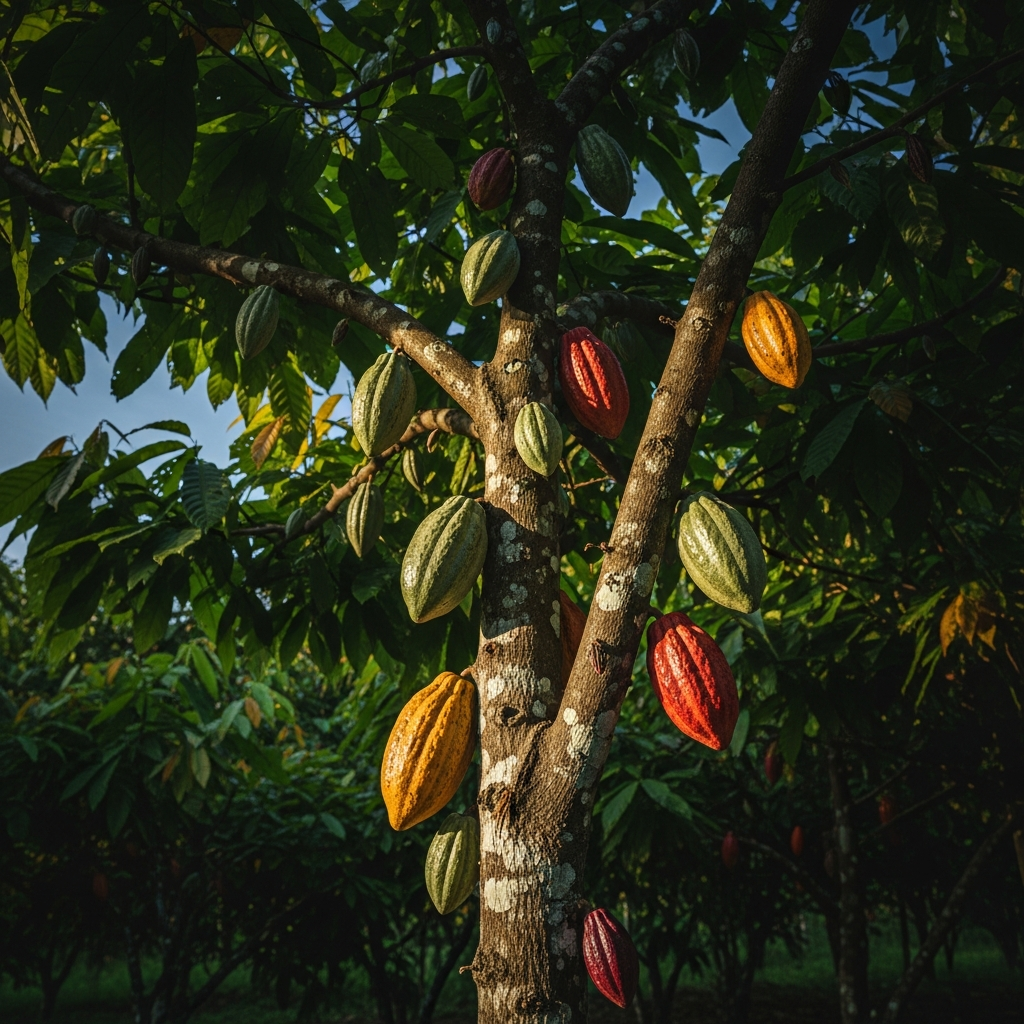
Stoneware mug, dishwasher safe
Buy Mug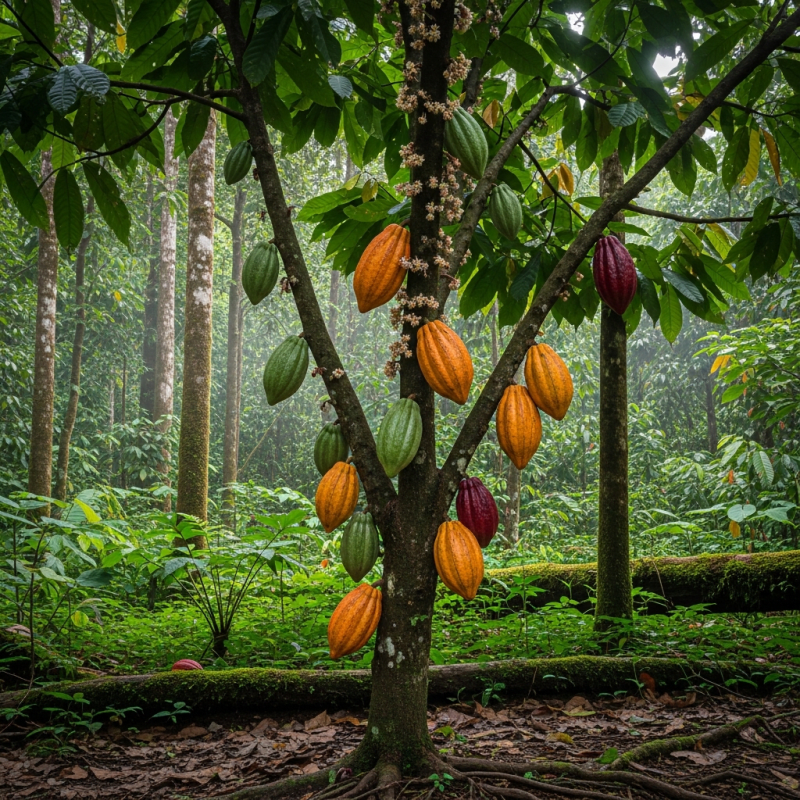
Soft cotton tee, unisex sizes
Buy ShirtCacao has deep cultural roots, especially in Mesoamerica, where it was revered by the Olmec, Maya, and Aztec peoples. Beans were used in rituals, as currency, and in traditional cuisine. Today, cacao remains a symbol of celebration and luxury, central to the global chocolate industry and cherished in culinary traditions worldwide.
Cacao serves as an important understory tree in tropical forests, providing shade and habitat for a variety of insects, birds, and small mammals. Its flowers attract specialized pollinators, such as midges, and its fallen pods and pulp contribute organic matter to the forest floor. Cacao plantations, when managed sustainably, can support biodiversity and maintain ecological balance.


Cacao is native to the humid lowland forests of the upper Amazon basin but is now cultivated throughout the tropics, including West Africa, Latin America, and Southeast Asia. It prefers shaded environments with annual rainfall exceeding 1,500 mm and temperatures between 21–32°C. The tree is sensitive to drought, wind, and cold, making its distribution closely tied to stable tropical climates.
To cultivate cacao successfully, select a humid, shaded site in the lowland tropics. Young trees benefit from shade, regular watering, and protection from wind and cold. Propagation is typically by seed or grafted clones, but seeds must remain moist and cannot be dried. Monitor for common diseases such as witches’ broom, frosty pod rot, and black pod, and maintain soil fertility for optimal yields. Trees begin bearing pods at 3–5 years, with commercial productivity peaking at 8–10 years.
Cacao faces several threats, including fungal diseases like witches’ broom, frosty pod rot, and black pod, as well as environmental challenges such as drought, wind, and habitat loss. Conservation efforts focus on breeding disease-resistant cultivars, promoting agroforestry practices, and preserving genetic diversity in wild and cultivated populations. Sustainable farming and fair trade initiatives aim to protect both the tree and the livelihoods of those who depend on it.
Cacao is the foundation of the global chocolate industry, with its beans processed into cocoa mass, cocoa butter, and cocoa powder for use in confections, baking, and cosmetics. The sweet pulp is sometimes consumed fresh or fermented for beverages. As a major export crop, cacao supports millions of farmers and is integral to the economies of producing countries in West Africa, Latin America, and Southeast Asia.
Throughout history, cacao has been a symbol of abundance, luxury, and ritual. Ancient Mesoamerican cultures regarded it as a sacred plant, using its beans as currency and in ceremonial drinks. Today, cacao continues to evoke celebration, pleasure, and connection, woven into folklore and modern traditions surrounding chocolate.
To identify a cacao tree, look for its modest height (4–8 meters), single slender trunk, and dense canopy of large, glossy leaves. Distinctive cauliflorous flowers—small and pinkish-white—grow directly on the trunk and branches. The ovoid pods, which ripen from green/yellow to red/purple, hang from the trunk and contain numerous seeds embedded in sweet pulp. Cacao is typically found in shaded, humid tropical environments.