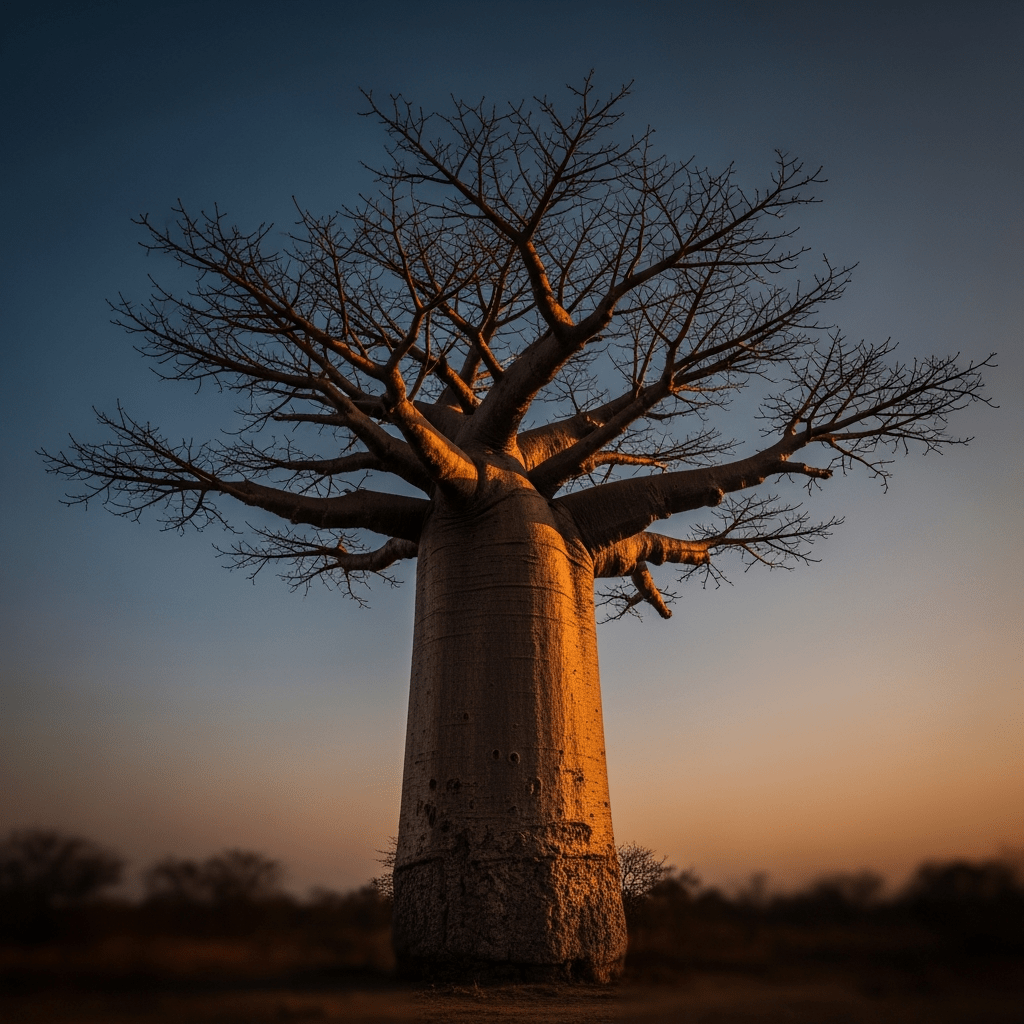
Adansonia
The baobab is a genus of monumental, long-lived trees known for their massive trunks and iconic presence across Africa, Madagascar, and Australia.
The baobab is a genus of monumental, long-lived trees known for their massive trunks and iconic presence across Africa, Madagascar, and Australia.
Baobabs (genus Adansonia) trace their origins to sub-Saharan Africa, Madagascar, and northwestern Australia. First described by botanist Michel Adanson in 1763, these trees have evolved within the Malvaceae family, subfamily Bombacoideae. Each region hosts its own endemic species, shaped by millennia of adaptation to arid and semi-arid landscapes.
Baobabs belong to the genus Adansonia within the family Malvaceae, order Malvales, class Magnoliopsida, and kingdom Plantae. This places them among flowering plants (angiosperms), specifically within the Bombacoideae subfamily, alongside other tropical giants. Their distinctive morphology and genetic lineage set them apart from other tree genera.
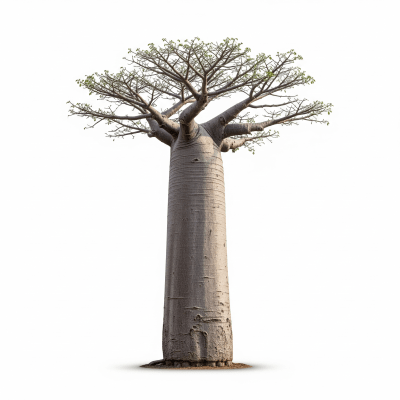
Baobabs are instantly recognizable for their enormous, bottle-shaped trunks, which can reach up to 10 meters in diameter and soar 5–30 meters high. Their bark is smooth, gray, and fibrous, while the palmately compound leaves, typically with 5–11 leaflets, create a lush canopy during the rainy season and fall away in the dry months. The trees produce large, white, nocturnal flowers, pollinated by bats, and bear hefty, woody fruit capsules filled with edible, nutrient-rich pulp and seeds.
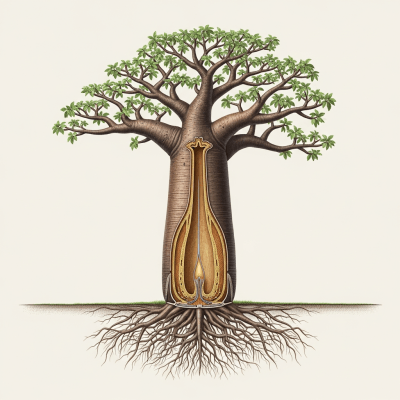
Baobabs are ecological marvels, storing thousands of liters of water in their trunks to survive harsh droughts. Humans utilize nearly every part of the tree: fruit pulp for food and drink, seeds for oil, leaves as vegetables, and bark for fiber. Baobabs also serve as vital shade trees, gathering places, and sources of traditional medicine, while their resilience to fire and arid climates makes them keystones in their native habitats.
Bring this kind into your world illustrated posters, mugs, and shirts.
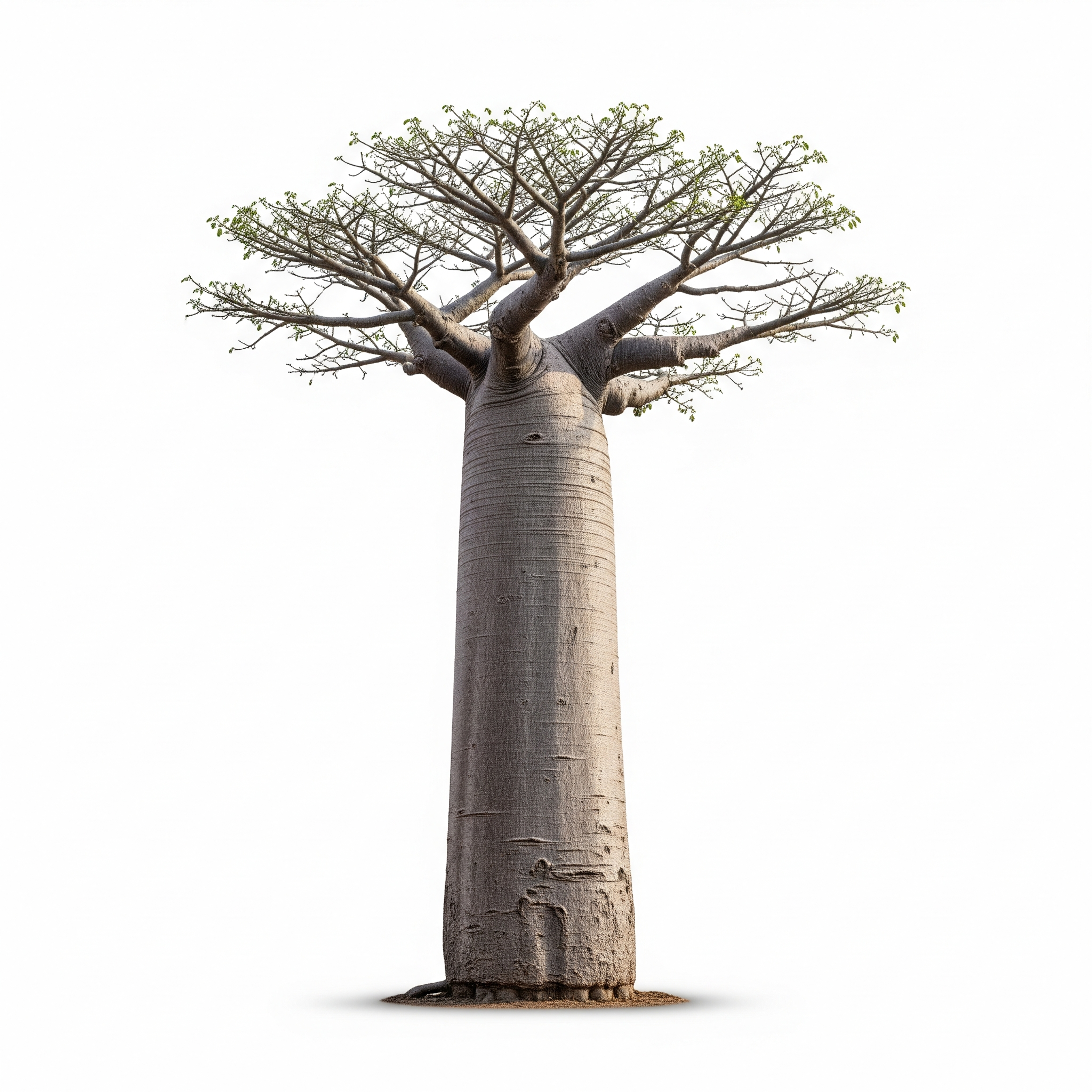
Archival print, museum-grade paper
Buy Poster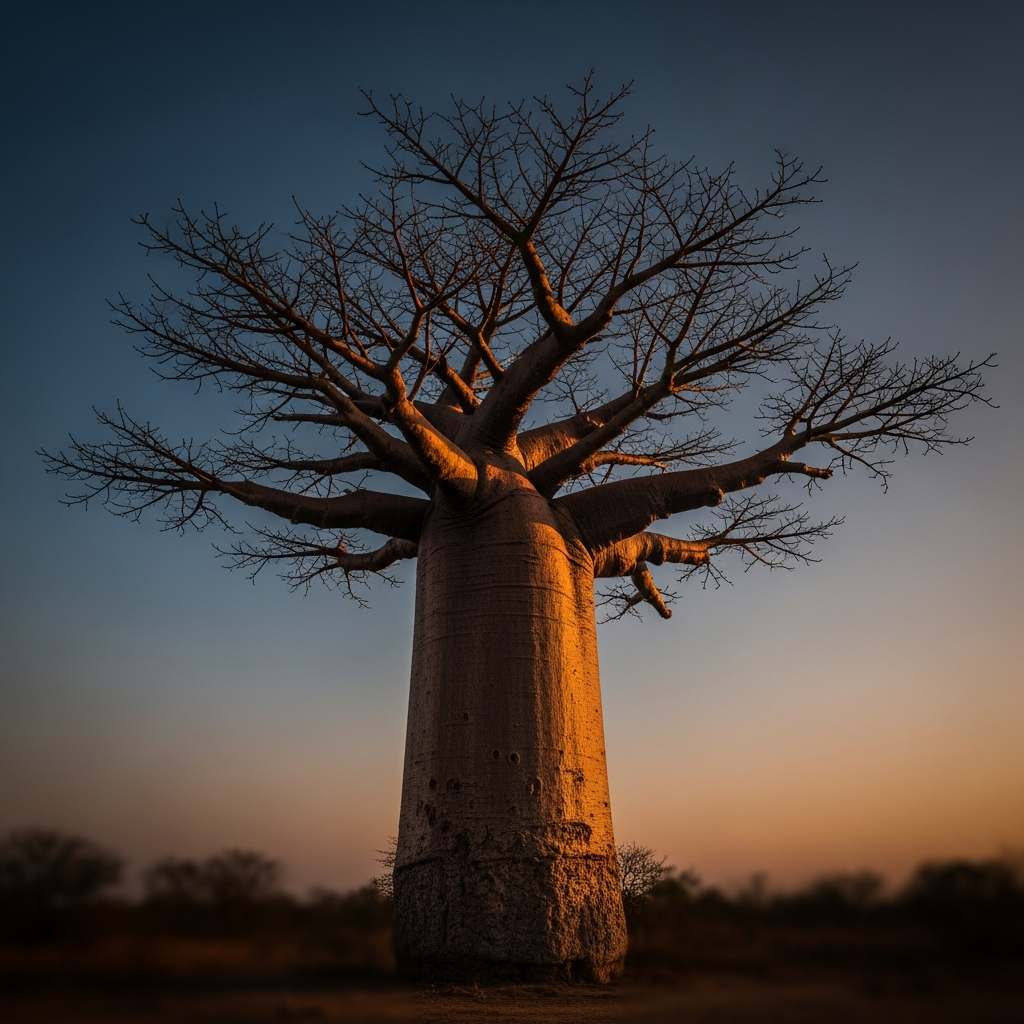
Stoneware mug, dishwasher safe
Buy Mug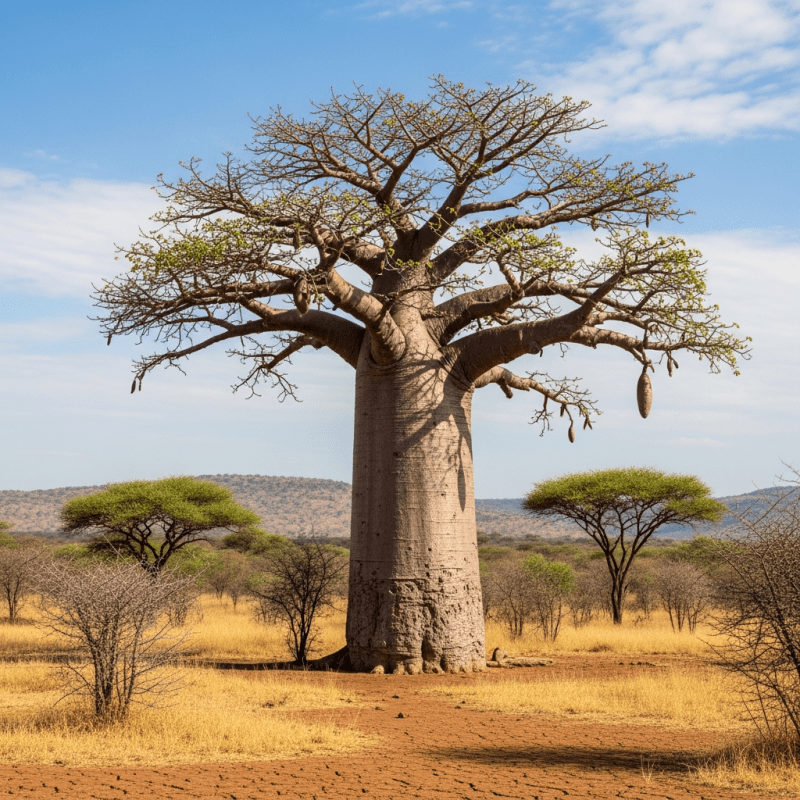
Soft cotton tee, unisex sizes
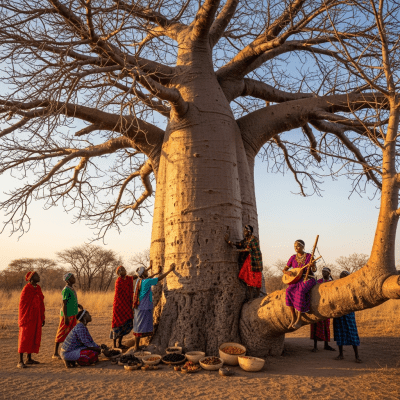
Buy ShirtBaobabs hold profound cultural importance across Africa and Madagascar, featuring in countless myths, legends, and spiritual practices. They are often called the "upside-down tree" for their root-like branches and symbolize longevity, wisdom, and community. In art and folklore, baobabs are depicted as ancient sentinels and sacred meeting places, revered for their life-sustaining properties and majestic form.
Baobabs are ecological pillars in their environments, providing food and shelter for a diverse array of wildlife. Their flowers attract bats and nocturnal pollinators, while the fruit feeds mammals, birds, and humans. The trees' ability to store water supports local ecosystems during droughts, and their fallen leaves enrich the soil. Baobabs also stabilize landscapes and serve as keystone species in savanna and dry forest habitats.
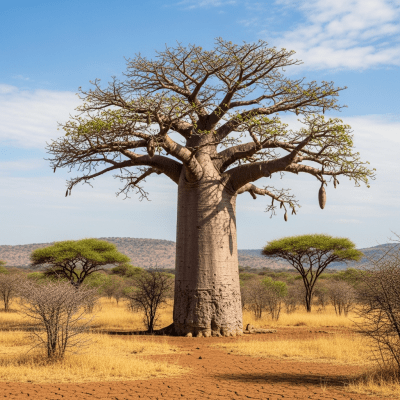
Baobabs are found across sub-Saharan Africa, Madagascar, and northwestern Australia. They thrive in arid and semi-arid climates, favoring well-drained soils and open savannas. Each species is adapted to its native region, with Malagasy baobabs often inhabiting dry deciduous forests and African baobabs dominating open plains and rocky outcrops.
Growing baobabs requires patience and the right conditions: they prefer warm, dry climates and well-drained soils. Seeds should be soaked and scarified before planting to encourage germination. Young trees need protection from frost and excessive moisture, as they are susceptible to root rot. Baobabs grow slowly but require little maintenance once established, thriving in full sun and tolerating drought and fire.
Major threats to baobabs include habitat loss, climate change, and overharvesting of bark and fruit. Some species, especially those endemic to Madagascar, face heightened risk due to deforestation and land conversion. Conservation efforts focus on habitat protection, sustainable harvesting, and raising awareness of the baobab's ecological and cultural value.
Baobab products are increasingly sought after for their nutritional and medicinal benefits. The fruit pulp is processed into powders, juices, and jams, prized for its vitamin C and antioxidant content. Seeds are edible and can be pressed for oil, while leaves are used as a vegetable. Bark fibers are crafted into rope, mats, and cloth. Baobabs also serve as shade trees, sources of traditional remedies, and raw materials for cosmetics and health foods.
Baobabs are steeped in symbolism and folklore, often representing wisdom, endurance, and community. Stories tell of the tree being planted upside-down by the gods, explaining its root-like branches. In many cultures, baobabs are sacred meeting places, believed to house spirits or serve as gateways between worlds. Their longevity and resilience inspire tales of survival and hope.