Bamboo
Bamboo is a group of perennial, woody-stemmed grasses renowned for their rapid growth, towering culms, and profound ecological and economic impact, often regarded as tree-like in both natural and human contexts.
Bamboo is a group of perennial, woody-stemmed grasses renowned for their rapid growth, towering culms, and profound ecological and economic impact, often regarded as tree-like in both natural and human contexts.
Bamboo's evolutionary journey spans continents, with major centers of diversity in Asia, Africa, and the Americas. Cultivated and revered for millennia, bamboo species have thrived in wild landscapes long before formal scientific description. The earliest taxonomic records date to the 18th century, when Linnaean botanists recognized genera such as Bambusa and Dendrocalamus, but its true origins are woven into the history of indigenous cultures and ancient forests.
Though commonly called a tree, bamboo is botanically classified as a grass, belonging to the family Poaceae and subfamily Bambusoideae. Its tree-like stature, with single, tall culms and elevated canopies, blurs the boundary between grasses and trees, especially among the giant bamboos. This dual identity leads to bamboo's inclusion in forestry and ecological discussions of trees, despite its distinct lineage.
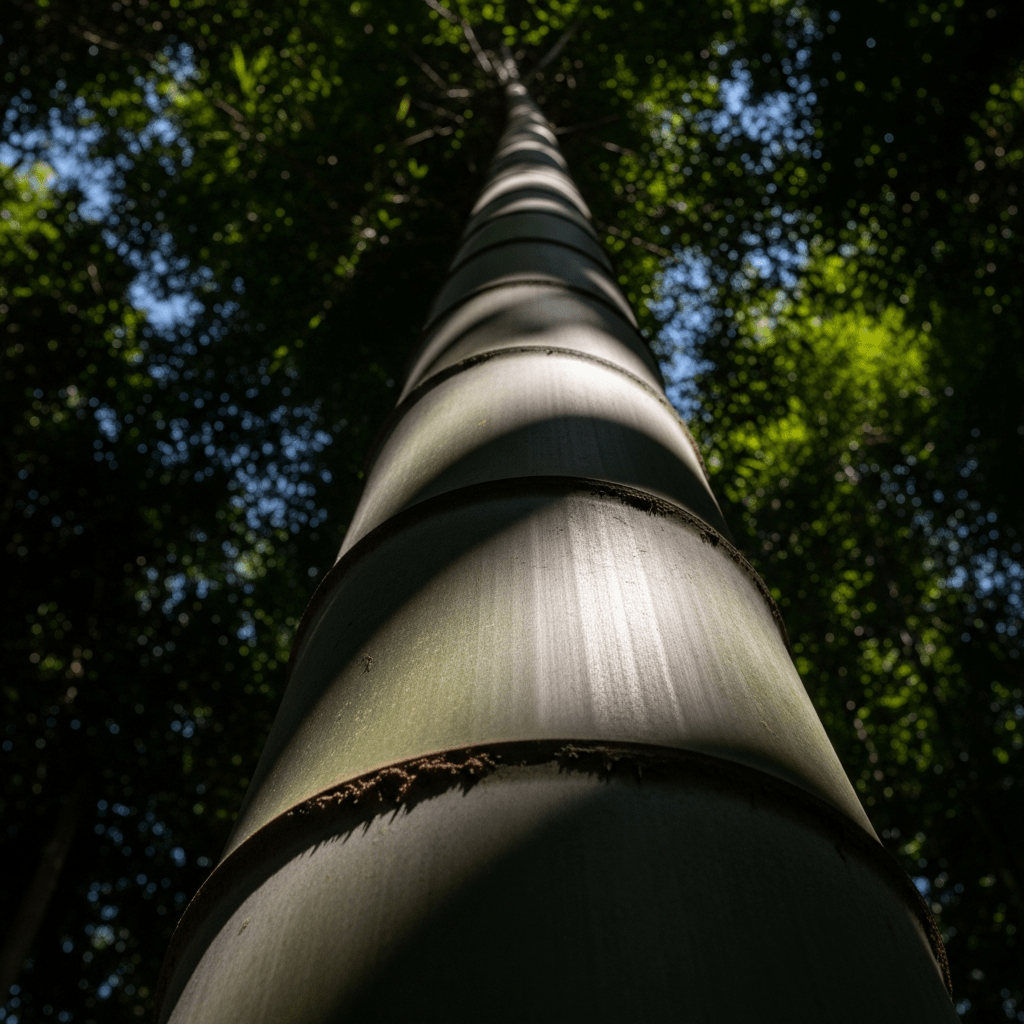
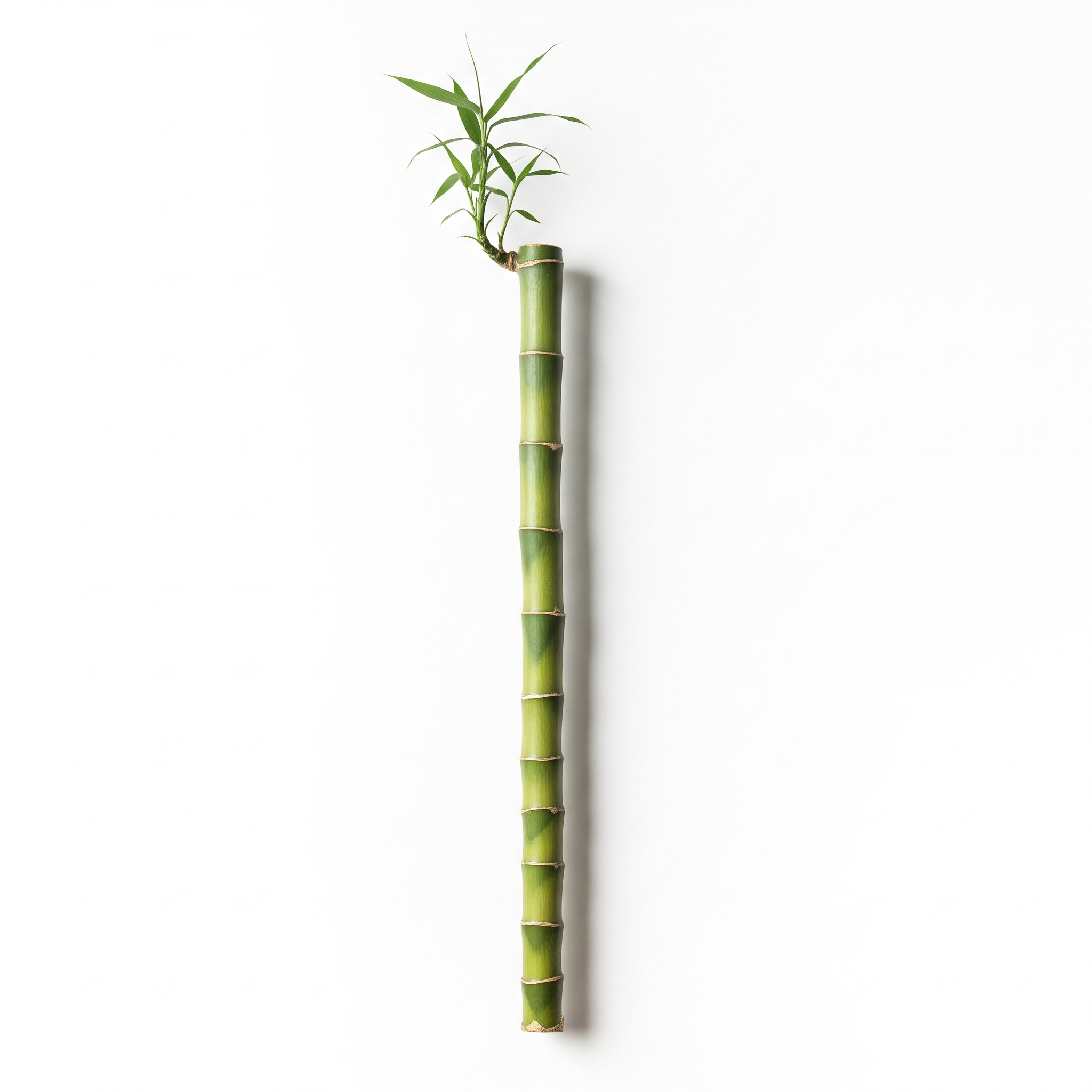
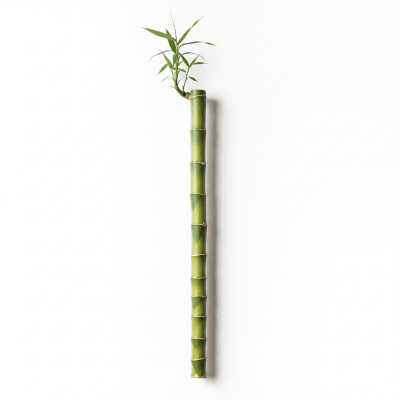
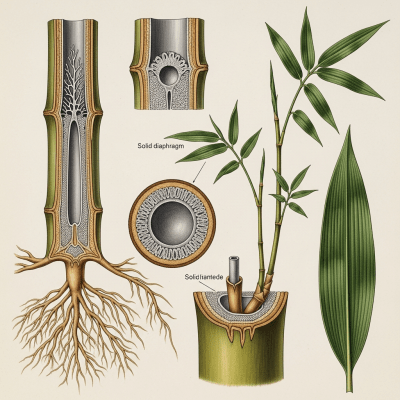
Bamboo presents a striking silhouette: woody, hollow stems (culms) that rise from 1 to 30 meters, sometimes reaching more than 30 centimeters in diameter. The culms are smooth, jointed, and often a vibrant green or golden hue. Leaves are slender, lance-shaped, and arranged alternately along the branches, creating a lush, airy canopy. The root system is rhizomatous, forming dense clumps or spreading runners depending on the species. When mature, bamboo groves evoke a sense of tranquility and vertical grandeur.
Bamboo is celebrated for its versatility and resilience. It grows at astonishing rates—some species can surge nearly a meter in a single day—making it a renewable resource for construction, crafts, and food. Humans harvest bamboo for edible shoots, sturdy culms used in scaffolding, flooring, and furniture, and for its role in paper and textile production. In the wild, bamboo stabilizes soil, supports wildlife, and contributes to carbon sequestration, making it both a practical and ecological asset.
Bring this kind into your world illustrated posters, mugs, and shirts.
Archival print, museum-grade paper
Buy Poster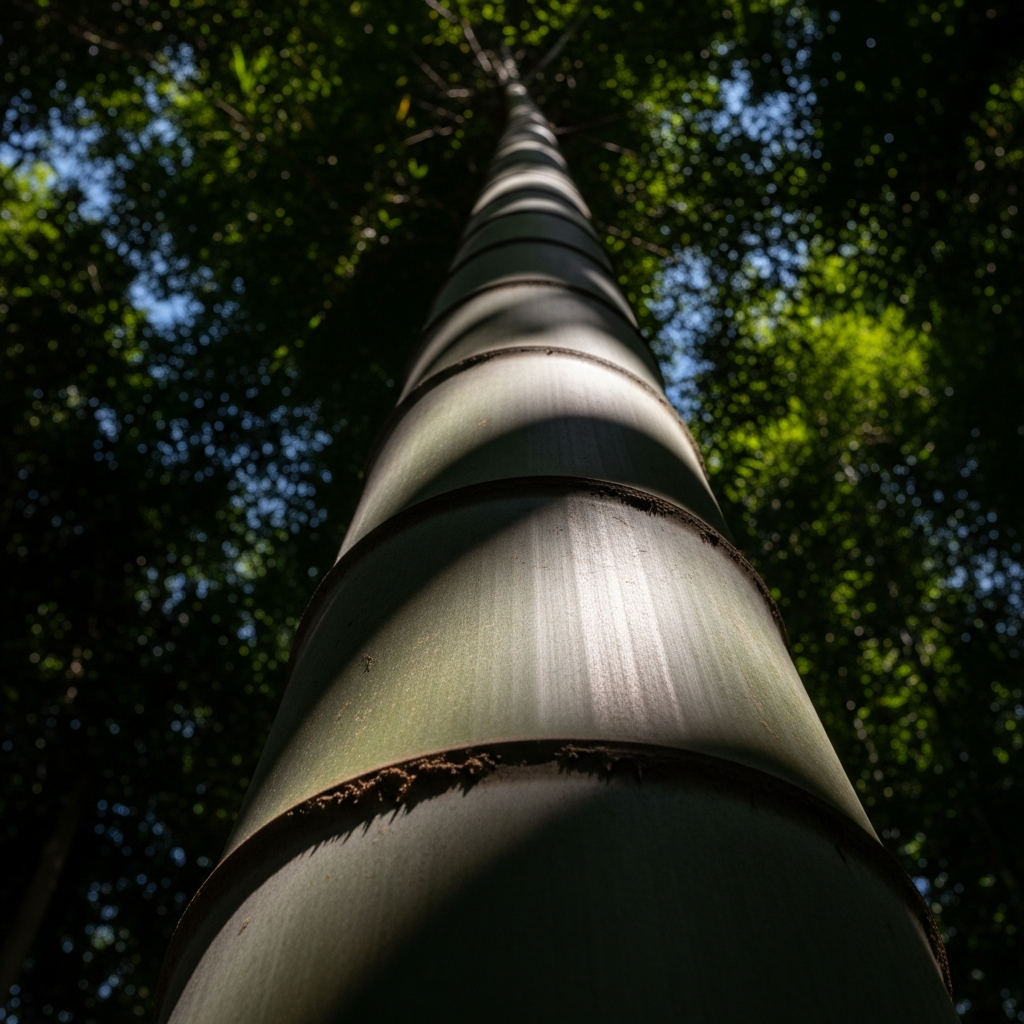
Stoneware mug, dishwasher safe
Buy Mug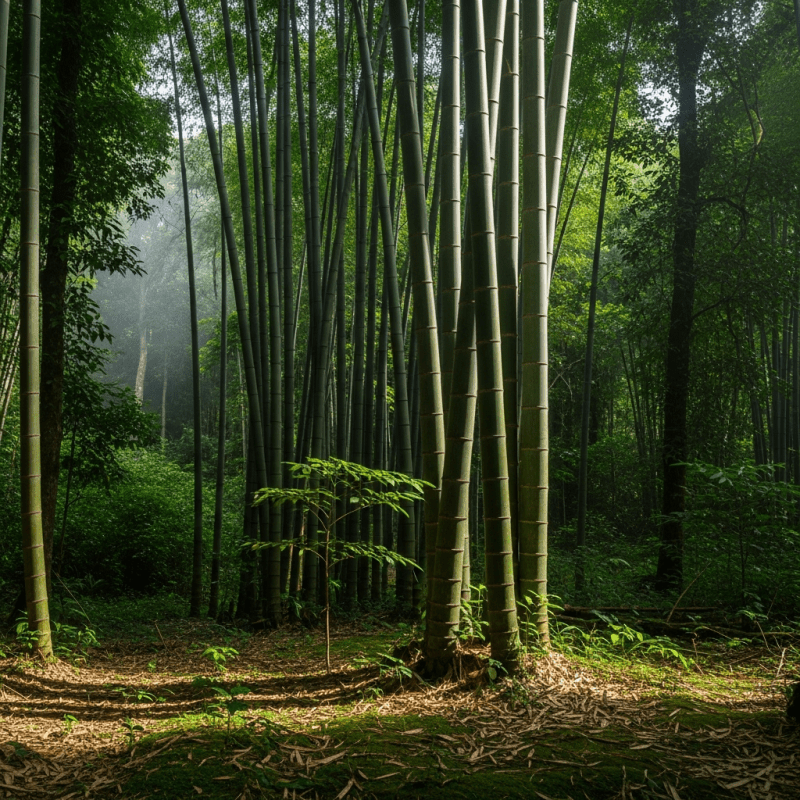
Soft cotton tee, unisex sizes
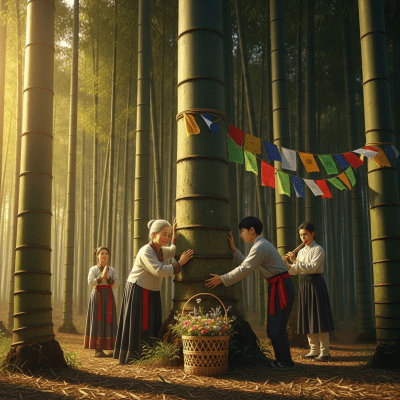
Buy ShirtBamboo holds deep cultural resonance across Asia and beyond. In Chinese and Japanese art, it symbolizes resilience, humility, and integrity, often depicted in ink paintings and poetry. Bamboo is central to festivals, culinary traditions, and daily life, from musical instruments to ceremonial objects. Its presence in folklore and myth reflects themes of flexibility and endurance, making it a living emblem of strength and adaptability.
Bamboo plays a pivotal role in its ecosystem, providing shelter and food for wildlife such as pandas, birds, and insects. Its dense root systems prevent soil erosion, stabilize riverbanks, and enhance water retention. Bamboo groves create microhabitats, support biodiversity, and contribute to carbon sequestration, making them vital for both natural and managed landscapes.
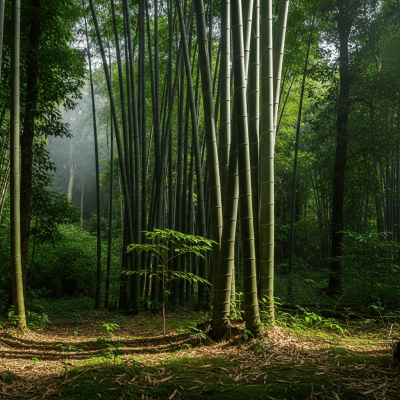
Bamboo is found across tropical, subtropical, and temperate regions of Asia, Africa, and the Americas. It flourishes in diverse habitats—from mountain slopes and riverbanks to lowland forests and managed plantations. Species-specific preferences vary, but most bamboos favor well-drained soils and moderate moisture, with some adapted to drought or high altitudes.
To cultivate bamboo, select species suited to your climate and soil. Plant in well-drained, fertile ground with access to sunlight or partial shade. Clumping varieties are easier to manage, while running types require barriers to prevent spread. Regular watering, mulching, and protection from pests (especially borers and fungal pathogens) ensure healthy growth. Harvest culms at maturity, and store them dry to avoid decay.
Bamboo faces threats from habitat loss, overharvesting, and disease. Fungal pathogens and insect borers can damage stands, while mass flowering events may lead to die-off and reduced regeneration. Conservation efforts focus on sustainable harvesting, habitat protection, and the preservation of genetic diversity across species and regions.
Bamboo is a cornerstone of many economies, valued for its rapid renewability and strength. Its culms are used in construction, flooring, and furniture; shoots are a nutritious food source; fibers are processed into paper, textiles, and charcoal. Bamboo also features in landscaping, handicrafts, musical instruments, and environmental services such as soil stabilization and carbon capture.
Throughout history, bamboo has symbolized resilience, flexibility, and longevity. In Chinese culture, it represents uprightness and modesty, while Japanese traditions associate it with purity and protection. Folktales often feature bamboo as a source of magic or transformation, and its enduring qualities are celebrated in poetry, art, and spiritual practice.