Shou Pu-Erh
Shou Pu-erh is a post-fermented Chinese dark tea made from Camellia sinensis leaves using an accelerated microbial fermentation process, known for its dark, earthy liquor and smooth, mellow flavor.
Shou Pu-erh is a post-fermented Chinese dark tea made from Camellia sinensis leaves using an accelerated microbial fermentation process, known for its dark, earthy liquor and smooth, mellow flavor.
Originating in Yunnan Province, China, Shou Pu-erh was developed in 1973 by the Kunming Tea Factory under the guidance of the China National Native Produce & Animal By-Products Import & Export Corporation. This modern method was created to replicate the aging qualities of traditional raw Pu-erh in a much shorter time, utilizing large-leaf Camellia sinensis var. assamica harvested from Yunnan's subtropical highlands.
Shou Pu-erh belongs to the category of dark teas, distinguished by its unique post-fermentation process. It is one of the two main types of Pu-erh tea, alongside Sheng (raw) Pu-erh, and is classified by its accelerated microbial fermentation that sets it apart within the broader Camellia sinensis tea family.
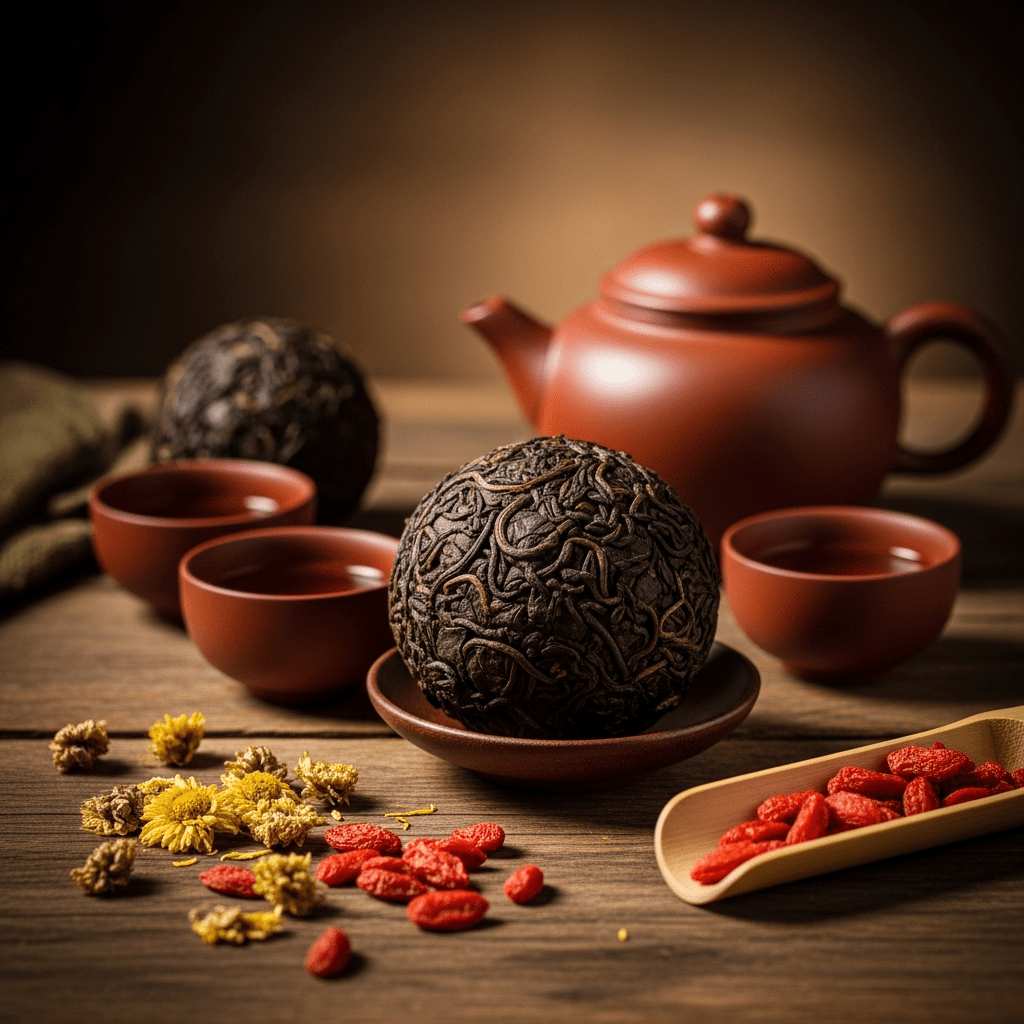
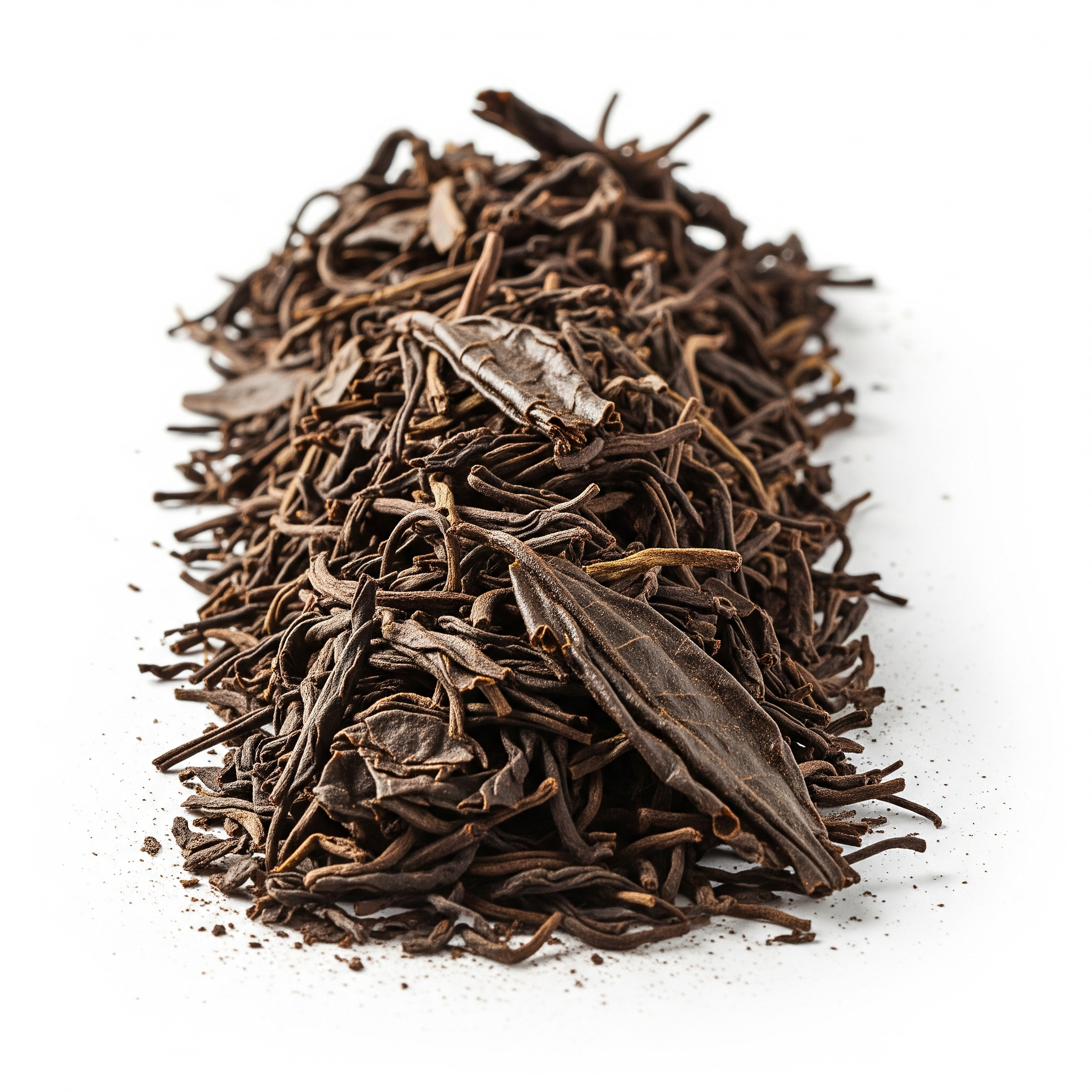
Before processing, the leaves are large, thick, and leathery with a dark green color. After fermentation, they turn dark brown to black. Shou Pu-erh is commonly shaped into pressed cakes, bricks, or sold as loose leaf, each form showcasing the tea’s dense, aged appearance.
Shou Pu-erh undergoes a distinctive "wo dui" or wet piling fermentation, where moistened leaves are piled and fermented under controlled heat and humidity for 40 to 60 days. This process produces a smooth, mellow tea that lacks the sharp astringency of raw Pu-erh and is prized for its aging potential and digestive qualities.
Bring this kind into your world illustrated posters, mugs, and shirts.
Archival print, museum-grade paper
Buy Poster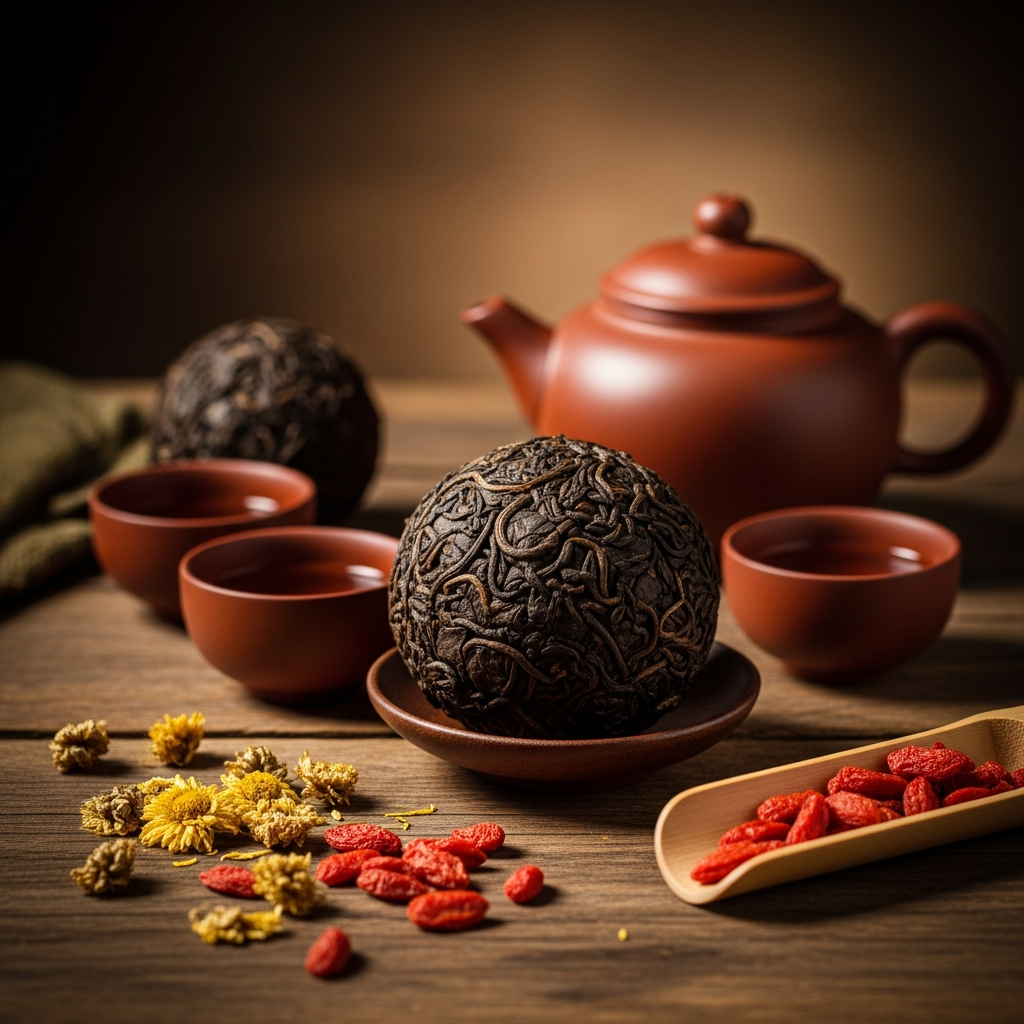
Stoneware mug, dishwasher safe
Buy Mug
Soft cotton tee, unisex sizes
Buy ShirtConsumed primarily in China and Southeast Asia, Shou Pu-erh holds cultural value in traditional Gongfu tea ceremonies and daily life. It is appreciated not only for its flavor but also for its reputed health benefits, often symbolizing patience and refinement through its aging process.
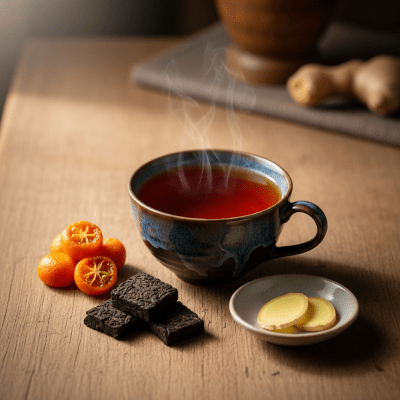
Shou Pu-erh offers a smooth, mellow flavor with deep earthy notes complemented by subtle woody or sweet undertones. Unlike raw Pu-erh, it lacks sharp astringency, presenting a rich, full-bodied liquor that is both comforting and complex.

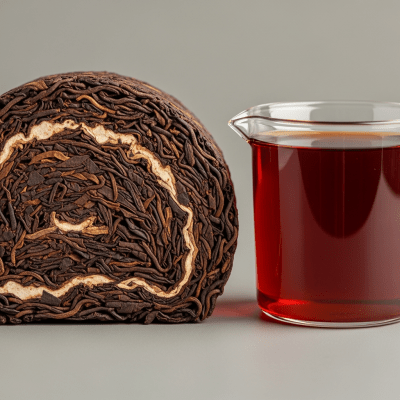
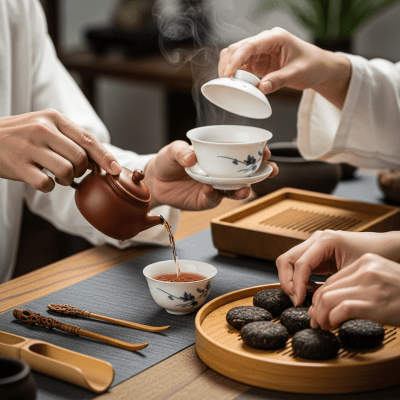



Processing begins with harvesting mature leaves from Camellia sinensis var. assamica. The leaves are moistened and subjected to the wo dui or wet piling fermentation, where they are heaped under controlled temperature and humidity for 40 to 60 days. After fermentation, the tea is pressed into cakes, bricks, or left loose, then dried and packaged for aging or immediate consumption.
Shou Pu-erh is traditionally brewed using the Gongfu tea ceremony, emphasizing multiple short infusions to extract its layered flavors. It is a staple in Chinese and Southeast Asian households, valued for both its taste and its reputed digestive properties, often enjoyed after meals or during social gatherings.
Shou Pu-erh is reputed to aid digestion and promote gut health due to its microbial fermentation. It is also believed to support metabolism and provide antioxidants, making it a favored choice for those seeking both flavor and wellness benefits in their tea.
While the core accelerated fermentation process of Shou Pu-erh is standardized, subtle regional variations exist based on specific factory recipes and fermentation techniques within Yunnan. These nuances influence flavor depth, aroma, and aging potential, reflecting the diverse terroirs and craftsmanship of Pu-erh producers.