Jin Jun Mei
Jin Jun Mei is a premium Chinese black tea celebrated for its delicate sweetness and distinctive golden appearance, crafted exclusively from young tea buds harvested in the Wuyi Mountains of Fujian Province.
Jin Jun Mei is a premium Chinese black tea celebrated for its delicate sweetness and distinctive golden appearance, crafted exclusively from young tea buds harvested in the Wuyi Mountains of Fujian Province.
First developed in 2005 by tea master Liang Junde at Tongmu Village in the Wuyi Mountains, Jin Jun Mei emerged as a refined expression of traditional Wuyi black tea techniques. It traces its lineage to the Camellia sinensis var. sinensis cultivar used in famed teas like Lapsang Souchong, but distinguishes itself by focusing solely on the earliest spring buds.
Jin Jun Mei belongs to the black tea category, known in China as hong cha, characterized by full oxidation. It is a subtype of Wuyi black teas, sharing botanical roots with other teas from the region but standing apart due to its exclusive use of young buds and meticulous processing.
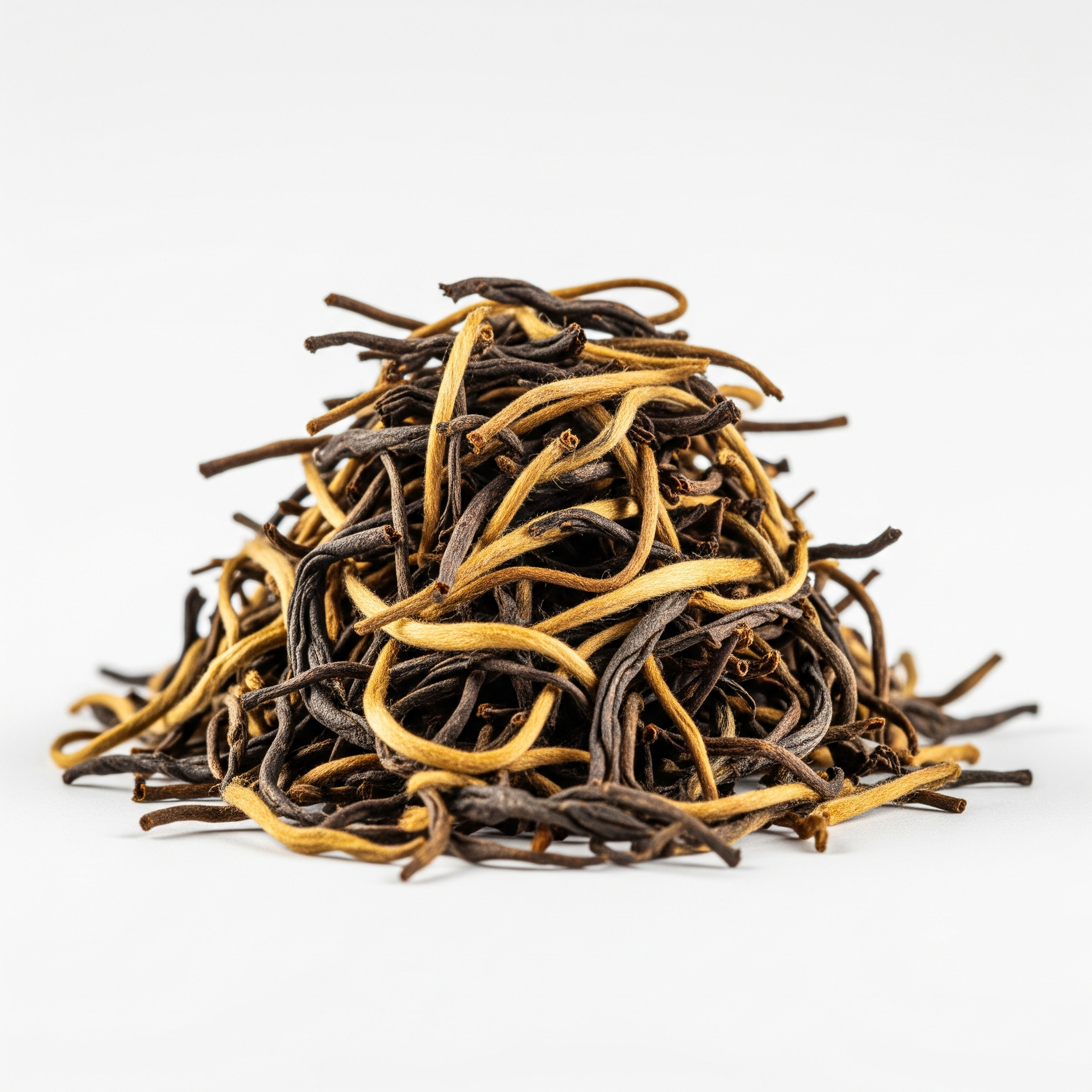
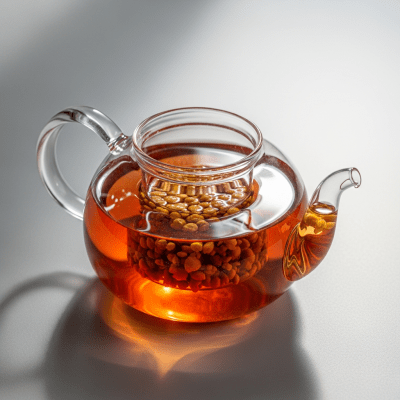
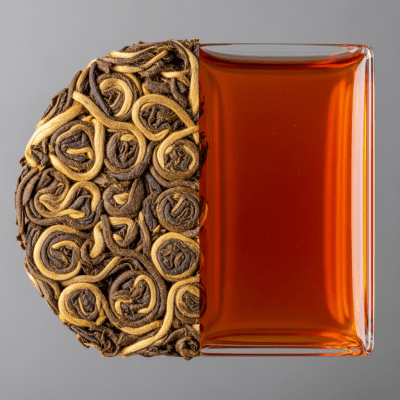
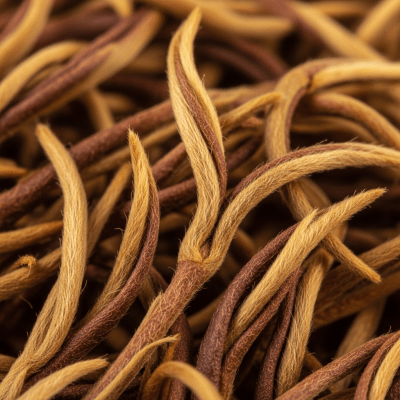
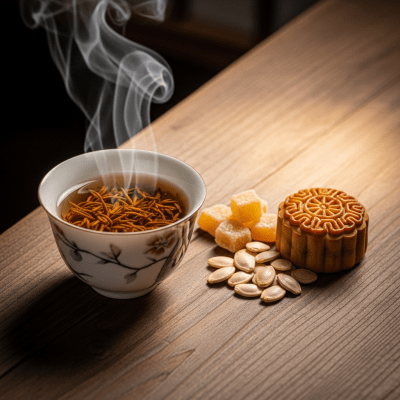
The dry leaves of Jin Jun Mei are small, needle-like buds covered in fine golden hairs, giving the tea its signature shimmering golden hue. When brewed, it produces a clear amber-red liquor that reflects its refined craftsmanship and youthful raw material.
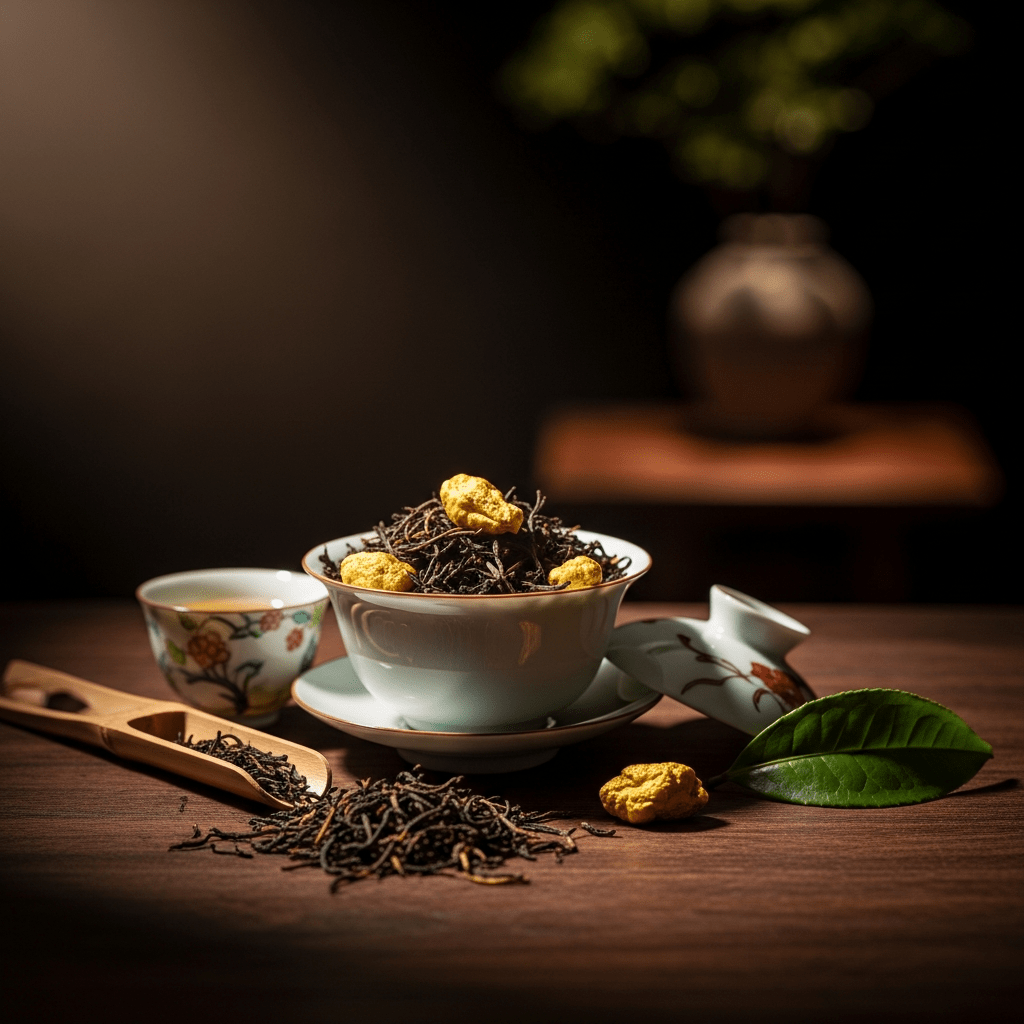
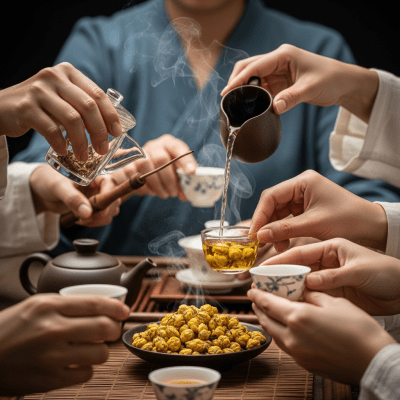
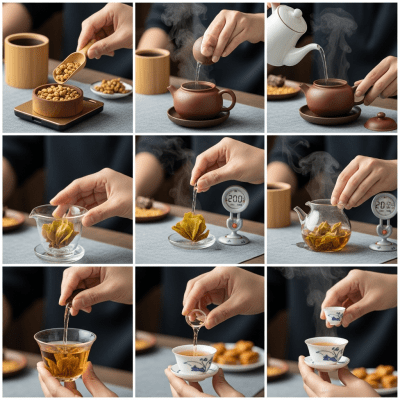
Jin Jun Mei is prized for loose-leaf brewing, often prepared in small gaiwans or porcelain teapots to highlight its nuanced flavors. Its labor-intensive harvesting of only unopened buds results in limited production, making it a sought-after luxury tea often reserved for special occasions or gifting.
Bring this kind into your world illustrated posters, mugs, and shirts.
Archival print, museum-grade paper
Buy Poster
Stoneware mug, dishwasher safe
Buy Mug
Soft cotton tee, unisex sizes
Buy ShirtEsteemed as one of China’s most prestigious black teas, Jin Jun Mei holds cultural value as a symbol of refined taste and artisanal skill. It is frequently presented as a gift and enjoyed during celebrations, embodying both tradition and modern appreciation for high-quality teas.
Jin Jun Mei offers a sweet and floral flavor profile, enriched with notes of honey and ripe fruit. Its taste is smooth and complex, finishing with a lingering caramel sweetness that delights the palate without bitterness or astringency.
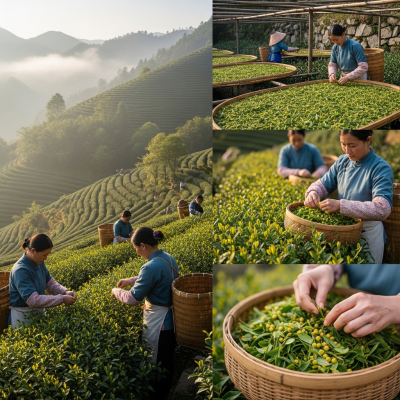
The tea undergoes traditional black tea processing steps: withering to reduce moisture, gentle rolling to shape the buds, full oxidation to develop rich flavors, and careful drying to preserve aroma. The delicate handling throughout ensures the integrity of the young buds remains intact.
Consumed primarily as a luxury tea in China, Jin Jun Mei is typically brewed in small vessels to savor multiple infusions. It is often served during special occasions or given as a prestigious gift, reflecting its status and the care invested in its production.
As a fully oxidized black tea made from young buds, Jin Jun Mei contains antioxidants and moderate caffeine levels. It is reputed to aid digestion, enhance alertness, and provide a soothing, uplifting experience, though its health benefits align with those generally attributed to high-quality black teas.
Jin Jun Mei is closely associated with the Wuyi Mountains region and is considered a distinct style within Wuyi black teas. While related to Lapsang Souchong, it differs in raw material and processing focus. Variants may exist under names like "Tongmu Jin Jun Mei" or "Wuyi Jin Jun Mei," emphasizing origin or subtle stylistic differences.