Gunpowder Tea
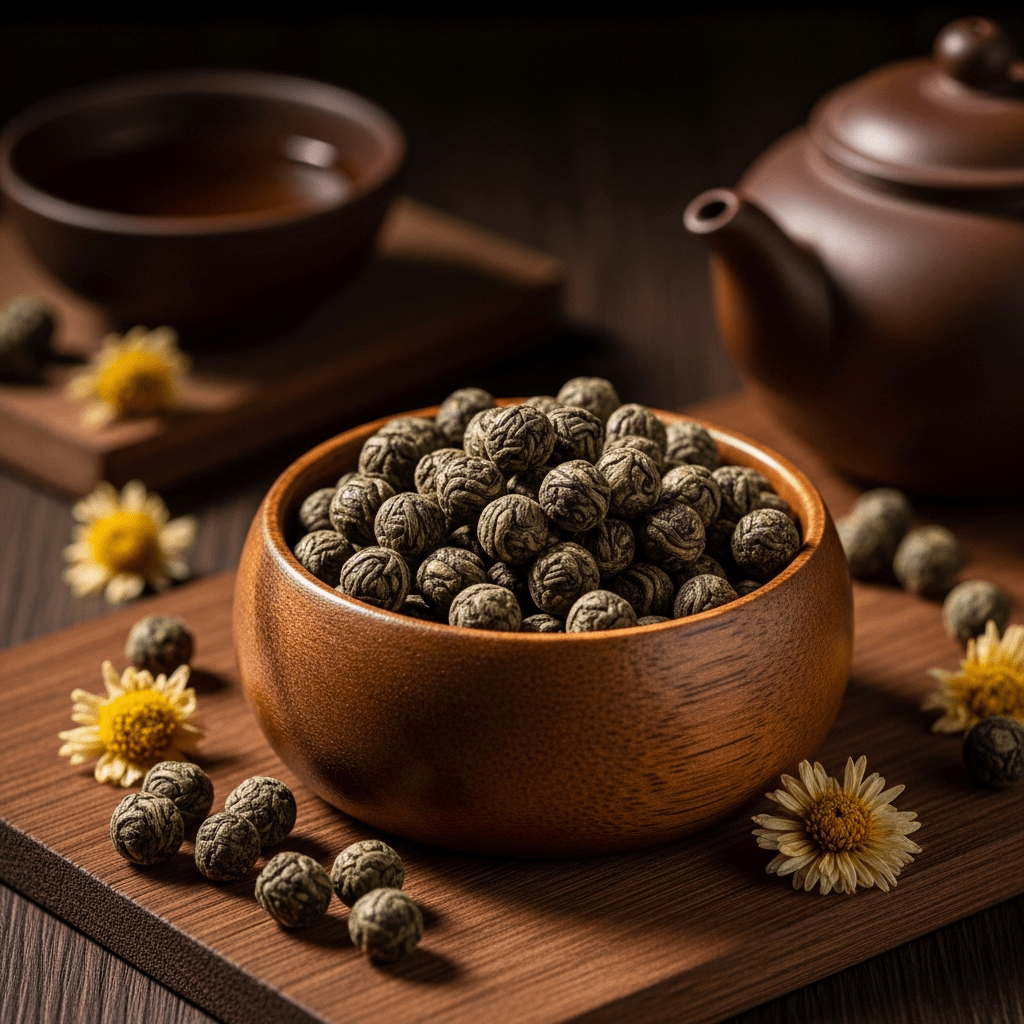
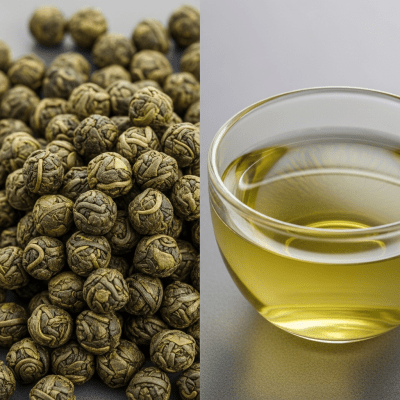
Gunpowder tea is a distinctive Chinese green tea known for its tightly rolled leaves that resemble small pellets or grains of gunpowder, prized for its robust flavor and exceptional durability during storage and transport.
Gunpowder tea is a distinctive Chinese green tea known for its tightly rolled leaves that resemble small pellets or grains of gunpowder, prized for its robust flavor and exceptional durability during storage and transport.
Originating in Zhejiang Province, China, gunpowder tea has a rich history dating back to the Tang Dynasty (618–907 CE). It emerged from traditional regional green tea processing methods rather than from a specific breeder or cultivar, embodying centuries of Chinese tea craftsmanship.
Gunpowder tea belongs to the green tea category within the broader Camellia sinensis family. It is classified by its processing style, which involves minimal oxidation and a unique rolling technique that sets it apart from other green teas.
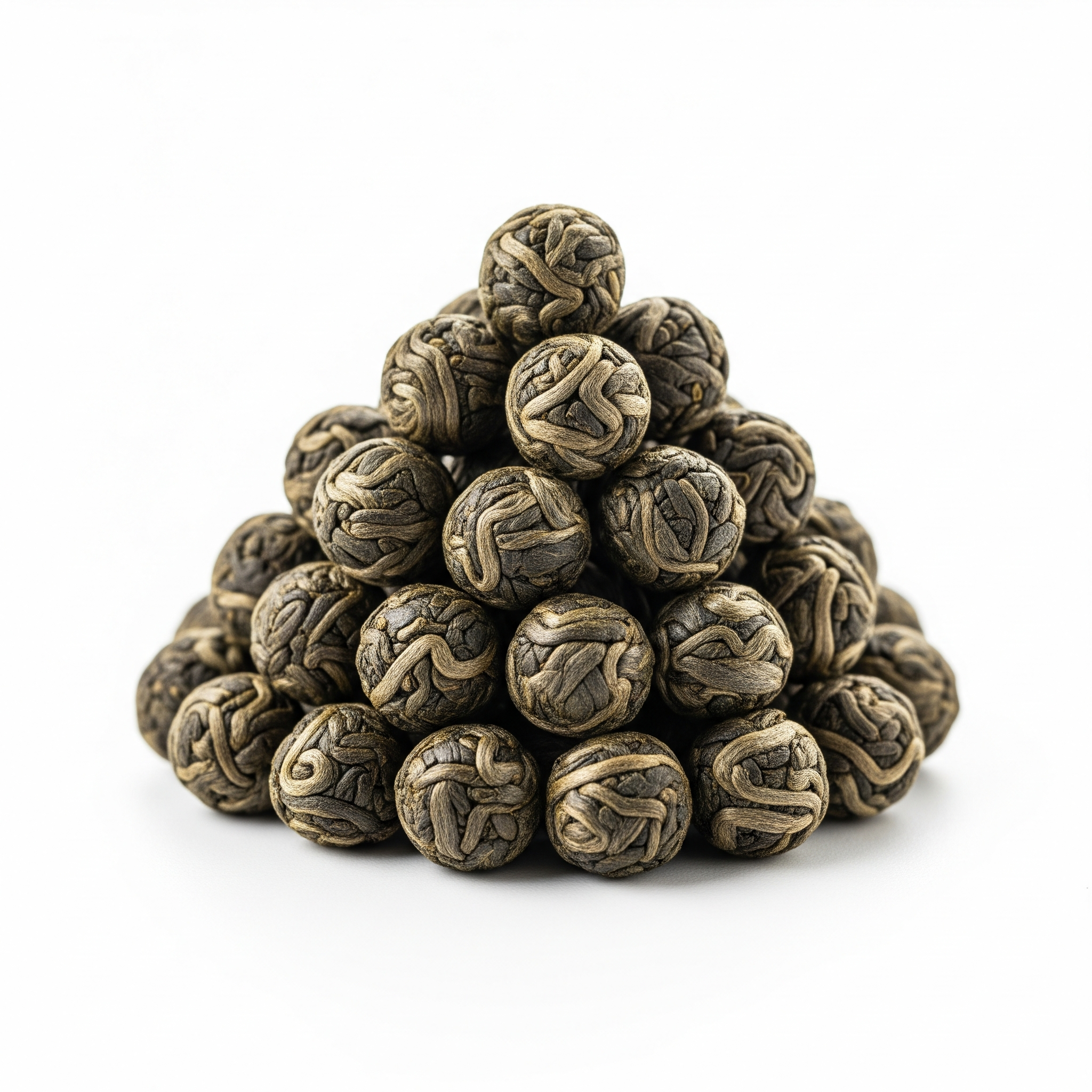
The tea leaves are medium to large in size and are rolled into small, tight pellets with a glossy, dark green to grayish-green hue. This pellet-like form not only defines its name but also contributes to its distinctive texture and visual appeal.
Gunpowder tea is traditionally brewed plain but also serves as the foundational base for North African mint tea, known as Maghrebi tea. Its tightly rolled pellets unfurl during steeping, releasing a bold, slightly smoky flavor with vegetal and nutty undertones. The rolling process enhances its shelf life and resistance to moisture and damage, making it ideal for export and long-term storage.
Bring this kind into your world illustrated posters, mugs, and shirts.
Archival print, museum-grade paper
Buy Poster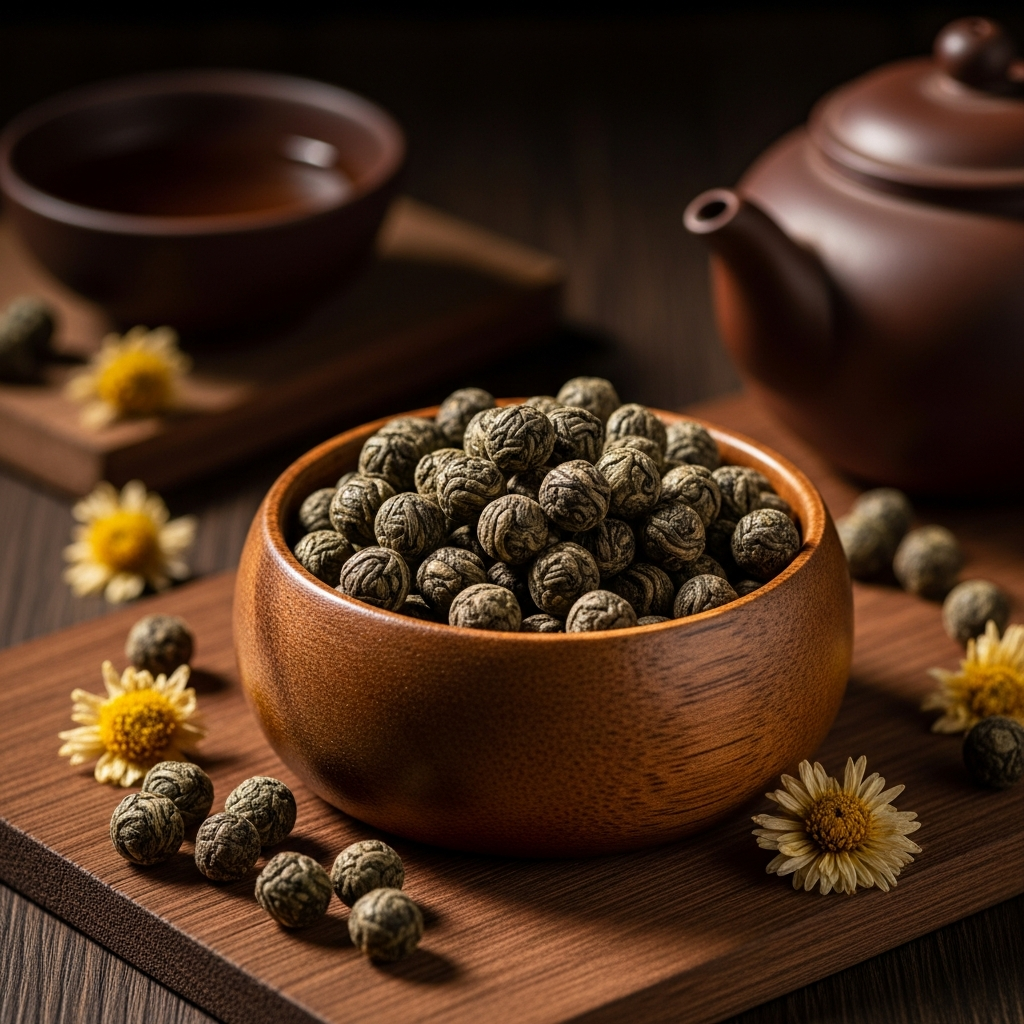
Stoneware mug, dishwasher safe
Buy Mug
Soft cotton tee, unisex sizes
Buy ShirtIn North Africa and the Middle East, gunpowder tea holds cultural importance as the standard base for Maghrebi mint tea, a symbol of hospitality and social ritual. Its presence in global tea trade also marks it as one of China’s most historically significant exported green teas.
Gunpowder tea offers a bold and slightly smoky flavor, complemented by vegetal notes reminiscent of fresh greens and subtle nutty undertones. Its aroma is robust yet clean, providing a satisfying sensory experience that balances strength with smoothness.



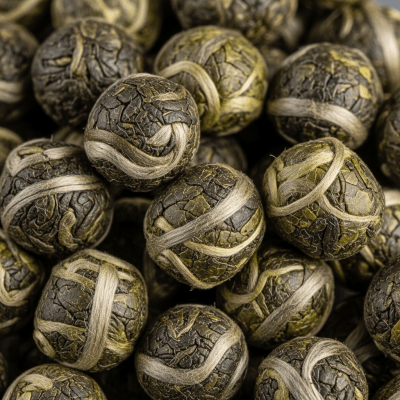

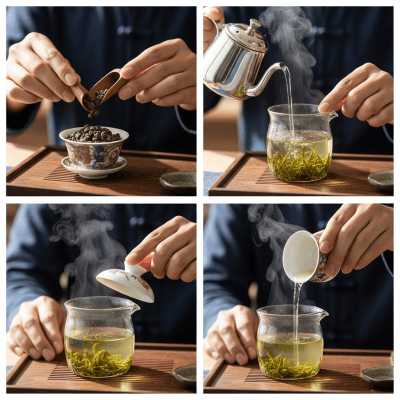
The production of gunpowder tea involves several key steps: withering the fresh leaves, steaming or pan-firing to halt oxidation, rolling the leaves tightly into small pellets, and finally drying them. This rolling technique is central to its identity, enhancing durability and preserving flavor.
Gunpowder tea is commonly served plain or sweetened, and it plays a vital role in North African tea culture as the base for Maghrebi mint tea, where it is brewed strong and combined with fresh mint and sugar. This ritual is an emblem of hospitality and social bonding.
As a green tea, gunpowder tea is rich in antioxidants and may support metabolism, cardiovascular health, and mental alertness. Its antioxidant compounds help combat oxidative stress, contributing to overall wellness.
While the core technique of tightly rolling leaves remains consistent, regional variants of gunpowder tea differ primarily in pellet size and subtle processing nuances. These variations influence flavor intensity and appearance but maintain the tea’s characteristic durability and bold profile.