Green Tea
Green tea is a category of tea made from the leaves of Camellia sinensis that undergo little to no oxidation during processing, resulting in a fresh, light-colored brew prized for its vegetal and delicate flavor.
Green tea is a category of tea made from the leaves of Camellia sinensis that undergo little to no oxidation during processing, resulting in a fresh, light-colored brew prized for its vegetal and delicate flavor.
Originating in ancient China over 3,000 years ago, green tea’s earliest records appear in historical texts from this region. It spread to Japan and beyond through cultural exchange and trade, evolving into numerous regional styles without a single known breeder or institution responsible for its development.
Green tea belongs to the broader family of teas derived from the Camellia sinensis plant, distinguished primarily by its minimal oxidation level. It is one of the major tea categories alongside black, oolong, white, yellow, and pu-erh teas, classified chiefly by processing methods rather than cultivar.
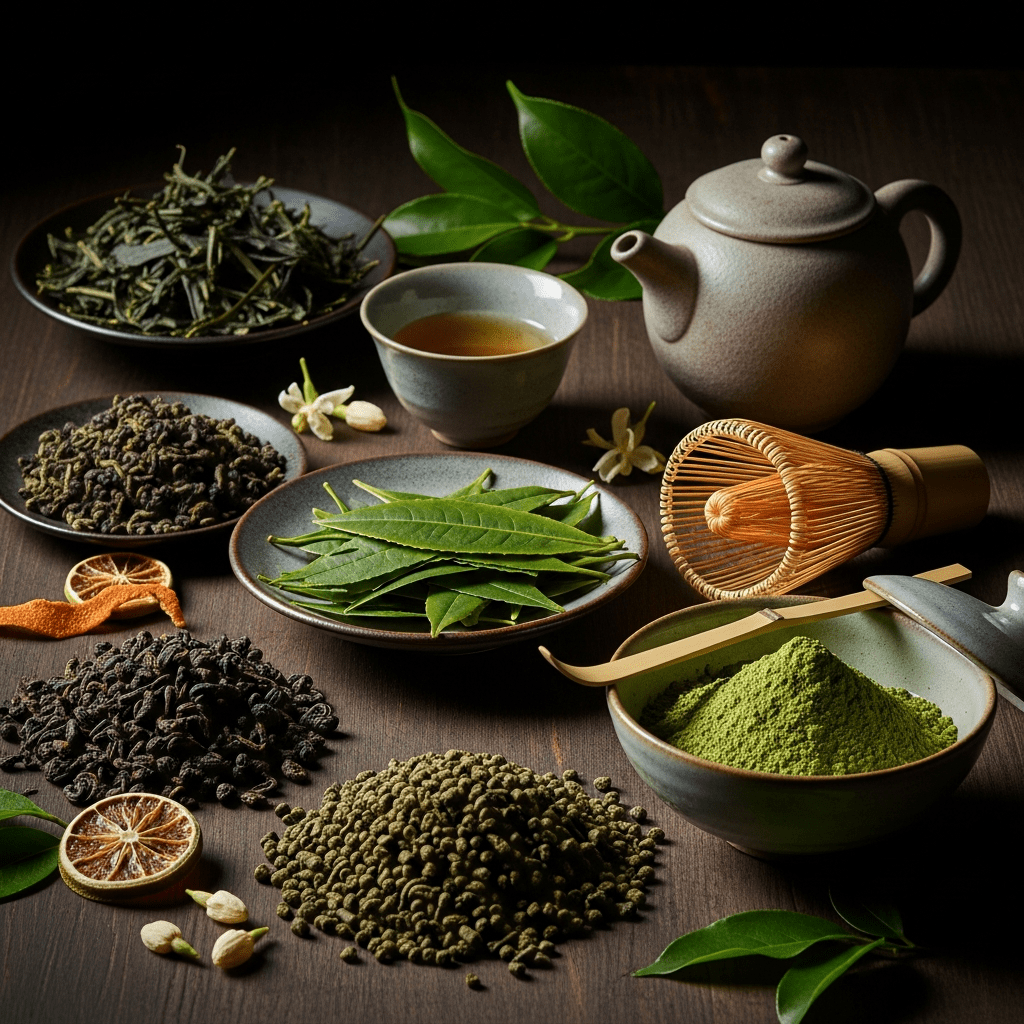
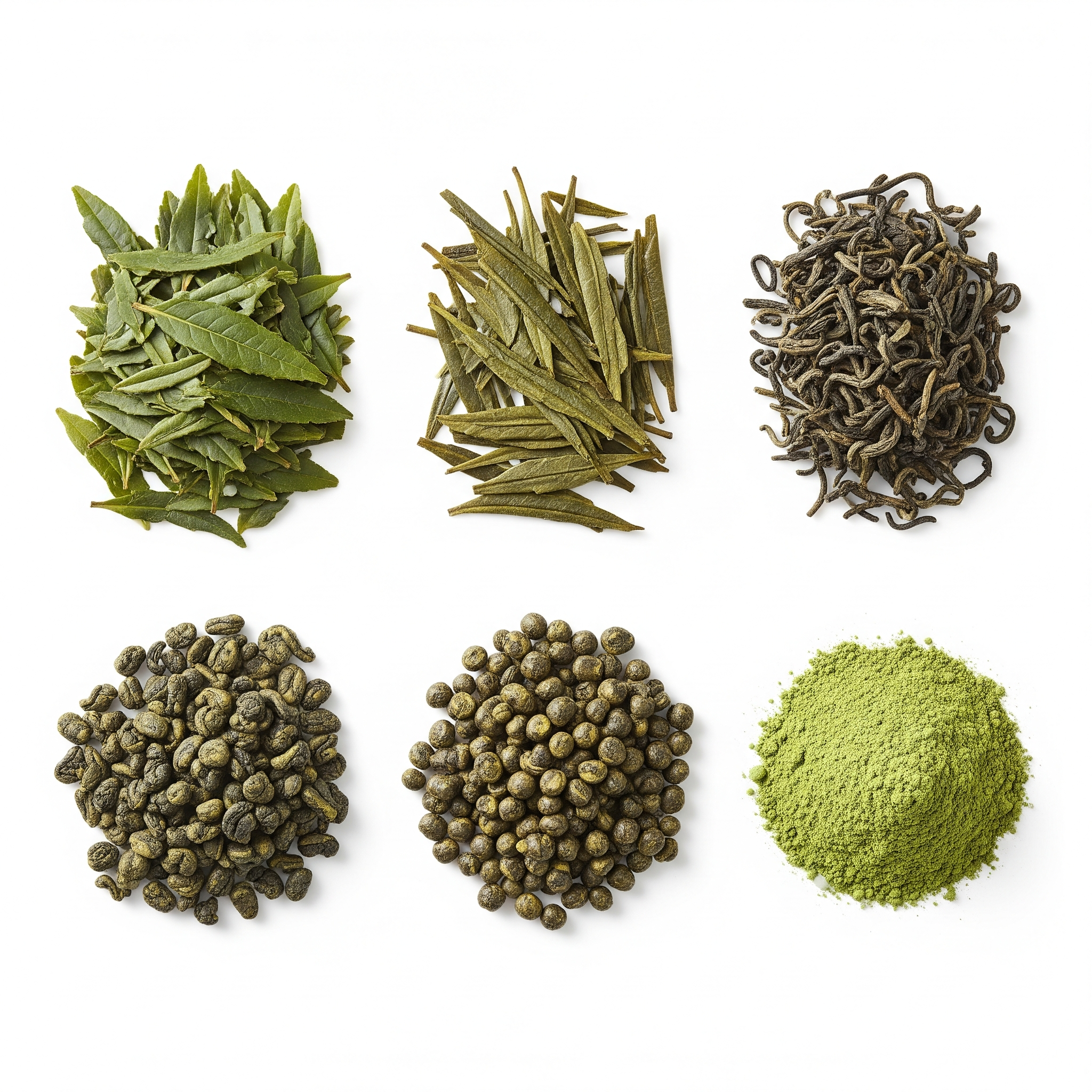
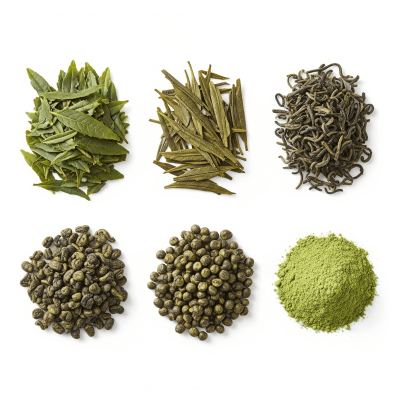
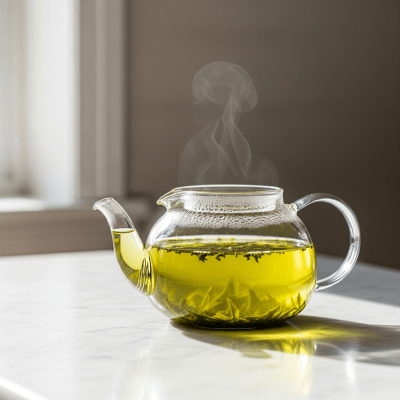
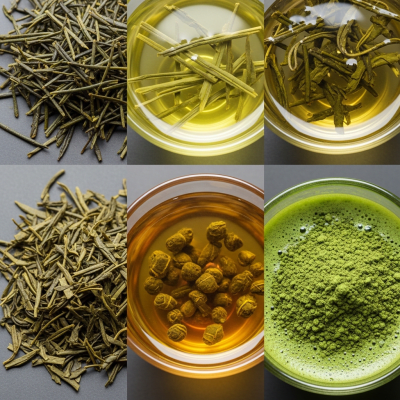
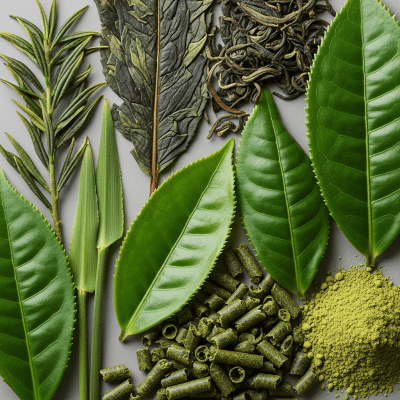
Green tea leaves are typically small to medium in size, shaped lanceolate to elliptical, and vary in color from light to dark green. The brewed liquor ranges from pale green to yellow, reflecting the tea’s fresh and unoxidized nature.
Green tea leaves are harvested and promptly processed to prevent oxidation, commonly through rapid steaming or pan-firing, followed by rolling, shaping, and drying. The tea is brewed at moderate temperatures (70–85°C), yielding a refreshing infusion enjoyed worldwide both as loose leaf and powdered forms like Matcha.
Bring this kind into your world illustrated posters, mugs, and shirts.
Archival print, museum-grade paper
Buy Poster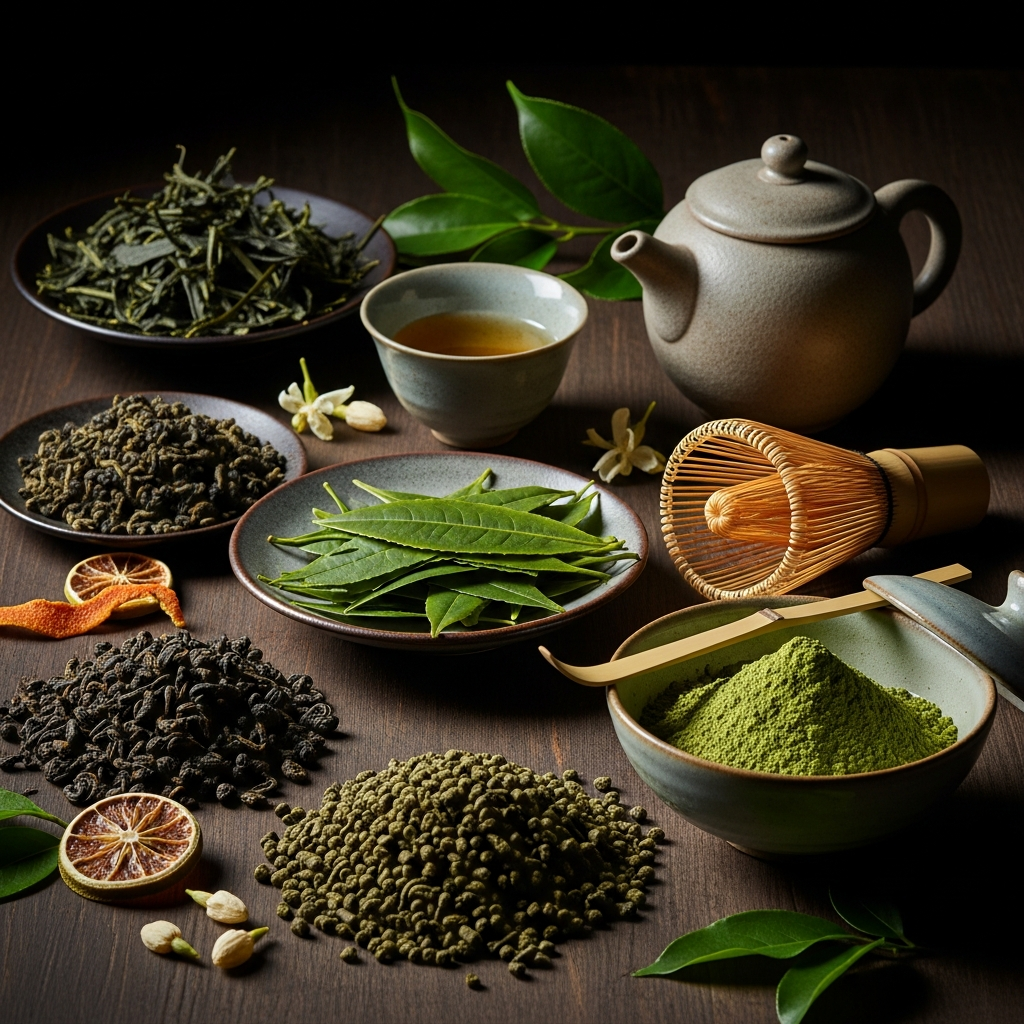
Stoneware mug, dishwasher safe
Buy Mug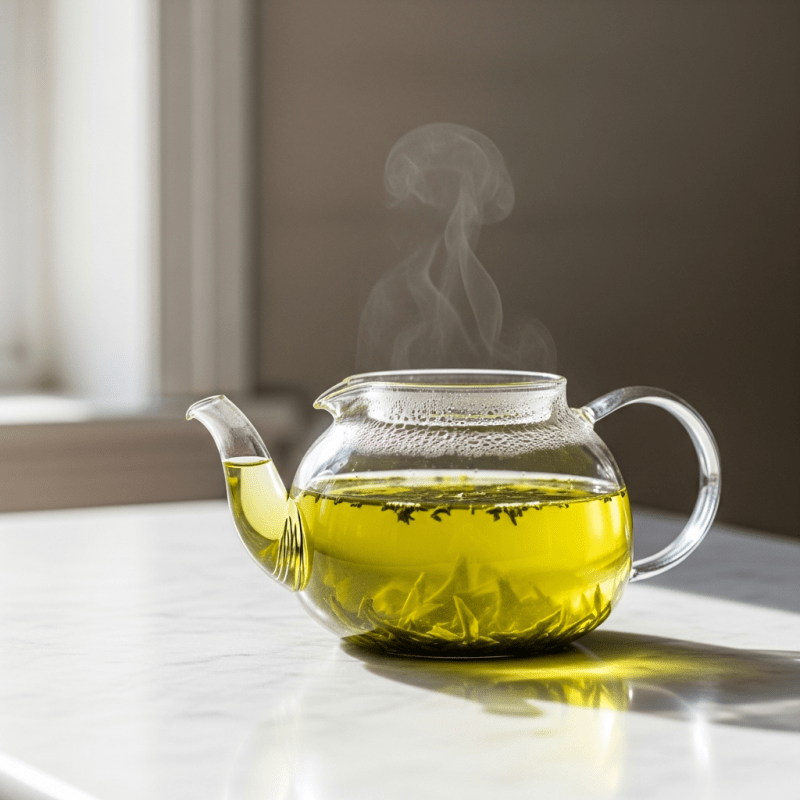
Soft cotton tee, unisex sizes
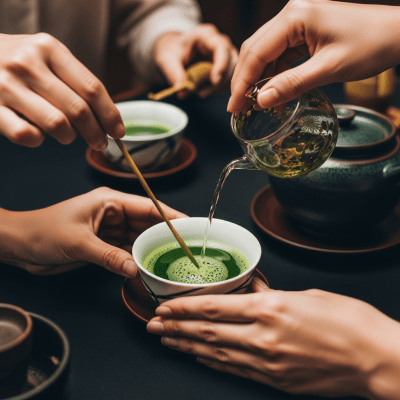
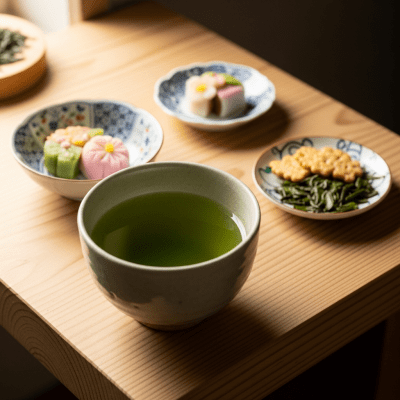
Buy ShirtGreen tea holds deep cultural importance in East Asia, integral to the Japanese tea ceremony (Chanoyu) and the Chinese Gongfu tea practice. Its presence in art, ritual, and daily life underscores a rich heritage of appreciation and refinement.
Green tea’s flavor varies by region and processing style. Japanese steamed varieties often present grassy, vegetal, and umami notes, while Chinese pan-fired types tend toward nutty, sweet, and chestnut-like flavors. The overall sensory experience is fresh, light, and subtly complex.
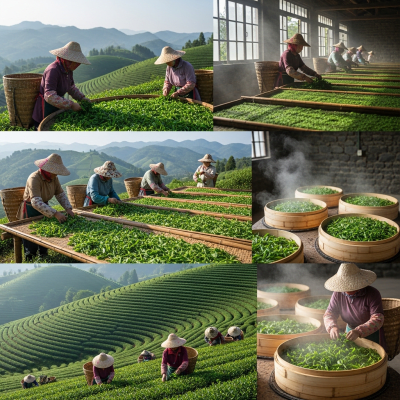

Processing of green tea involves halting enzymatic oxidation immediately after harvest, typically through rapid steaming (common in Japan) or pan-firing (common in China). This is followed by rolling to shape the leaves and drying to preserve freshness. These steps ensure minimal oxidation and maintain the tea’s characteristic flavor and color.
Green tea is enjoyed globally in various forms, from traditional loose leaf infusions to powdered Matcha whisked in ceremonial contexts. In East Asia, it is central to cultural rituals such as the Japanese tea ceremony and Chinese Gongfu tea practice, emphasizing mindfulness and appreciation of tea’s nuances.
Green tea is valued for its high catechin content and antioxidants, which are associated with potential health benefits including improved cardiovascular health, metabolism support, and cognitive function. It also contains less caffeine than black tea, making it a gentle stimulant.
Notable regional variants of green tea include Japan’s Sencha and Matcha, known for steaming processing; China’s Longjing and Gunpowder, which are pan-fired and rolled; and Biluochun, prized for its delicate aroma. Each reflects local terroir, processing traditions, and cultural preferences.