Da Hong Pao
Da Hong Pao is a legendary Chinese oolong tea from the Wuyi Mountains, celebrated for its complex mineral-rich flavor and esteemed as one of the most prized Wuyi rock teas, known as Yancha.
Da Hong Pao is a legendary Chinese oolong tea from the Wuyi Mountains, celebrated for its complex mineral-rich flavor and esteemed as one of the most prized Wuyi rock teas, known as Yancha.
Originating in the Wuyi Mountains of Fujian Province, China, Da Hong Pao traces back to the Ming dynasty (1368–1644). Its original bushes, revered and rare, have been propagated vegetatively over centuries, preserving their unique lineage and connection to this historic terroir.
Classified as a partially oxidized oolong tea, Da Hong Pao belongs to the Yancha family of Wuyi rock teas. It is derived from the Camellia sinensis var. sinensis cultivar and distinguished by its semi-oxidized processing and traditional charcoal roasting.
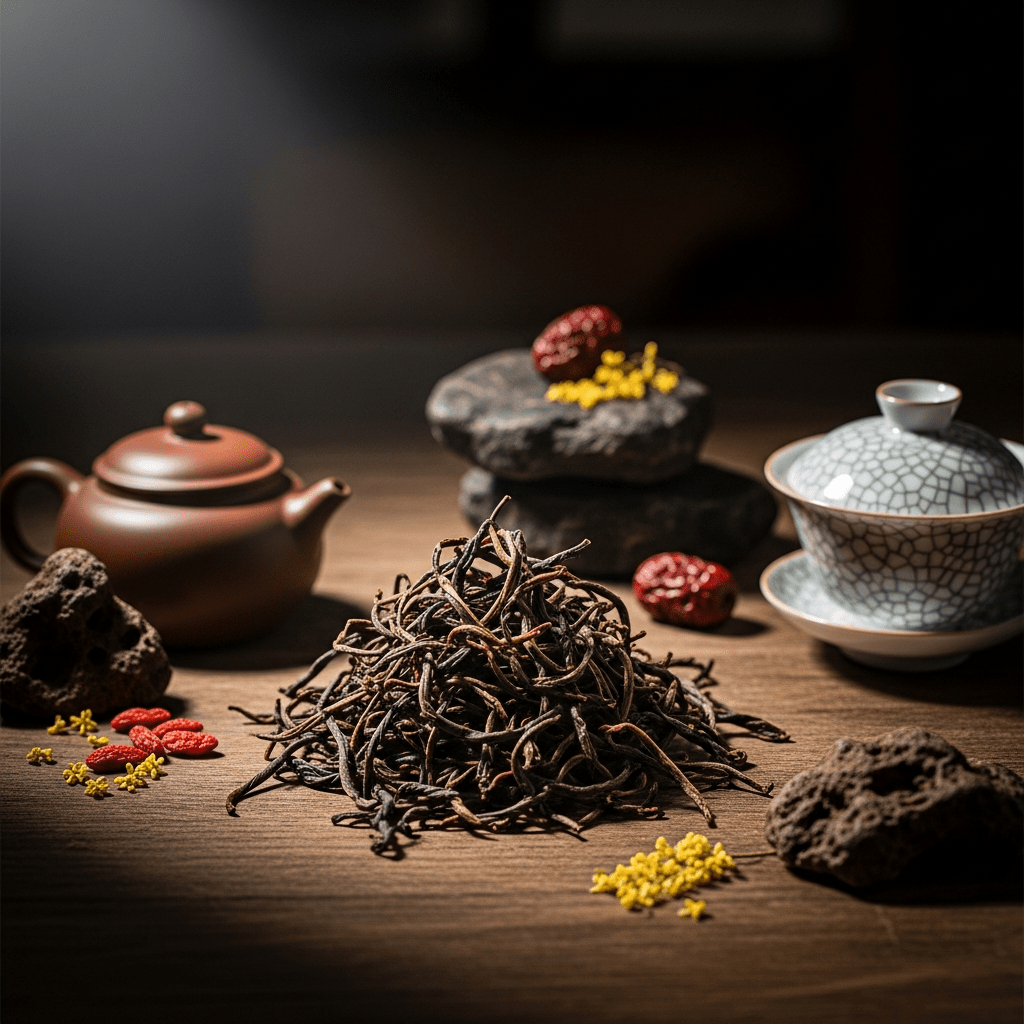
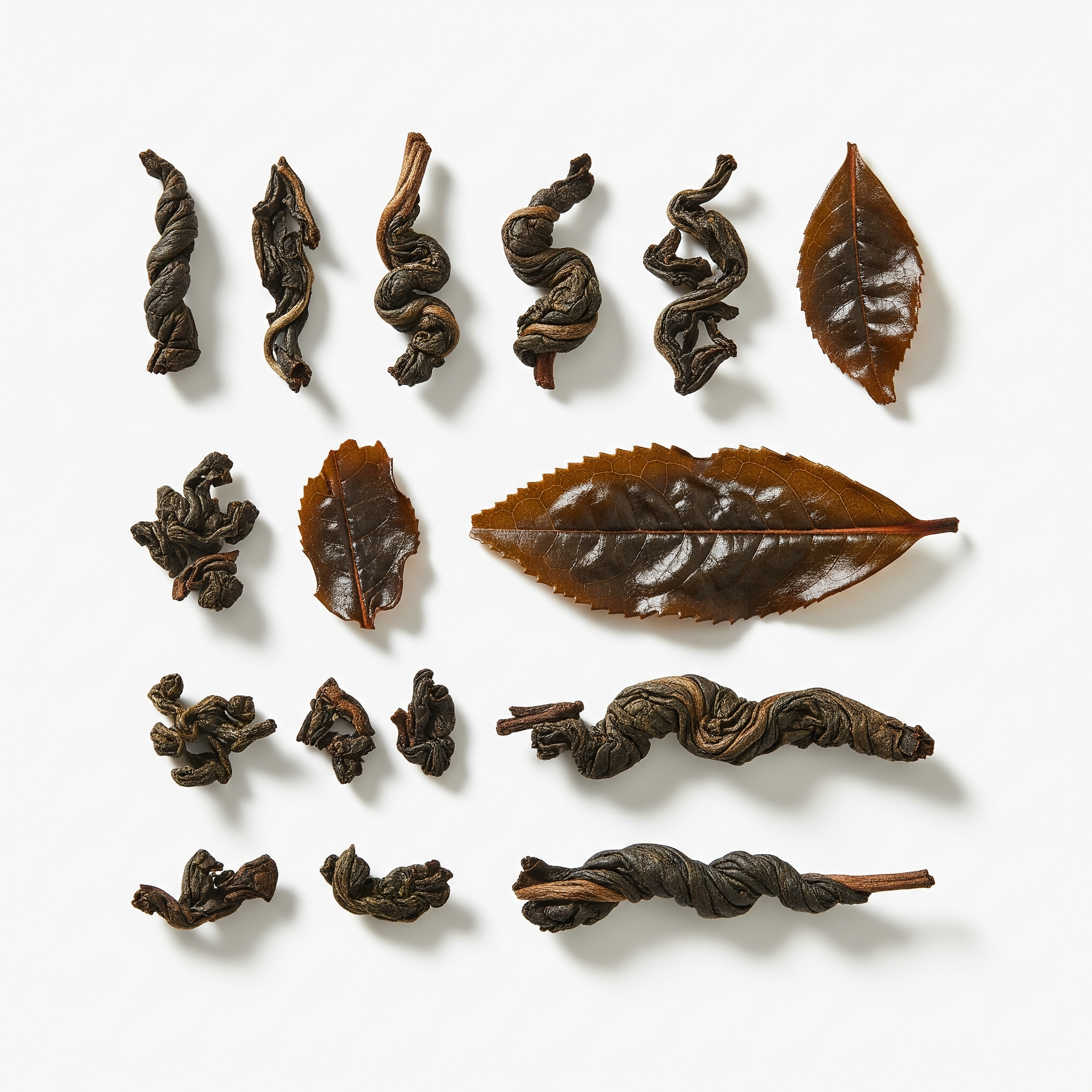
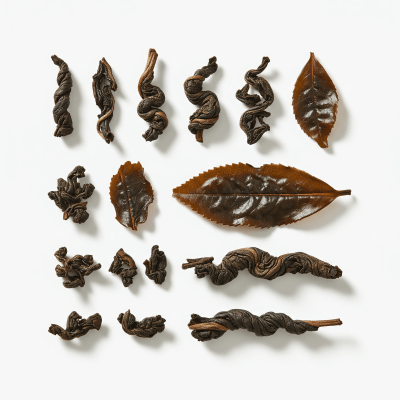
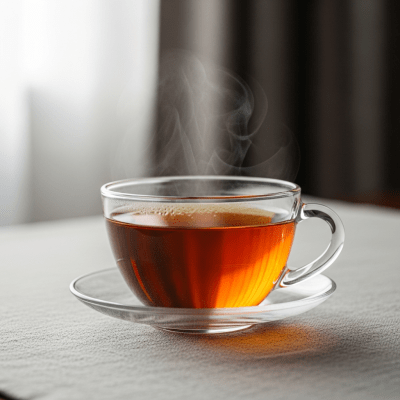
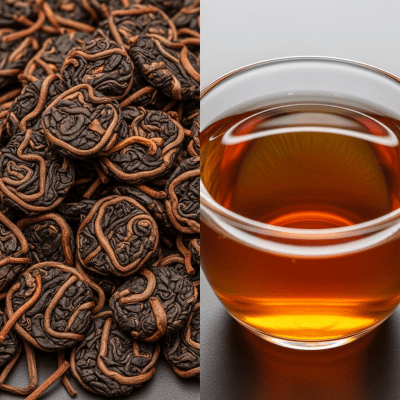
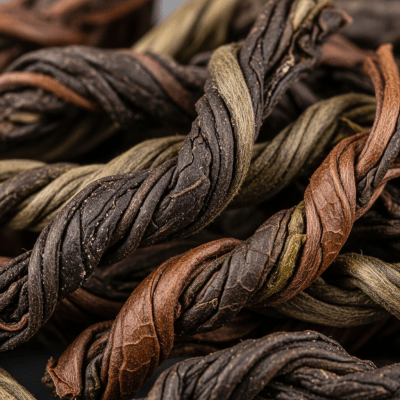
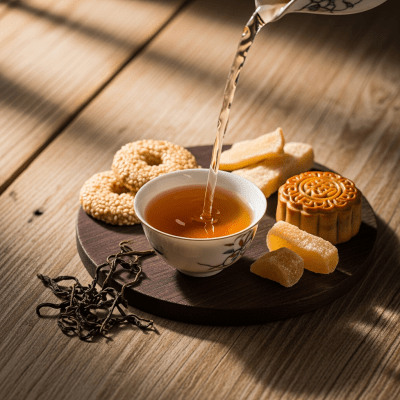
The tea leaves of Da Hong Pao are thick and elongated with a dark green color and pronounced serrated edges. The finished dry leaves often exhibit a twisted or curled form, reflecting skilled processing, while the brewed liquor reveals a rich amber hue.
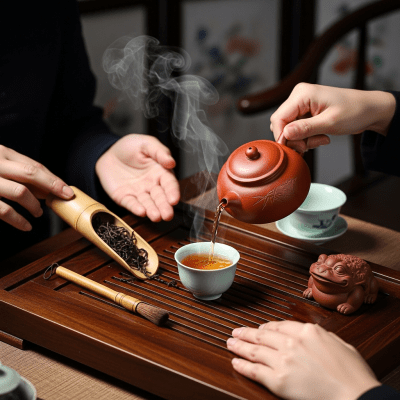
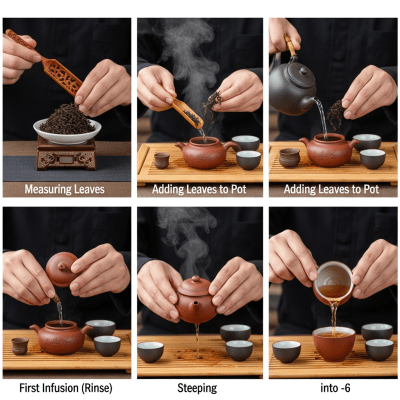
Da Hong Pao is prized for its layered aroma and flavor, resulting from careful withering, rolling, oxidation, and charcoal roasting. It is traditionally brewed as loose-leaf tea in small Yixing teapots or gaiwans, allowing multiple infusions that reveal evolving taste profiles.
Bring this kind into your world illustrated posters, mugs, and shirts.
Archival print, museum-grade paper
Buy Poster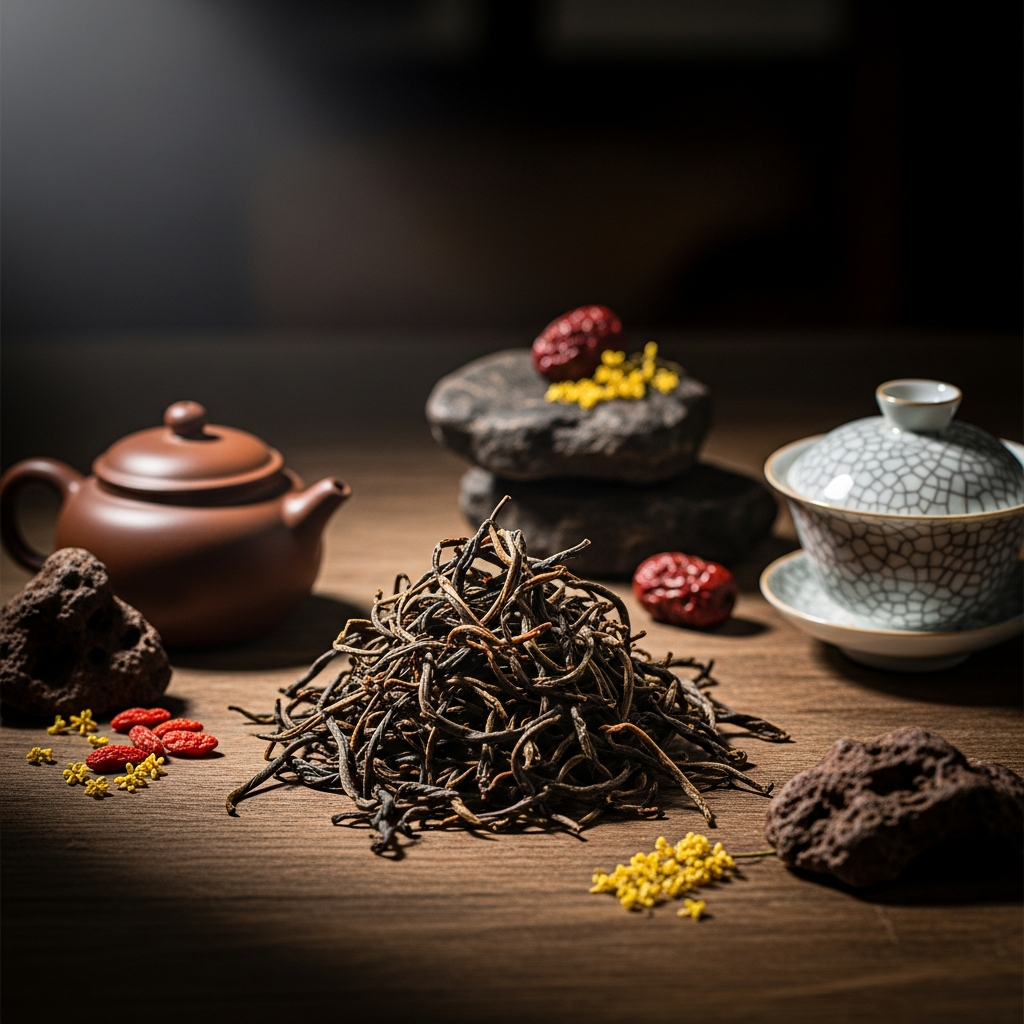
Stoneware mug, dishwasher safe
Buy Mug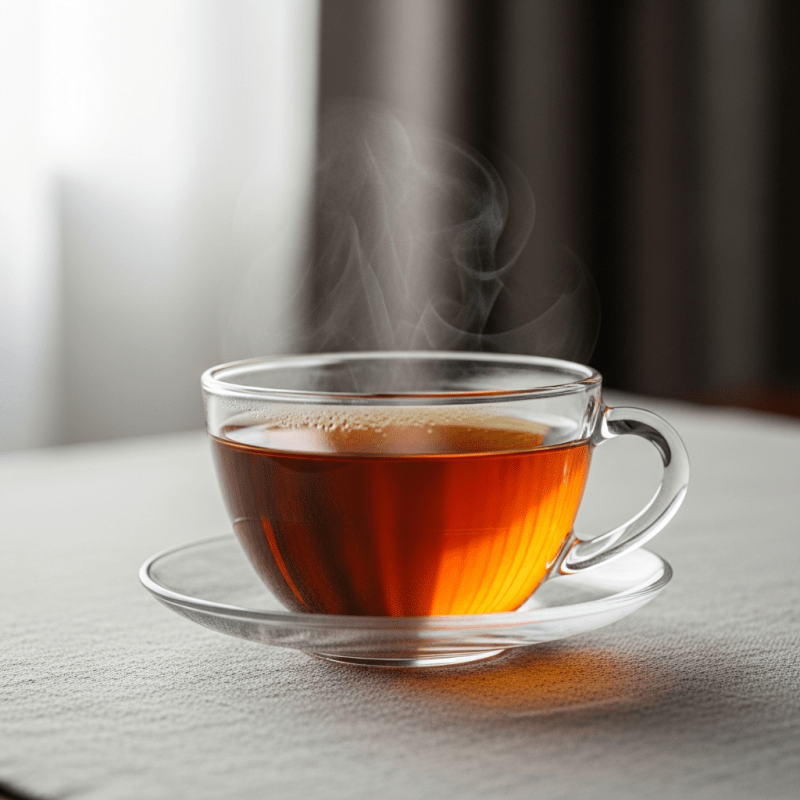
Soft cotton tee, unisex sizes
Buy ShirtEsteemed as a symbol of prestige in Chinese culture, Da Hong Pao is often presented as a ceremonial gift and regarded as a national treasure. Its legendary status and rarity have inspired art, folklore, and a deep cultural reverence surrounding Wuyi rock teas.
Da Hong Pao offers a complex flavor profile combining floral notes with pronounced mineral and roasted undertones. The tea finishes with a lingering sweet aftertaste that embodies the famed "rock rhyme" or Yan Yun, reflecting its unique terroir.
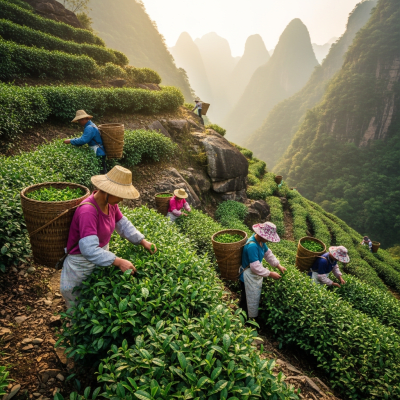
Processing involves withering fresh leaves, rolling to bruise and shape them, controlled oxidation at 40–60%, followed by traditional charcoal roasting and drying. These steps develop Da Hong Pao’s signature aroma and flavor complexity.
Da Hong Pao is traditionally enjoyed as a loose-leaf tea brewed in small Yixing teapots or gaiwans, emphasizing multiple infusions to explore its evolving taste. It holds ceremonial importance and is often gifted to honor guests or mark special occasions in China.
Like many oolong teas, Da Hong Pao is reputed to aid digestion, support metabolism, and provide antioxidants. Its moderate oxidation preserves beneficial compounds, contributing to its valued healthful qualities.
While the original Da Hong Pao comes from the mother bushes in Wuyi, several regional variants exist. Some teas labeled Da Hong Pao are blends from other Wuyi cultivars, differing in flavor intensity and rarity, reflecting diverse terroirs within the region.