
Terrestrial Planet
A terrestrial planet is a rocky world with a solid surface primarily composed of silicate minerals and metals, distinct from gas or ice giants by its compact, dense structure and minimal volatile envelope.
A terrestrial planet is a rocky world with a solid surface primarily composed of silicate minerals and metals, distinct from gas or ice giants by its compact, dense structure and minimal volatile envelope.
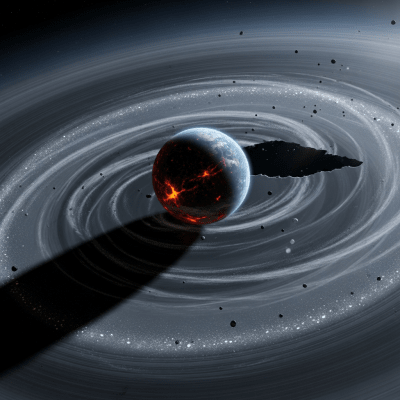
The concept of terrestrial planets emerged from early astronomical observations that distinguished Earth-like solid bodies from larger gaseous planets in our Solar System. Rooted in the Latin term terra meaning Earth, this classification was formalized during the 20th century and widely adopted by authorities such as the International Astronomical Union and NASA. Terrestrial planets form through the accretion of refractory materials within protoplanetary disks, developing differentiated interiors with cores, mantles, and crusts.
Terrestrial planets belong to the broader category of rocky planets characterized by their silicate and metallic composition. They typically fall within a mass range of about 0.05 to 10 Earth masses and a radius range up to roughly 1.5 Earth radii, beyond which planets often possess significant volatile envelopes and transition into mini-Neptunes. This class is foundational in planetary taxonomy, contrasting with gas giants, ice giants, and dwarf planets, and includes subtypes such as super-Earths when mass and size increase but composition remains predominantly rocky.
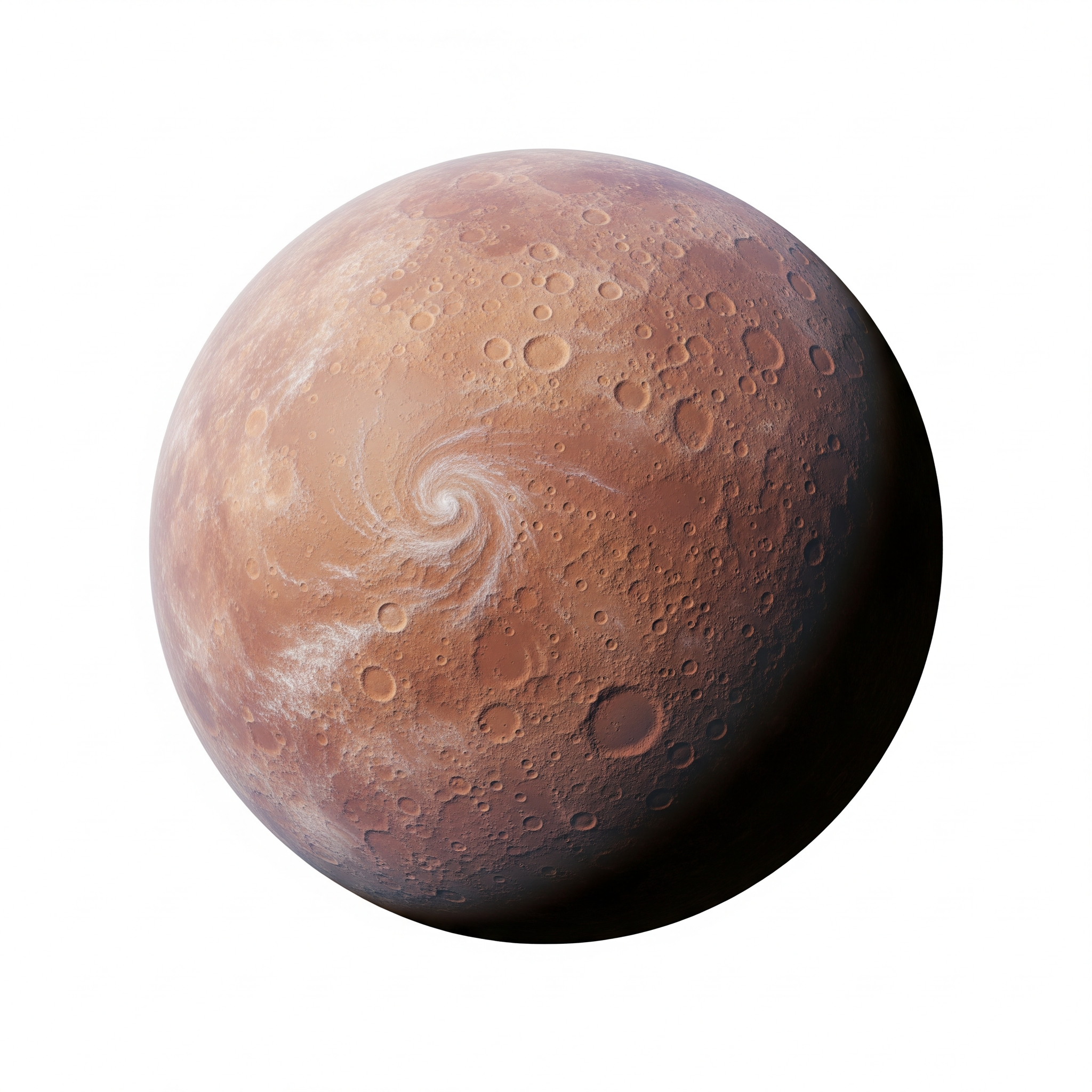
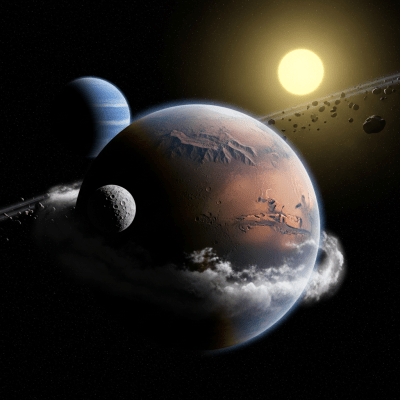
Terrestrial planets feature a solid, rocky surface that lacks deep layers of volatile ices or thick gaseous envelopes. Their surfaces are shaped by silicate minerals like olivine and pyroxene, combined with metallic cores primarily of iron and nickel. Visually, these planets often display varied terrain including mountains, plains, and impact craters, with atmospheres—if present—composed mainly of heavier molecules such as carbon dioxide, nitrogen, and oxygen rather than light gases.
Terrestrial planets serve as the primary environments for potential habitability and human exploration due to their solid surfaces and capacity to support atmospheres. They interact with their host stars through varied orbital distances, influencing surface temperatures and climate. In observational astronomy, terrestrial planets are often detected via transit and radial velocity methods, especially when orbiting close to their stars, allowing detailed study of their mass, radius, and atmospheric properties.
Bring this kind into your world illustrated posters, mugs, and shirts.
Archival print, museum-grade paper
Buy Poster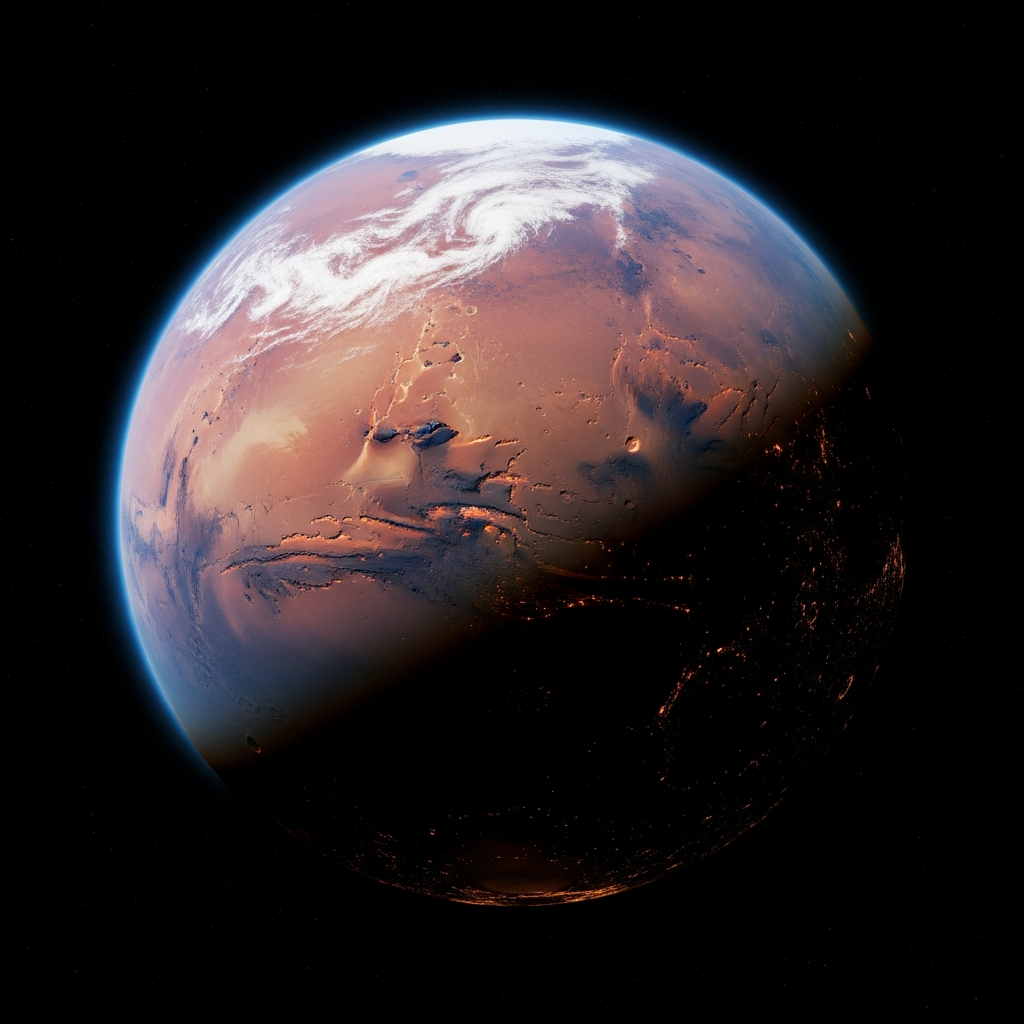
Stoneware mug, dishwasher safe
Buy Mug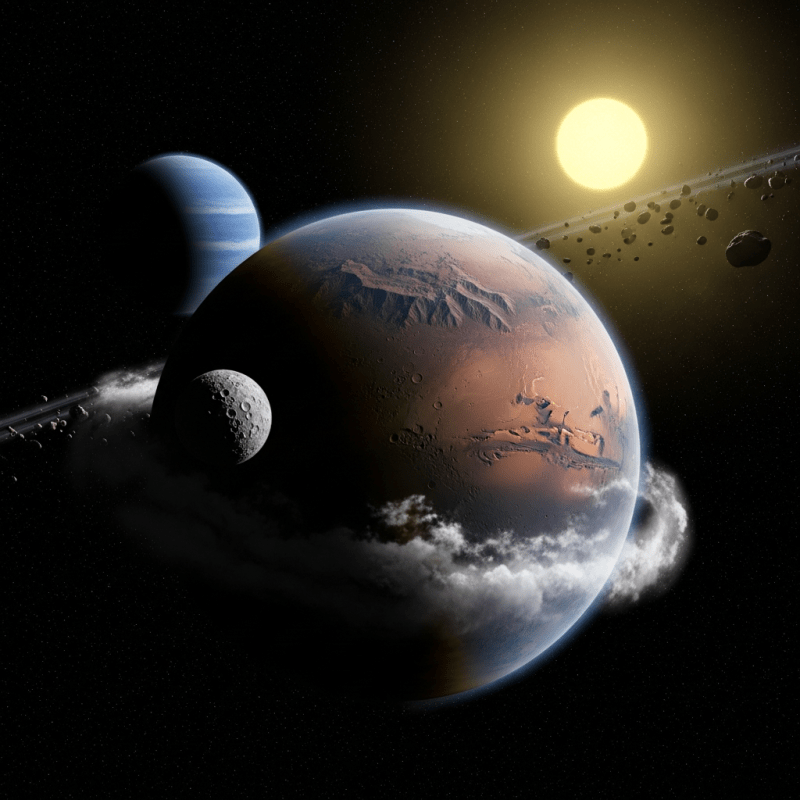
Soft cotton tee, unisex sizes
Buy ShirtTerrestrial planets hold profound cultural importance as the archetypes of Earth-like worlds. They appear prominently in mythology, art, and literature as symbols of home, life, and exploration. The term itself evokes the human connection to Earth, inspiring scientific inquiry and popular imagination about other rocky worlds that might harbor life or resemble our own planet.
Terrestrial planets occupy a range of orbital distances from their host stars, often found closer in than gas and ice giants. In our Solar System, they orbit within the asteroid belt, with semi-major axes varying from about 0.39 AU (Mercury) to 1.52 AU (Mars). Their orbits can range from nearly circular to moderately eccentric, influencing surface temperatures and climate. These orbital parameters affect their equilibrium temperatures, which vary widely depending on stellar radiation and distance.
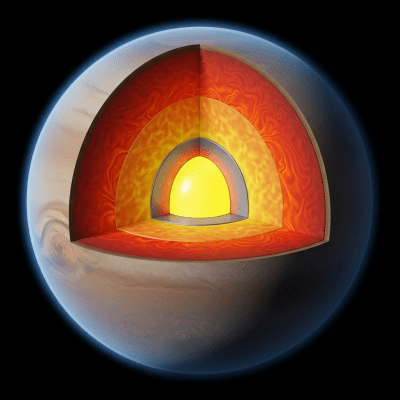
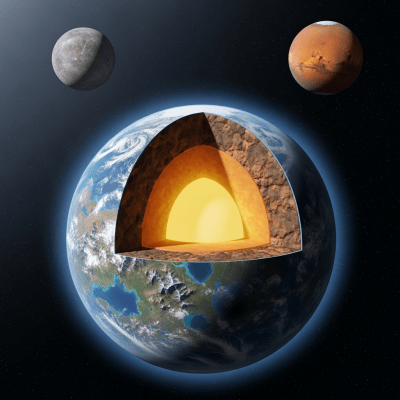
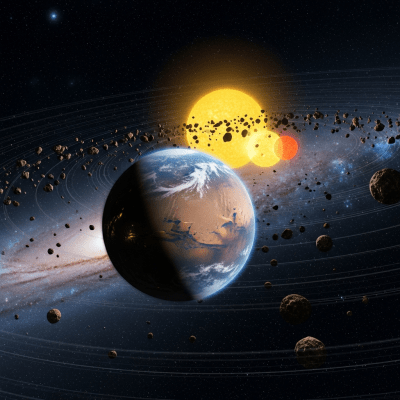
Terrestrial planets typically have masses between 0.05 and 10 Earth masses and radii from approximately 0.5 to 1.5 Earth radii. Their mean densities usually range from 3.5 to 5.5 grams per cubic centimeter, indicative of their rocky and metallic composition. Morphologically, they possess solid surfaces without extensive volatile layers. Internally, they are differentiated into core, mantle, and crust, with core fractions varying but generally significant due to metallic iron content.
While terrestrial planets may have atmospheres, these are typically thin compared to gas giants and composed mainly of heavier molecules such as carbon dioxide, nitrogen, and oxygen. Hydrogen and helium are rare due to low gravity and solar wind stripping. Atmospheric presence varies widely—from the dense CO₂ atmosphere of Venus to the thin, cold CO₂ atmosphere of Mars—affecting surface conditions and potential habitability.
Terrestrial planets have been the primary targets of human and robotic exploration within the Solar System. Missions to Mercury, Venus, Mars, and Earth’s Moon have provided detailed knowledge of their surfaces, atmospheres, and geology. These explorations have advanced understanding of planetary formation, climate, and potential for life, laying the groundwork for future interplanetary missions and exoplanet studies.
Terrestrial planets are considered the most promising candidates for habitability due to their solid surfaces and potential to maintain atmospheres conducive to liquid water. Habitability depends on factors including orbital distance within the habitable zone, atmospheric composition, magnetic field presence, and geological activity. While many terrestrial planets may be inhospitable, their structural characteristics provide the essential framework for life-supporting environments.