Super-Earth
A Super-Earth is a planet with a mass larger than Earth's but significantly less than Neptune's, representing an intermediate class of planetary bodies with diverse compositions and characteristics.
A Super-Earth is a planet with a mass larger than Earth's but significantly less than Neptune's, representing an intermediate class of planetary bodies with diverse compositions and characteristics.
The term Super-Earth emerged in the early 2000s alongside the discovery of numerous exoplanets larger than Earth but smaller than Neptune, a size range absent in our Solar System. This classification gained traction through peer-reviewed studies and major space agencies like NASA and ESA, reflecting a mass-based approach to categorizing planets beyond our system.
Super-Earths belong to the terrestrial category of planets, defined primarily by their mass—typically between 1 and 10 Earth masses—and radius, which generally falls between 1 and 2 Earth radii. They occupy a key niche between Earth-sized rocky planets and larger gas-rich mini-Neptunes, though their exact composition can vary widely.
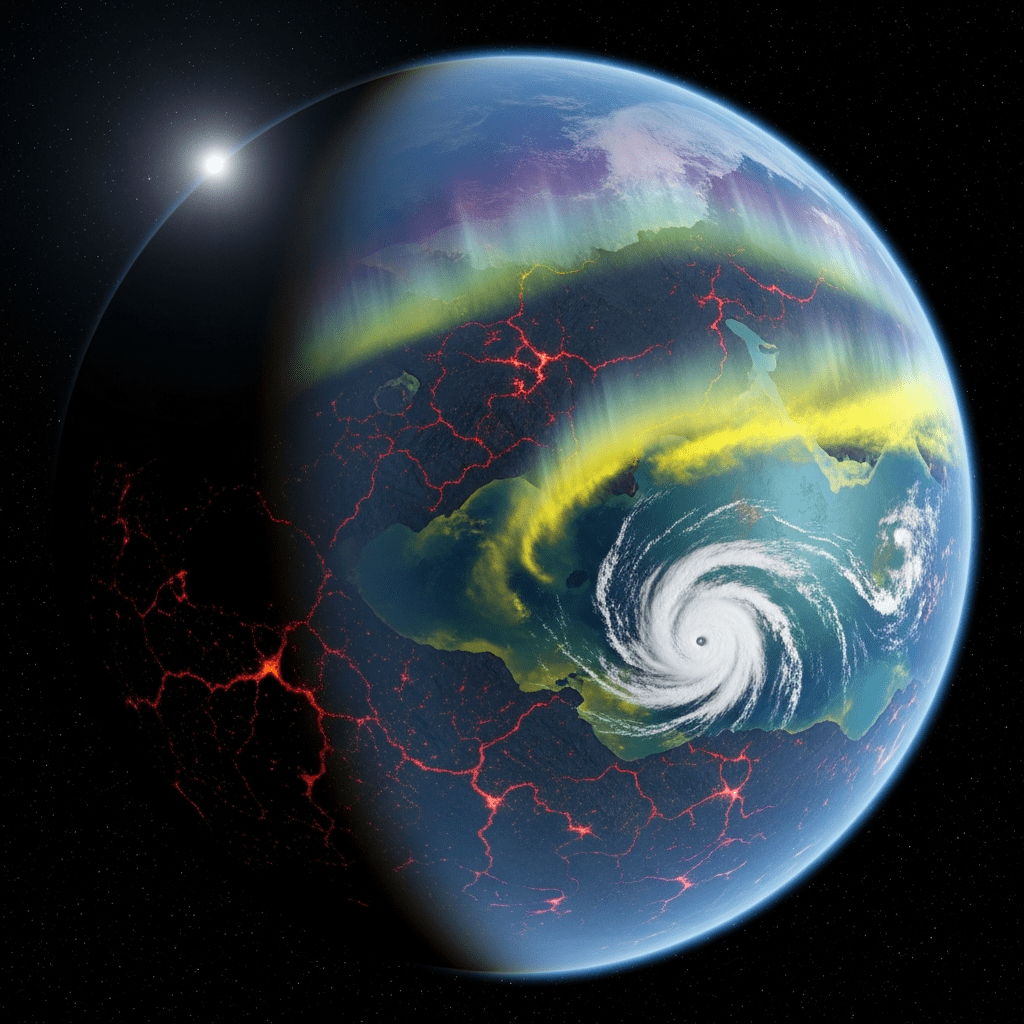
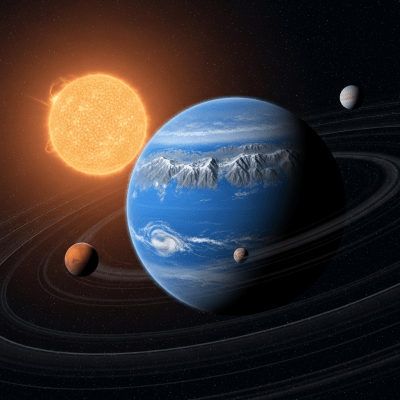
Super-Earths can exhibit a range of appearances depending on their composition. Some are predominantly rocky with solid surfaces, while others may be water-rich or enveloped by modest gaseous atmospheres. Their sizes vary from just above Earth's radius up to nearly twice that, often influencing their surface conditions and visual characteristics.
While Super-Earths do not have direct interactions with humans, their study enhances our understanding of planet formation and diversity. They often serve as prime targets for atmospheric characterization and habitability research, helping scientists explore the range of planetary environments beyond our Solar System.
Bring this kind into your world illustrated posters, mugs, and shirts.
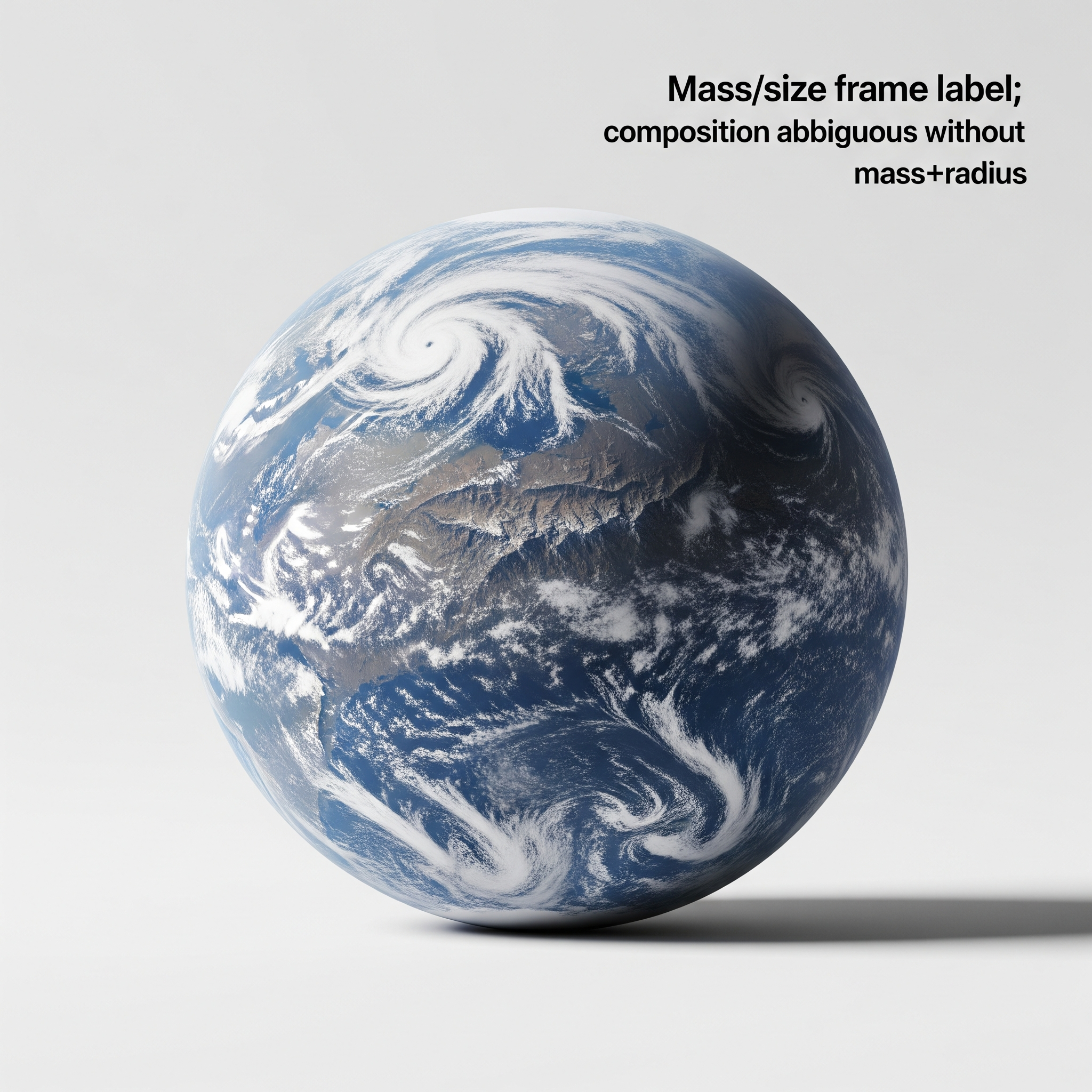
Archival print, museum-grade paper
Buy Poster
Stoneware mug, dishwasher safe
Buy Mug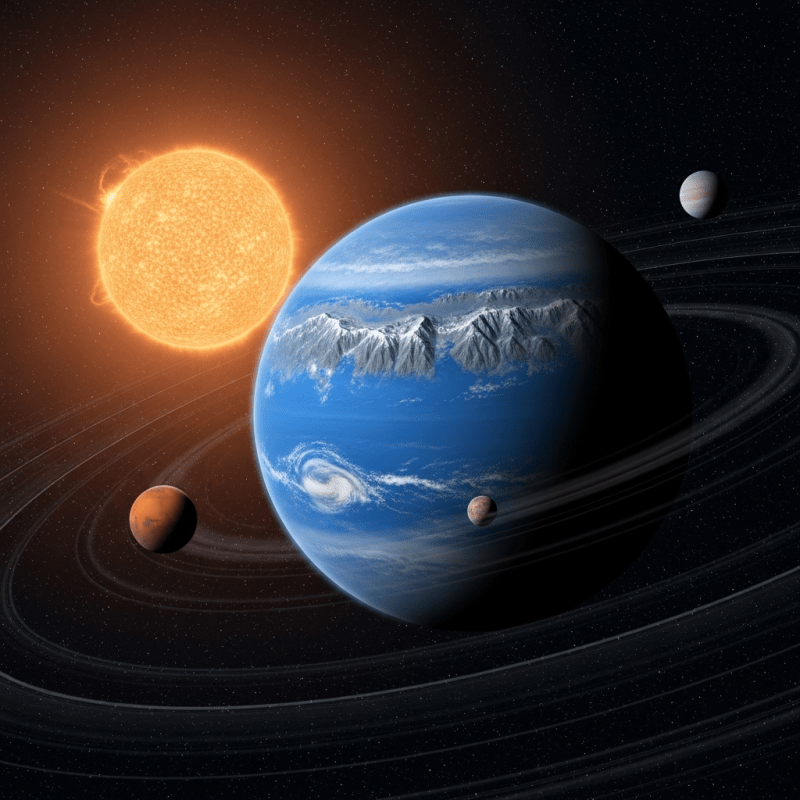
Soft cotton tee, unisex sizes
Buy ShirtSuper-Earths have captured public imagination as potential abodes for life and as stepping stones in the search for Earth-like worlds. Though the term does not imply habitability, these planets frequently feature in science fiction and popular science as intriguing new worlds that bridge familiar terrestrial planets and exotic gas giants.
Super-Earths are found across a broad range of orbits, from ultra-short periods of less than a day to several astronomical units from their stars. There is no intrinsic orbital restriction for this class; however, observational biases favor detecting those in close orbits due to transit and radial velocity methods.
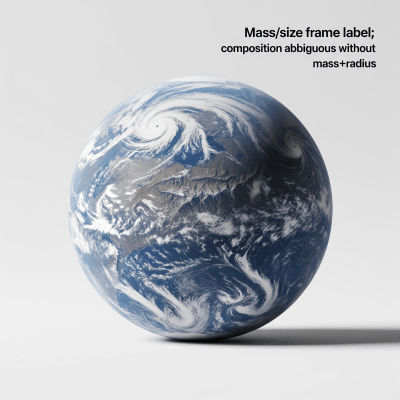
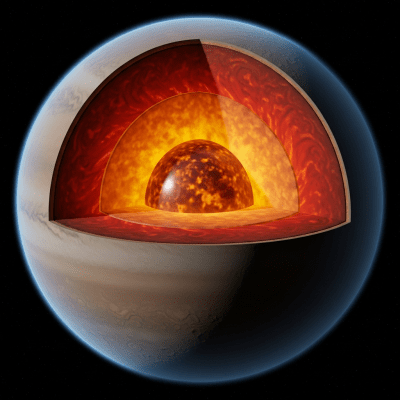
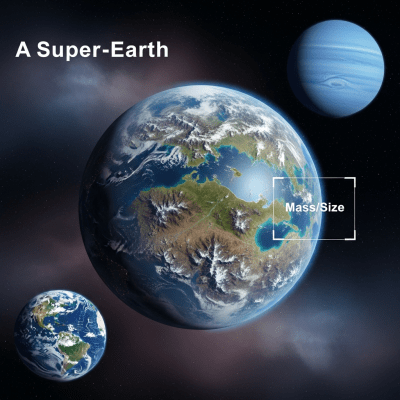
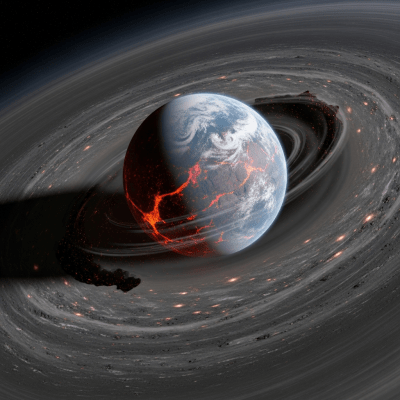
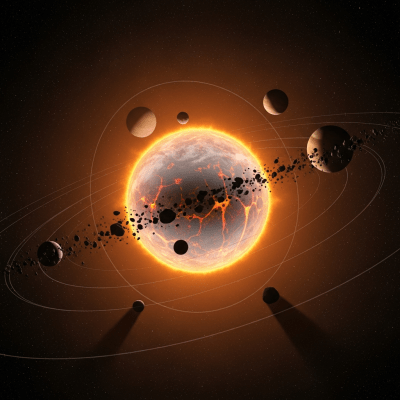
Typically, Super-Earths have masses between 1 and 10 Earth masses and radii from just above 1 to about 2 Earth radii. Their densities vary widely, reflecting diverse compositions from dense rocky interiors to volatile-rich or gas-enveloped structures. This diversity makes precise physical characterization challenging without both mass and radius measurements.
Many Super-Earths possess atmospheres ranging from thin to modest in thickness. Their atmospheric compositions can include hydrogen, helium, water vapor, or secondary gases formed through geological or photochemical processes. Detecting and analyzing these atmospheres remains difficult but crucial for understanding their nature.
Super-Earths have been primarily explored through remote observations by space telescopes and ground-based instruments using transit and radial velocity techniques. Missions like Kepler and TESS have identified thousands of candidates, enabling statistical studies and atmospheric probes, though no direct spacecraft missions to Super-Earths currently exist.
The potential habitability of Super-Earths depends on many factors including their atmosphere, surface conditions, and orbital distance within the habitable zone. While some may have conditions suitable for liquid water, the term itself does not imply habitability. Their diverse compositions and environments mean each Super-Earth must be evaluated individually.